Korean Chili Oil Boiled Dumplings
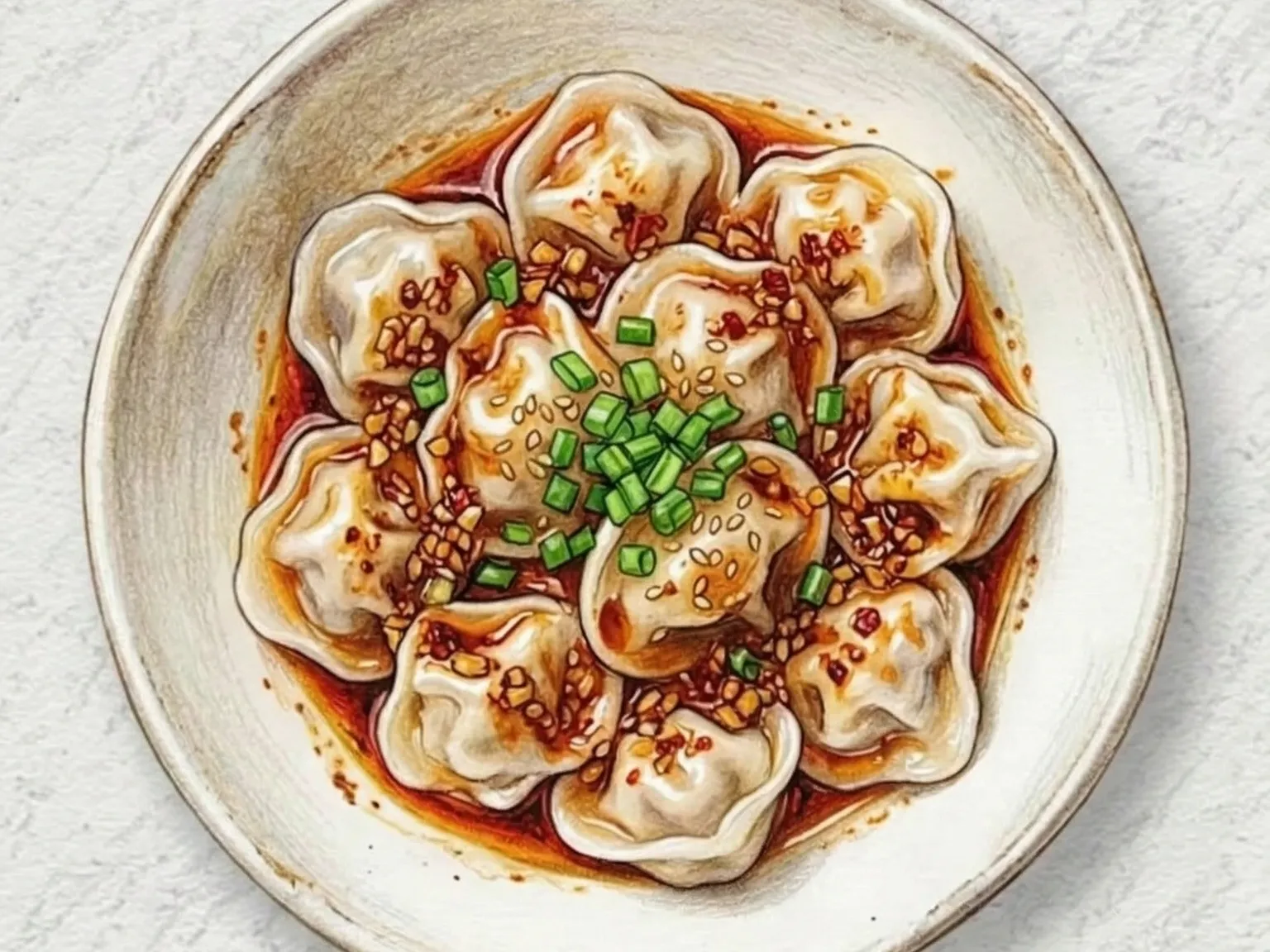
Chili oil mulmandu is a Korean dish of boiled dumplings dressed in a sauce of chili oil, soy sauce, vinegar, garlic, and sugar. The dumplings are boiled until they float and then cooked two more minutes for a springy wrapper, and draining them thoroughly prevents the sauce from diluting. Soy sauce and vinegar form a salty-tart base, while chili oil adds a spicy aroma and glossy red sheen. Chopped scallion scattered on top brings a fresh herbal note that lightens the oily richness of the sauce.
Adjust Servings
Instructions
- 1
Boil water, add dumplings, and cook 2 more minutes after they float.
- 2
Drain dumplings well and transfer to a serving bowl.
- 3
Mix soy sauce, vinegar, sugar, and minced garlic for the base sauce.
- 4
Add chili oil and pour the finished sauce over the dumplings.
- 5
Top with chopped scallion and serve immediately.
As an Amazon Associate, we may earn from qualifying purchases.
Tips
Nutrition (per serving)
More Recipes

Korean Crispy Kimchi Fried Dumplings
Kimchi gun mandu are pan-fried dumplings filled with finely chopped kimchi, squeezed tofu, ground pork, and green onion seasoned with soy sauce and garlic, shaped into half-moons. The bottoms are first crisped in oil, then water is added and the pan is covered for four minutes to steam the tops, achieving a contrast of crunchy base and moist upper wrapper. The kimchi's acidity and heat permeate the pork fat to create a more assertive umami than plain dumplings, and the tofu smooths out the filling's texture. A splash of vinegar in the soy dipping sauce cuts any greasiness.

Korean Steamed Mandu (Pork and Tofu Dumplings Steamed in Half-Moon Shape)
Jjin mandu are Korean steamed dumplings filled with a mixture of ground pork, squeezed tofu, soaked glass noodles, garlic chives, and onion seasoned with soy sauce and sesame oil, folded into half-moon shapes and steamed for 12 to 15 minutes. Cooking by steam rather than oil keeps the wrapper moist and supple while letting the filling's own flavors come through cleanly. Tofu absorbs excess moisture and softens the texture of the filling, while garlic chives add a pungent bite that tempers the pork. They are served with a dipping sauce of soy sauce, vinegar, and red chili flakes.

Korean Oil Tteokbokki (Dry-Stir-Fried Rice Cakes in Chili Soy Glaze)
Gireum-tteokbokki is a dry-style tteokbokki where rice cakes are stir-fried in oil and coated with a concentrated paste of gochugaru, soy sauce, sugar, and garlic - no broth involved. Blooming the chili flakes briefly in oil draws out their nutty aroma rather than raw heat, and the soy sauce and sugar build layered sweetness and umami on top. Without liquid, the seasoning clings tightly to each rice cake's surface, creating an intense glaze. Green onion and sesame seeds added at the end provide a fresh bite and fragrance to balance the rich coating.

Korean Grilled Jjondeugi (Sweet Spicy Glazed Wheat Cracker Snack)
Jjondeugi-gui is a nostalgic Korean snack made by lightly grilling thin pressed-wheat sheets (jjondeugi) over low heat until pliable, then brushing them with a sauce of gochujang, soy sauce, sugar, oligosaccharide syrup, garlic, and sesame oil and grilling again. Heating transforms the rigid sheets into a chewy texture, while the sauce caramelizes on the surface to create a sweet-spicy glaze. The sauce must be applied in thin layers across multiple passes to avoid burning. The finished sheets are cut into bite-size pieces with scissors and served immediately.

Korean Kimchi Pancake
Well-fermented kimchi is chopped fine and mixed into a batter of Korean pancake mix, kimchi brine, and chili flakes, then fried in oil until both sides turn golden. Adding the kimchi brine directly into the batter is the key step, as its lactic acid tang brings depth that plain water cannot. Cooking four minutes on the first side and three on the second produces a crisp exterior while the interior stays moist from the kimchi moisture.

Korean Spicy Dakgalbi Rice Bowl
Dakgalbi deopbap brings the flavors of Chuncheon's famous spicy chicken to a single rice bowl. Boneless chicken thigh is stir-fried with cabbage, onion, and green onion in a gochujang-based marinade that balances heat with a touch of sweetness. High heat ensures the sauce caramelizes onto the chicken while the vegetables keep a slight crunch. A finishing drizzle of sesame oil adds a toasty fragrance that rounds out the bold seasoning. The dish captures the essence of a dakgalbi restaurant meal - the moment just before the leftover sauce gets turned into fried rice - and serves it as a complete, self-contained bowl that needs no side dishes.