Korean Crispy Pan-Fried Dumplings
Quick answer
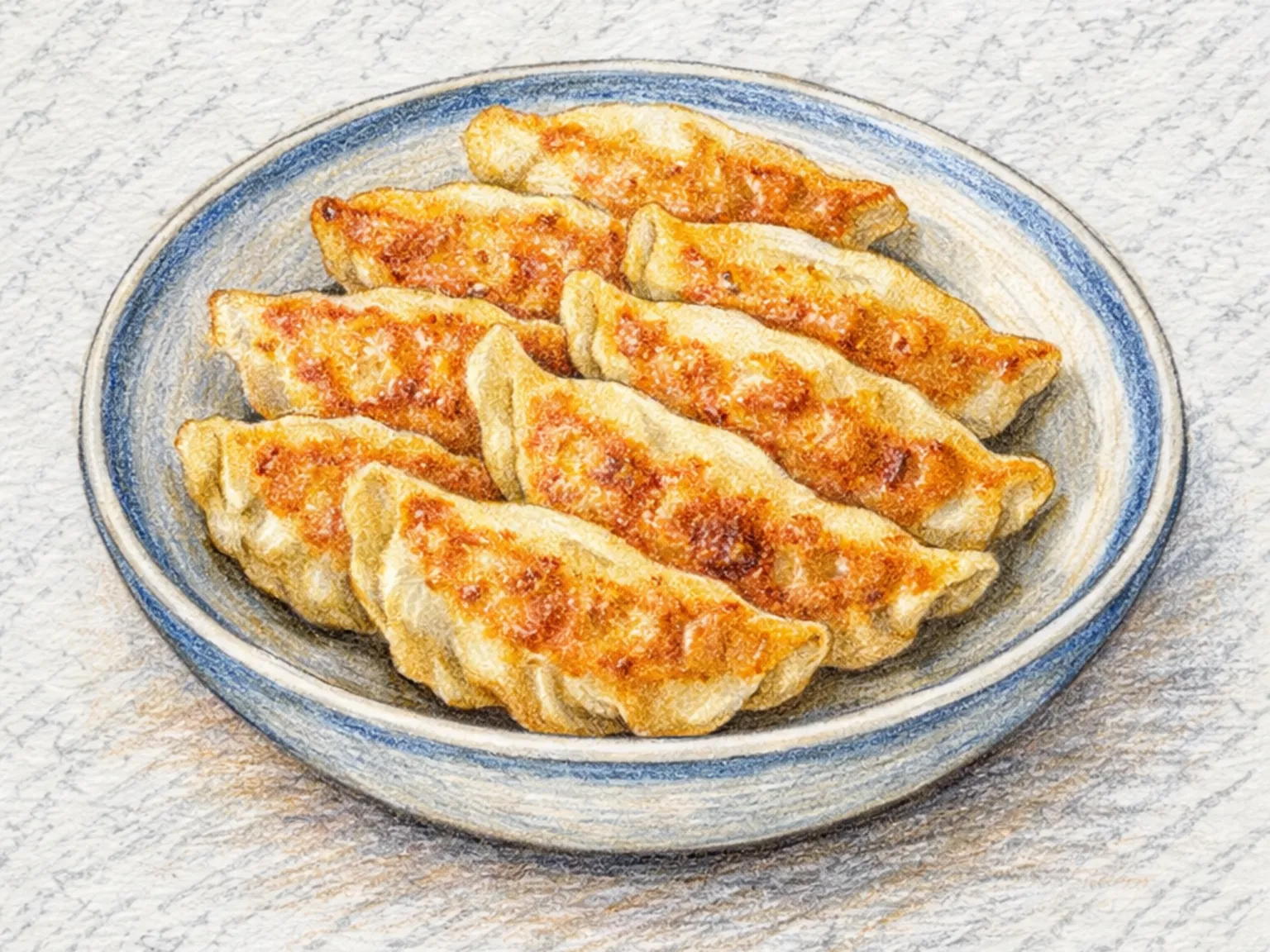
Crispy gunmandu uses a two-stage pan-frying method to give frozen dumplings a golden, crunchy base while keeping the tops moist.
What makes this special
- A three-stage oil and water frying method creates a crunchy base for these pan-fried dumplings.
- Oil, then water, then oil again: three-stage method for crisp base and moist top
- Flour slurry poured in creates a thin wing-shaped crust connecting all dumplings
Key ingredients
Core cooking flow
- 1 Add 2 tablespoons cooking oil to a pan and preheat over medium heat for about 1 minute.
- 2 Cook uncovered for 3 to 4 minutes without moving the dumplings.
- 3 Pour 120 ml water slowly along the edge of the pan, then cover immediately.
Crispy gunmandu uses a two-stage pan-frying method to give frozen dumplings a golden, crunchy base while keeping the tops moist. The dumplings are seared in oil first until the bottoms turn golden, then water is added and the lid goes on to steam the filling through. Once the water evaporates, the lid comes off and the base crisps up a second time. Adding a flour-and-water slurry instead of plain water creates a lacy, connected crust that bridges all the dumplings together along the bottom, widening the crisp surface area and letting them lift out of the pan as one sheet. Dipped in a sauce of soy sauce, vinegar, and gochugaru, the nutty browned base contrasts sharply with the moist, seasoned filling inside.
Instructions
Read the steps as a cooking flow: prep, heat, seasoning, doneness control, and finish.
- 1Control
Add 2 tablespoons cooking oil to a pan and preheat over medium heat for about 1 minute.
Arrange 12 frozen dumplings flat-side down with small gaps between them so the bottoms brown evenly and do not stick together.
- 2Control
Cook uncovered for 3 to 4 minutes without moving the dumplings.
Check only when the edges of the bases look golden and smell toasted, because lifting too early can tear the crust before it sets.
- 3Control
Pour 120 ml water slowly along the edge of the pan, then cover immediately.
Keep your face and hands back from the steam and splatter, since the water hits hot oil as soon as it enters.
- 4Step
Keep the heat at medium and steam for 5 minutes.
You should hear steady bubbling, and the tops should look moist and slightly swollen, a sign that the frozen filling is heating through.
- 5Step
Remove the lid and raise the heat to medium-high for 2 to 3 minutes.
Wait until the sizzling becomes quieter and the pan looks dry, which means the remaining moisture has evaporated and the base is crisping again.
- 6Finish
Mix soy sauce, vinegar, sugar, red chili flakes, and chopped green onion for the dipping sauce.
Transfer the dumplings as soon as the bottoms feel firm and crisp, and serve immediately before steam softens the crust.
After the steps
Pick a recipe that fits this dish.
Continue with shared ingredients, meal pairings, or a similar method.
Recipes That Go Well With This
More Street food →Based on shared ingredients and meal pairing
Korean Kimchi Bulgogi Udon
Kimchi bulgogi udon is a Korean stir-fried noodle dish that brings together the sharp acidity of well-fermented kimchi and the sweet, savory depth of thinly sliced bulgogi beef, all coating thick, round udon strands. The beef is seared quickly over high heat to develop browning on the surface before onion and kimchi join the pan and cook until nearly all their moisture evaporates, concentrating both flavor and color. A sauce of soy sauce, gochujang, and sugar goes in next, followed by briefly blanched udon noodles that get tossed on maximum heat for about one minute so every strand absorbs the sauce while retaining a firm bite. The thick cross-section of udon holds bold, clingy sauces better than thinner noodles and creates a satisfying, filling meal without any broth. When kimchi is especially sour, a small addition of sugar or a quick rinse of the kimchi before cooking brings the acidity back into proportion. Finishing with sliced scallion and toasted sesame seeds adds color and a nutty lift that completes the dish.
Watermelon Punch
Subak hwachae is a Korean summer punch that uses half its watermelon blended and strained into a smooth juice base, with the other half scooped into balls as garnish. Mixing the watermelon juice with milk creates a pink, creamy foundation, and lemon-lime soda is stirred in just before serving to preserve its fizz. Adding strawberries and blueberries introduces an acidic brightness and color contrast that watermelon alone lacks, and generous ice keeps the drink cold enough for the fruit aromas to stay sharp. Chilling the watermelon juice thoroughly before combining it with milk is essential to prevent the two liquids from separating. The layered colors of red watermelon, deep blueberries, and vivid strawberries in a single bowl make it as visually striking as it is refreshing, turning a straightforward summer drink into something worth presenting at the table.
Korean Soybean Leaf Doenjang Muchim
Kongip-doenjang-muchim dresses boiled soybean leaves in doenjang and perilla oil - a rustic Korean banchan more commonly found on countryside tables in Jeolla and Gyeongsang provinces than in urban kitchens. Soybean leaves are larger and thicker than perilla leaves, with a chewy, almost fabric-like texture after cooking. Fresh leaves are a seasonal ingredient available only in summer, typically sourced at rural markets or directly from farms rather than supermarkets. Boiling for five to six minutes softens the tough fibers while preserving the earthy, beany aroma unique to the leaf. Since doenjang is the primary seasoning and can easily over-salt the dish, diluting it with a tablespoon of water brings the intensity to the right level. Perilla oil is chosen over sesame oil because its grassy, nutty profile harmonizes with the leaf's herbaceous character. Gentle hand-mixing is essential - aggressive tossing tears the softened leaves.
Korean Crispy Kimchi Fried Dumplings
Kimchi gun mandu are pan-fried dumplings filled with finely chopped kimchi, squeezed tofu, ground pork, and green onion seasoned with soy sauce and garlic, shaped into half-moons. The bottoms are first crisped in oil, then water is added and the pan is covered for four minutes to steam the tops, achieving a contrast of crunchy base and moist upper wrapper. The kimchi's acidity and heat permeate the pork fat to create a more assertive umami than plain dumplings, and the tofu smooths out the filling's texture. A splash of vinegar in the soy dipping sauce cuts any greasiness.
Similar recipes
Korean Kimchi Pork Crispy Dumplings
Kimchi pork gunmandu are pan-fried dumplings with a filling of ground pork, well-drained kimchi, garlic chives, firm tofu, soy sauce, garlic, and sesame oil. The near-equal ratio of 180g pork to 150g kimchi puts the kimchi's fermented tang front and center. Garlic chives add a sharp, onion-like depth, and the tofu absorbs excess moisture from the filling to prevent wrapper breakage. The dumplings are first pan-fried to crisp the bottoms, then steamed with a splash of water, and finished uncovered to evaporate remaining liquid.
Korean Kimchi Ramen Pancake
Kimchi ramyeon jeon is a Korean pan-fried pancake made with slightly undercooked ramen noodles mixed into a batter of pancake mix, chopped fermented kimchi, green onion, and red chili flakes. The noodles are boiled for only two minutes, leaving them firm enough to hold their structure in the pan; fully cooked noodles turn soft and collapse into the batter, losing all chew. The residual heat from pan-frying finishes the cooking while the noodles stay springy. Kimchi brings its fermented sourness and the chili flakes add heat, both layering over the mild, savory flavor of the batter. Spreading the mixture thin before frying allows the edges to crisp all the way through. The wavy, coiled shape of ramen strands creates an uneven surface on the pancake, producing irregular pockets and ridges that fry up especially crunchy. It is a popular late-night snack or a practical way to use leftover ramen blocks.
Korean Popcorn Chicken
Popcorn chicken is a Korean fried snack made by cutting chicken breast into 2cm cubes, coating them in egg wash and cornstarch, then double-frying at 170 degrees Celsius. The first fry sets the crust; the second fry drives out residual moisture, producing an exceptionally crunchy shell. Because the pieces are small, the crust-to-meat ratio is high, so every bite delivers maximum crunch. A glaze reduced from soy sauce, sugar, and oligosaccharide syrup coats each piece in a sweet-salty finish. Garlic powder mixed into the initial seasoning carries a mild garlic note through the oil.
Korean Sweet Potato Pancakes
Goguma-jeon is a Korean sweet potato pancake made by julienning peeled sweet potatoes, folding them into a batter of pancake mix, water, salt, and a touch of sugar, then spreading the mixture thin in an oiled pan and frying both sides until golden. The sweet potato's starch gelatinizes in the heat and bonds with the batter to create lacy, crisp edges, while the center retains the tuber's natural moist sweetness. Keeping the pancake thin is non-negotiable-pressing the batter flat with the back of a spoon ensures even cooking and maximum crunch, because thick portions steam internally and turn soggy. Adding a teaspoon of sugar to the batter amplifies the sweet potato's subtle sweetness and encourages faster caramelization at the edges.
Korean Tofu Jeon (Golden Egg-Coated Pan-Fried Tofu)
Dubu-jeon is a Korean pan-fried tofu dish and a standard side dish in everyday home cooking as well as a fixture on ancestral rite tables. Firm tofu is sliced to about 1 cm thickness, seasoned with salt and pepper, dusted in a thin layer of flour to help the coating adhere, dipped in beaten egg, then fried on each side in a lightly oiled pan until the exterior turns golden and set. Pressing the tofu before cooking is the most important preparatory step: wrapping the slices in paper towels and placing a heavy object on top for at least fifteen minutes removes enough moisture to prevent the oil from splattering and allows the egg coating to bond tightly to the surface. Three to four uninterrupted minutes per side over medium heat are needed to develop an even golden crust without burning the egg; turning the pieces too often strips the batter away and leaves patches of bare tofu. The fried tofu is mild and nutty on its own, but a dipping sauce of soy sauce mixed with a small amount of vinegar and red pepper flakes adds salt, acidity, and heat that transform the simple base into something more complex. Eaten hot, the egg coating is thin and slightly crisp; as it cools the exterior softens while the interior remains tender.