Korean Skewered Fish Cake Soup
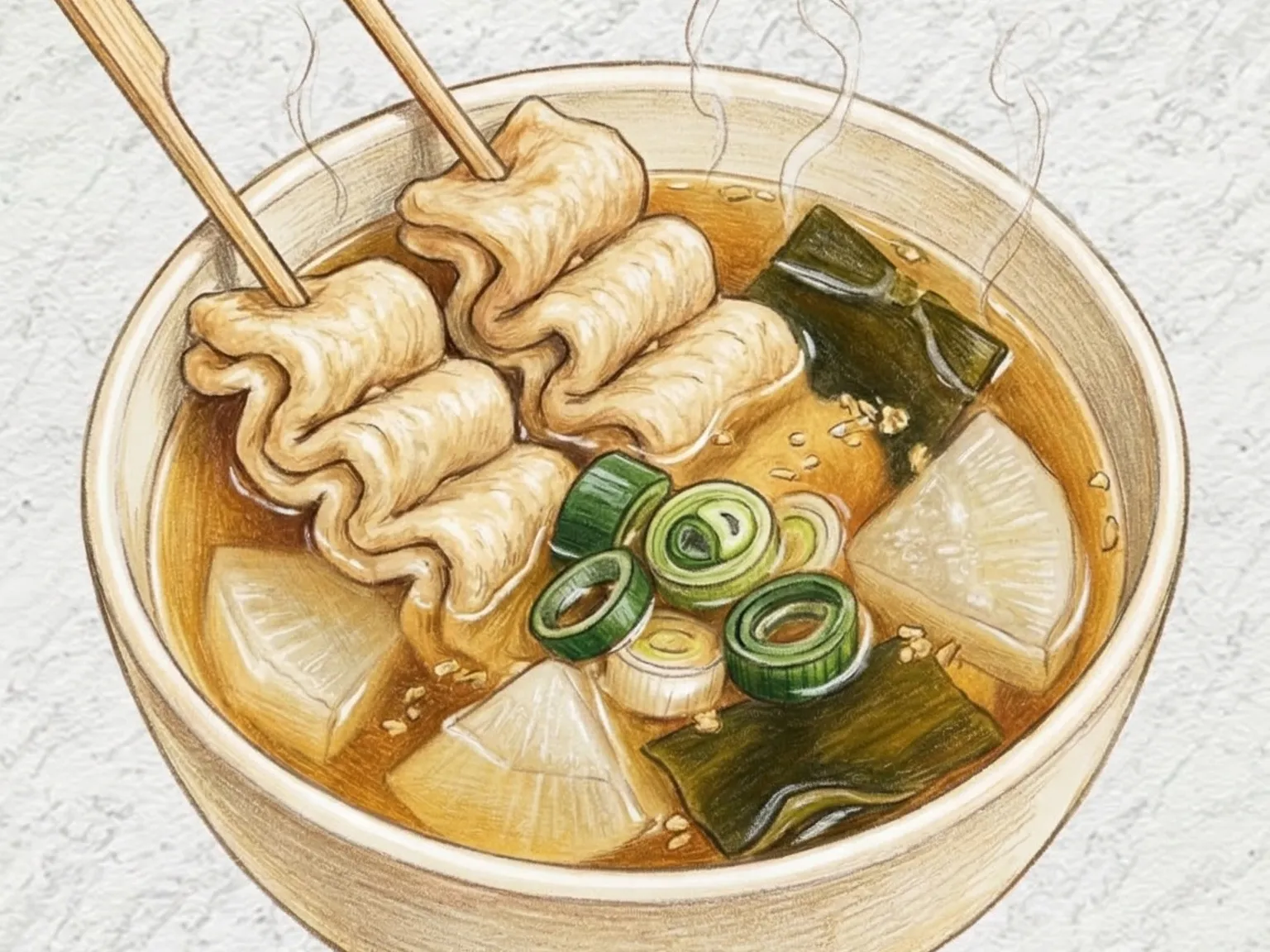
Eomuk-kkochi folds flat fish cake sheets into zigzag shapes on skewers and simmers them in a clear broth made from Korean radish, kelp, and green onion. The broth draws umami from the radish and kelp, which soaks into the fish cakes as they cook, giving them a clean but layered depth. As the fish cakes absorb broth, they soften from their original firm bounce, while the broth thickens slightly from the starch released by the eomuk. This is one of Korea's most iconic winter street foods, traditionally served at pojangmacha stalls where the hot broth is ladled into paper cups for sipping.
Adjust Servings
Instructions
- 1
Blanch fish cakes in hot water for 10 seconds to remove excess oil.
- 2
Fold fish cakes accordion-style and skewer them.
- 3
Boil water with radish, anchovies, and kelp for 15 minutes.
- 4
Remove kelp and anchovies, then season with soy sauce and garlic.
- 5
Add skewers and simmer 5 more minutes, then add green onion.
- 6
Serve hot with broth.
As an Amazon Associate, we may earn from qualifying purchases.
Tips
Nutrition (per serving)
Variations
Busan-Style Broth Fish Cake Skewers
A Busan-style fish cake skewer dish served in rich dashi broth. Umami-packed soup and chewy fish cake make a perfect pair.
Fish Cake Soup
Fish cakes skewered or cut and simmered in a savory, clear broth. A staple of Korean street food stalls, enjoyed for its clean, comforting flavor.
More Recipes

Eomuk-guk (Fish Cake Radish Clear Soup)
Eomuk-guk is a straightforward Korean fish cake soup that relies on radish-infused water for its clean, faintly sweet base. Sliced fish cakes simmer in the broth for six minutes, long enough to soak up the seasoning of soup soy sauce and garlic without falling apart. A finish of green onion and black pepper lifts the aroma and adds a touch of warmth. The entire pot comes together in about twenty minutes, making it a practical choice when you need a warm bowl in a hurry.

Korean Street Stall Udon (Dashi Broth Fish Cake Noodle Soup)
Kombu is simmered for eight minutes, then bonito flakes are steeped for two minutes to produce a clear dashi broth, seasoned with soup soy sauce, regular soy sauce, and a touch of sugar. Fish cake slices are simmered in the broth for added depth, while frozen udon noodles are blanched separately and briefly rinsed to remove excess starch before being placed in bowls and ladled with the hot broth. Topped with sliced scallion and shredded seaweed, the dish centers on a clean, soy-based umami.

Korean Sausage Skewers
Sosiji-kkochi are Korean sausage skewers made by scoring Vienna sausages and threading two or three onto wooden sticks, then pan-frying until golden brown on all sides. The score marks open up during cooking, allowing heat to penetrate evenly and creating slightly caramelized, crispy edges. Ketchup and mustard are served alongside, with the tomato sweetness and sharp mustard bite complementing the salty sausage. The dish takes under 15 minutes from start to finish, and threading rice cakes between the sausages turns it into a sotteok-sotteok variation.

Korean Eomuk Hot Bar (Fried Fish Cake Skewer)
Crispy battered fish cake on a stick - a beloved Korean street food snack that is golden outside and chewy inside. Wrapping the fish cake around the skewer maximizes surface area for the batter to cling to, and frying produces a crisp shell on the outside while the fish cake inside stays chewy. A small amount of baking powder in the batter helps it puff slightly for an airier crunch. Ketchup or mustard is the typical topping, and the mild fish flavor from the eomuk comes through gently beneath the fried coating.

Korean Grilled Rice Cake Skewers
Tteokkochi are grilled rice cake skewers coated in a thick gochujang-based sauce built from ketchup, oligosaccharide syrup, soy sauce, and minced garlic simmered until reduced. The rice cakes are first pan-seared in a thin layer of oil to create a lightly crisp shell before the sauce is brushed on, so each bite cracks through a toasted surface into the chewy center. The ketchup lends a mild acidity that tempers the gochujang heat, while the syrup adds a rounded sweetness without graininess. Rolling the glazed skewers over low heat for one final minute fuses the sauce onto the rice cake surface so it holds even as the snack cools.

Korean Fish Cake Soup (Clear Anchovy Radish Broth)
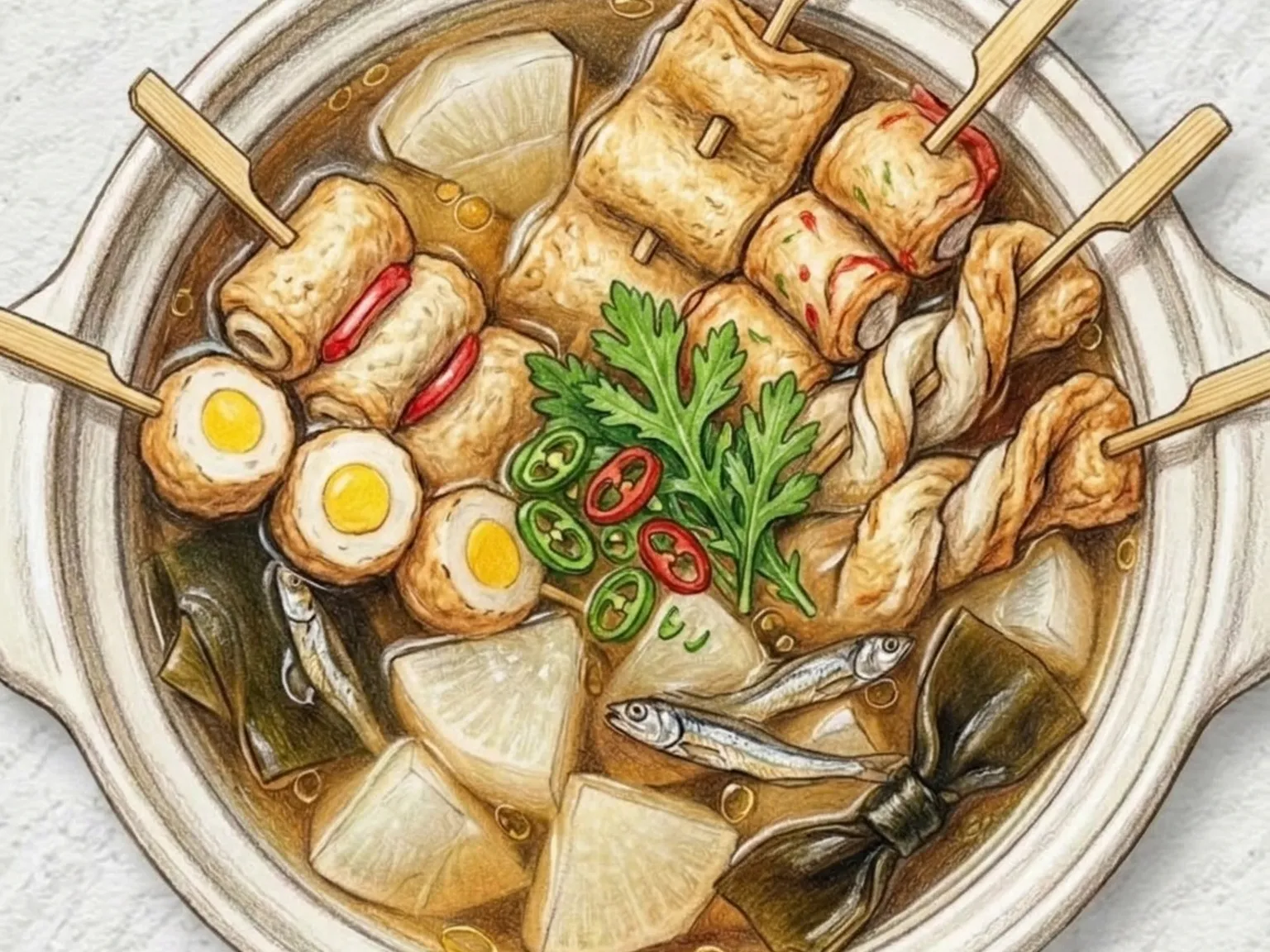
Eomuk-tang is a Korean fish cake soup in which skewered fish cakes and thick radish slices simmer in a clear broth built from dried anchovies and kelp. The kelp is removed as soon as the water begins to boil to prevent the broth from becoming slimy, and the radish is cut thick so it releases natural sweetness over extended simmering. Rinsing the fish cakes in hot water before adding them removes surface oil and keeps the broth clean. Soup soy sauce adjusts the seasoning, and scallion and black pepper finish the bowl with a mild, savory depth.