Chili Paneer (Spicy Fried Cheese Stir-Fry)
Quick answer
Chili paneer belongs to Indo-Chinese cuisine, a fusion genre that emerged in the late nineteenth century when Hakka Chinese immigrants settled in Kolkata and began cookin...
What makes this special
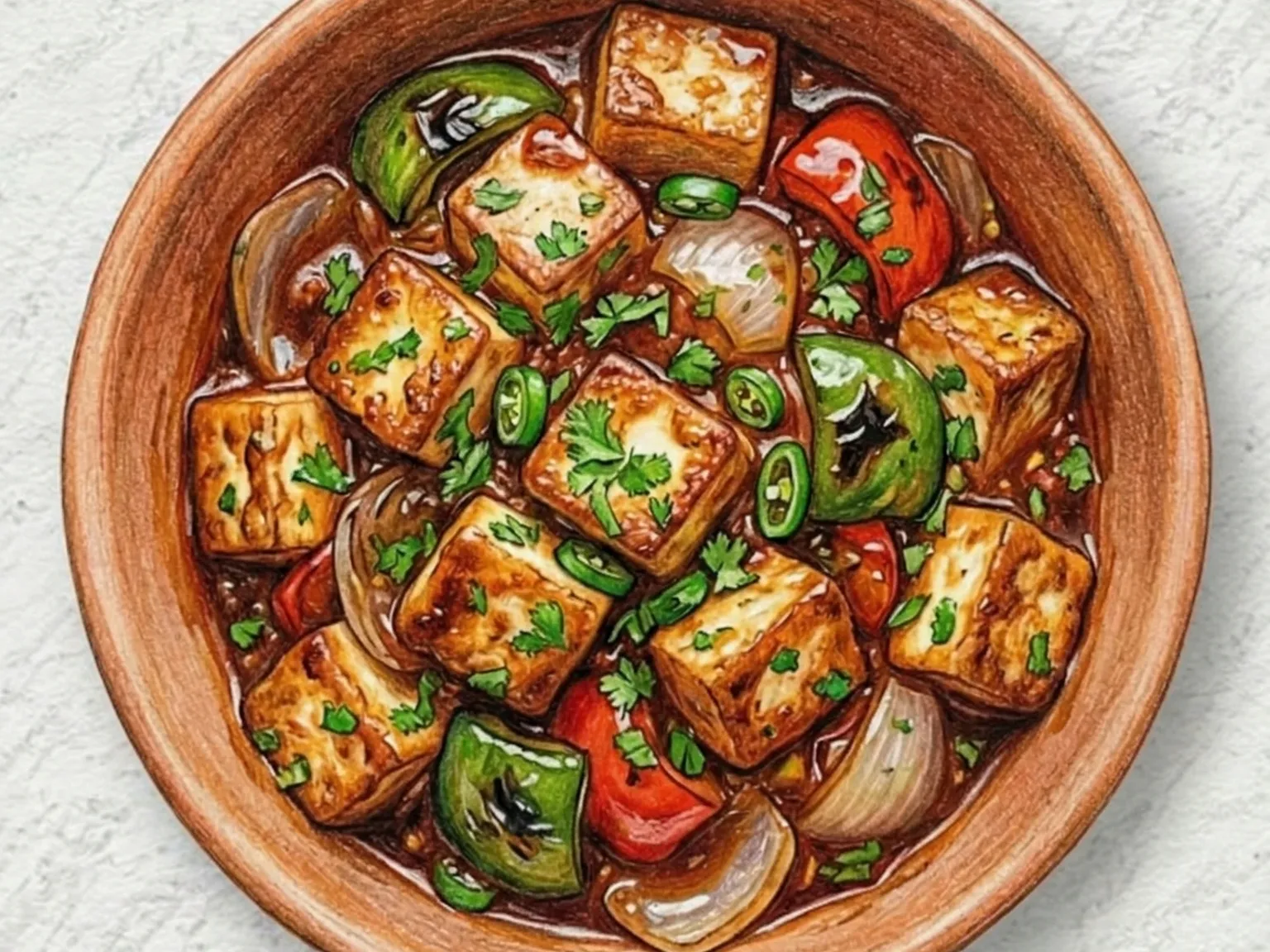
- Chili Paneer combines firm fried cheese cubes with spicy peppers in a high-heat wok stir-fry.
- Paneer holds its cube shape even under high wok heat
- Crisp exterior from cornstarch contrasts the soft interior
Key ingredients
Core cooking flow
- 1 Cut 250 g paneer into 2 cm cubes and pat away surface moisture with a towel if needed.
- 2 Heat a generous layer of oil in a wide pan over medium-high heat until it shimmers.
- 3 Remove the crisp paneer to a plate or rack so excess oil can drain.
Chili paneer belongs to Indo-Chinese cuisine, a fusion genre that emerged in the late nineteenth century when Hakka Chinese immigrants settled in Kolkata and began cooking with Indian ingredients and techniques. Cubes of paneer, India's firm fresh cheese that holds its shape under high heat without melting, are coated in cornstarch and deep-fried until a crisp shell forms, then tossed in a blazing-hot wok with diced garlic, green chilies, bell peppers, and onions, all brought together in a sauce built from soy sauce, chili sauce, tomato ketchup, and vinegar. The starchy crust absorbs the punchy sauce while shielding the soft, milky interior of the paneer, and the contrast between the crunchy shell and the yielding cheese inside is the defining pleasure of the dish. Two distinct styles exist: dry, where the sauce barely coats each cube and the dish is eaten as a starter or with drinks, and gravy, where a thicker, glossier sauce pools generously around the paneer for scooping with naan or ladling over fried rice. The flavor profile, salty soy meeting sour vinegar, sweet ketchup cutting through hot chili, is neither Chinese nor Indian but something entirely its own, a product of a specific immigrant community adapting to a new place while keeping familiar techniques alive.
Instructions
Read the steps as a cooking flow: prep, heat, seasoning, doneness control, and finish.
- 1Control
Cut 250 g paneer into 2 cm cubes and pat away surface moisture with a towel if needed.
Coat lightly with 2 tbsp cornstarch, turning each cube so all sides are covered, then shake off loose starch.
- 2Control
Heat a generous layer of oil in a wide pan over medium-high heat until it shimmers.
Add the paneer in one layer without crowding, then fry 1-2 minutes per side until the coating turns golden and crisp.
- 3Finish
Remove the crisp paneer to a plate or rack so excess oil can drain.
Leave only a small film of oil in the pan, because keeping the cheese over heat too long can make the cubes tough.
- 4Control
Mince 3 garlic cloves, then cut 1 onion and 1 bell pepper into bite-sized pieces before the pan gets hot.
Stir-fry the garlic over high heat for about 30 seconds, just until fragrant, not browned.
- 5Control
Add the onion and bell pepper, then stir-fry over high heat for about 2 minutes.
Stop while the onion edges look slightly translucent and the pepper still looks bright, so the vegetables keep some bite.
- 6Finish
Mix 1 tbsp soy sauce, 1.5 tbsp chili sauce, and 1 tsp rice vinegar, then pour it into the hot pan.
Boil 30-40 seconds, return the paneer, toss only 30 seconds, and serve before the sauce over-reduces.
After the steps
Pick a recipe that fits this dish.
Continue with shared ingredients, meal pairings, or a similar method.
Recipes That Go Well With This
More Asian →Based on shared ingredients and meal pairing
Palak Paneer (Indian Spinach Curry with Paneer Cheese)
Palak paneer is one of North India's most beloved vegetarian curries, pairing a bright spinach puree with cubes of mild, milky paneer cheese. Fresh spinach is blanched briefly and blended into a green sauce, combined with a base of sauteed onions, garlic, ginger, and tomatoes seasoned with garam masala. The paneer cubes are typically pan-seared first to form a light skin that holds their shape in the sauce while the interior stays soft and creamy. A swirl of heavy cream at the end rounds out the flavors, blending the earthy depth of spinach with warm spice and dairy richness.
Paneer Tikka (Indian Spiced Yogurt-Marinated Grilled Cheese Skewer)
Paneer tikka is an Indian grilled appetizer where cubes of paneer cheese and vegetables are marinated in spiced yogurt and cooked over high heat until charred at the edges. The marinade combines plain yogurt with chili powder, turmeric, garam masala, and lemon juice, creating a thick coating that clings to each cube. After marination, the spices penetrate the surface while the yogurt adds tang. Bell peppers and onion chunks are threaded between the paneer pieces, and their natural sugars caramelize during grilling. The goal is to cook quickly so the exterior gets smoky char marks while the inside stays soft. Mint chutney on the side completes the dish.
Mango Lassi
Mango lassi is an Indian yogurt drink made by blending ripe mango flesh with plain yogurt and milk until completely smooth. The concentrated tropical sweetness of ripe mango and the tangy acidity of yogurt balance each other so that the drink feels refreshing rather than cloying. A small amount of ground cardamom, typically around a quarter teaspoon, introduces a faintly floral, aromatic spice layer that lifts the drink away from an ordinary fruit smoothie and into something distinctly South Asian. Honey allows the sweetness to be calibrated against the specific ripeness of the mango being used. Using ingredients that have been chilled in the refrigerator beforehand produces a thick, cold lassi without needing much ice, avoiding the dilution that comes from blending a large quantity of ice cubes into an otherwise dense drink.
Poha (Indian Spiced Flattened Rice Breakfast with Peanuts)
Poha is a staple Indian breakfast built on flattened rice that has been briefly soaked in water until pliable. The cooking starts with a tempering of mustard seeds and curry leaves in oil, followed by sliced onion, green chili, and turmeric. The soaked flattened rice is folded in gently so the grains stay separate rather than clumping. Turmeric stains everything a warm yellow. Roasted peanuts tossed in at the end provide a crunchy counterpoint to the soft rice, and a generous squeeze of lemon brightens the entire dish. The city of Indore is famous for its poha, where vendors garnish each plate with freshly grated coconut and a handful of sev, a crispy chickpea-flour noodle snack. The dish comes together in under fifteen minutes and sits comfortably in the stomach all morning.
Serve with this
Kachumber Salad (Indian Kachumber salad)
Kachumber salad finely dices cucumber, tomato, and red onion, then tosses them with chopped cilantro, lime juice, ground cumin, chaat masala, and salt in a quick Indian raw vegetable preparation. Removing some of the seeds from the cucumber and tomato limits excess moisture so the dressing stays concentrated rather than watery. Soaking the diced red onion in cold water for three minutes draws out its harsh sharpness, letting it blend more smoothly with the other ingredients. Ground cumin lays down a warm, earthy undertone, and chaat masala layers a tangy, salty complexity over the lime acidity, lifting a simple combination of vegetables into something distinctly Indian. Chopping cilantro stems together with the leaves releases more of the herb's aromatic oils than leaves alone provide. Letting the dressed salad rest for about fifteen minutes before serving allows the flavors to meld so the final result is noticeably more cohesive.
Fettuccine Alfredo
Fettuccine Alfredo is an exercise in simplicity where technique matters more than a long ingredient list. Wide fettuccine noodles are tossed with unsalted butter and finely grated Parmigiano-Reggiano cheese, using starchy pasta water to create a smooth emulsion that clings to every strand. The original Roman recipe contains no cream at all - the silky texture comes from the marriage of melted butter fat, cheese protein, and the starch released by the pasta during cooking. The pan must stay off direct heat while tossing, as excessive temperature breaks the emulsion and turns the sauce grainy and clumped. Speed is essential: the dish should move from pan to plate in under a minute. Generous freshly cracked black pepper provides a sharp counterpoint to the rich, concentrated cheese flavor. Born in Rome in the early twentieth century, this pasta remains one of the most recognizable Italian dishes served worldwide.
Steak Rice Bowl (Seared Beef with Soy-Garlic Glaze over Rice)
A thick-cut beef steak is seared at high heat until a deep brown crust forms, then sliced and fanned over a bowl of hot rice. A glaze of soy sauce, garlic, and mirin is spooned over the slices, coating them in a glossy, caramelized finish. As the warm rice absorbs the pan juices, each spoonful carries the full weight of the beef's seared flavor. A runny fried egg or a small dab of wasabi on the side balances the richness with creaminess or heat. Controlling resting time and grain texture helps the ingredients cook evenly while keeping the final seasoning balanced.
Similar recipes
Aloo Gobi (Indian Cauliflower Potato Curry)
Aloo gobi is the kind of North Indian dish that appears in both roadside dhabas along Punjab highways and home kitchens across Uttar Pradesh, eaten by people with very different relationships to food. It is a dry preparation - no gravy, no broth - just potatoes and cauliflower coated in cumin, turmeric, and chili powder that forms a thin spice crust as the vegetables cook. Cumin seeds go into hot oil first, blooming their fragrance before the vegetables are added and turned to coat them evenly in the spiced fat. The lid goes on, trapping steam to cook the interiors while the base stays dry enough for browning to develop. Flipping once or twice is enough - too much movement breaks the crust and stews the vegetables instead of roasting them. The result: cauliflower edges that carry a faint char and a nutty depth, potato cubes that hold their structure with a floury, tender interior. Roti or plain steamed rice are the natural companions, and the spice notes actually sharpen as the dish cools, which makes it equally good packed for lunch the next day.
Crispy Chili Garlic Chicken
Kkanpunggi is a Korean-Chinese chicken dish where bone-in or boneless thigh pieces are coated in potato starch and deep-fried until the crust is completely shatter-crisp, then tossed quickly over high heat in a sauce built from garlic, dried red chilies, soy sauce, rice vinegar, and sugar. The sauce must go on while the chicken is still hot from the fryer: the heat helps the thin glaze bond to the surface without softening the coating, while allowing the seasoning to penetrate just enough. Leaving the chicken in the sauce any longer causes the starch shell to absorb moisture and go limp, which destroys the entire point of the dish. The balance of salty, sour, and sweet in the sauce coats each piece evenly, and the assertive garlic aroma combined with the slow heat of dried chilies forms the flavor signature that makes kkanpunggi instantly recognizable. Additional sliced fresh chilies, green or red, can be added at the end to control heat intensity to personal preference. Crisping the skin side of the thigh thoroughly during frying deepens both the textural contrast and the roasted savory aroma. This is one of the most popular anju dishes in Korea, routinely paired with beer or soju, and it must be eaten immediately while the crunch is intact.
Yu Xiang Eggplant (Sichuan Spicy Garlic Pork Eggplant)
Yu Xiang Qiezi is a Sichuan-style eggplant stir-fry with ground pork, doubanjiang, black vinegar, and sugar. The eggplant is pre-fried to firm it up so it holds its shape in the sauce, while the pork and doubanjiang create a spicy, aromatic oil base. Soy sauce, vinegar, and sugar layer sweet and sour notes over the heat, producing the characteristic Yu Xiang flavor profile. Garlic and ginger add fragrance, and the eggplant absorbs the sauce deeply so every bite releases a concentrated burst of seasoning.