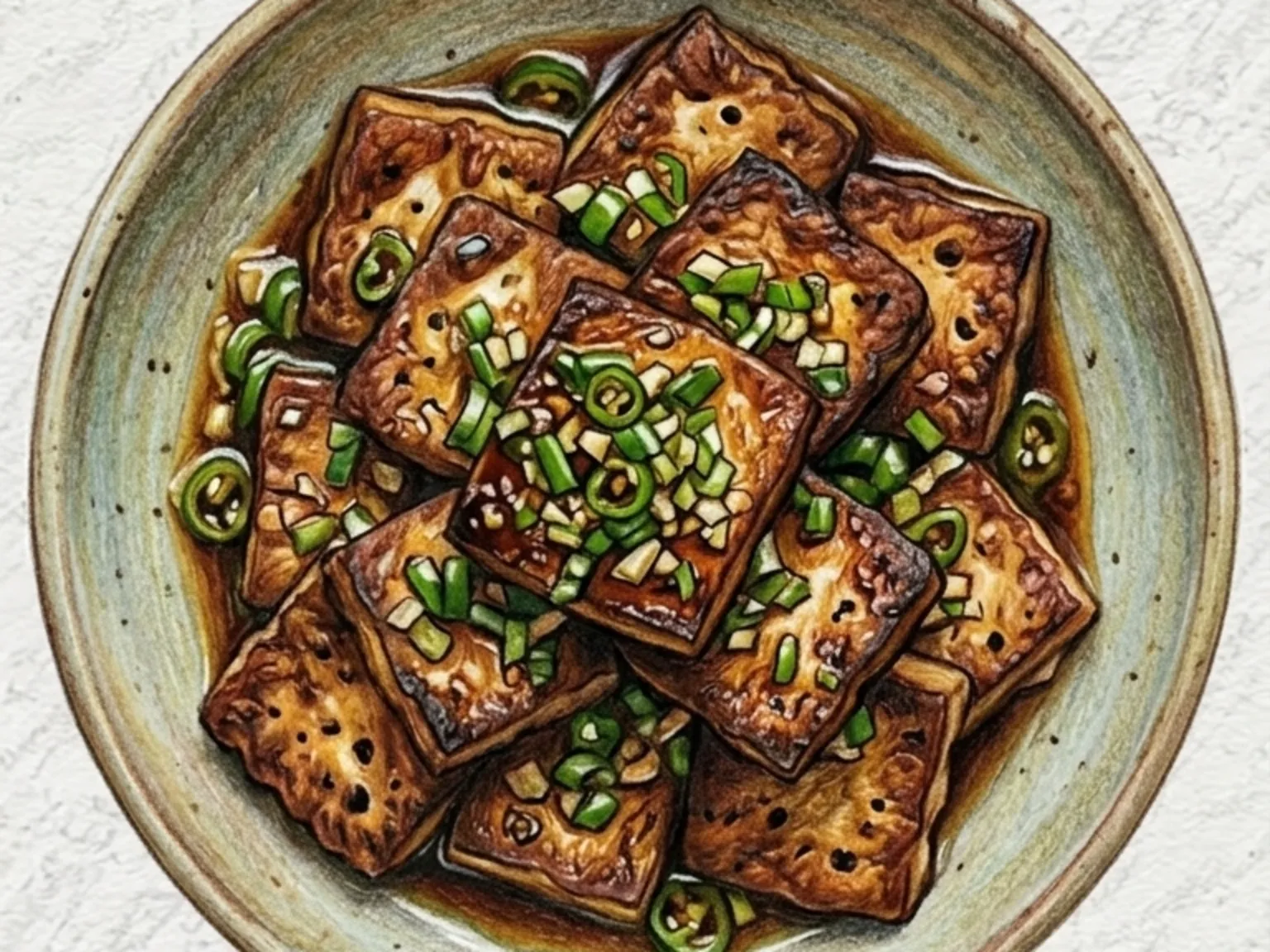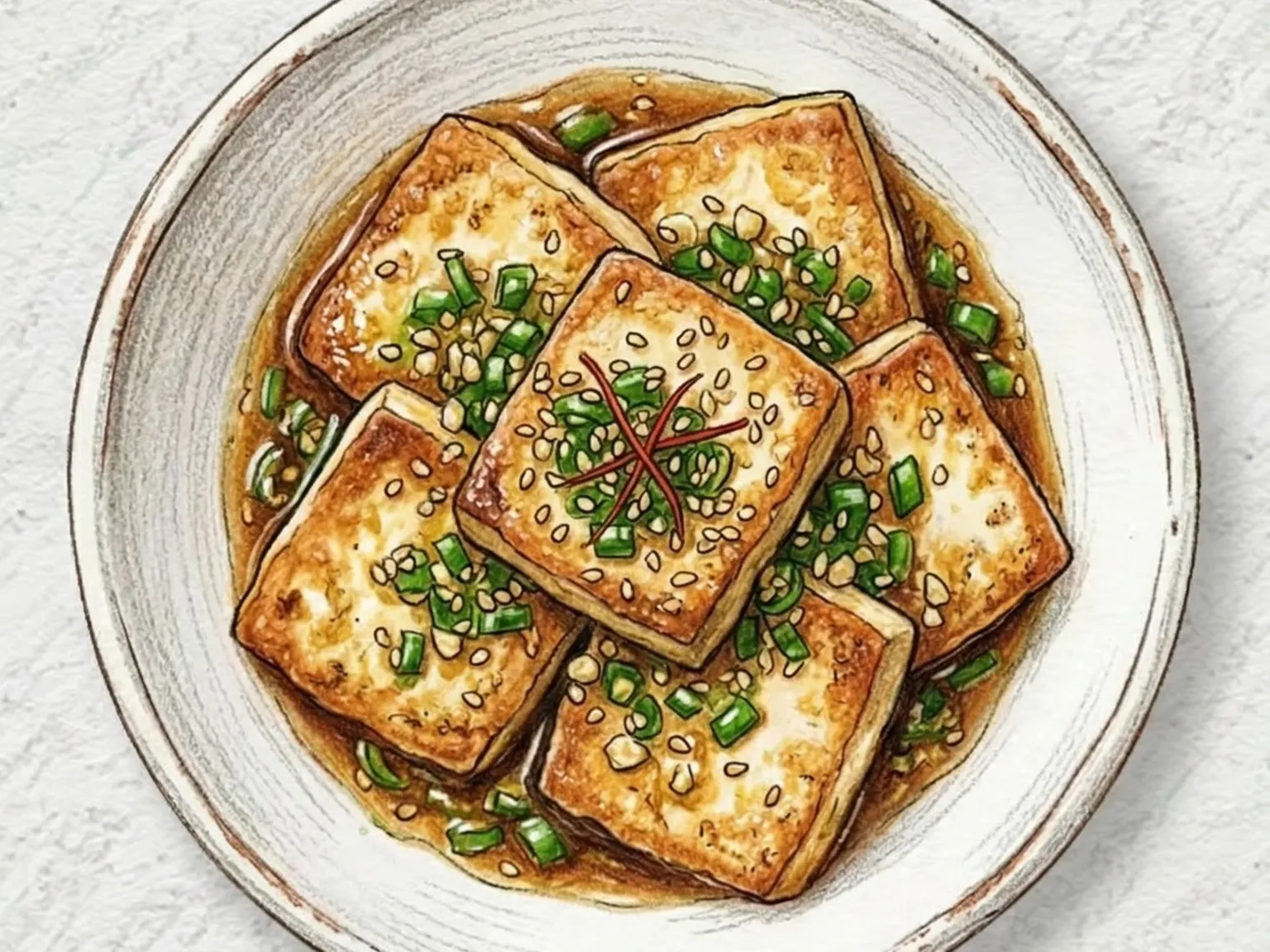
Korean Chili Soy Grilled Tofu

Korean Chili Soy Grilled Tofu

Quick answer

Chili-tofu-gui is a Korean pan-grilled tofu dish where firm tofu slices are browned on both sides, then glazed with a sauce of soy sauce, minced hot green chili, garlic...

What makes this special

  • Firm tofu slices are dried and browned before glazing for this Korean Chili Soy Grilled Tofu.
  • Thorough surface drying prevents oil splatter and enables a clean brown crust
  • Low-heat reduction of soy-chili sauce forms a glossy sweet-salty coating
Total time
24 min
Level
Easy
Servings
2 servings
Ingredients
7
Calories
210 kcal
Protein
14 g

Key ingredients

firm tofusoy saucehot green chiliminced garlicsesame oil

Core cooking flow

  1. 1 Drain 300g firm tofu and cut it into even 1.5cm slices.
  2. 2 Combine 2 tbsp soy sauce, 1 minced hot green chili, 1 tsp minced garlic, 1 t...
  3. 3 Heat a pan over medium heat and spread 1 tbsp cooking oil across the surface.

Chili-tofu-gui is a Korean pan-grilled tofu dish where firm tofu slices are browned on both sides, then glazed with a sauce of soy sauce, minced hot green chili, garlic, sesame oil, and sugar. Pressing moisture out of the tofu before cooking is essential for achieving a clean, golden-brown sear without oil spattering across the pan. Once the sauce is added, a brief simmer on low heat coats each slice in a glossy layer where the soy's saltiness, the sugar's sweetness, and the chili's sharp heat play against the tofu's neutral base. The dish works equally well as a weeknight side dish or as a quick drinking snack. Adding one tablespoon of water when simmering the sauce prevents it from reducing too sharply and ensures each slice is evenly coated rather than over-salted. A scattering of sesame seeds at the end is optional but recommended.

Prep 12min Cook 12min 2 servings

Instructions

Read the steps as a cooking flow: prep, heat, seasoning, doneness control, and finish.

6 steps
  1. 1
    Prep

    Drain 300g firm tofu and cut it into even 1.5cm slices.

    Press both sides with paper towels until the surface feels dry, since excess moisture causes splattering and keeps the tofu from browning cleanly.

  2. 2
    Season

    Combine 2 tbsp soy sauce, 1 minced hot green chili, 1 tsp minced garlic, 1 tsp sesame oil, and 0.5 tsp sugar.

    Stir until the sugar dissolves so the glaze seasons evenly instead of clumping in the pan.

  3. 3
    Control

    Heat a pan over medium heat and spread 1 tbsp cooking oil across the surface.

    Arrange the tofu in a single layer and leave it undisturbed for about 3 minutes so a firm brown crust can form.

  4. 4
    Heat

    Flip the slices when the bottom is golden and the edges look set.

    Cook the second side for about 3 minutes, using a thin spatula and gentle pressure so the tofu does not tear or crumble.

  5. 5
    Control

    Lower the heat to low and spoon the sauce evenly over the tofu.

    If the pan looks too dry or salty, add 1 tbsp water, then simmer for 1 to 2 minutes until the glaze turns glossy.

  6. 6
    Finish

    Turn off the heat when the sauce clings to the tofu with a glossy coating and only a little remains in the pan.

    Transfer carefully to a plate and serve warm while the crust is still defined.

After the steps

Pick a recipe that fits this dish.

Continue with shared ingredients, meal pairings, or a similar method.

Recipes That Go Well With This

More Grilled →

Based on shared ingredients and meal pairing

Korean Spicy Stir-Fried Anchovies
Serve together Side dishes

Korean Spicy Stir-Fried Anchovies

Spicy stir-fried anchovies (maeun myeolchi-bokkeum) toss medium-sized dried anchovies in a gochujang-gochugaru glaze, occupying the opposite end of the flavor spectrum from the sweet jiri-myeolchi version and targeting adult palates. Medium anchovies are larger and thicker than the tiny variety, requiring individual head-and-gut removal to eliminate bitterness - a tedious prep step that nonetheless determines the dish's clean finish. After dry-toasting to drive off moisture, the anchovies simmer in a sauce of gochujang, gochugaru, soy sauce, oligosaccharide, and minced garlic until each piece is coated in a rust-colored glaze. The gochujang's fermented heat combines with gochugaru's vivid red to create both flavor depth and visual appeal. The larger anchovy size delivers a satisfying crunch that lingers alongside a lasting savory umami. Heat intensity is adjustable via gochugaru quantity - adding chopped cheongyang chili ratchets it up another notch. This banchan doubles as a soju drinking snack, appearing as frequently on bar tables as on dinner tables.

Korean Chicken Mayo Rice Bowl
Serve together Rice

Korean Chicken Mayo Rice Bowl

Chikin mayo deopbap is a Korean rice bowl topped with pan-fried chicken breast glazed in a sweet-salty soy sauce and finished with a generous drizzle of mayonnaise. The chicken is cooked over medium-high heat until the exterior turns golden and slightly crisp while the inside stays moist. A soy sauce and sugar glaze added near the end caramelizes around each piece, creating a sticky coating that clings well. The mayonnaise adds creaminess and a mild tang that balance the saltiness of the glaze; when it hits the warm chicken and rice, it loosens slightly into a sauce that seeps down through the bowl. With only a handful of everyday ingredients and around fifteen minutes of cooking time, it matches the convenience of a packaged lunch box while delivering noticeably better flavor and texture.

Korean Bok Choy Kimchi (Gochugaru Fermented Quick)
Serve together Kimchi

Korean Bok Choy Kimchi (Gochugaru Fermented Quick)

Cheonggyeongchae kimchi is a bok choy kimchi prepared by halving the heads lengthwise, salting them for twenty minutes, and coating each leaf layer with a paste of gochugaru, salted shrimp, anchovy fish sauce, and sweet rice paste. Keeping the salting time short preserves the crisp snap of the stems, while the leaves soften just enough to hold the seasoning. Julienned scallions and carrot add color and textural variety, and adjusting the fish sauce quantity based on the salted shrimp salinity keeps the overall salt level balanced. After four hours of room-temperature fermentation followed by refrigeration, this kimchi is ready within a day and offers a lighter, crunchier character than traditional napa cabbage kimchi.

Korean Pan-Fried Tofu with Soy Dipping Sauce
Similar recipe Grilled

Korean Pan-Fried Tofu with Soy Dipping Sauce

Firm tofu is sliced 1.5 cm thick, patted thoroughly dry with paper towels, and lightly salted before going into an oiled pan for four to five minutes per side. Removing surface moisture is the critical step - dry tofu does not splatter and develops an even golden crust. A dipping sauce of soy sauce, Korean chili flakes, chopped green onion, and sesame oil accompanies the fried slices, and the crisp exterior absorbs just enough sauce to add flavor while the soft interior stays mild. With minimal ingredients, this dish is entirely about the textural contrast between the crunchy shell and the silky center.

Similar recipes

Korean Tofu Jeon (Golden Egg-Coated Pan-Fried Tofu)
Grilled Easy

Korean Tofu Jeon (Golden Egg-Coated Pan-Fried Tofu)

Dubu-jeon is a Korean pan-fried tofu dish and a standard side dish in everyday home cooking as well as a fixture on ancestral rite tables. Firm tofu is sliced to about 1 cm thickness, seasoned with salt and pepper, dusted in a thin layer of flour to help the coating adhere, dipped in beaten egg, then fried on each side in a lightly oiled pan until the exterior turns golden and set. Pressing the tofu before cooking is the most important preparatory step: wrapping the slices in paper towels and placing a heavy object on top for at least fifteen minutes removes enough moisture to prevent the oil from splattering and allows the egg coating to bond tightly to the surface. Three to four uninterrupted minutes per side over medium heat are needed to develop an even golden crust without burning the egg; turning the pieces too often strips the batter away and leaves patches of bare tofu. The fried tofu is mild and nutty on its own, but a dipping sauce of soy sauce mixed with a small amount of vinegar and red pepper flakes adds salt, acidity, and heat that transform the simple base into something more complex. Eaten hot, the egg coating is thin and slightly crisp; as it cools the exterior softens while the interior remains tender.

🍺 Bar Snacks 🏠 Everyday
Prep 12min Cook 8min 2 servings
Korean Grilled Dried Pollack
Grilled Medium

Korean Grilled Dried Pollack

Dried pollack strips are briefly moistened, coated in a paste of gochujang, soy sauce, and oligosaccharide syrup, then grilled low and slow. The slow heat lets the glaze seep into the chewy dried fish without charring, building layers of spicy-sweet flavor. A touch of sesame oil applied at the finish adds a toasted aroma that rounds out the dish. The sweet-spicy glaze filling the kitchen with fragrance as the fish grills is part of what makes this a beloved home-cooked snack.

🍺 Bar Snacks 🏠 Everyday
Prep 15min Cook 8min 2 servings
Korean Grilled Bellflower Root
Grilled Medium

Korean Grilled Bellflower Root

Bellflower root is shredded lengthwise, soaked in salted water, and blanched for one minute to draw out its characteristic bitterness without eliminating it entirely. A ten-minute soak in a sauce of gochujang, gochugaru, soy sauce, oligosaccharide syrup, garlic, and sesame oil seasons the root before it hits a medium-heat pan for three to four minutes per side. The result has a crisp, crunchy bite - distinct from any other vegetable - with a red-glazed surface that carries moderate heat. Open-flame grilling adds a smoky dimension that pairs well with the spicy coating, and sesame seeds provide a finishing touch.

🍺 Bar Snacks 🏠 Everyday
Prep 20min Cook 10min 2 servings
Korean Pan-Fried Tofu with Seasoned Soy Sauce
Side dishes Easy

Korean Pan-Fried Tofu with Seasoned Soy Sauce

Dubu buchim yangnyeom is one of the most common Korean home banchan, a dish that appears on the table because the technique is straightforward and the ingredients are always in the kitchen. Firm tofu is cut into thick slices, salted lightly to pull moisture from the surface, then pan-fried in a minimal amount of oil until both faces develop a golden, crackling crust while the interior stays soft and warm. The yangnyeom jang, the seasoned sauce, is assembled directly at the stove: soy sauce, gochugaru, chopped scallion, garlic, and sesame oil stirred together, then spooned over the hot tofu the moment it comes out of the pan. The residual heat of the tofu gently wilts the raw scallion and opens the sesame oil, releasing its fragrance into the sauce without any additional cooking. The ratio of ingredients in the sauce varies from household to household, with some reducing the gochugaru and adding toasted sesame seeds, and others adding cheongyang chili for extra heat. In Korean temple cuisine, this preparation has served for centuries as the primary protein source in meat-free meals.

🏠 Everyday 🍱 Lunchbox
Prep 10min Cook 12min 2 servings
Korean Spicy Braised Tofu
Stir-fry Easy

Korean Spicy Braised Tofu

Spicy dubu-jorim pan-sears firm tofu slabs cut 1.5 centimeters thick until golden on both sides, then braises them in a sauce of soy sauce, gochugaru, garlic, and sugar. Searing first firms the tofu so it holds its shape through the eight-minute simmer, during which onion and green onion cook alongside in the reducing liquid. The chili flakes deliver a direct, persistent heat that penetrates the tofu as the sauce thickens, balanced by the sugar's sweetness. A final circle of sesame oil ties the flavors together with a roasted, nutty aroma.

🏠 Everyday 🍱 Lunchbox
Prep 10min Cook 15min 2 servings

Tips

Dry tofu well before cooking for better browning.

Nutrition (per serving)

Calories
210
kcal
Protein
14
g
Carbs
7
g
Fat
14
g