Charim

2686 Korean & World Recipes

2686+ Korean recipes, clean and organized. Ingredients to instructions, all at a glance.

Korean Chive Salad with Doenjang Dressing

Korean Chive Salad with Doenjang Dressing

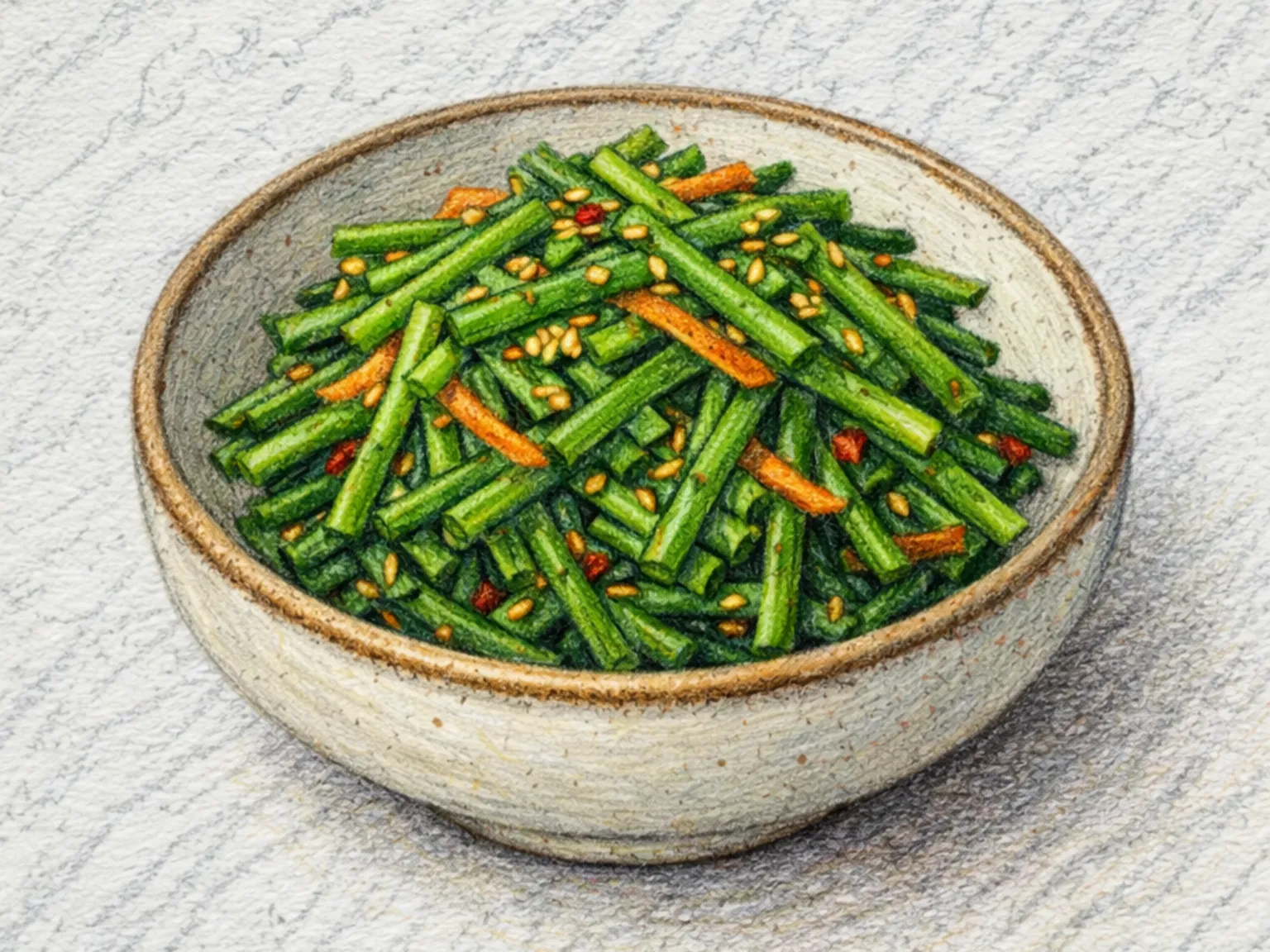
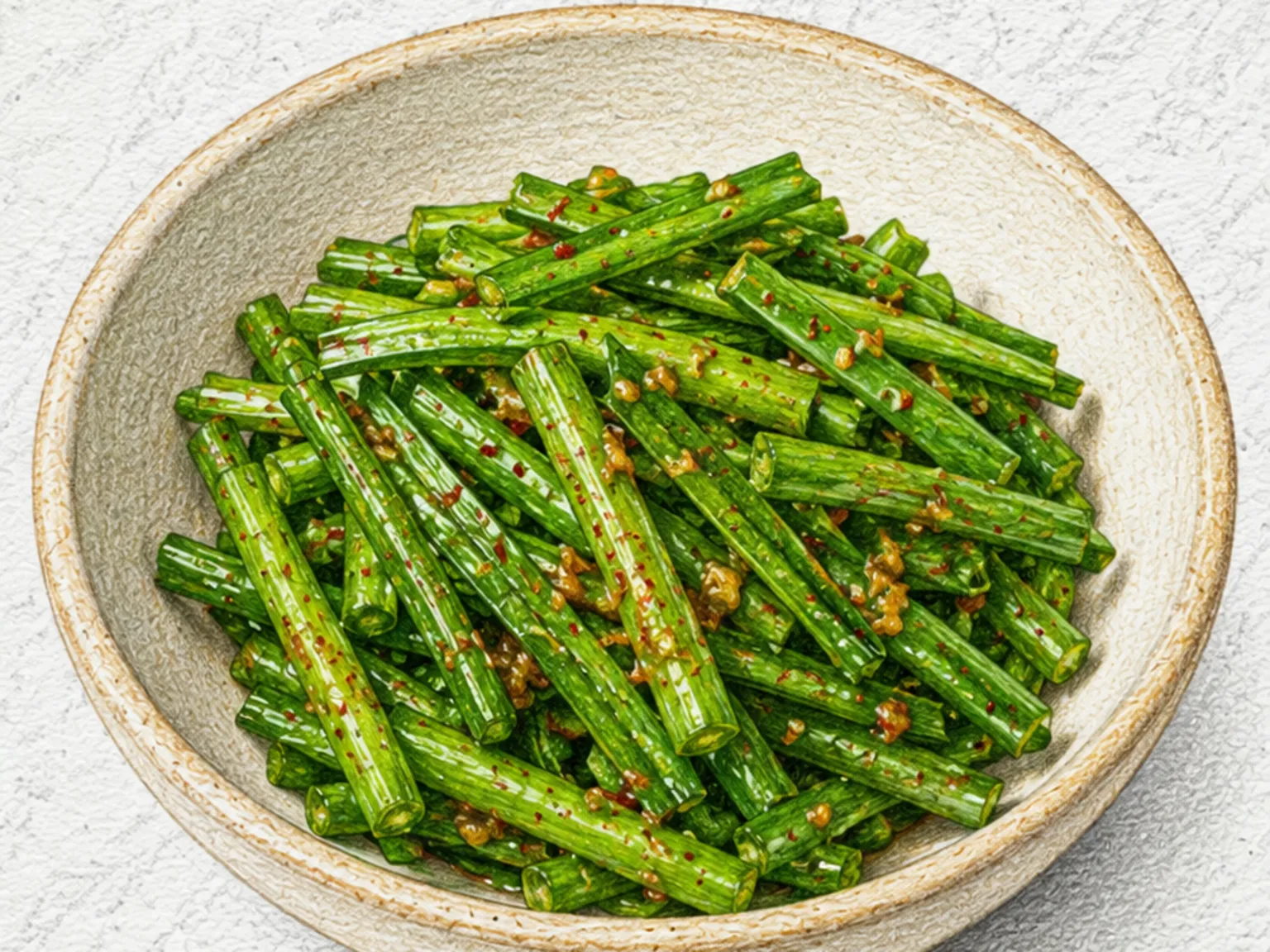
Garlic chives - buchu - have a sharper, more pungent bite than Western chives, and Koreans dress them raw to preserve that kick. Chives are cut, rinsed in cold water to crisp them, then tossed for only 20 seconds with a doenjang dressing spiked with vinegar and gochugaru. Over-mixing draws out moisture and turns the dish limp. The fermented paste clings to the flat blades, delivering a salty-funky punch with each bite. Best assembled minutes before serving.

Prep 8min Cook 2min 2 servings

Adjust Servings

2servings
servings

Instructions

  1. 1

    Cut chives into 5 cm pieces, rinse in cold water, and drain thoroughly.

  2. 2

    Whisk doenjang, vinegar, chili flakes, and garlic in a bowl.

  3. 3

    Add sesame oil; if too thick, loosen with 1 tbsp water.

  4. 4

    Add chives and toss gently by hand for only 20 seconds.

  5. 5

    Sprinkle ground sesame, toss once more, and serve immediately.

🛒Shop Ingredients on Amazon

As an Amazon Associate, we may earn from qualifying purchases.

Tips

Over-mixing can make chives smell grassy; keep tossing brief.
Adding vinegar near the end keeps its aroma brighter.

Nutrition (per serving)

Calories
95
kcal
Protein
3
g
Carbs
8
g
Fat
6
g

More Recipes

Korean Cucumber Doenjang Salad
Side dishesEasy

Korean Cucumber Doenjang Salad

Oi-doenjang-muchim dresses cucumber in a doenjang-based seasoning - a milder alternative to the gochugaru-forward oi-muchim, foregrounding the fermented soybean paste's savory depth over spicy heat. Cucumber is sliced into half-moons or diagonal cuts and salted for five minutes to draw out moisture; skipping this step dilutes the dressing into a watery puddle. The seasoning blends doenjang, soup soy sauce, minced garlic, sesame oil, and sesame seeds, with the doenjang quantity being the critical ratio - too much and the dish is aggressively salty, too little and the cucumber's blandness dominates. Roughly one tablespoon of doenjang to two cucumbers is the working proportion. The cucumber's cool moisture meets doenjang's deep umami to produce a combination that is refreshing yet substantial enough to anchor a rice meal, especially in summer. This banchan must be eaten promptly after assembly - over time, osmotic pressure draws water from the cucumber and collapses its crunch. Served alongside grilled meat, the doenjang's savoriness complements the char while cleansing the palate.

🏠 Everyday🍱 Lunchbox
Prep 10min2 servings
Korean Chwinamul with Doenjang
Side dishesEasy

Korean Chwinamul with Doenjang

This variation pairs blanched chwinamul with doenjang - Korea's fermented soybean paste - creating a banchan where two strong flavors meet. Greens are boiled two minutes, squeezed, and cut before dressing with doenjang, soup soy sauce, garlic, sesame oil, and perilla powder. The paste's funky, salty depth clings to porous leaves, amplifying natural bitterness into something complex. Five minutes of resting lets seasoning penetrate fully. Often made with dried chwinamul reconstituted in winter.

🏠 Everyday🍱 Lunchbox
Prep 18minCook 7min4 servings
Korean Seasoned Glasswort Salad
Side dishesEasy

Korean Seasoned Glasswort Salad

Sebalnamul-muchim features 220 grams of glasswort, a succulent coastal plant that carries a natural salinity from the tidal flats where it grows. A 10-second blanch in boiling water is enough to barely soften the thin stems while preserving their distinctive pop when bitten. The dressing of gochugaru, vinegar, plum extract, and sesame oil coats the tender shoots without masking their inherent briny flavor. Thinly sliced onion adds a sweet crunch, and the plum extract mellows the vinegar's sharpness into a rounded tartness. Because no additional salt is needed, the final seasoning relies entirely on the balance between acid, sweetness, and the glasswort's own minerality.

🥗 Light & Healthy🏠 Everyday
Prep 8minCook 1min4 servings
Korean Seasoned Garlic Chives
Side dishesEasy

Korean Seasoned Garlic Chives

Unlike buchu kimchi, this raw chive muchim uses soy sauce and vinegar rather than fish sauce, producing a brighter, acidic result. The chives stay raw, tossed by hand under twenty seconds - longer and they bruise, releasing liquid. Gochugaru adds color and heat, while vinegar and sugar create a sweet-tart dressing contrasting with natural pungency. Must be eaten the same day before the chives wilt. A sharp, punchy side that cuts through oily main dishes.

🏠 Everyday🍱 Lunchbox
Prep 12minCook 3min2 servings
Smoked Duck Chive Salad (Korean Chive Salad)
SaladsEasy

Smoked Duck Chive Salad (Korean Chive Salad)

Smoked duck chive salad sears smoked duck in a hot pan for two to three minutes to render excess fat, then combines it with Korean chives cut into four-centimeter lengths, shredded cabbage, and sliced bell pepper in a soy-mustard dressing. The duck's dense smokiness and fatty richness are tempered head-on by the chives' sharp, pungent grassiness, and a dressing of soy sauce, mustard, vinegar, honey, and sesame oil layers a nose-clearing heat with sweet-sour acidity to clean the palate after each oily bite. Crisp cabbage provides textural relief against the chewy duck meat, and toasted sesame seeds finish with a nutty fragrance. Adding the chives last preserves their fresh aroma, and keeping the searing time short prevents the duck from turning tough.

🍺 Bar Snacks🥗 Light & Healthy
Prep 15minCook 8min2 servings
Korean Stir-fried Chives and Shrimp
Stir-fryEasy

Korean Stir-fried Chives and Shrimp

Deveined shrimp are dried thoroughly and seared over high heat until their shells turn pink, then tossed briefly with garlic chives for a stir-fry that takes under ten minutes from cutting board to plate. Removing every trace of surface moisture before the shrimp hit the pan is the single most important step; residual water generates steam and turns the sear into a braise, leaving the shrimp pale and soft instead of lightly caramelized. Sliced garlic goes into the oil first to build an aromatic base that clings to every ingredient. One tablespoon of soy sauce paired with a teaspoon of oyster sauce amplifies the natural seafood umami without tipping the dish into excessive saltiness, and black pepper sharpens the finish. The chives must go in last and cook for no more than sixty seconds; any longer and they lose their vivid color and turn stringy. At 220 calories with 26 grams of protein per serving, this dish fills the role of a satisfying yet light side that pairs well with steamed rice or slides neatly into a packed lunch.

🏠 Everyday🍱 Lunchbox
Prep 12minCook 8min2 servings
More Side dishes →