Chocolate Mousse
Quick answer
Chocolate mousse achieves a fundamental paradox: it tastes intensely of chocolate yet feels almost weightless on the tongue.
What makes this special
- High cacao dark chocolate provides bitter depth that does not rely on heavy sugar.
- 70% cacao or higher gives bitter depth that doesn't rely on sugar
- Cream folded in three additions keeps air bubbles evenly distributed
Key ingredients
Core cooking flow
- 1 Break 180 g dark chocolate into small, even pieces and place them in a heatproof bowl.
- 2 Melt the chocolate slowly for 3-5 minutes, stirring only occasionally so it does not seize or scorch.
- 3 Whisk 2 egg yolks with 30 g sugar for about 2 minutes.
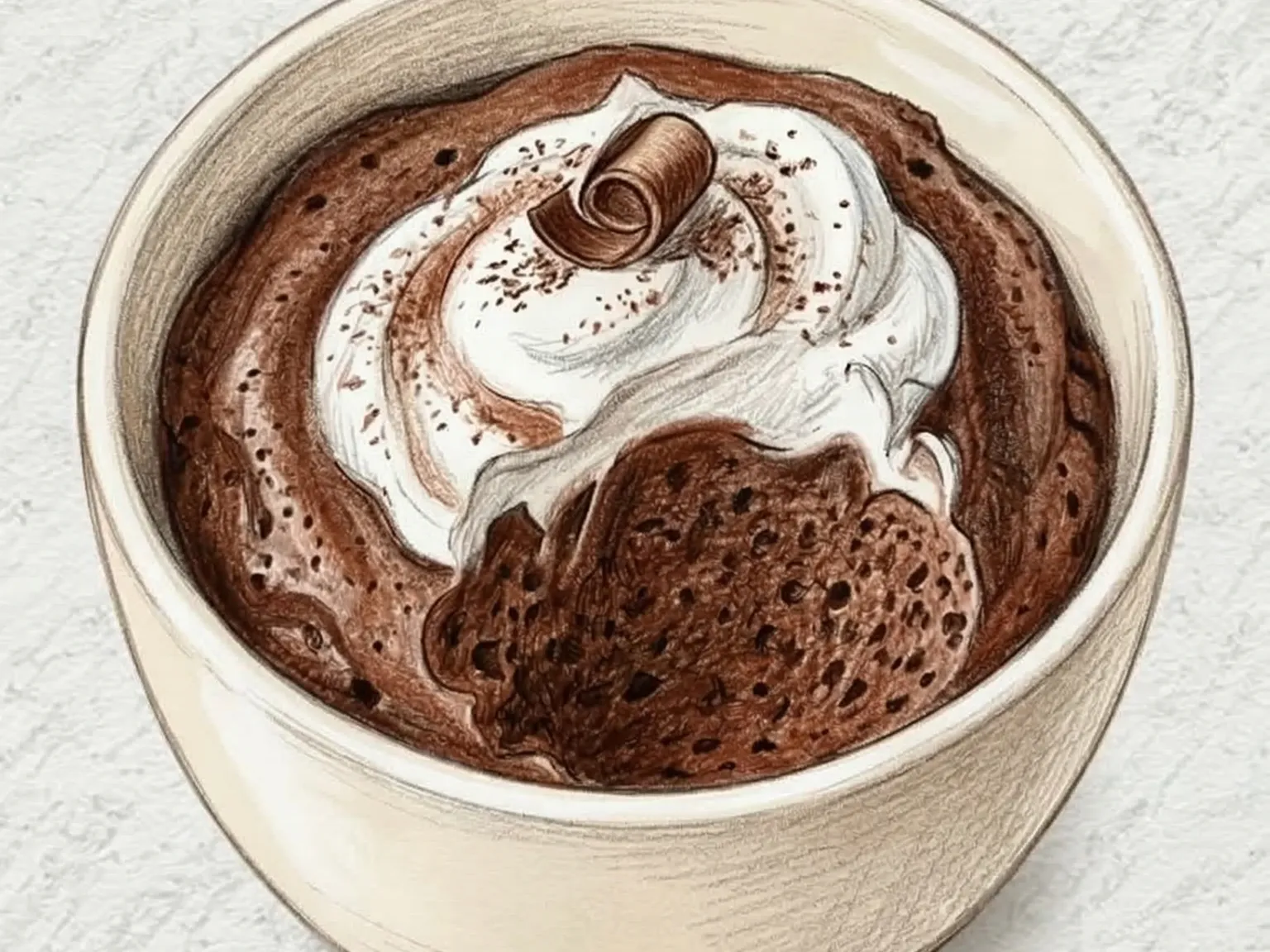
Chocolate mousse achieves a fundamental paradox: it tastes intensely of chocolate yet feels almost weightless on the tongue. Dark chocolate is melted gently over a bain-marie and cooled until warm but no longer hot enough to deflate the cream. Whipped cream is then folded in three separate additions: the first loosens the chocolate mass, the second begins to lighten its density, and the third introduces the full airy volume that defines mousse. Some recipes add egg yolks for richness and a custard-like body, while beaten egg whites lift the texture even further. Chilling for at least two hours allows the mousse to set to a consistency that holds its shape on a spoon yet dissolves on contact with the palate. The cacao percentage governs both the bitterness and the intensity of the finished dessert, and chocolate above seventy percent produces a mousse that reads as unmistakably adult in its depth. A small measure of vanilla extract rounds the sharper edges of the cocoa without competing for attention. Mousse can be served directly in individual cups, spread into a tart shell to firm overnight, or piped into layers with cream for a more composed plated dessert. A dusting of unsweetened cocoa through a fine sieve over the top surface is the minimal finishing touch.
Instructions
Read the steps as a cooking flow: prep, heat, seasoning, doneness control, and finish.
- 1Control
Break 180 g dark chocolate into small, even pieces and place them in a heatproof bowl.
Bring water to a simmer, lower the heat, and set the bowl above the pan without letting its base touch the water.
- 2Step
Melt the chocolate slowly for 3-5 minutes, stirring only occasionally so it does not seize or scorch.
When almost smooth, remove it from the heat and cool it to 37-40°C before adding the yolks.
- 3Season
Whisk 2 egg yolks with 30 g sugar for about 2 minutes.
Continue until the mixture looks paler, slightly thicker, and the sugar granules feel mostly dissolved when rubbed between your fingers.
- 4Prep
Add the yolk mixture to the cooled chocolate in 2-3 additions.
Stir each addition just until the surface turns glossy again, stopping before the mixture becomes dense from overmixing.
- 5Season
Add 0.5 teaspoon vanilla extract and 0.1 teaspoon salt to 300 ml cold heavy cream.
Whip until soft peaks form, stopping while the cream still looks smooth rather than grainy or stiff.
- 6Finish
Fold the whipped cream into the chocolate in three additions, lifting from the bottom to keep the air in.
Spoon into cups or ramekins, chill for at least 2 hours, and serve cold once it holds its shape.
After the steps
Pick a recipe that fits this dish.
Continue with shared ingredients, meal pairings, or a similar method.
Recipes That Go Well With This
More Baking →Based on shared ingredients and meal pairing
Chocolate Souffle
Chocolate souffle folds stiffly beaten egg white meringue into a base of melted dark chocolate and egg yolks, then bakes it in a buttered ramekin at high heat until it rises dramatically above the rim. The intense oven heat expands the air trapped within the meringue, pushing the souffle upward while the exterior sets into a thin, delicate crust and the interior remains a molten, near-liquid chocolate cream. Breaking through the top with a spoon releases a rush of hot, intensely flavored chocolate from inside, and that moment of opening is the point of the entire dessert. The souffle begins to deflate within a minute or two of leaving the oven, so it must go directly to the table without delay. Coating the inside of the ramekin with butter followed by sugar is not optional: this surface preparation gives the batter traction to climb straight upward rather than sticking to the sides and collapsing unevenly. Using chocolate with a high cocoa content produces a deeper, more defined contrast between bitterness and sweetness. The most critical technical step is folding the meringue into the chocolate base using broad, circular motions with a spatula and a minimum number of strokes, because overmixing deflates the air bubbles that are responsible for the rise. Serve dusted with powdered sugar or alongside a scoop of vanilla ice cream.
Chocolate Lava Cake
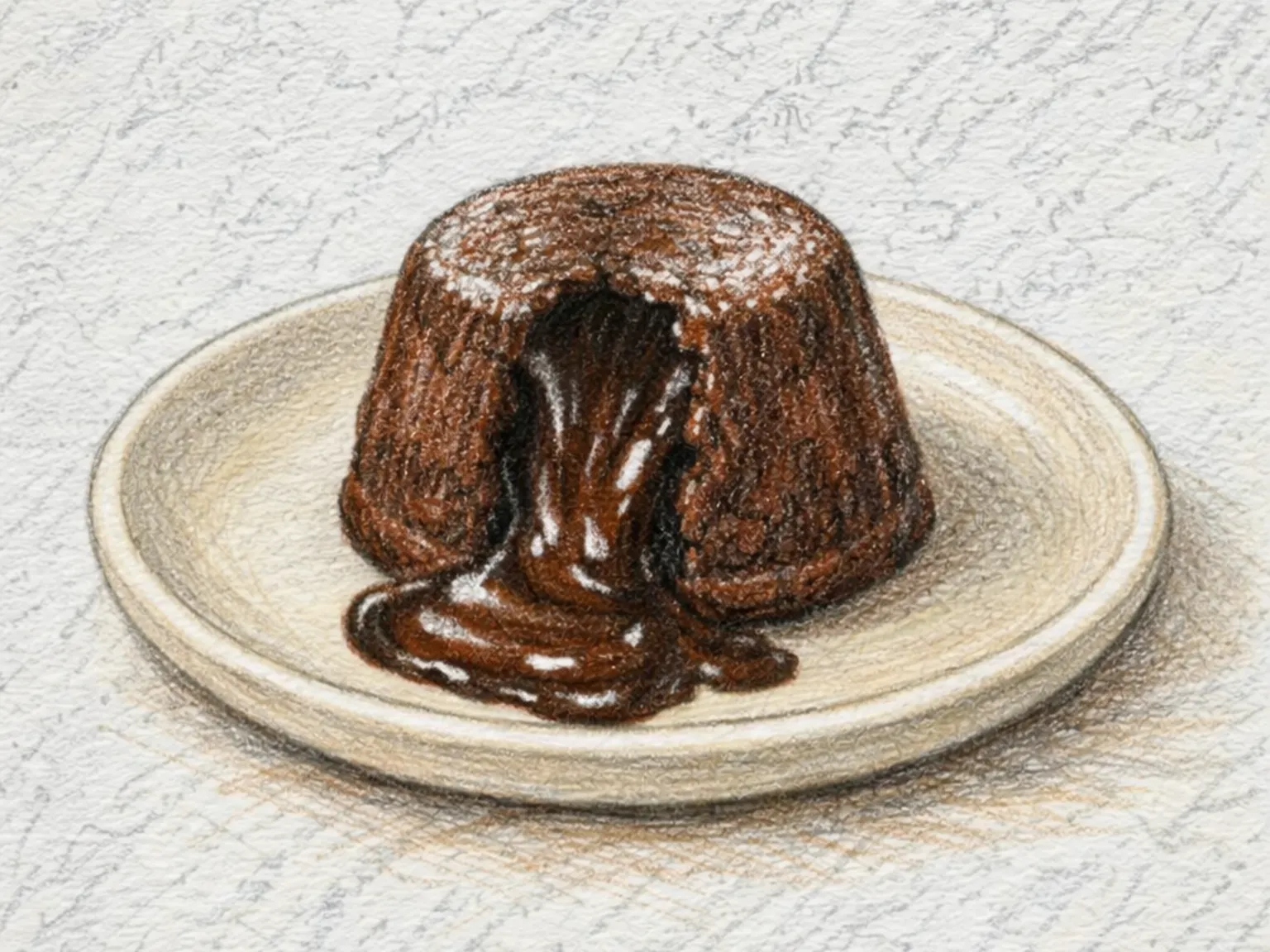
Chocolate lava cake bakes a batter of melted dark chocolate, butter, whole eggs, egg yolks, sugar, and a small measure of flour in buttered ramekins at 220 degrees Celsius for ten to twelve minutes, producing a set crust and molten center from a single brief baking window. The high oven temperature firms the outside and top of the batter into cake while the core stays liquid, so breaking the surface with a spoon releases a slow pour of concentrated warm chocolate. High-cacao dark chocolate provides a complex, bittersweet depth that pairs with the richness of butter fat, and vanilla extract softens and rounds the overall aroma. Timing controls everything in this recipe: overbaking by even two minutes sets the center solid and destroys the signature flow. The edges of each ramekin should feel just firm when pressed lightly through a towel at the ten-minute mark. Ramekins can be filled ahead and refrigerated, but the baking time then needs an extra one to two minutes to account for the colder starting temperature. Serving with a scoop of vanilla ice cream or a spoonful of cold heavy cream creates a striking contrast between the hot, dense chocolate interior and the chilled, lighter dairy.
Clafoutis (French Baked Cherry Custard Dessert)
Clafoutis is a traditional French dessert from the Limousin region made by arranging fresh cherries in a buttered baking dish, then pouring over a thin batter of eggs, sugar, milk, and flour and baking at 180 degrees Celsius for thirty to thirty-five minutes. The batter is considerably thinner than pancake batter, and the result when baked is a texture that sits between a creamy custard and a light sponge -- the edges puff and turn golden while the center around the cherries stays moist and yielding. Using unpitted cherries is the traditional method: the pits release a faint almond scent during baking that perfumes the surrounding batter in a way that pitted fruit cannot replicate. The cherries also hold their shape better with the pits in. Vanilla extract deepens the egg-and-milk base, and the cherries' own tart juice seeps into the batter during baking, creating concentrated pockets of fruit flavor that balance the overall sweetness. Clafoutis is served directly from the baking dish, typically dusted with powdered sugar and brought to the table while still warm, because the custard texture softens and loosens slightly as it cools, making the warm version noticeably more appealing. Made with blueberries, plums, or apricots instead of cherries, the dessert takes a different name -- flaugnarde -- though the technique remains identical.
Gateau au Chocolat (Rich Flourless Chocolate Cake)
Gateau au chocolat is a French-style chocolate cake built on an unusually high ratio of dark chocolate and butter relative to flour. Many versions use only a trace of flour or none at all, so the structure depends almost entirely on eggs and melted chocolate rather than on gluten development. Whipping the egg whites separately into a glossy meringue and folding them into the batter introduces just enough trapped air to prevent the result from feeling dense and leaden; the finished cake is simultaneously rich and melt-on-the-tongue light. Straight from the oven the center appears underset, but as the cake cools fully on a rack the interior firms to a fudge-like consistency and a thin, crackly shell forms across the top. Sliced, it reveals an intensely dark cross-section that looks as concentrated as it tastes. A fine dusting of powdered sugar provides visual contrast against the dark surface, and a generous spoonful of lightly whipped, unsweetened cream tempers the bittersweet intensity. The cake actually improves if left overnight: moisture redistributes evenly through the crumb and the chocolate flavor deepens noticeably, making it an ideal candidate for baking a full day ahead of birthdays or dinner gatherings where a reliable, make-ahead dessert is needed.
Serve with this
Beet and Goat Cheese Salad
Beet and goat cheese salad begins with whole beets wrapped in foil and roasted at 200°C for forty-five to sixty minutes, long enough for their raw, earthy undertone to convert almost entirely into a concentrated, caramel-adjacent sweetness. Peeling the skins while the beets are still warm requires only the pressure of a paper towel - they slip off cleanly - and slicing them before they cool preserves the vivid crimson-purple cross-section that makes the dish visually striking. Crumbled goat cheese placed on the warm slices softens slightly, and its tangy acidity cuts through the dense sweetness of the roasted root rather than competing with it. Walnuts toasted briefly in a dry pan lose much of their raw bitterness, developing a nuttiness that bridges the mineral quality of the beet and the dairy sharpness of the cheese. Balsamic reduction does more than dress the plate: its concentrated sweet-tart intensity ties the separate components into a coherent whole. Arugula underneath the beet slices provides a peppery bitterness that sharpens the contrast against the sweetness, giving the salad a complexity well beyond what its short ingredient list suggests. A simple dressing of extra-virgin olive oil and lemon juice over the greens keeps the balance light and clear.
Walnut Cakes (Korean Bite-Sized Red Bean Walnut Pastries)
Hodu-gwaja are bite-sized Korean walnut cakes baked in a dedicated walnut-shaped cast iron mold, made from a batter of cake flour, baking powder, eggs, milk, and melted butter. Each cavity is half-filled with batter, then topped with sweet red bean paste and a toasted walnut half, sealed with a second pour of batter, and cooked over medium-low heat for six to eight minutes per side. The result is a thin, lightly browned shell encasing a moist, soft interior. Toasting the walnut halves at 160 degrees Celsius for five minutes beforehand makes a noticeable difference: the finished cakes carry a deeper, more fragrant nut aroma compared to those made with untoasted walnuts. Resting the batter for ten minutes before using it relaxes the gluten, which reduces air pockets during pouring and produces a smoother exterior surface. The cake originated as a regional specialty of Cheonan in South Chungcheong Province and has since become one of the most recognized snacks sold at highway rest stops and traditional markets across the country.
Dongdongju (Korean Unfiltered Fermented Rice Wine)
Dongdongju is a traditional Korean unfiltered rice wine made by steaming short-grain and sweet rice together, then fermenting the cooked grain with nuruk starter and a small amount of dry yeast for seven days. Unlike makgeolli, it passes through a coarse sieve only once, leaving rice grains floating on the surface -- a trait that gives the drink its name and provides a distinctly chewy grain texture with each sip. Stirring the mash twice daily ensures the nuruk breaks down the starches evenly throughout fermentation, and keeping the temperature low after day three prevents the batch from over-fermenting. A pinch of salt added at the finish tempers residual sweetness without flattening the fermented grain character. Home-brewed dongdongju tends to carry a more pronounced rice fragrance and a heavier body than commercial makgeolli, and its flavor shifts noticeably day by day as fermentation continues.
Similar recipes
Chestnut Madeleine (French Shell Cake with Chestnut Butter Batter)
Chestnut madeleine is a small French cake baked in shell-shaped molds with chestnut paste folded directly into the batter. The chestnut brings a warm, starchy sweetness that layers with butter and honey, producing a flavor that is understated but noticeably complex. The signature dome, known as the hump, rises properly only when the batter is rested in the refrigerator for at least an hour before baking, then transferred directly into a hot oven. This temperature shock is what drives the rapid rise in the center. The crumb is light and moist, and the chestnut flavor comes through clearly rather than being absorbed by the butter. Warm milk or a latte amplifies the roasted chestnut notes, and the compact size makes these ideal for packaging as gifts.
Croquembouche (French Caramel-Glazed Cream Puff Tower Centerpiece)
Croquembouche is a French celebration centerpiece constructed by dipping cream-filled choux puffs in hot caramel and stacking them into a tall conical tower. Each profiterole is baked until the interior is hollow and dry, filled with vanilla pastry cream, then submerged briefly in caramelized sugar that hardens into a thin shell on contact and bonds each puff to its neighbors. As the tower rises, caramel strands are stretched between the puffs, cooling into a web of spun sugar threads that wrap around the entire structure. A finished tower can stand several feet tall, and guests detach individual puffs from the top downward to eat. Cracking the hardened caramel shell with teeth reveals soft choux pastry underneath and cold cream inside, a progression of textures that plays out in a single bite. The name itself comes from the French for crunching in the mouth. In France the croquembouche is a traditional centrepiece at weddings and christenings, where it stands in place of a tiered cake.