Chocolate Souffle
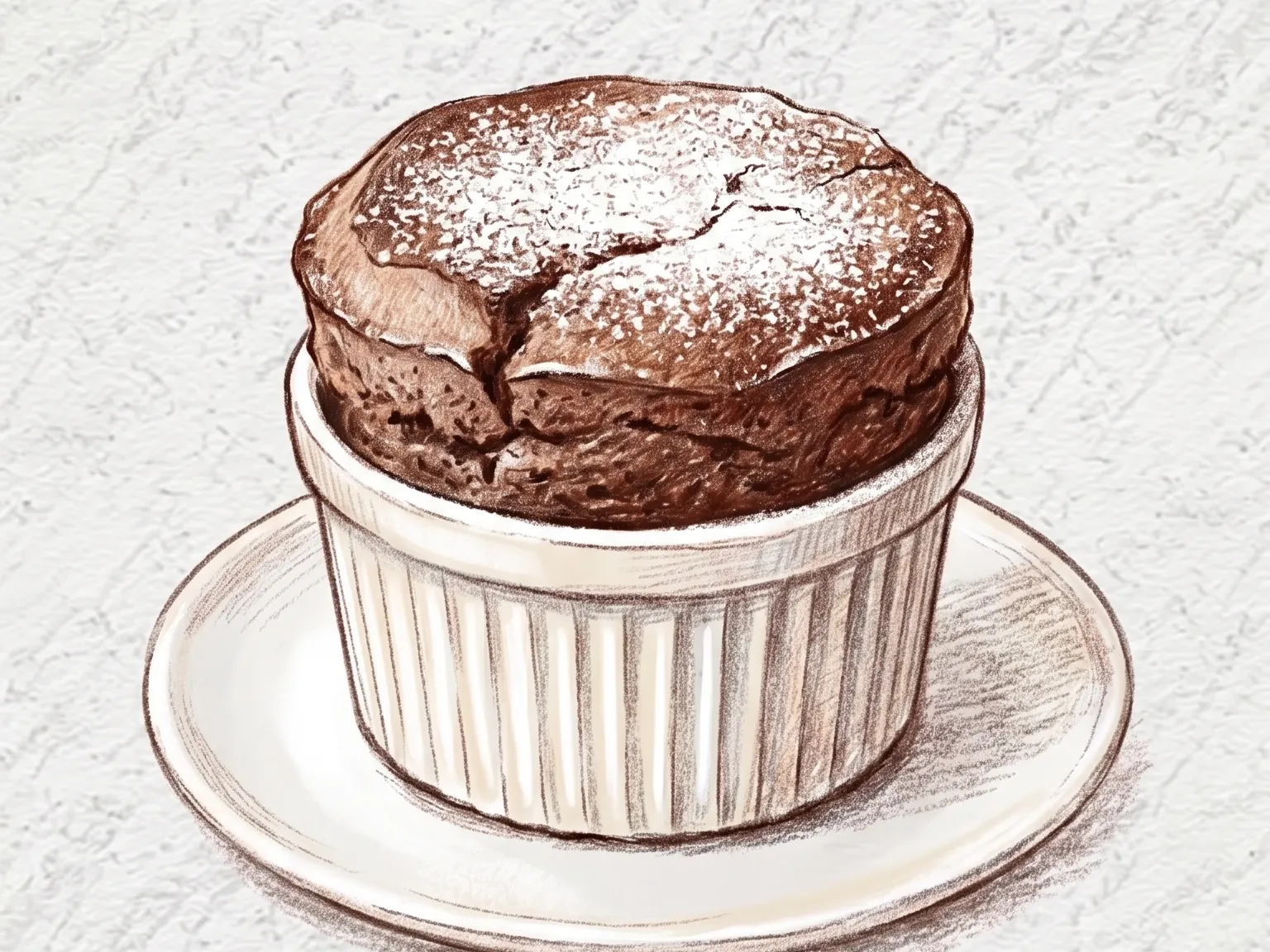
Chocolate souffle is built on a foundation of melted dark chocolate and egg yolk base into which stiffly beaten egg whites are folded. In the oven's intense heat, the air trapped in the meringue expands rapidly, pushing the souffle upward above the rim of its ramekin in a dramatic rise. The exterior sets into a thin, fragile crust while the interior remains molten - somewhere between a baked custard and a warm chocolate sauce. The moment of service is critical: a souffle begins to deflate within a minute or two of leaving the oven, so it must be rushed to the table and eaten immediately. Breaking through the top with a spoon releases a rush of hot, intensely flavored chocolate from within. The ramekins are prepared by coating the interior with butter and sugar, which gives the batter something to grip as it climbs. Despite its reputation for difficulty, the technique is straightforward - the challenge is timing, not skill.
Adjust Servings
Instructions
- 1
Butter ramekins and coat with sugar.
- 2
Melt chocolate and butter, then whisk in yolks.
- 3
Whip egg whites with sugar to stiff peaks.
- 4
Fold meringue into chocolate base in 2-3 additions.
- 5
Bake at 200C for 12-15 minutes and serve immediately.
As an Amazon Associate, we may earn from qualifying purchases.
Tips
Nutrition (per serving)
More Recipes

Chocolate Mousse
Chocolate mousse is a French dessert that achieves a paradox: it tastes intensely of chocolate yet feels weightless on the tongue. Dark chocolate is melted gently and cooled to a temperature warm enough to remain fluid but cool enough not to deflate the cream. Whipped cream is folded in three additions - the first loosens the chocolate, the second begins to lighten it, and the third introduces the airy volume that defines mousse. Some recipes add egg yolks for richness or beaten egg whites for extra lift, but the core is always the marriage of chocolate and cream. After chilling for at least two hours, the mousse sets to a consistency that holds its shape on a spoon yet dissolves immediately on the palate. The cacao percentage of the chocolate determines the bitterness and intensity - seventy percent or higher produces a mousse with pronounced dark chocolate character. A drop of vanilla extract rounds the edges without intruding.

Creme Brulee
Creme brulee is a French custard dessert made from just four components: egg yolks, heavy cream, sugar, and vanilla bean. Hot cream infused with vanilla seeds is tempered into beaten yolks and sugar, then poured into ramekins and baked in a water bath at low heat. The water bath moderates the temperature, preventing the custard from curdling or developing bubbles, yielding a surface as smooth as silk. After thorough chilling, a thin layer of sugar is sprinkled on top and caramelized with a torch until it forms a glassy, amber-colored crust. The ritual of cracking through that crust with a spoon is as integral to the experience as the flavor. Beneath lies cold, trembling custard that melts on the tongue, while the hot caramel introduces a bittersweet crunch.

French Macarons
French macarons are small, round almond meringue sandwich cookies that demand precision at every step. The shells are made from finely ground almond flour, powdered sugar, and a meringue base, mixed with a technique called macaronage - folding the batter until it flows like lava and forms a smooth, glossy surface when piped. A properly baked macaron has a smooth, domed top, a ruffled ring called the foot at its base, and a thin crisp shell that yields to a chewy, slightly moist interior. The filling between the shells - buttercream, ganache, or fruit curd - carries the primary flavor. Varieties range from classic vanilla and pistachio to raspberry, salted caramel, and yuzu. After assembly, macarons must rest in the refrigerator for at least twelve hours, during which moisture from the filling softens the shells into a unified, melt-in-the-mouth texture.

Ile Flottante (Poached Meringue on Vanilla Custard)
Ile flottante presents a cloud of poached meringue floating on a pool of chilled vanilla custard sauce. Stiffly beaten egg whites are shaped into rounds and gently poached in hot milk, cooking just enough to set the exterior while the center remains airy and marshmallow-soft. The custard beneath is a creme anglaise made from egg yolks, sugar, milk, and vanilla bean, cooked slowly until it coats the back of a spoon with a silky consistency. The contrast between the weightless meringue and the rich, creamy sauce defines the eating experience: each spoonful combines something ethereal with something indulgent. Thin threads of caramel drizzled over the meringue just before serving add a brittle sweetness and a golden visual accent. Despite having only a handful of components, the dessert demands precision at every stage.

Chocolate Lava Cake
Chocolate lava cake bakes a batter of melted dark chocolate, butter, eggs, sugar, and a small amount of flour in ramekins at high heat for a brief window, producing a set exterior with a molten chocolate core. At 220 degrees Celsius for ten to twelve minutes, the edges firm into a soft cake while the center stays liquid - breaking the surface releases a stream of warm, concentrated chocolate. The bittersweet depth of dark chocolate combines with the butterfat to create a dense, velvety richness, while vanilla extract rounds out the flavor. Timing is critical: overbaking by even two minutes solidifies the center and eliminates the signature lava effect.

Clafoutis (French Baked Cherry Custard Dessert)
Clafoutis is a traditional French dessert from the Limousin region, made by pouring a thin batter of eggs, sugar, milk, and flour over fresh cherries arranged in a buttered baking dish. Baking at 180 degrees Celsius for thirty to thirty-five minutes puffs the batter into a texture between a pancake and a baked custard - golden and lightly set at the edges, moist and tender around the fruit. The cherries release their tart juice into the surrounding batter during baking, creating pockets of concentrated fruit flavor. Vanilla extract rounds out the egg-and-milk base. Serving the clafoutis slightly warm rather than fully cooled preserves its soft, custardy consistency.