Korean Cold Vinegar Mustard Chicken Soup
Soups Medium

Korean Cold Vinegar Mustard Chicken Soup

Quick answer

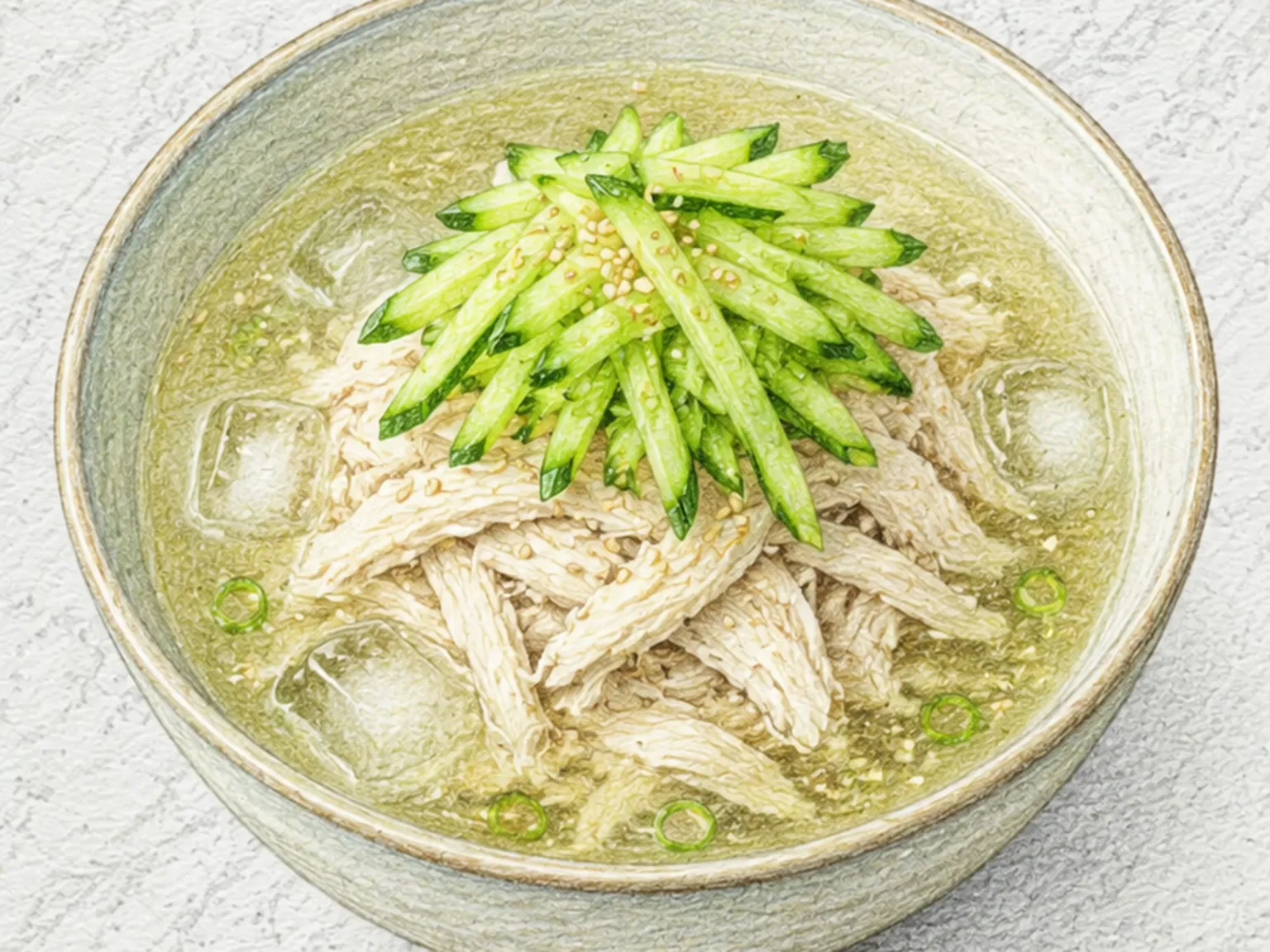
Chogye-tang is a chilled Korean chicken soup where boiled, shredded breast meat sits in an ice-cold broth sharpened with rice vinegar and hot mustard paste.

What makes this special

  • Chogye-tang provides a chilled chicken breast soup sharpened with tangy rice vinegar and hot mustard paste.
  • Broth must be fully chilled; warmth kills the sharp vinegar-mustard balance
  • Hand-torn chicken breast soaks up the cold sour broth between its fibers
Total time
75 min
Level
Medium
Servings
4 servings
Ingredients
7
Calories
245 kcal
Protein
31 g

Key ingredients

chicken breastwatercucumbervinegarhot mustard

Core cooking flow

  1. 1 Place 500g chicken breast and 1.7L water in a pot over medium heat.
  2. 2 Lift out the chicken breast and let it cool through.
  3. 3 Strain the broth through a sieve to remove foam and small solids.

Chogye-tang is a chilled Korean chicken soup where boiled, shredded breast meat sits in an ice-cold broth sharpened with rice vinegar and hot mustard paste. The broth must be thoroughly refrigerated before seasoning and serving - at a warm temperature the mustard loses its sharp bite and the vinegar's acidity becomes dull, collapsing the defining tang that makes the dish what it is. Shredding the chicken along its grain rather than chopping it allows the cold, pungent broth to soak into every fiber rather than sitting on the surface of the meat. Julienned cucumber layered on top provides a crisp, cooling contrast to the shredded meat. The flavor logic mirrors that of Pyongyang-style cold noodles - sour, spicy, and bracingly cold - but replaces starch with lean protein, making it a lighter and more protein-forward meal. Historically associated with royal court cuisine as a restorative summer dish, it continues to be eaten in the same cold format during the hottest months.

Prep 35min Cook 40min 4 servings
Recipes by ingredient → chicken breast cucumber vinegar

Instructions

Read the steps as a cooking flow: prep, heat, seasoning, doneness control, and finish.

6 steps
  1. 1
    Control

    Place 500g chicken breast and 1.7L water in a pot over medium heat.

    Once it starts simmering, skim off the foam and cook for about 20 minutes so the broth stays clean.

  2. 2
    Step

    Lift out the chicken breast and let it cool through.

    Do not shred it while hot, because the meat loses moisture more easily, so wait until it is comfortable to handle.

  3. 3
    Season

    Strain the broth through a sieve to remove foam and small solids.

    Let the steam fade at room temperature, then refrigerate it until fully cold before seasoning.

  4. 4
    Season

    Shred the cooled chicken breast thinly along the grain.

    Avoid chopping it into short pieces, because longer fibers absorb the cold seasoned broth more evenly between the strands.

  5. 5
    Season

    Stir 2 tbsp vinegar, 1 tsp hot mustard, 1 tbsp sugar, and 0.7 tsp salt into the cold broth.

    Add the mustard gradually and taste, since its sharpness changes the balance quickly.

  6. 6
    Finish

    Julienne 120g cucumber and place it over the shredded chicken in bowls.

    Pour the cold seasoned broth over the top and serve immediately; add ice only when an extra cold bowl is wanted.

After the steps

Pick a recipe that fits this dish.

Continue with shared ingredients, meal pairings, or a similar method.

Recipes That Go Well With This

More Soups →

Based on shared ingredients and meal pairing

Chogye Guksu (Korean Cold Chicken Noodles)
Shared ingredient: chicken breast Noodles

Chogye Guksu (Korean Cold Chicken Noodles)

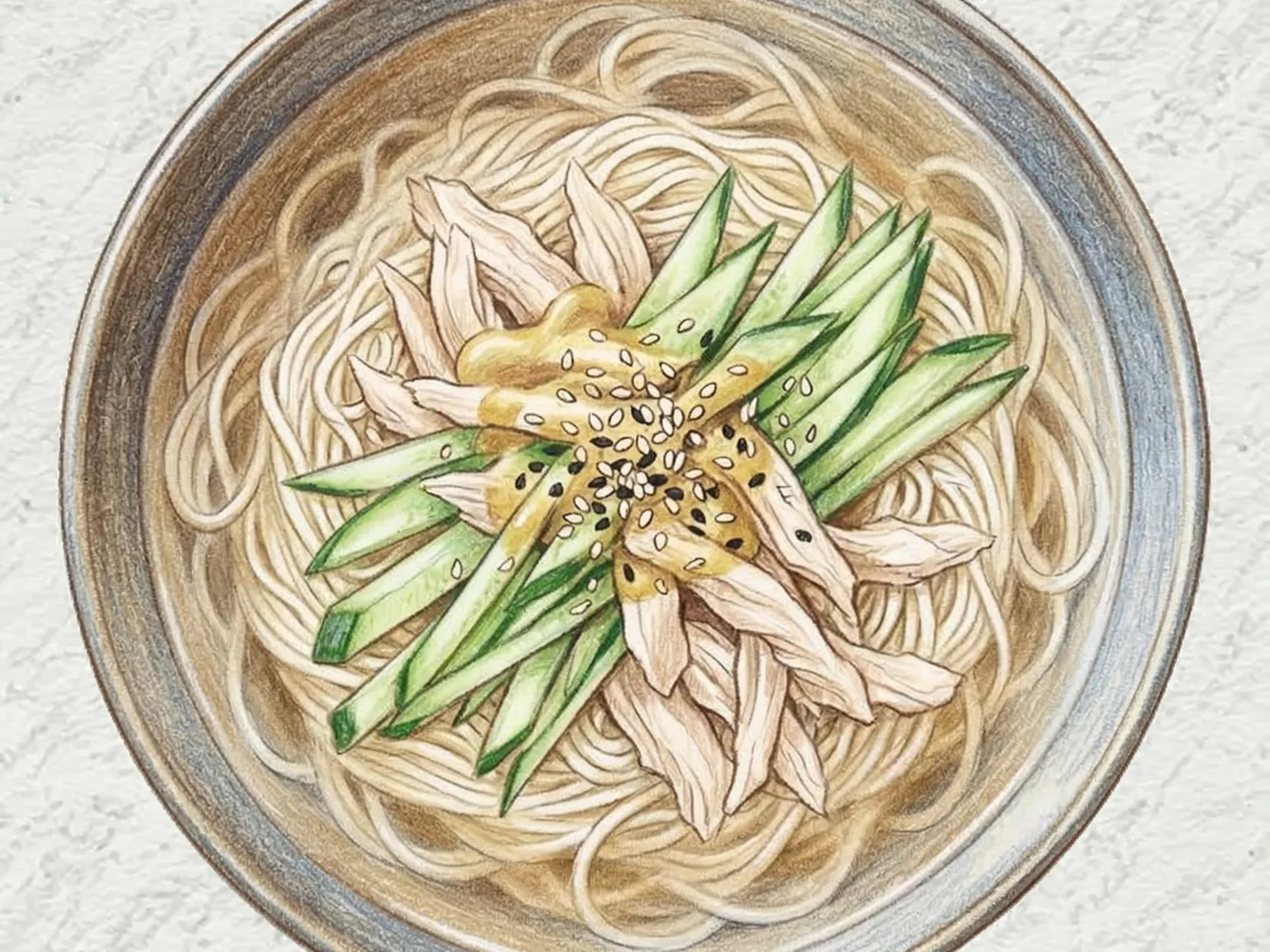
Shredded poached chicken and julienned cucumber top thin wheat noodles served in an icy mustard-vinegar chicken broth. The broth starts as a clear, clean chicken stock, then gains its defining sharpness from dissolved mustard powder and rice vinegar, delivering a nasal tingle and bright acidity that revive the appetite on sweltering days. The chicken, torn along the grain into thin strips, adds lean protein without weight, while sliced Korean pear contributes a crisp, mildly sweet counterpoint that keeps the bowl from feeling heavy. Mustard heat flares briefly on the palate and fades quickly, leaving behind the savory clarity of well-made stock. Keeping the broth thoroughly chilled through service is essential: it prevents the noodles from softening and preserves the contrast that defines this dish. Floating a few ice cubes in the bowl ensures the temperature holds from the first chopstickful to the last.

Korean Yuja Chicken Cold Somyeon
Shared ingredient: chicken breast Noodles

Korean Yuja Chicken Cold Somyeon

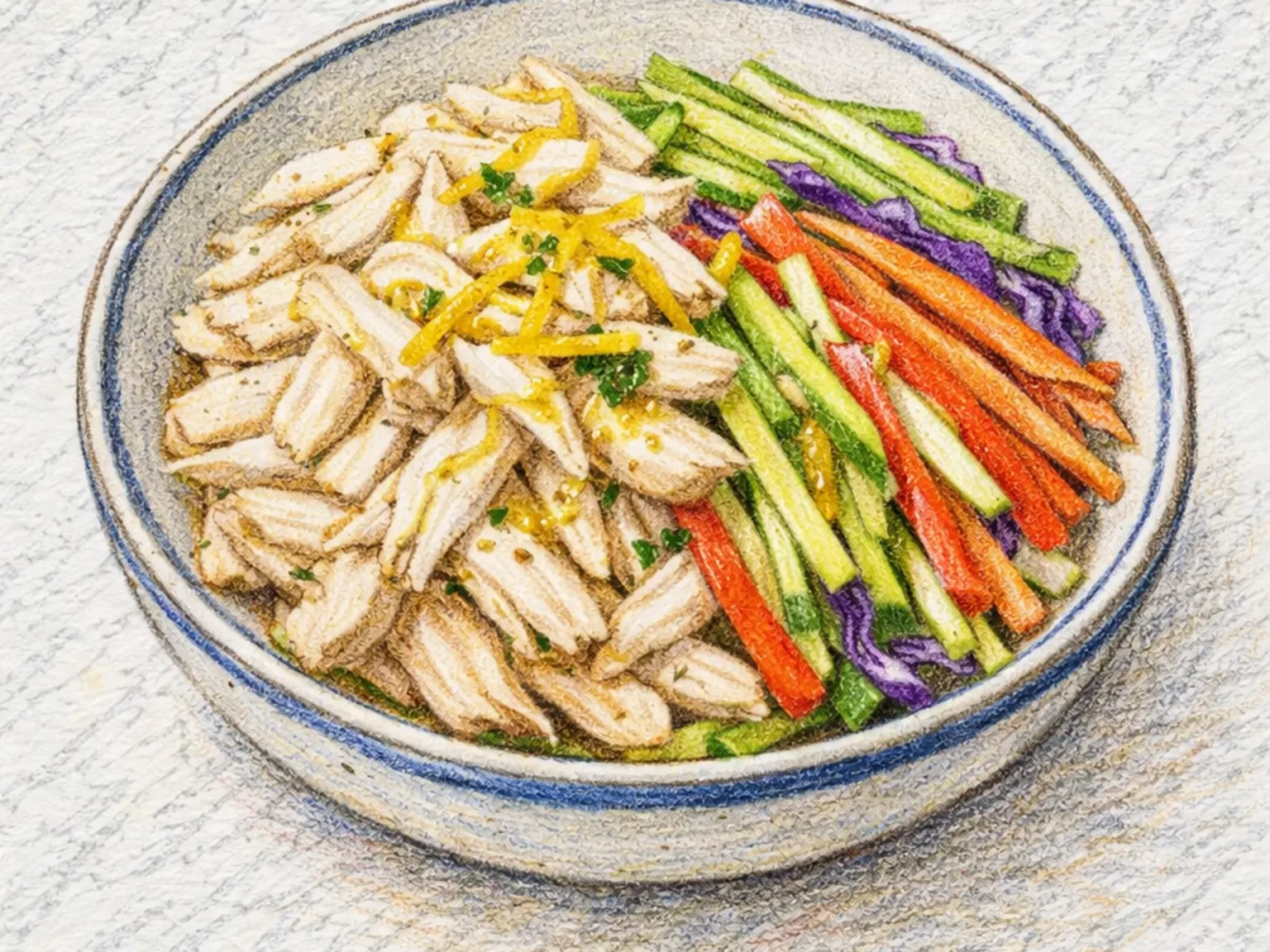
Yuja chicken naeng somyeon is a Korean cold noodle dish served in a clear chicken-radish broth brightened with yuja (citron) syrup. The broth is chilled before serving, and its combination of mild chicken flavor and floral citrus aroma sets it apart from other cold noodle soups. Shredded poached chicken breast is placed on top of the cold somyeon along with cucumber or cherry tomatoes. The broth is deliberately kept lean, with no heavy oils. If the broth is prepared in advance, the final assembly takes under 30 minutes.

Korean Napa Cabbage Tofu Porridge
Serve together Rice

Korean Napa Cabbage Tofu Porridge

A gentle Korean rice porridge built from napa cabbage and soft tofu - mild enough for a recovering stomach, substantial enough to be a proper meal. The rice is first stir-fried in sesame oil, coating each grain in a thin film of fat that releases a quiet, nutty fragrance as the grains slowly swell and break down. Minced garlic is added at this stage and cooked through so its raw sharpness disappears into the base. Vegetable stock and finely chopped cabbage follow, and the pot simmers at medium heat, stirring occasionally, until the grains dissolve completely into a thick, uniform porridge. During this process, the cabbage sheds its moisture into the broth, gently sweetening it without any added sugar. Tofu crumbled by hand is stirred in during the last five minutes, dispersing evenly to create a smooth, soft protein layer throughout. Seasoning is deliberately light - just guk-ganjang and salt - to let the cabbage sweetness and the tofu's quiet richness carry the flavor. No heavy oils or pungent spices. This is porridge for days when the body needs something undemanding, or when plain, clean food is exactly what the moment calls for.

Korean Chilled Seaweed Soup
Similar recipe Soups

Korean Chilled Seaweed Soup

Miyeok-naengguk is a Korean chilled seaweed soup designed for the hottest days of summer, when the idea of a boiling pot feels intolerable. Rehydrated sea mustard and thinly sliced cucumber are bathed in a cold broth made from soy sauce, rice vinegar, sugar, and iced water, producing a tangy, lightly sweet liquid that hits the palate with immediate refreshment. The seaweed contributes a slippery, marine texture while the cucumber provides a sharp crunch, and together they give the soup a satisfying range of mouthfeel in each spoonful. Preparation requires no cooking at all - the ingredients are simply mixed, seasoned, and chilled - making it one of the fastest dishes in the Korean repertoire. A generous sprinkle of toasted sesame seeds adds nuttiness on top, and an optional pinch of gochugaru turns the broth a vivid red while contributing gentle heat. The soup pairs naturally with cold noodle dishes like naengmyeon or bibim-guksu, and it improves after an hour in the refrigerator as the seasoning penetrates the seaweed. In many Korean homes, a bowl of miyeok-naengguk is the unofficial signal that summer has arrived.

Serve with this

Korean Crumbled Tofu Stir-fry
Side dishes Easy

Korean Crumbled Tofu Stir-fry

Dubu seoboro - crumbled tofu stir-fry - is a Korean banchan that transforms a block of tofu into something resembling a dry, granular scramble. The tofu is crumbled by hand into rough, irregular pieces rather than diced, creating a range of textures from large curds to fine crumbs that hold seasoning differently. Squeezed thoroughly in a cloth to remove as much moisture as possible, it then goes into a hot pan with diced carrot, onion, and zucchini. The key technique is cooking on high heat without stirring too often, allowing the tofu crumbles to develop lightly golden edges before soy sauce and sesame oil go in at the end. The result is a fluffy, granulated side dish that soaks into rice like a savory topping - satisfying without being rich. Popular in Korean daycare and school lunches because it delivers plant protein in a form that children eat willingly, and it travels cleanly in lunchboxes without leaking. The ingredient cost is low and the cooking time short, which makes it one of the first recipes to reach for when the refrigerator is running low on banchan.

🥗 Light & Healthy 🏠 Everyday
Prep 12min Cook 10min 2 servings
Korean Soy Pickled Radish Cubes
Kimchi Easy

Korean Soy Pickled Radish Cubes

Mu jangajji is a fundamental Korean soy-pickled radish made by cutting radish into 1.5 cm cubes, packing them in a sterilized jar with dried chili, and pouring over a boiled brine of soy sauce, vinegar, and sugar. The radish's firm flesh absorbs the sweet-salty brine gradually while maintaining its crisp bite, and the dried chili adds a gentle warmth and aroma to the liquid. Pouring the brine while still hot is important because the heat briefly opens the cell walls of the radish, allowing the seasoning to penetrate more evenly throughout. Vinegar balances the soy's saltiness with a clean tang, and using dense winter radish yields the best texture. This is one of the most versatile Korean pickles, appearing alongside gimbap, bibimbap, and gukbap as a reliable everyday table companion.

🍱 Lunchbox 🏠 Everyday
Prep 20min Cook 10min 4 servings
Korean Radish & Shrimp Pancake
Pancakes Easy

Korean Radish & Shrimp Pancake

Julienned Korean radish and small peeled shrimp are combined in a pancake batter fortified with a measured amount of potato starch for added crispiness. Egg is mixed into the batter to improve binding and keep the pancake intact when flipped. Scallions are distributed throughout for a mild, grassy fragrance. Radish releases notable moisture as it cooks, so frying over high heat is essential to drive off that liquid quickly and achieve a crisp outer surface. The sharp, slightly bitter edge of raw radish disappears with heat and gives way to a gentle natural sweetness that pairs cleanly with the mild, delicate flavor of the shrimp. Pressing the center of the pancake down with a spatula while frying encourages even browning all the way through.

🍺 Bar Snacks ⚡ Quick
Prep 15min Cook 12min 2 servings

Similar recipes

Korean Acorn Jelly Cold Broth Bowl
Soups Easy

Korean Acorn Jelly Cold Broth Bowl

Dotori-muksabal is a chilled Korean acorn jelly broth bowl where thinly sliced acorn jelly sits in a cold, tangy-sweet seasoned broth. Acorn jelly carries a distinctly earthy, mildly astringent aftertaste and a firm, bouncy texture that becomes noticeably more pronounced once it has chilled thoroughly. The broth, a mixture of stock seasoned with soy sauce, vinegar, and sugar, must be cold before pouring over the jelly to keep that cool snap alive from the first bite to the last. Chopped kimchi adds fermented heat and a pungent sourness, while julienned cucumber contributes a clean crunch, and both ingredients cut through the jelly's neutral flavor with sharp contrasts that make the bowl far more lively than its simple appearance suggests. A spoonful of gochugaru-spiked seasoning ties the components together. The dish is notably low in calories and rich in dietary fiber, making it an appealing light meal on hot days.

🥗 Light & Healthy 🏠 Everyday
Prep 20min Cook 10min 2 servings
Korean Buckwheat Jelly Cold Broth Bowl
Soups Easy

Korean Buckwheat Jelly Cold Broth Bowl

Memil-muksabal is a chilled Korean dish in which firm blocks of buckwheat jelly sit submerged in cold, seasoned broth. The broth is typically made from anchovy or beef stock, cooled to refrigerator temperature, and sharpened with soy sauce, rice vinegar, and a touch of sugar that balances the acidity. Buckwheat jelly has a neutral, slightly earthy flavor and a slippery, springy texture that absorbs the surrounding seasonings with each bite. Julienned cucumber adds crunch, crushed roasted sesame seeds contribute nuttiness, and shredded dried seaweed brings a gentle oceanic accent. The dish is almost calorie-free compared to noodle soups and digests easily, which is why it appears on Korean tables most frequently during the hottest weeks of summer. Making the jelly from scratch involves boiling buckwheat starch until thick and letting it set, but store-bought blocks simplify the process to little more than slicing and assembling. The cold broth hits the palate first, followed by the yielding texture of the jelly - a sequence that feels instantly cooling.

🥗 Light & Healthy 🏠 Everyday
Prep 20min Cook 10min 2 servings
Korean Perilla Chicken Soup
Soups Easy

Korean Perilla Chicken Soup

Deulkkae samgye-guk is a perilla-enriched Korean chicken soup that delivers the warming, restorative depth of samgyetang with a considerably simpler preparation -- no glutinous rice to stuff, no ginseng required, just chicken pieces and perilla seed powder. The chicken is cut into large pieces and placed in cold water from the start, then simmered for forty minutes so the collagen and flavor compounds dissolve gradually into the broth, turning it milky and full-bodied. Perilla powder must be pre-dissolved in a small cup of water before being stirred in -- adding it dry causes it to clump -- and ten more minutes of gentle simmering allows its oils to emulsify fully into the chicken stock, creating a broth with a smooth, nutty coating on every sip. Seasoning with only soup soy sauce and salt lets the natural savoriness of the chicken and the distinctive fragrance of perilla come through without distraction. Rich in the omega-3 fatty acids of perilla seed and the protein of chicken, this soup is eaten as a restorative meal during hot summers and whenever energy levels drop.

🏠 Everyday 🥗 Light & Healthy
Prep 15min Cook 60min 4 servings

Tips

Serve very cold broth for proper chogye-tang flavor.
Add mustard gradually to control heat.

Nutrition (per serving)

Calories
245
kcal
Protein
31
g
Carbs
7
g
Fat
9
g