Chole Bhature (Chickpea Curry with Puffed Bread)
Quick answer
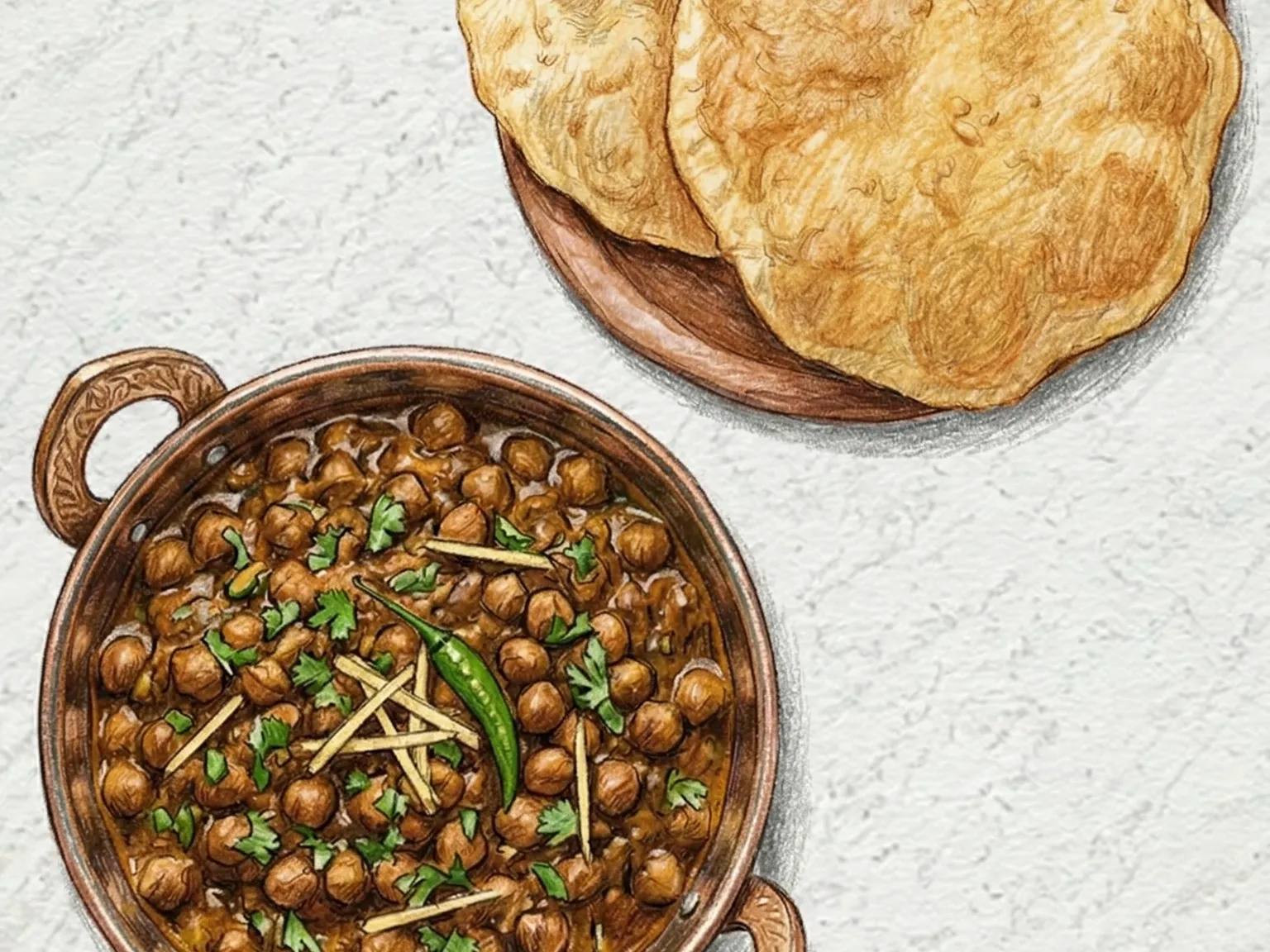
Chole bhature is the definitive breakfast combination of North India's Punjab and Delhi regions, bringing together a dark, intensely spiced chickpea curry and deep-fried...
What makes this special
- Chole Bhature matches a tangy, dark spiced chickpea curry with deep-fried, puffed bread.
- Amchur and anardana powder give chole its signature tang
- Whole spice sachet infuses depth without floating pieces
Key ingredients
Core cooking flow
- 1 Mix 300g flour, 60g yogurt, 1 teaspoon baking powder, and 3 to 4 tablespoons water in a bowl.
- 2 Knead for about 5 minutes, until the surface becomes smoother and the dough...
- 3 Heat 2 tablespoons cooking oil in a wide pan over medium-high heat.
Chole bhature is the definitive breakfast combination of North India's Punjab and Delhi regions, bringing together a dark, intensely spiced chickpea curry and deep-fried puffed bread. The chole begins with dried chickpeas soaked overnight and pressure-cooked until tender, then folded into a base of slow-cooked onion and tomato seasoned with amchur, anardana, and garam masala, simmered until the gravy thickens to a deep, clinging brown. Whole spices - black cardamom, cinnamon, bay leaf - are often tied in muslin and simmered alongside the chickpeas, infusing the pot with fragrance without leaving stray solids in the finished dish. Bhature dough is made with refined flour enriched by yogurt and coarse semolina, rested at room temperature until slightly fermented, then rolled and lowered into hot oil where it balloons into a puffy, golden pillow within seconds. The ritual of tearing a piece of bhature and scooping up chole delivers salty, sour, and spiced-bread richness in a single motion. Raw onion rings and pickled green chilies cut through the heaviness with crunch and heat. In Old Delhi, the most storied shops have maintained their curry by never fully emptying the pot, topping it up over decades so the base carries years of accumulated flavor.
Instructions
Read the steps as a cooking flow: prep, heat, seasoning, doneness control, and finish.
- 1Prep
Mix 300g flour, 60g yogurt, 1 teaspoon baking powder, and 3 to 4 tablespoons water in a bowl.
Bring the dough together only until no dry flour remains, adding water gradually to avoid stickiness.
- 2Control
Knead for about 5 minutes, until the surface becomes smoother and the dough feels elastic rather than crumbly.
Cover with a damp cloth and rest at room temperature for 20 minutes so it rolls and puffs more evenly.
- 3Control
Heat 2 tablespoons cooking oil in a wide pan over medium-high heat.
Add 180g diced onion and cook for 8 to 10 minutes, stirring often, until deep golden brown but not blackened at the edges.
- 4Control
Add 220g chopped tomato and 2 teaspoons chole masala, then lower to medium heat.
Cook for about 8 minutes, pressing the tomato as it softens, until the mixture thickens and oil begins to show around it.
- 5Control
Stir in 500g cooked chickpeas and 240ml water, scraping the pan so the browned base dissolves into the liquid.
Cover and simmer over medium heat for 15 minutes, then uncover for 5 minutes to thicken.
- 6Finish
Divide the rested dough into 8 pieces and roll each into a 15cm round.
Heat the oil to 180 to 190°C, fry one at a time for 30 to 40 seconds per side, pressing gently until puffed, then drain and serve with chole.
After the steps
Pick a recipe that fits this dish.
Continue with shared ingredients, meal pairings, or a similar method.
Recipes That Go Well With This
More Asian →Based on shared ingredients and meal pairing
Chana Masala (Punjabi Spiced Chickpea Tomato Curry)
Chana masala is a staple of Punjabi home cooking and one of the most widely eaten vegetarian dishes across North India, found on the menus of dhabas, railway canteens, and five-star hotel restaurants alike. Dried chickpeas are soaked overnight and pressure-cooked until they hold their shape but yield when pressed -- the texture of the chickpea matters as much as the sauce around it. The sauce builds from finely diced onions fried until deeply browned, which provides natural sweetness and body without any cream. Tomatoes cook down with coriander, cumin, turmeric, garam masala, and amchur -- dried mango powder -- which contributes a tart, fruity acidity that sets this preparation apart from other chickpea curries and gives it a distinctive brightness no other spice replicates. The sauce should be thick and clingy, not soupy; each chickpea gets coated in a dark, spiced layer rather than sitting in loose liquid. Topped with sliced raw onion, green chili, and a squeeze of lemon, the dish pairs with bhatura -- fried bread -- as the iconic Punjabi street-food duo known as chole bhature. Scooped up with roti, the same preparation becomes an everyday weeknight meal that costs almost nothing to make.
Palak Paneer (Indian Spinach Curry with Paneer Cheese)
Palak paneer is one of North India's most beloved vegetarian curries, pairing a bright spinach puree with cubes of mild, milky paneer cheese. Fresh spinach is blanched briefly and blended into a green sauce, combined with a base of sauteed onions, garlic, ginger, and tomatoes seasoned with garam masala. The paneer cubes are typically pan-seared first to form a light skin that holds their shape in the sauce while the interior stays soft and creamy. A swirl of heavy cream at the end rounds out the flavors, blending the earthy depth of spinach with warm spice and dairy richness.
Kachumber Salad (Indian Kachumber salad)
Kachumber salad finely dices cucumber, tomato, and red onion, then tosses them with chopped cilantro, lime juice, ground cumin, chaat masala, and salt in a quick Indian raw vegetable preparation. Removing some of the seeds from the cucumber and tomato limits excess moisture so the dressing stays concentrated rather than watery. Soaking the diced red onion in cold water for three minutes draws out its harsh sharpness, letting it blend more smoothly with the other ingredients. Ground cumin lays down a warm, earthy undertone, and chaat masala layers a tangy, salty complexity over the lime acidity, lifting a simple combination of vegetables into something distinctly Indian. Chopping cilantro stems together with the leaves releases more of the herb's aromatic oils than leaves alone provide. Letting the dressed salad rest for about fifteen minutes before serving allows the flavors to meld so the final result is noticeably more cohesive.
Pani Puri (Indian Crispy Hollow Shells with Spiced Herb Water)
Pani puri is India's most iconic street snack - crisp, hollow shells filled with potato, chickpeas, and a spiced herb water, then consumed in a single bite before they soften. Each puri is cracked open at the top, stuffed with mashed potato and chickpeas seasoned with chaat masala, and flooded with chilled pani made from blended mint, cilantro, tamarind, and green chili. The moment it enters the mouth, the shell shatters and releases a cold, tangy-spicy rush of liquid followed by the starchy comfort of potato. The flavor is layered and immediate: mint's cooling bite, tamarind's sour sweetness, and chaat masala's sharp saltiness all arrive at once.
Serve with this
Mango Lassi
Mango lassi is an Indian yogurt drink made by blending ripe mango flesh with plain yogurt and milk until completely smooth. The concentrated tropical sweetness of ripe mango and the tangy acidity of yogurt balance each other so that the drink feels refreshing rather than cloying. A small amount of ground cardamom, typically around a quarter teaspoon, introduces a faintly floral, aromatic spice layer that lifts the drink away from an ordinary fruit smoothie and into something distinctly South Asian. Honey allows the sweetness to be calibrated against the specific ripeness of the mango being used. Using ingredients that have been chilled in the refrigerator beforehand produces a thick, cold lassi without needing much ice, avoiding the dilution that comes from blending a large quantity of ice cubes into an otherwise dense drink.
Japanese Dan Dan Ramen (Sesame Cream Broth with Spicy Pork)
Tantanmen is the Japanese adaptation of Sichuan dan dan noodles, served as a ramen with a thick sesame-cream broth. Ground pork is stir-fried with doubanjiang and spooned over the bowl along with chili oil. The sesame base gives the soup a dense, nutty body, while the chili oil adds a slow-building heat. Standard ramen noodles are used, paired with bok choy or scallions. Preparation takes about 45 minutes, with most of the effort going into building the sesame broth and seasoning the pork topping.
Steak Rice Bowl (Seared Beef with Soy-Garlic Glaze over Rice)
A thick-cut beef steak is seared at high heat until a deep brown crust forms, then sliced and fanned over a bowl of hot rice. A glaze of soy sauce, garlic, and mirin is spooned over the slices, coating them in a glossy, caramelized finish. As the warm rice absorbs the pan juices, each spoonful carries the full weight of the beef's seared flavor. A runny fried egg or a small dab of wasabi on the side balances the richness with creaminess or heat. Controlling resting time and grain texture helps the ingredients cook evenly while keeping the final seasoning balanced.
Similar recipes
Malai Kofta (Indian Paneer Potato Dumplings in Creamy Tomato Sauce)
Malai kofta is a celebratory vegetarian dish from North India in which dumplings made from mashed potato and crumbled paneer are fried until golden-brown, then placed in a velvety tomato-cream gravy. The exterior of each kofta crisps in the oil while the interior remains soft and filled with mild paneer, so that when broken open in the gravy, the cheese spills into the sauce and enriches it further. The gravy is built from a base of slow-cooked onions and tomatoes pureed until smooth, finished with cashew nut paste and heavy cream for a rich, dense texture. Cashew paste is the key technique here, adding a nutty creaminess that coconut milk or plain cream alone cannot replicate. Garam masala and a touch of turmeric contribute warm, fragrant spice without sharp chili heat, keeping the dish approachable and suitable for formal occasions. The koftas should be added to the gravy just before serving, since extended soaking softens the exterior and causes them to break apart. Served alongside naan or basmati rice, malai kofta is a standard centerpiece at Indian wedding feasts and festival gatherings, prized as much for its visual richness as for its flavor.
Butter Chicken
Butter chicken - murgh makhani - starts by marinating chicken thighs in yogurt, garam masala, and cumin, then roasting or grilling them at high heat to develop a slightly charred, smoky exterior. That surface char is a defining element; plain poaching cannot replicate it. The tomato sauce base requires long, patient reduction - the raw acidity must cook off and round into sweetness before any dairy is added. Butter and heavy cream then go in, wrapping the spice blend sharp heat in a velvety richness that carries through to the last bite. Cumin and garam masala provide the earthy, layered warmth that anchors this curry's identity, and together they produce the mild, creamy character that sets murgh makhani apart from hotter Indian preparations.
Chicken Tikka Masala
Chicken tikka masala marinates chicken overnight in yogurt, curry powder, garlic, and ginger, then grills or broils it at high heat to develop char on the surface before finishing in a sauce of tomato puree, garam masala, and heavy cream. The lactic acid in yogurt gently breaks down surface proteins while acting as a vehicle to drive the spices deeper into the meat. Browning diced onion in butter, then cooking tomato puree with garam masala for at least fifteen minutes allows the sharp, raw edges of the spices to mellow and integrate fully, building a sauce base with genuine depth. Heavy cream added just before serving wraps the tomato acidity and chili heat in a smooth, rich body that unifies the dish. Overnight marination makes a substantial difference compared to a short soak, as the spices have time to penetrate to the center of each piece. Basmati rice or naan bread served alongside is standard, and dragging the bread through the sauce captures the full range of flavor in a single bite.