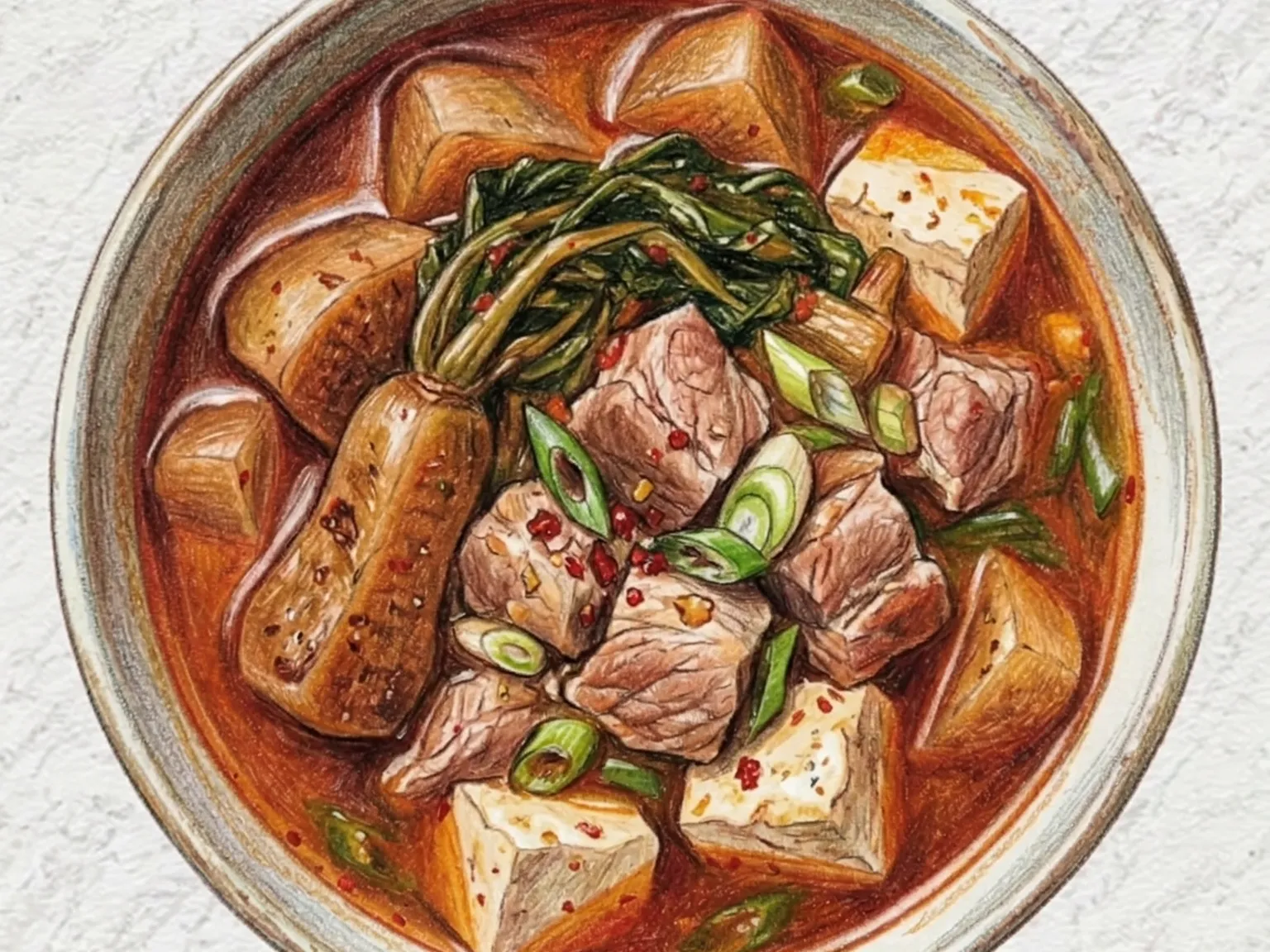
Korean Young Radish Kimchi Stew
This kimchi jjigae uses chonggak kimchi - small, whole ponytail radishes fermented in chili paste - instead of the usual napa cabbage kimchi. The radish pieces retain a crisp, crunchy bite even after simmering, giving the stew a texture that sets it apart. Pork shoulder and a generous pour of kimchi brine build a robust, tangy broth, with tofu added to balance the bold flavors.
Adjust Servings
Instructions
- 1
Cut young radish kimchi and greens into 3-4 cm pieces.
- 2
Stir-fry pork with half the kimchi brine for 3 minutes to remove odor.
- 3
Add kimchi, water, and remaining brine; simmer on medium heat for 15 minutes.
- 4
Add onion, gochugaru, and garlic; cook 7 more minutes to build body.
- 5
Add tofu and green onion, simmer 3 minutes, and serve immediately.
As an Amazon Associate, we may earn from qualifying purchases.
Tips
Nutrition (per serving)
More Recipes

Korean Pork Kimchi Stew (Fermented Kimchi & Pork Shoulder)
Pork kimchi jjigae is one of the most beloved home-cooked Korean stews, built on aged kimchi and pork shoulder. The marbled fat from the pork shoulder melts into the broth, balancing the kimchi's sharp acidity with richness. Tofu and onion bulk up the pot, while soup soy sauce and chili flakes season the liquid. The riper and more sour the kimchi, the better this stew tastes - it is the ideal use for old kimchi.

Korean Jjageuli Pork Stew
Jjageuli jjigae is a thick, reduced-broth stew of pork and potato simmered in a gochujang and gochugaru sauce. As the potato pieces break down, they naturally thicken the stew into a hearty, almost gravy-like consistency. The pork fat renders into the spicy-sweet seasoning, creating a deeply coating sauce meant to be spooned over rice. Onion and green onion add sweetness and fragrance, making this a satisfying one-pot meal that needs little else on the side.

Korean Galchi Kimchi Jjigae (Hairtail Kimchi Stew)
This stew brings together hairtail fish and aged kimchi in an anchovy-kelp stock, creating a layered broth where the oily richness of the fish meets the deep tanginess of well-fermented kimchi. Korean radish and onion add body to the soup, while gochugaru and soup soy sauce round out the seasoning. The hairtail flesh breaks down gently during cooking, releasing its natural umami into every spoonful.

Korean Kimchi Jjigae (Kimchi Stew)
Kimchi jjigae is the quintessential Korean home-cooked stew, built on well-fermented kimchi and pork belly simmered together until the flavors fully meld. The kimchi's sharp acidity breaks down the richness of the pork fat, producing a broth that is simultaneously tangy, spicy, and deeply savory. A spoonful of doenjang adds another layer of fermented complexity, while tofu blocks absorb the fiery liquid. Finished with a drizzle of sesame oil, it is the definitive comfort food served with steamed rice.

Korean Ponytail Radish Kimchi
Chonggak kimchi is a classic Korean kimchi made with whole young ponytail radishes salted for two hours, then coated in a seasoning paste of gochugaru, anchovy fish sauce, garlic, ginger, and scallions. Blooming the chili flakes in fish sauce first softens their texture and intensifies the color before garlic and ginger are added for aromatic depth. Trimming the radish tops short prevents them from turning fibrous and keeps the eating experience crisp. One day of room-temperature fermentation produces a lively carbonation and refreshing tang, after which refrigeration preserves the crunchy texture and spicy umami for weeks. This is a year-round kimchi staple in Korean households.

Kimchi Dwaejigogi-guk (Kimchi Pork Tofu Soup)
Kimchi-dwaejigogi-guk begins by stir-frying pork shoulder in perilla oil until the fat renders, then well-fermented kimchi and chili flakes join the pot for three more minutes of cooking. This initial step melds the tangy acidity of the kimchi with the pork drippings, creating a base that carries the entire soup. Water and sliced onion simmer for fifteen minutes, and blocks of firm tofu go in near the end, absorbing the ruddy, peppery broth. The result has more liquid than a typical jjigae, making it well suited for spooning over a bowl of rice.