Choux Cream Puffs (French Hollow Pastry with Vanilla Custard)
Quick answer
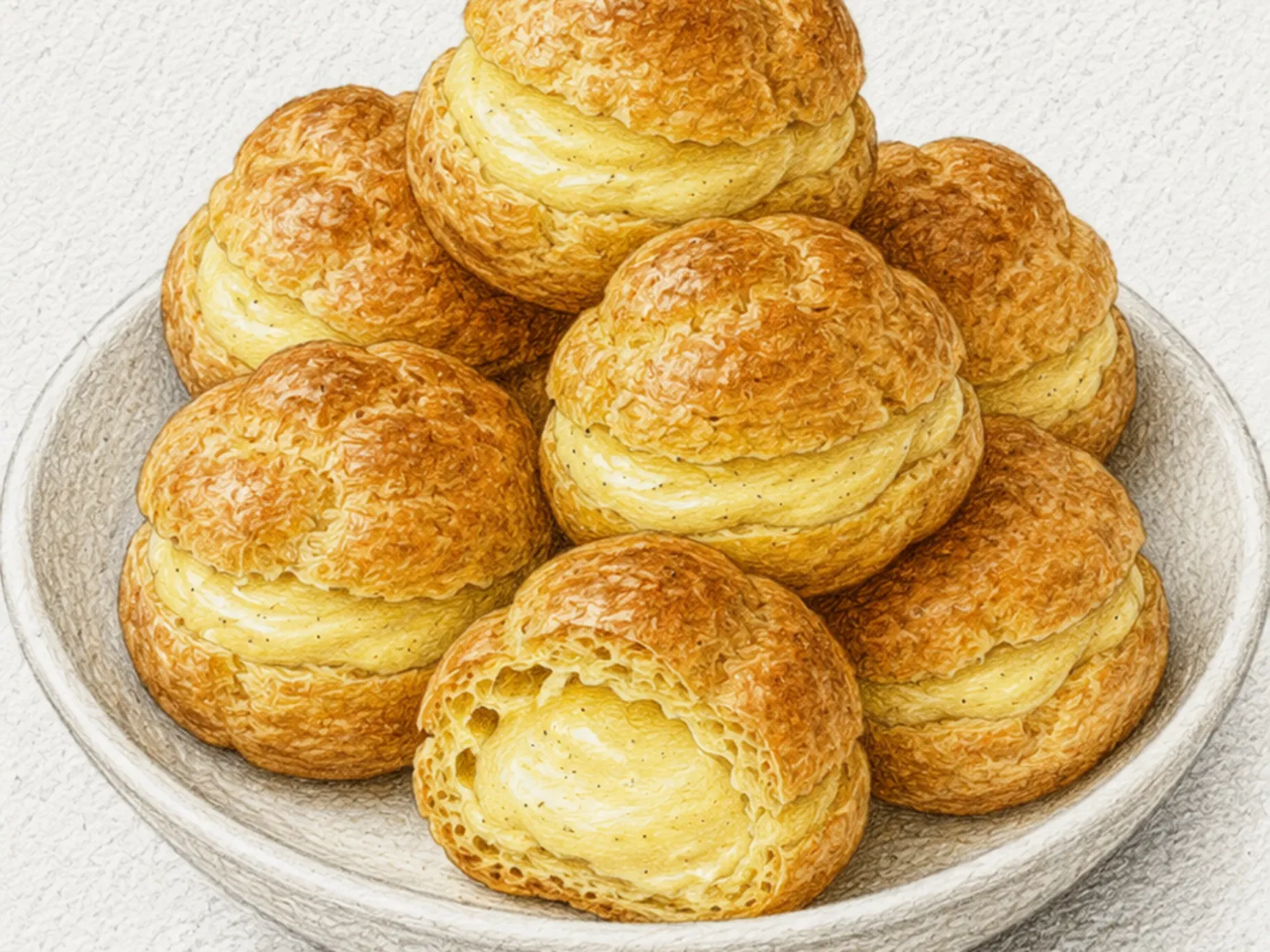
Choux cream puffs are built around pate a choux, a paste cooked directly on the stovetop by combining water, butter, and flour over heat, then beating in eggs one at a ti...
What makes this special
- Glossy choux paste bakes into hollow shells designed to hold cool vanilla custard.
- Cooked panade absorbs egg moisture to form the glossy extensible choux paste
- Steam expansion hollows the shell; never open the oven during baking
Key ingredients
Core cooking flow
- 1 Preheat the oven to 200°C and line a baking sheet with parchment.
- 2 When the liquid boils, lower the heat and add 70g flour all at once.
- 3 Once the surface looks slightly matte, remove the pan from the heat and tran...
Choux cream puffs are built around pate a choux, a paste cooked directly on the stovetop by combining water, butter, and flour over heat, then beating in eggs one at a time until the dough is smooth, glossy, and just thick enough to hold a piped shape. Once mounds are piped onto a baking sheet and slid into a hot oven, the water content in the dough converts rapidly to steam, inflating each piece into a hollow shell while the exterior sets into a crisp, deep-golden crust. The key to a reliably hollow interior is patience with the eggs: adding them too quickly or all at once produces uneven expansion, while a gradual approach allows the structure to develop properly. Once completely cooled - cooling fully is not optional, as residual heat will melt the filling - a small hole is pierced in the bottom of each shell and pastry cream is piped inside. The contrast upon biting is what makes the pastry compelling: the thin, shattering shell breaks to release cool, silky custard against the palate. The pastry cream itself is made by simmering milk with a split vanilla bean, then whisking the infused milk into egg yolks, sugar, and cornstarch, cooking until thick, and chilling until cold and set. Filled puffs should be consumed within two to three hours, as moisture from the cream migrates into the pastry over time, softening the crust and eliminating the textural contrast that defines the experience.
Instructions
Read the steps as a cooking flow: prep, heat, seasoning, doneness control, and finish.
- 1Control
Preheat the oven to 200°C and line a baking sheet with parchment.
Put 120ml water, 55g butter, and a pinch of salt in a saucepan over medium heat, heating until the butter fully melts and the mixture reaches a clear boil.
- 2Heat
When the liquid boils, lower the heat and add 70g flour all at once.
Stir hard with a wooden spoon for 1-2 minutes, until the dough gathers into one ball and pulls cleanly from the bottom of the pan.
- 3Step
Once the surface looks slightly matte, remove the pan from the heat and transfer the dough to a bowl for 5 minutes.
Let the steam fade so the eggs do not scramble, then beat in 2 eggs one at a time until fully absorbed.
- 4Step
The dough is ready when it falls slowly from the spatula and leaves a V-shaped tail.
Spoon it into a piping bag with a round tip, pipe 4cm rounds, and leave at least 5cm between them for expansion.
- 5Heat
Bake at 200°C for 30 minutes without opening the oven door at any point.
Remove the shells when they are deep golden and feel light but firm, then cool them completely so the filling will not melt.
- 6Finish
For the filling, whisk 250ml milk, 50g sugar, 20g cornstarch, and 1 teaspoon vanilla extract over medium heat until thick and smooth. Chill until cold, pierce a small hole in each shell base, pipe in the cream, and serve promptly.
After the steps
Pick a recipe that fits this dish.
Continue with shared ingredients, meal pairings, or a similar method.
Recipes That Go Well With This
More Baking →Based on shared ingredients and meal pairing
Chocolate Eclairs
Eclairs are elongated French pastries built from choux dough, a cooked paste of water, butter, and flour into which eggs are incorporated one at a time until the mixture becomes smooth and glossy. When piped into finger-length strips and baked at high heat, the moisture locked in the dough converts to steam and expands, inflating each strip into a hollow shell with a crisp golden exterior. After cooling completely, vanilla custard cream is piped through a small hole in the base to fill the cavity. The top surface is dipped in a dark chocolate glaze that sets into a thin, shiny coating. Biting through delivers a layered experience: the slight bitterness of the chocolate, the crunch of the choux shell, and the cool smoothness of the custard in quick succession. Because the shell begins absorbing moisture from the cream as soon as it is filled, eclairs are best consumed within a few hours of assembly. Leaving them overnight compromises the texture significantly.
Croquembouche (French Caramel-Glazed Cream Puff Tower Centerpiece)
Croquembouche is a French celebration centerpiece constructed by dipping cream-filled choux puffs in hot caramel and stacking them into a tall conical tower. Each profiterole is baked until the interior is hollow and dry, filled with vanilla pastry cream, then submerged briefly in caramelized sugar that hardens into a thin shell on contact and bonds each puff to its neighbors. As the tower rises, caramel strands are stretched between the puffs, cooling into a web of spun sugar threads that wrap around the entire structure. A finished tower can stand several feet tall, and guests detach individual puffs from the top downward to eat. Cracking the hardened caramel shell with teeth reveals soft choux pastry underneath and cold cream inside, a progression of textures that plays out in a single bite. The name itself comes from the French for crunching in the mouth. In France the croquembouche is a traditional centrepiece at weddings and christenings, where it stands in place of a tiered cake.
Clafoutis (French Baked Cherry Custard Dessert)
Clafoutis is a traditional French dessert from the Limousin region made by arranging fresh cherries in a buttered baking dish, then pouring over a thin batter of eggs, sugar, milk, and flour and baking at 180 degrees Celsius for thirty to thirty-five minutes. The batter is considerably thinner than pancake batter, and the result when baked is a texture that sits between a creamy custard and a light sponge -- the edges puff and turn golden while the center around the cherries stays moist and yielding. Using unpitted cherries is the traditional method: the pits release a faint almond scent during baking that perfumes the surrounding batter in a way that pitted fruit cannot replicate. The cherries also hold their shape better with the pits in. Vanilla extract deepens the egg-and-milk base, and the cherries' own tart juice seeps into the batter during baking, creating concentrated pockets of fruit flavor that balance the overall sweetness. Clafoutis is served directly from the baking dish, typically dusted with powdered sugar and brought to the table while still warm, because the custard texture softens and loosens slightly as it cools, making the warm version noticeably more appealing. Made with blueberries, plums, or apricots instead of cherries, the dessert takes a different name -- flaugnarde -- though the technique remains identical.
Gougeres (Gruyère Cheese Choux Puffs)
Gougeres are savory cheese puffs from Burgundy, France, made by folding grated Gruyere cheese into choux pastry and baking until golden and hollow inside. Water, butter, and salt are brought to a boil, then flour is added all at once and stirred over low heat until the starches gelatinize and the dough pulls away from the pan in a smooth ball. Eggs are beaten in one at a time - the dough breaks apart and re-forms with each addition, building the elastic structure that allows the puffs to rise. Folding in the cheese and pepper, then piping rounds onto a tray and baking at 200 degrees Celsius turns the moisture in the dough to steam, which inflates each puff into a crisp shell with a hollow, airy center. Opening the oven door during baking releases the steam prematurely, which can cause the puffs to collapse.
Serve with this
Beet and Goat Cheese Salad
Beet and goat cheese salad begins with whole beets wrapped in foil and roasted at 200°C for forty-five to sixty minutes, long enough for their raw, earthy undertone to convert almost entirely into a concentrated, caramel-adjacent sweetness. Peeling the skins while the beets are still warm requires only the pressure of a paper towel - they slip off cleanly - and slicing them before they cool preserves the vivid crimson-purple cross-section that makes the dish visually striking. Crumbled goat cheese placed on the warm slices softens slightly, and its tangy acidity cuts through the dense sweetness of the roasted root rather than competing with it. Walnuts toasted briefly in a dry pan lose much of their raw bitterness, developing a nuttiness that bridges the mineral quality of the beet and the dairy sharpness of the cheese. Balsamic reduction does more than dress the plate: its concentrated sweet-tart intensity ties the separate components into a coherent whole. Arugula underneath the beet slices provides a peppery bitterness that sharpens the contrast against the sweetness, giving the salad a complexity well beyond what its short ingredient list suggests. A simple dressing of extra-virgin olive oil and lemon juice over the greens keeps the balance light and clear.
Sweet Chestnut Confection
Yulran is a traditional Korean chestnut confection that is prepared by boiling 300 grams of chestnuts in water for a duration of 20 minutes. Once the boiling process is complete, the chestnut flesh is removed from the shells and pressed through a fine sieve. This manual pressing continues until the texture becomes perfectly smooth. The purpose of using a sieve is to eliminate any grainy bits, which results in a chestnut paste with an even and velvety consistency. This puree is then kneaded together with a combination of honey and ground cinnamon. After the ingredients are thoroughly mixed, the paste is shaped into small, bite-sized rounds. The honey used in this recipe serves as both a source of moisture and a necessary adhesive. Its sticky property provides the strength required for the confection to hold its molded shape effectively without crumbling into pieces. Ground cinnamon is included to provide a warm spice note. This flavor is chosen because it complements the starchy and earthy sweetness of the chestnut rather than competing with the natural profile of the nut. Following the shaping process, each piece is rolled in ground pine nuts. This step coats the exterior in a mild nuttiness and introduces a subtle textural contrast against the smooth paste contained within. For a final visual touch, thin slices of jujube are placed on top as a garnish to provide a stroke of red color. The finished rounds are then placed in the refrigerator to chill for 15 minutes. This cooling period firms the surface of the paste just enough so that the confections can be picked up cleanly with the fingers without sticking to the skin. Historically, Yulran was a common fixture on the ceremonial and banquet tables of the Joseon court. It was valued for its clean and understated sweetness, which allows the natural flavor of the chestnut to remain the central focus.
Korean Five-Grain Sweet Rice Punch
Ogok-sikhye is a traditional Korean grain punch made by saccharifying a mix of cooked sweet rice, barley, millet, and foxtail millet in barley malt extract at 60 to 65 degrees Celsius for one hour. The malt powder is soaked in lukewarm water for 20 minutes, kneaded by hand, and strained through a cloth to yield a clear, enzyme-rich liquid -- this is the working ingredient that converts the grain starches into natural sugars during the slow saccharification. Temperature control is central to the process: below 60 degrees the enzymes slow down, and above 70 degrees they denature and die, so maintaining the right range throughout the hour-long rest determines whether the conversion succeeds. As saccharification progresses, the rice grains hollow out and float to the surface; these are skimmed off, rinsed separately, and later floated back into the finished punch to add a soft, chewable element to each cup. After sweetening with sugar and chilling completely in the refrigerator, the drink is served cold with pine nuts floating on top. The combination of multiple grains produces a more layered, complex sweetness than single-grain sikhye, and the overnight rest in the refrigerator smooths the flavor into something more cohesive.
Similar recipes
Paris-Brest (Ring-Shaped Choux with Praline Cream)
A ring of choux pastry is baked until deeply golden and hollow, then split and generously filled with praline mousseline cream made from roasted hazelnut paste. The shell shatters on first bite, giving way to a smooth, nutty cream that carries an intense toasted aroma. Sliced almonds pressed onto the raw dough before baking add a secondary layer of crunch and visual texture. The choux must cool completely before filling to prevent the cream from melting and the shell from going soft. Eggs are added to the hot dough gradually, checking the consistency after each addition, because the exact amount needed varies with flour absorption and egg size. Once assembled, a brief chill in the refrigerator sets the cream without softening the pastry.
Mille-Feuille (Layered Puff Pastry with Vanilla Cream)
Mille-feuille stacks three sheets of puff pastry with layers of vanilla pastry cream between them, creating a dessert defined by the tension between crisp and soft. The pastry itself is built through repeated folding with cold butter, generating hundreds of paper-thin layers that puff apart in the oven into shatteringly flaky sheets. Pastry cream - egg yolks, sugar, milk, and a touch of flour cooked to a thick custard - fills the gaps with a smooth richness that yields immediately to the fork. The top is typically dusted with powdered sugar or glazed with fondant, sometimes decorated with a feathered chocolate pattern. Timing matters: once assembled, moisture from the cream migrates into the pastry, so the window for peak crispness is roughly one to two hours. When eaten fresh, each bite collapses with an audible crunch before the cream takes over.
Cream of Mushroom Soup
The preparation of cream of mushroom soup begins by sautéing chopped onion and minced garlic to establish a fragrant aromatic foundation for the dish. Once these aromatics have softened, sliced button mushrooms are added to a mixture of butter and olive oil. These mushrooms are cooked for a duration of eight to ten minutes, a process that continues until their internal moisture has fully evaporated and the slices have taken on a deep brown color. Dried thyme is incorporated during the cooking process to provide an earthy herb quality that works in conjunction with the savory profile of the mushrooms. To build the body of the soup, flour is stirred into the fat and cooked for approximately one minute. This step is essential for creating a roux that will thicken the liquid effectively while ensuring the base remains smooth. Chicken stock is then introduced by whisking it in gradually, which prevents the formation of lumps. Heavy cream is added at the final stage of cooking, followed by a brief period of simmering to allow the flavors to combine and the texture to gain its characteristic richness. To achieve the final consistency, only half of the soup is processed in a blender. This technique produces a result that is simultaneously velvety and full of chunky mushroom pieces.