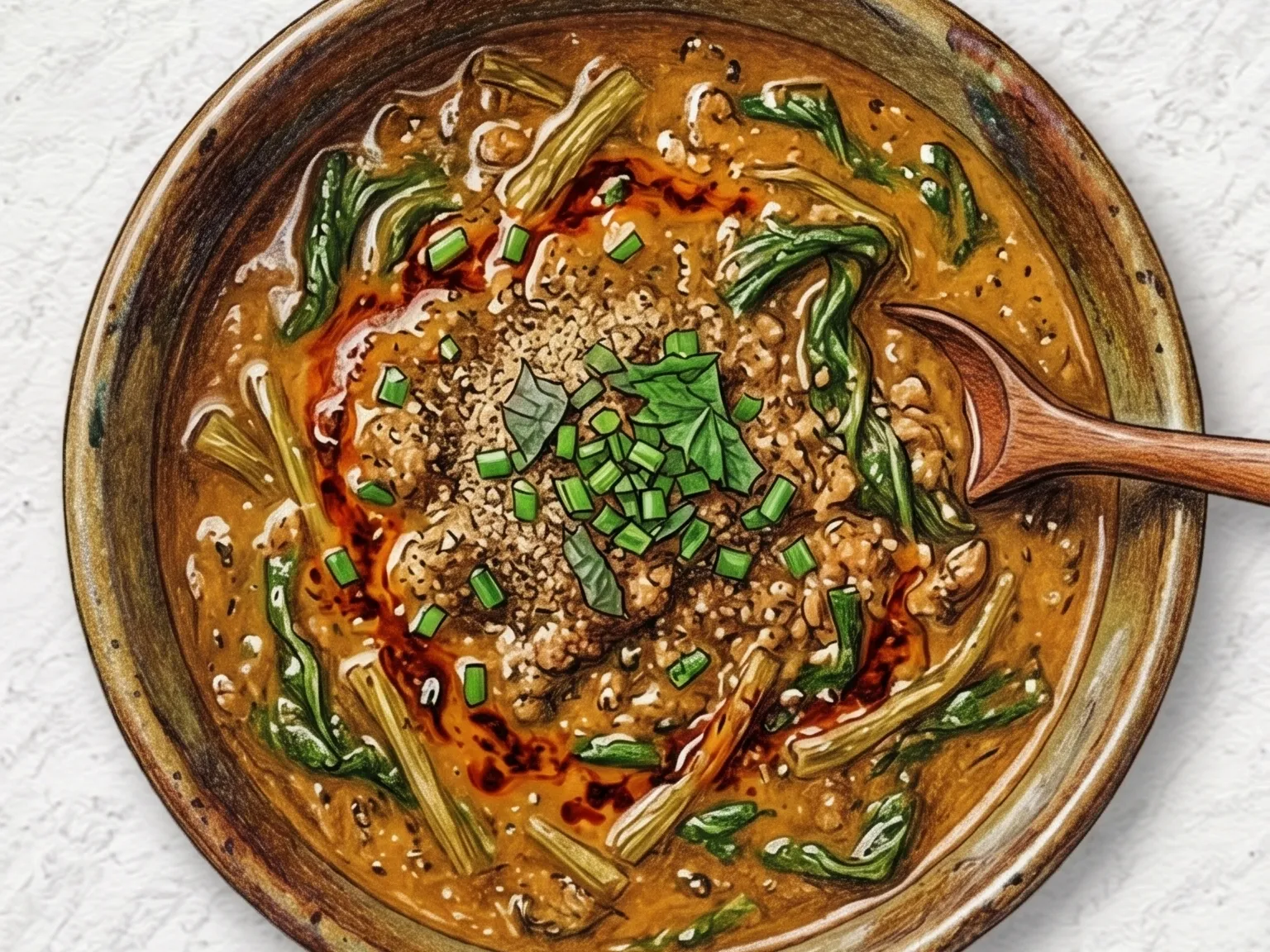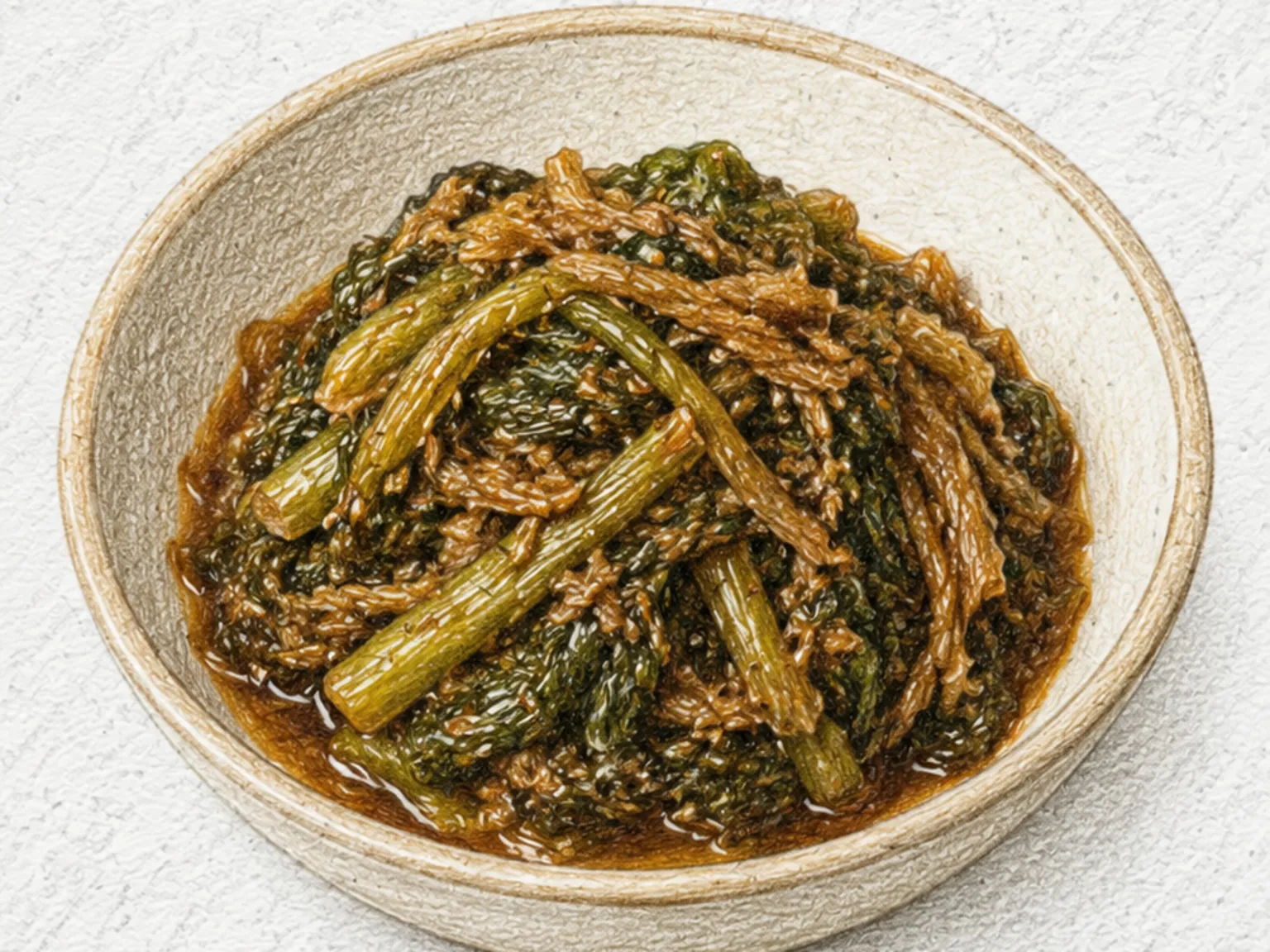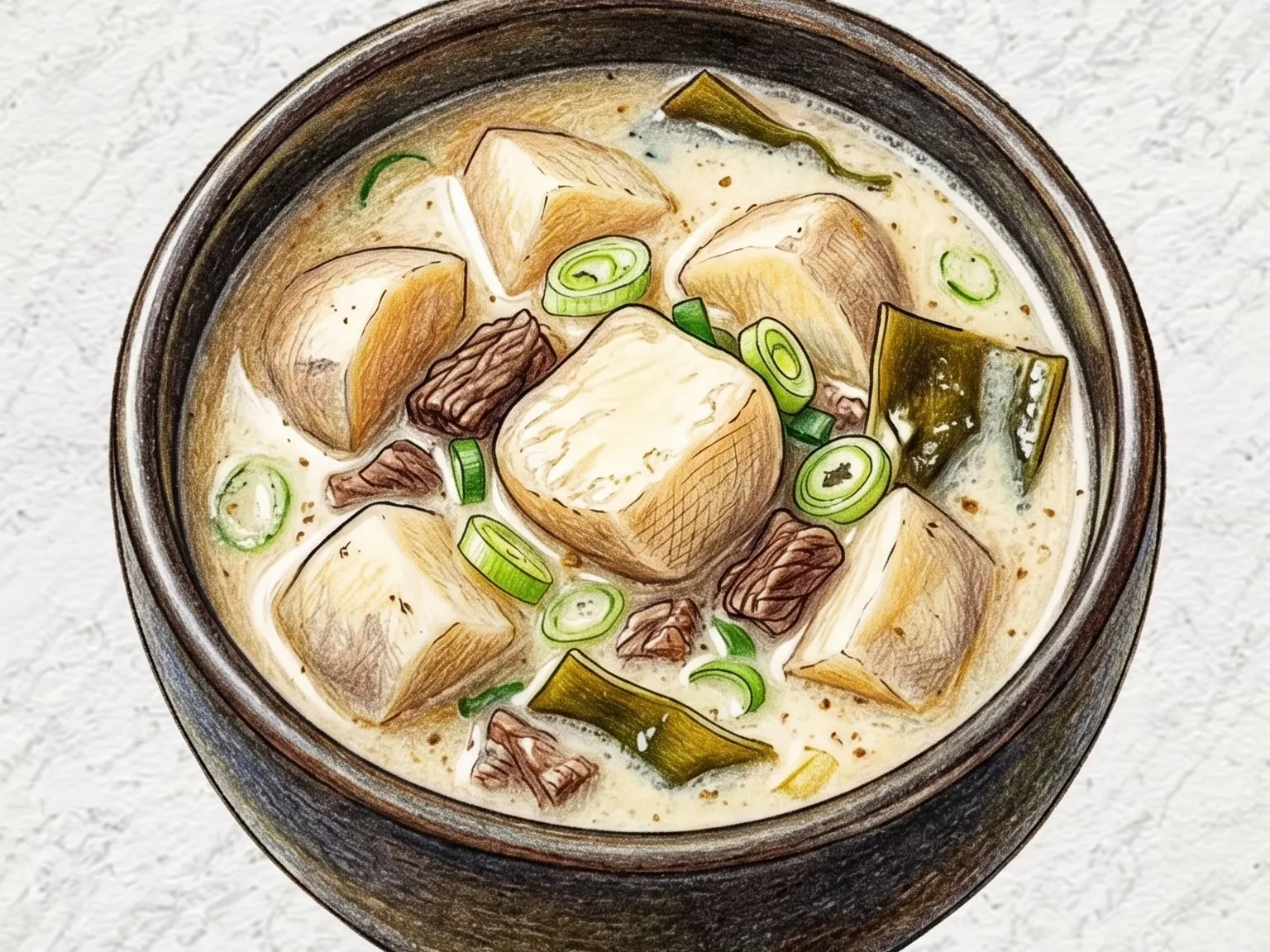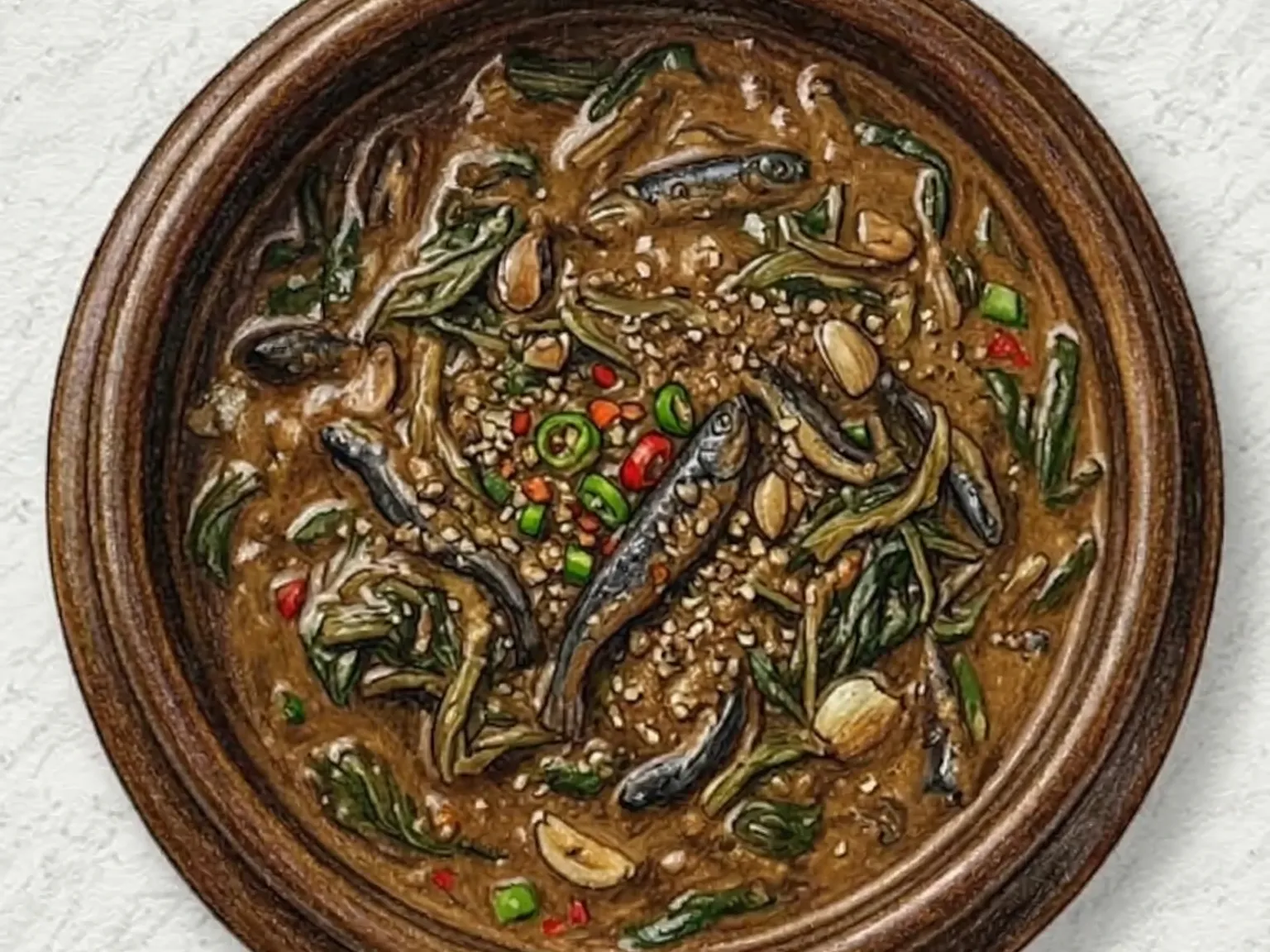
Korean Loach Stew (Ground Loach & Perilla Seed Pot)
Quick answer
Finely grinding whole loach into the broth creates the distinctive, porridge-like consistency that defines this traditional Korean stew.
What makes this special
- Chueo jjigae achieves a heavy, porridge-like texture by incorporating finely ground loach and nutty perilla seeds into a savory soybean paste broth.
- Ground loach dissolves into broth making it thick as porridge
- Three tablespoons of perilla powder add oily nuttiness to the miso base
Key ingredients
Core cooking flow
- 1 Prepare 220g of dried radish greens by boiling them until tender, rinsing mu...
- 2 Blanch 500g of cleaned loach briefly in boiling water with a pinch of salt t...
- 3 Pour 1200ml of anchovy stock into a pot and dissolve 1.5 tablespoons of soyb...
Finely grinding whole loach into the broth creates the distinctive, porridge-like consistency that defines this traditional Korean stew. Long recognized as a restorative autumn dish, it achieves a heavy body without the use of fatty meats, setting it apart from thinner soybean paste soups. Perilla seed powder introduces a nutty oiliness to the liquid, while dried radish greens contribute an earthy bitterness that grounds the heavy base of fermented soybean and chili pastes. Garlic and green onions establish a savory foundation, and red chili powder supplies a dark color and a layer of sharpness. An alternative preparation involves cooking the fish whole rather than grinding it, which results in a thinner broth where the soft flesh naturally detaches from the bones during the boiling process. This method provides a contrasting texture that is absent in the ground version. Adjusting the ingredients can shift the character of the dish: adding more dried radish greens increases the fibrous texture and bitter edge, while a larger portion of perilla powder emphasizes the nutty qualities. When the stew arrives at the table boiling in a stone pot, the rising steam carries a heavy, concentrated scent that fills the immediate air.
Instructions
Read the steps as a cooking flow: prep, heat, seasoning, doneness control, and finish.
- 1Heat
Prepare 220g of dried radish greens by boiling them until tender, rinsing multiple times in cold water, and squeezing out excess moisture before cutting into 5cm pieces.
- 2Season
Blanch 500g of cleaned loach briefly in boiling water with a pinch of salt to remove any fishy odors, then drain thoroughly using a fine mesh strainer.
- 3Step
Pour 1200ml of anchovy stock into a pot and dissolve 1.5 tablespoons of soybean paste, 1 tablespoon of chili paste, and minced garlic completely until no lumps remain.
- 4Control
Add the prepared radish greens and simmer over medium heat for about 10 minutes to allow their earthy bitterness and fibrous texture to infuse the heavy broth base.
- 5Heat
Add the loach and cook for another 8 minutes, then stir in 3 tablespoons of perilla seed powder to achieve a thick, porridge-like consistency and nutty aroma.
- 6Control
Mix in the sliced green onions and Cheongyang chili peppers, simmer for 2 more minutes to enhance the savory flavor, then check the final seasoning before serving hot.
After the steps
Pick a recipe that fits this dish.
Continue with shared ingredients, meal pairings, or a similar method.
Recipes That Go Well With This
More Stews →Based on shared ingredients and meal pairing
Korean Gangwon-Style Loach Soup
Gangwon-style chueotang is a thick, hearty loach soup in which the entire fish is boiled, blended smooth, and returned to the pot with ground perilla seeds and dried radish greens. Pulverizing the loach whole dissolves its small bones into the broth, creating a calcium-rich liquid with a distinctive earthy depth. Perilla seed powder transforms the soup into something creamy and nutty, far removed from a typical clear broth. Dried radish greens, rehydrated and chopped, provide a pleasantly chewy counterpoint to the thick liquid. Doenjang and gochugaru add fermented savoriness and gentle heat that deepen the overall flavor. Before blending, the loach should be soaked in salted water to purge any muddy taste, and the perilla powder is best stirred in after the soup reaches a boil so the nutty aroma does not cook off too quickly. The finished soup is dense and substantial, closer to a stew than a broth, and is traditionally eaten in autumn and winter as a stamina food. In the mountainous Gangwon province, chueotang holds a near-legendary status as a warming, restorative meal on the coldest days.
Korean Loach Soup (Blended Loach and Dried Radish Greens Tonic)
Chueo-tang is a southern Korean tonic soup made by blending blanched loach into a smooth puree, straining out bones and skin, then simmering the liquid with doenjang and gochujang for depth. The straining step is what separates a clean, richly flavored broth from a gritty one; every bit of bone and skin must be removed before the long simmer begins. Dried radish greens, siraegi, are added midway and cooked for twenty-five minutes, contributing a fibrous chew that contrasts the velvety broth. Perilla seed powder stirred in near the end thickens the soup to a creamy, pale consistency and layers in a pronounced nutty fragrance that carries through each spoonful. A final pinch of ground sansho pepper leaves a tingling numbness on the tongue that clears any lingering earthiness from the freshwater fish. Loach is high in protein and calcium, and the soup has long been eaten as a summer restorative; a broth that is thick and deeply concentrated is the standard by which a well-made chueo-tang is judged.
Korean Cutlassfish Pot Rice
Galchi sotbap is a Korean one-pot rice dish in which cutlassfish seasoned with soy sauce and ginger is arranged on top of soaked rice along with sliced radish and shiitake mushroom, then cooked together in a heavy pot over direct heat. As the rice steams, the oils from the fish seep down through the grains, carrying a clean, rich marine savoriness into every layer of the pot. Radish softens slowly alongside the rice and releases a gentle sweetness that supports the fish without competing with it. Ginger handles any potential fishiness, keeping the overall flavor bright and unclouded. Shiitake mushroom contributes earthiness, added umami, and a chewy counterpoint to the tender fish and rice. The aroma released when the lid is lifted - soy-seasoned fish, steamed grain, and caramelized crust - is a considerable part of the eating experience. A soy-sesame dipping sauce is provided for mixing through the rice, layering in salt and nuttiness. The rice crust that forms at the base of the pot, called nurungji, adds a toasted crunch. The dish is finest in autumn when cutlassfish from the waters around Jeju Island and Korea's southern coast carry their peak fat content.
Korean Perilla Gamjatang (Nutty Perilla Pork Bone & Potato Stew)
This perilla-forward version of gamjatang places nutty richness at the center of the dish by adding a generous four tablespoons of ground perilla seed to the broth. Pork backbone weighing around 1.2 kilograms is soaked in cold water to draw out the blood, blanched once to clean the surface, then simmered into a heavy, collagen-rich stock that forms the base for everything else. Potatoes and salted napa outer leaves go in partway through cooking, absorbing the deeply savory liquid as they soften. The perilla powder added toward the end turns the broth noticeably pale and creamy, coating it in a smooth, roasted nuttiness that distinguishes this variation from the sharper, more aggressively spiced standard recipe. Twelve perilla leaves are added with the lid on during the final minutes, allowing their herbal fragrance to steep gently into the pot rather than cook off. A spoonful of doenjang strengthens the underlying umami. Gochugaru and gochujang are used to build heat, but the perilla softens and rounds the spice so the overall effect is warmer and less sharp than a conventional gamjatang. Frying leftover rice in the remaining broth at the end is a natural conclusion to the meal.
Serve with this
Korean Stuffed Eggplant Seon
Gaji-seon is a Joseon-era royal court banchan belonging to the seon category, a class of preparations in which vegetables are stuffed with a seasoned filling and steamed. The eggplant is scored at regular intervals with deep cuts that stop short of the bottom, creating accordion-like pockets along the length of the vegetable. A filling of minced pork or beef combined with crumbled tofu, scallion, and sesame oil is pressed firmly into each slit, then the stuffed eggplant is steamed for fifteen minutes. During steaming, the juices from the filling soak into the softening eggplant flesh, and the two components merge into a single flavor. The labor of stuffing each eggplant individually made this a dish historically reserved for guests and formal occasions rather than everyday meals. After steaming, a light soy-based sauce is spooned over the top. The sharp textural contrast between the near-dissolving eggplant skin and the firm, savory filling produces a refinement that clearly separates seon from ordinary stir-fried or braised eggplant preparations.
Korean Salted Yellow Croaker Jeotgal
Jogi jeotgal is a Korean salted and fermented yellow croaker made by gutting the fish, layering it in coarse sea salt for an initial multi-day cure in the refrigerator, then folding in gochugaru, garlic, ginger, and rice wine for a second stage of aging. Over the extended fermentation, fish protein breaks down into a concentrated savory depth that bears no resemblance to the raw ingredient, while the sea salt continuously draws out moisture and causes the flesh to contract and firm. Gochugaru and ginger suppress the fermentation smell and add a mild heat and aromatic warmth, while rice wine smooths out the sharp, rough edges that develop early in the process. The finished jeotgal is used in small amounts, placed over rice or added to kimchi jjigae as a flavor amplifier, a condiment that delivers significant depth from a very small quantity.
Korean Chive Clam Jeon (Garlic Chive and Clam Seafood Pancake)
Buchu-bajirak-jeon is a seafood pancake of garlic chives and clam meat, pan-fried in a batter made with a mix of all-purpose pancake flour and rice flour. The rice flour addition increases the chew and gives the finished jeon a slightly more resilient texture than plain flour batters. Clam meat releases a briny, oceanic liquid as it cooks that seeps into the batter and flavors it throughout, while the chives add a sharp, grassy counterpoint. Minced garlic and diagonally sliced cheongyang chili worked into the batter suppress any fishiness and build a layered fragrance. A generous amount of oil in the pan over medium heat produces edges that crisp and brown like the outside of a fritter. Waiting until the bottom is fully set before flipping prevents the pancake from tearing. Served with soy dipping sauce or a seasoned soy mixture, the clean salinity of the clams comes through clearly.
Similar recipes
Korean Namdo-Style Loach Soup
Namdo-chueotang is the southern Korean take on loach soup, distinguished from other regional versions by grinding the entire loach - bones and all - into a thick, porridge-like broth. The loaches are first boiled until completely soft, then blended and strained to produce a dense, opaque base packed with protein and calcium. Dried radish greens simmer in this liquid, contributing a rustic, earthy backbone. Doenjang and gochujang season the soup with fermented depth and moderate heat, while a generous addition of perilla seed powder lends a nutty richness that rounds out the heavy flavors. A final dusting of sancho pepper tames any lingering fishiness and adds a tingling, aromatic kick. This is restorative cooking at its most direct - a thick, warming bowl meant to rebuild energy during the colder months.
Korean Blood Sausage Perilla Stew
Perilla seed powder transforms beef bone broth into a thick, nutty liquid that serves as the foundation for this particular type of Korean stew. The main component, sundae, uses pork intestine as a casing to hold a mixture of glass noodles, glutinous rice, and vegetables, resulting in a chewy exterior and a multi-layered interior structure. This texture provides a different eating experience compared to stews that rely on standard cuts of meat. The oily characteristics of the ground seeds interact with the sausage filling to create a savory profile that stands apart from more common jjigae varieties. Pieces of cabbage maintain their firm texture throughout the simmering process, adding volume and a clean element that balances the heavy base. Just before the pot leaves the stove, fresh perilla leaves are added to introduce a grassy scent into the fatty broth, which helps manage the overall richness. A single spoonful of gochugaru provides enough heat to sharpen the nutty qualities of the perilla without overpowering the savory elements. Because the sausage casing can burst if boiled for too long, the pieces are only heated briefly at the very end of the cooking process. Serving the stew in a heavy stone pot ensures that the liquid remains at a boiling temperature for the duration of the meal.
Korean Perilla Seed and Potato Stew
Deulkkae gamja jjigae is a potato stew enriched with ground perilla seeds, which give the broth a distinctly nutty thickness reminiscent of a light porridge. Potato wedges and sliced zucchini simmer in anchovy stock until the potatoes begin to soften and partially break down, naturally thickening the liquid. A generous amount of perilla seed powder stirred in near the end creates the signature creamy, toasty quality that defines this dish. Seasoned simply with soup soy sauce and garlic, it demonstrates how a short list of humble pantry ingredients can produce a deeply satisfying, filling bowl without any meat.