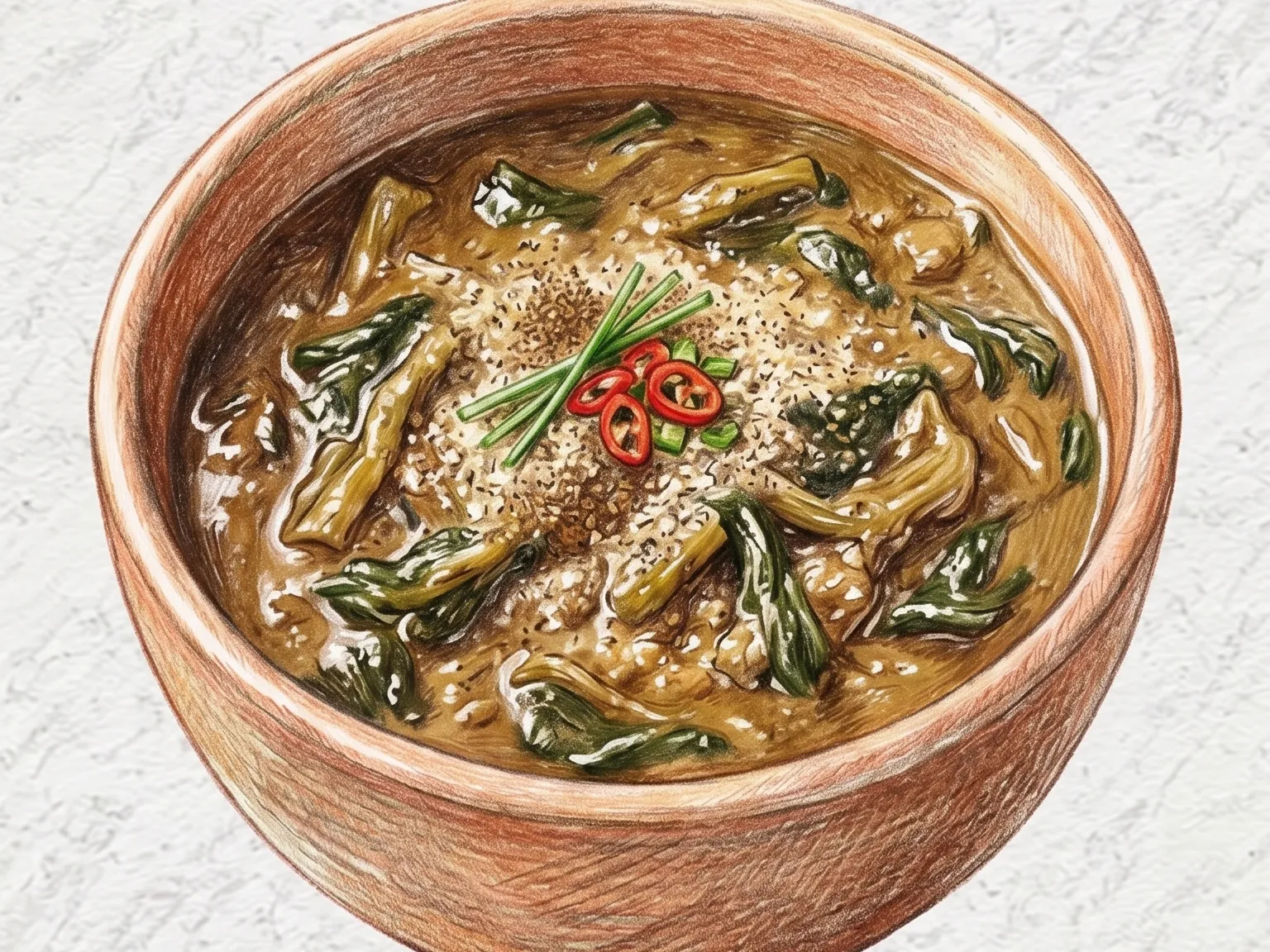
Korean Loach Soup (Blended Loach and Dried Radish Greens Tonic)
Blanch 600 g cleaned loach for 2 to 3 minutes, cool it completely, blend it very finely, and press the puree through a fine sieve several times, because the texture of this soup depends on thorough straining. Top the strained liquid up to 1.7 L with water, whisk in 1 1/2 tbsp doenjang, 1 tbsp gochujang, and 1 tbsp minced garlic, bring it to a boil while stirring along the bottom, and simmer 180 g boiled siraegi in it over medium heat for 25 minutes. Stir in 3 tbsp perilla seed powder little by little and simmer 5 minutes more, until the soup turns creamy and pale.
Quick answer
- Total time
- 75 min
- Level
- Hard
- Servings
- 4 servings
- Ingredients
- 9
About this dish
Whole loach are boiled, ground fine and pushed through a sieve to leave the bones and skin behind, and that broth simmers with siraegi (dried radish greens) until perilla seed powder thickens it.
Read more
A pinch of sansho pepper at the table leaves a light tingle on the tongue.
Ingredients
Instructions
- 1
Put 600 g cleaned loach into rapidly boiling water and blanch over high heat for 2 to 3 minutes.
When foam and impurities rise, drain the fish in a colander and let it cool completely before blending.
- 2
Blend the cooled loach very finely, adding a little of the measured water only as needed so the blades move smoothly.
Press the puree through a fine sieve several times until bones and skin no longer pass through.
- 3
Pour the strained loach liquid into a pot and add the remaining measured water to make 1700 ml total.
Whisk in 1.5 tablespoons doenjang, 1 tablespoon gochujang, and 1 tablespoon minced garlic until no large paste lumps remain.
- 4
Set the pot over medium heat and stir along the bottom while it comes to a boil.
Once it bubbles, skim the foam, lower to medium-low, and keep stirring occasionally so the blended fish does not scorch.
- 5
Add 180 g boiled siraegi and simmer over medium heat for 25 minutes.
Cook gently until the stems soften but still have a chew, and the broth looks thicker and more concentrated rather than watery.
- 6
Stir in 3 tablespoons perilla seed powder little by little and simmer 5 minutes more so it thickens without clumping.
When the soup turns creamy and pale, add 50 g green onion and finish with 0.2 teaspoon ground sansho pepper.
Use-up ingredient planner
Turn these ingredients into two more meals
The overlap excludes basic seasonings. Open the next recipe and your selected dishes will stay with you.
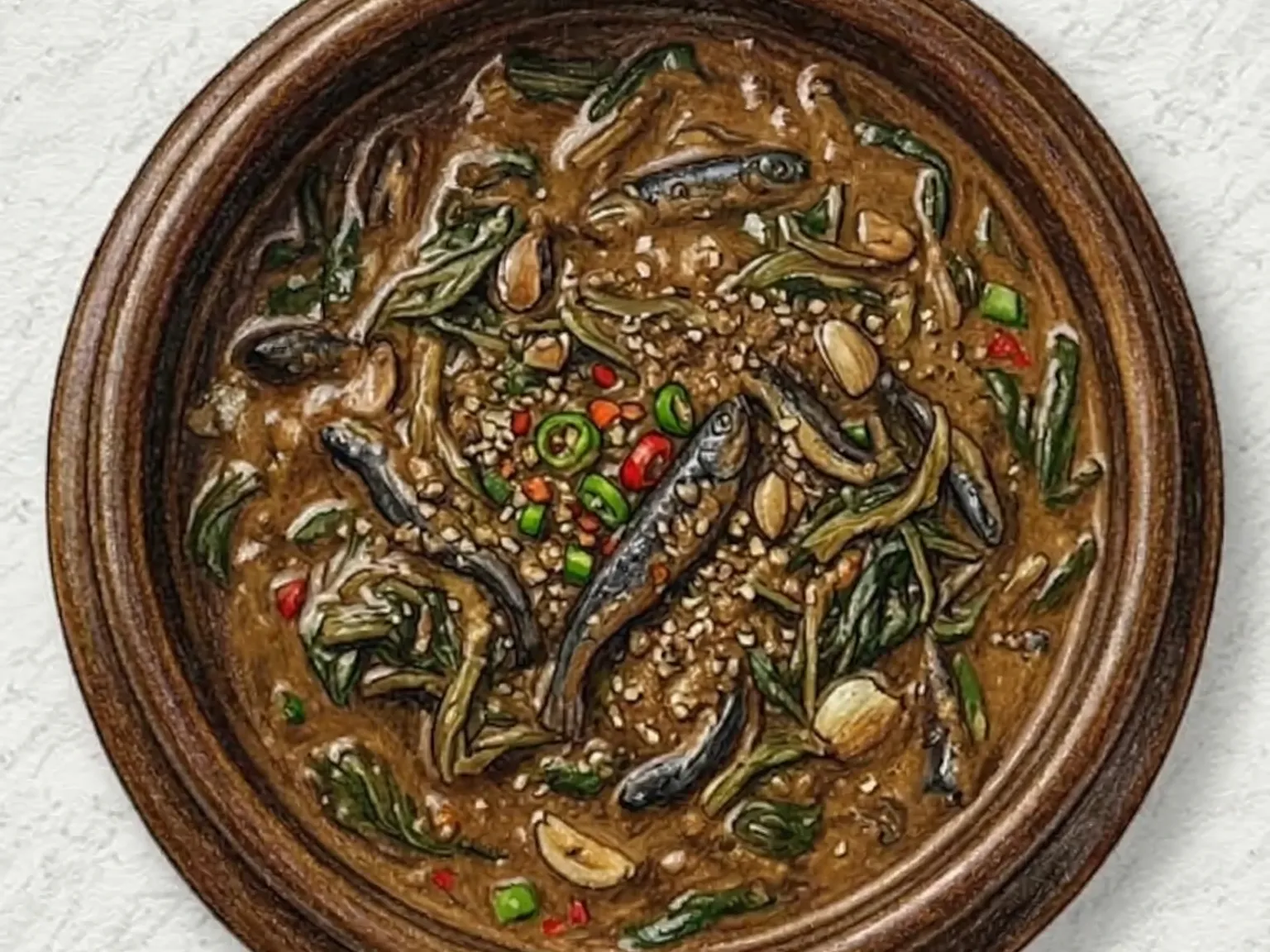
Korean Loach Stew (Ground Loach & Perilla Seed Pot)
Dried radish greens, Perilla seed powder
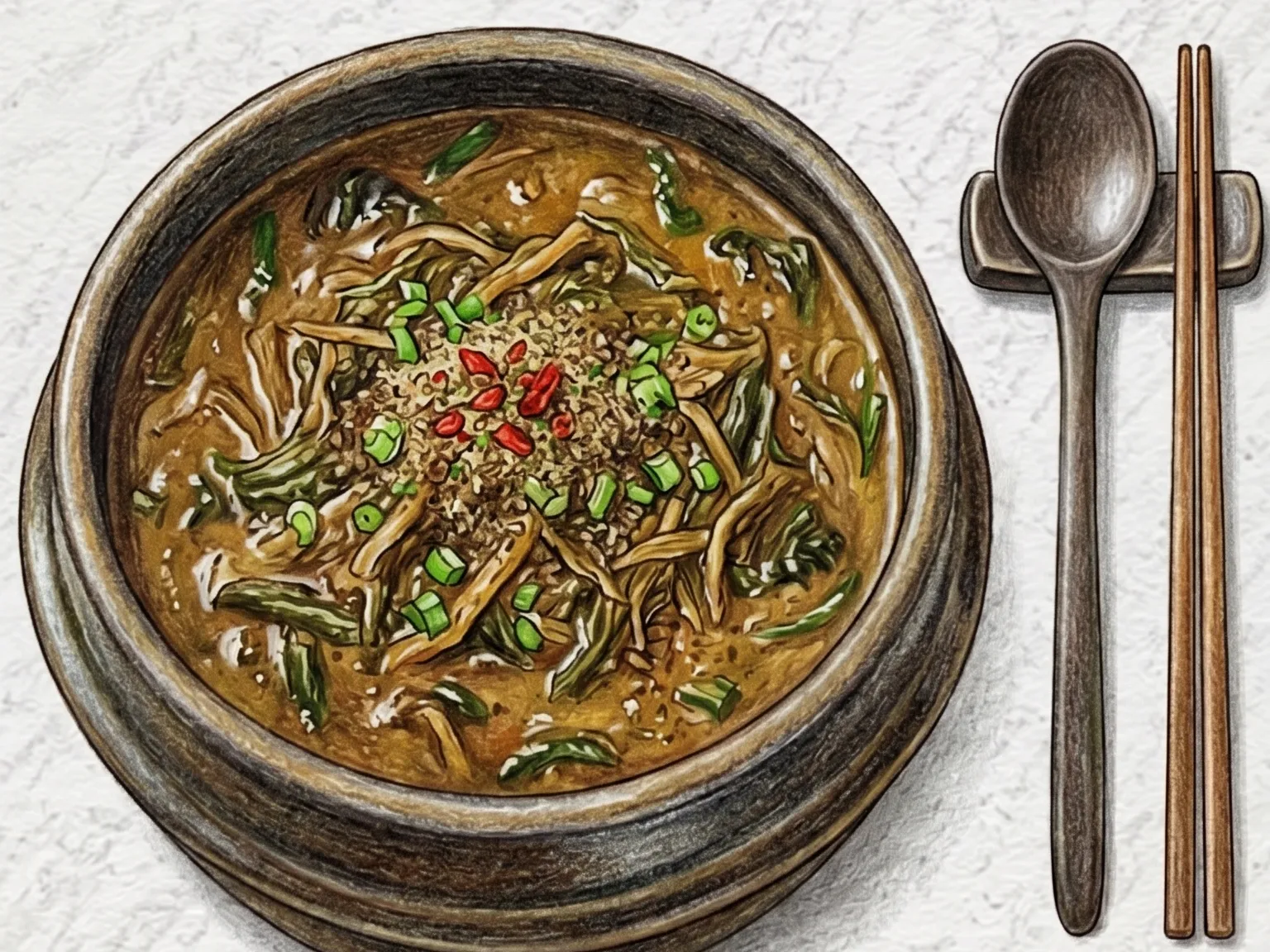
Korean Namdo-Style Loach Soup
Perilla seed powder, Green onion
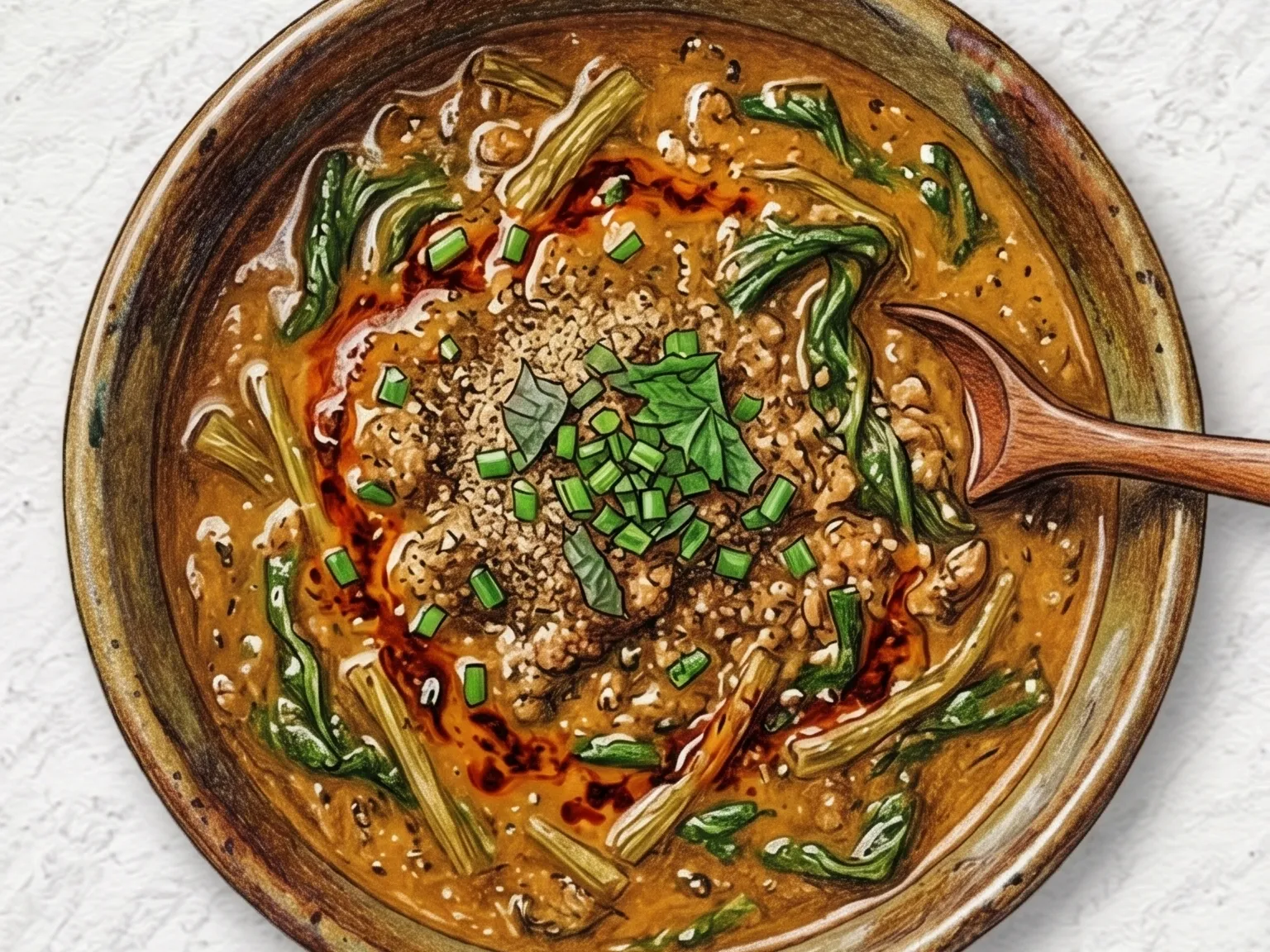
Korean Gangwon-Style Loach Soup
Dried radish greens, Perilla seed powder