Charim

2686 Korean & World Recipes

2686+ Korean recipes, clean and organized. Ingredients to instructions, all at a glance.

Korean Mini Seaweed Rice Rolls

Korean Mini Seaweed Rice Rolls

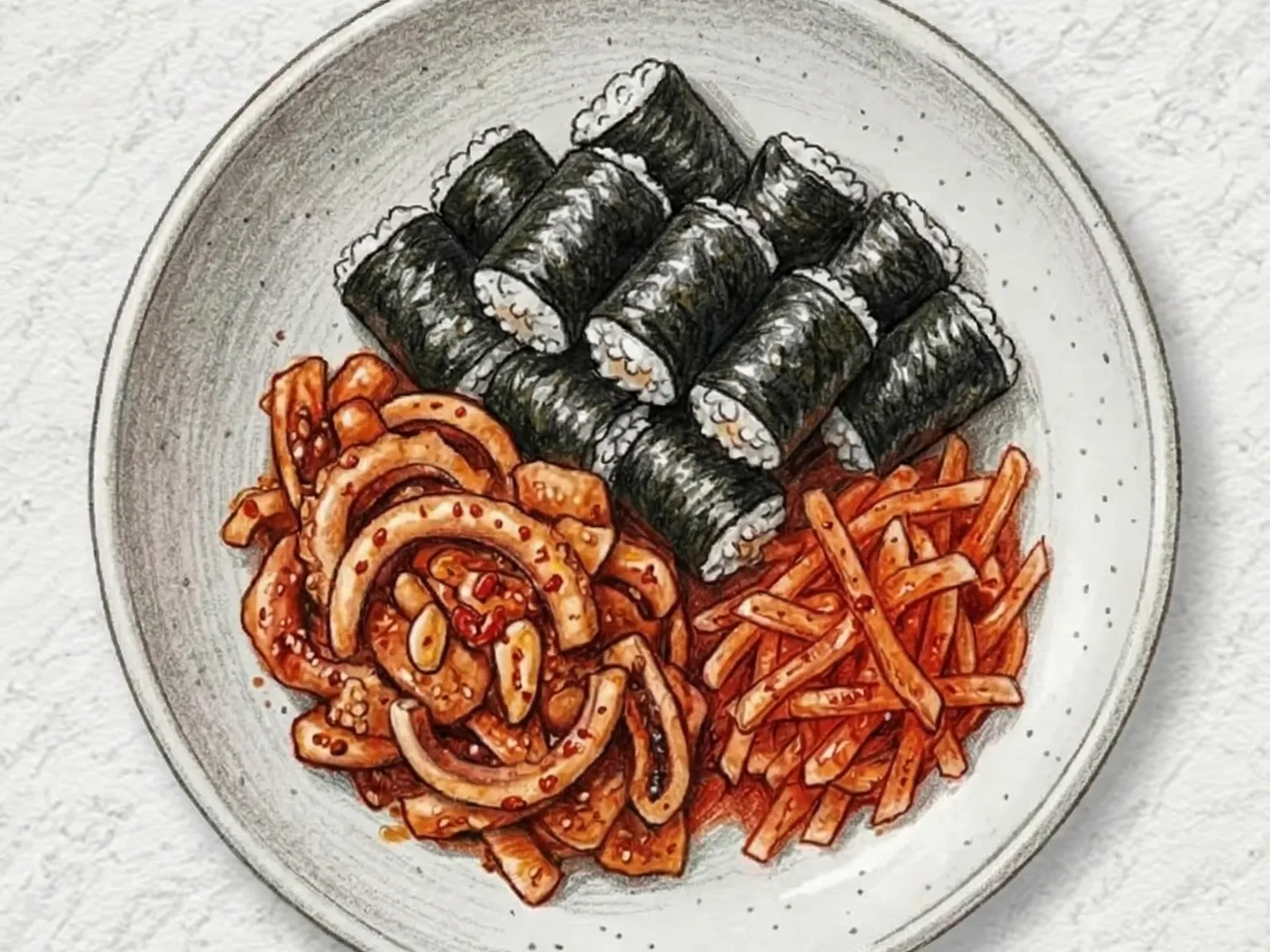
Chungmu gimbap is a regional specialty from Tongyeong in South Gyeongsang Province - small, bite-sized seaweed rice rolls seasoned only with sesame oil and salt, served alongside spicy squid and pickled radish side dishes. The rolls carry no filling at all, so the rice and seaweed stay clean and mild, with all the bold flavor coming from the accompaniments. Blanched squid is tossed in gochugaru, fish sauce, and garlic for a spicy, briny punch, while thin-sliced radish pickled in the same seasoning adds crunch and sharp tartness. The tension between the plain, compact rolls and the intensely seasoned sides is the point of this dish - each plain bite and each fiery bite calibrate each other, making the combination more satisfying than either part alone.

Prep 25min Cook 20min 4 servings

Adjust Servings

2servings
servings

Instructions

  1. 1

    Rinse and cook the rice, then season with salt and sesame oil and let it cool slightly.

  2. 2

    Clean squid, blanch for 2 minutes in boiling water, cool in cold water, and shred into bite-size pieces.

  3. 3

    Slice radish thinly and toss with gochugaru, fish sauce, garlic, and sugar for 10 minutes.

  4. 4

    Cut seaweed sheets in half and roll small compact portions of rice into bite-sized rolls.

  5. 5

    Plate the mini gimbap and serve immediately with seasoned squid and radish.

🛒Shop Ingredients on Amazon

As an Amazon Associate, we may earn from qualifying purchases.

Tips

Let the rice cool slightly before rolling so the seaweed stays crisp.
Make the radish salad 30 minutes ahead for better flavor absorption.

Nutrition (per serving)

Calories
430
kcal
Protein
18
g
Carbs
67
g
Fat
10
g

Goes Well With

Saenggang Jeonggwa (Candied Ginger)
DessertsMedium

Saenggang Jeonggwa (Candied Ginger)

Saenggang jeonggwa is a traditional Korean candied ginger prepared by slicing fresh ginger thin, blanching it twice to reduce the raw heat, then simmering the pieces slowly in a glaze of sugar and grain syrup. A ten-minute soak in cold water draws out the sharpest bite first, and two rounds of boiling soften the pungency further while leaving the clean, aromatic core intact. The slices are cooked on low heat until the syrup reduces to a thick, glossy coat on the surface, at which point lemon juice is added to introduce an acidity that keeps the sweetness from becoming cloying. Once dried on a rack and rolled in granulated sugar, the finished pieces carry a crisp, crystalline shell on the outside. On the first bite, the sugar crust shatters, and the chewy, syrup-saturated ginger beneath releases a slow, building warmth that lingers well after the piece is finished.

🎉 Special Occasion🧒 Kid-Friendly
Prep 15minCook 45min4 servings
Korean Rolled Omelette (Layered Vegetable Egg Roll)
Side dishesEasy

Korean Rolled Omelette (Layered Vegetable Egg Roll)

Gyeran-mari - Korean rolled omelette - is a staple of Korean lunchboxes and dinner tables, a dish every Korean home cook masters early. Finely diced carrot, onion, and scallion are mixed into beaten eggs and poured in a thin stream across a lightly oiled rectangular pan. When the egg layer is half-set, it is rolled from one side to the other, then more egg mixture is poured beside the roll and the process repeats three to four times, building concentric yellow layers visible when sliced. Air trapped between the thin sheets gives the omelette its characteristic pillowy softness. Temperature control is critical - too hot and the egg browns; too cool and the layers will not bond. After cooking, wrapping the roll in a bamboo mat or kitchen towel for two minutes sets its shape into a clean cylinder. Found in school cafeterias, picnic bento boxes, and family dinners across Korea.

🏠 Everyday🧒 Kid-Friendly
Prep 10minCook 8min2 servings
Korean Sweet Corn Latte (Butter Sauteed Corn Milk Drink)
DrinksEasy

Korean Sweet Corn Latte (Butter Sauteed Corn Milk Drink)

Sweet corn latte begins by sauteing cooked corn kernels in butter until fragrant, then simmering them in milk to draw out the corn's natural sugars before blending everything smooth. The butter amplifies the starchy, roasted aroma during the initial saute, coating each kernel so that the fat-soluble flavor compounds dissolve fully into the milk during the five-minute simmer. Blending the mixture until completely smooth and then straining it through a fine sieve removes any remaining hull pieces, producing a texture as silky as a custard sauce. This straining step makes a noticeable difference in the final quality. Condensed milk adds a rounded sweetness, and a small amount of white pepper introduces a faint spiced warmth that gives the drink depth beneath the sweetness. It works equally well served hot in a ceramic mug or chilled and poured over ice; the corn aroma remains vivid in both versions.

🍺 Bar Snacks🧒 Kid-Friendly
Prep 8minCook 10min2 servings
Korean Kimchi Glass Noodle Stir-Fry
NoodlesEasy

Korean Kimchi Glass Noodle Stir-Fry

Kimchi japchae is a variation on classic Korean glass noodle stir-fry that replaces the usual assortment of vegetables with well-fermented aged kimchi, giving the dish a bold tangy heat that the original does not have. Glass noodles are boiled, rinsed in cold water to stop the cooking, and pre-seasoned with soy sauce so they absorb flavor before hitting the pan. Pork shoulder goes in first to render its fat and build a savory base in the wok, then the kimchi -- thoroughly squeezed dry -- is added and stir-fried until the sourness concentrates and caramelizes slightly. Removing the kimchi's moisture is a non-negotiable step: excess liquid steams the noodles rather than frying them, causing the noodles to swell and the overall seasoning to turn watery and flat. Sliced onion goes in with the kimchi to contribute a natural sweetness that softens the acidity. Once the aromatics are cooked down, the noodles are tossed in with additional soy sauce and a small amount of sugar if the kimchi is especially sour. The pan comes off the heat before sesame oil is added to preserve its fragrance, and whole sesame seeds finish the dish. The combination of the noodles' chewy elasticity and the kimchi's pungent, fermented character produces a version of japchae that tastes fundamentally different from the traditional preparation.

🏠 Everyday🍱 Lunchbox
Prep 15minCook 15min2 servings

More Recipes

Korean Tuna Kimchi Gimbap
Street foodEasy

Korean Tuna Kimchi Gimbap

Tuna-kimchi gimbap rolls together drained canned tuna, stir-fried kimchi, and mayonnaise inside seasoned rice and roasted seaweed sheets. Stir-frying the kimchi for two minutes drives off excess liquid and concentrates its fermented tang into a deeper, more savory flavor. Perilla leaves layered directly on the rice add a herbal, slightly minty fragrance that offsets the richness of the tuna-mayo filling. A light brush of sesame oil on the finished roll preserves the seaweed's crispness while adding a final nutty aroma to every slice. Matching tuna and cooked kimchi in a one-to-one ratio keeps the salt and umami in balance, and adding just enough mayonnaise to bind the filling prevents the rice from turning soggy during rolling.

🍱 Lunchbox
Prep 20minCook 10min2 servings
Korean Tuna Mini Gimbap (Addictive Bite-Sized Tuna Mayo Seaweed Rolls)
Street foodEasy

Korean Tuna Mini Gimbap (Addictive Bite-Sized Tuna Mayo Seaweed Rolls)

Tuna mayak gimbap are bite-sized rolls made by cutting seaweed sheets in half, spreading a thin layer of sesame-oil-seasoned rice, and filling with tuna-mayo, pickled radish, sauteed carrot, and blanched spinach. Draining the canned tuna thoroughly before mixing with mayonnaise prevents sogginess while keeping the filling creamy. The pickled radish provides a sharp crunch that cleanses the palate between each piece, and the lightly sauteed carrot brings a touch of natural sweetness. Their miniature size ensures every ingredient registers in a single bite, delivering a compact burst of balanced flavor.

🍱 Lunchbox
Prep 20minCook 10min2 servings
Korean Seaweed Rice Roll
Street foodMedium

Korean Seaweed Rice Roll

Gimbap is a Korean seaweed rice roll made by spreading sesame-oil-and-salt-seasoned rice over a sheet of gim, then lining up individually prepared fillings such as spinach namul, sauteed carrot, egg strip, ham, pickled radish, and braised burdock before rolling tightly. Each filling is cooked separately so distinct flavors and textures meet in every bite. The rice must cool before spreading, because hot rice releases steam that softens the seaweed and breaks the roll's structure. When sliced, the cross-section reveals concentric rings of color, and a final brush of sesame oil over the finished roll deepens the nuttiness of the seaweed while giving the surface a slight sheen. The combination of fillings can shift with the season or personal preference, which is part of why gimbap remains a staple from picnic lunches to neighborhood snack bars.

🍱 Lunchbox
Prep 30minCook 15min2 servings
Korean Deep-Fried Seaweed Rice Roll
Street foodMedium

Korean Deep-Fried Seaweed Rice Roll

Gimmari is a Korean street snack of glass noodles seasoned with soy sauce and sesame oil, rolled tightly inside sheets of dried seaweed with julienned carrot and onion, then coated in a light batter and deep-fried until golden. At around 160 degrees Celsius, the seaweed barely absorbs oil during frying, crisping into a thin, taut shell while the glass noodles inside retain their characteristic springy, chewy pull. The first bite delivers the simultaneous crunch of the fried coating and the intensified savory depth of the toasted seaweed, followed by the elastic bounce of the glass noodles and the underlying soy-sesame seasoning that runs through the filling. One of gimmari's more notable qualities is the way high-heat frying concentrates the seaweed's natural umami, making the wrapper more flavorful than it would be raw. The classic accompaniment is tteokbokki sauce: the tangy, gochujang-based spice of the sauce against the crisp exterior creates one of the most iconic pairings in Korean street food. Eomuk broth on the side rounds out the combination, and the trio of gimmari, tteokbokki, and eomuk is essentially the standard order at any Korean bunsik stall.

🍺 Bar Snacks🧒 Kid-Friendly
Prep 20minCook 10min2 servings
Korean Spicy Fermented Squid Jeotgal
KimchiMedium

Korean Spicy Fermented Squid Jeotgal

Ojingeo jeotgal is a Korean fermented squid preserve made by salting cleaned, finely chopped squid for one hour to firm the flesh and extract moisture, then dressing it in a paste of gochugaru, minced garlic, ginger, fish sauce, and corn syrup. The salt cure intensifies the squid's natural chewiness, and cutting the pieces small accelerates seasoning absorption during the two-to-three-day cold fermentation. Chili flakes coat every surface in a deep red layer that delivers steady heat, while corn syrup adds gloss and a mild sweetness that prevents the salt from dominating. Spooned over steamed rice, each piece offers a firm, springy chew followed by a wave of fermented umami. Mixing in a touch of sesame oil before serving softens the saltiness and adds a nutty fragrance that rounds out each mouthful.

🍱 Lunchbox
Prep 30min4 servings
Korean Mushroom Japchae (Shiitake Glass Noodle Stir-Fry)
Side dishesMedium

Korean Mushroom Japchae (Shiitake Glass Noodle Stir-Fry)

Beoseot japchae replaces beef with shiitake mushrooms as the primary source of savory depth, making it a staple of Buddhist temple cuisine and vegetarian tables alike. Sweet potato noodles are soaked and boiled, then rinsed in cold water immediately to lock in a firm, springy texture. Shiitake, spinach, carrot, and onion are each cooked separately - their moisture levels and heat tolerances differ enough that combining them prematurely flattens every component. Soy sauce, sugar, minced garlic, and sesame oil bring the noodles and vegetables together, and the finished dish rests for ten minutes so the seasoning penetrates the noodles evenly. The result is a japchae where the mushroom carries genuine umami weight without any meat.

🏠 Everyday🎉 Special Occasion
Prep 20minCook 15min4 servings
More Street food →