Chwee Kueh (Steamed Rice Cake with Chai Poh)
Quick answer
Chwee kueh is a traditional steamed rice cake that is commonly eaten during breakfast in Singapore and Malaysia.
What makes this special
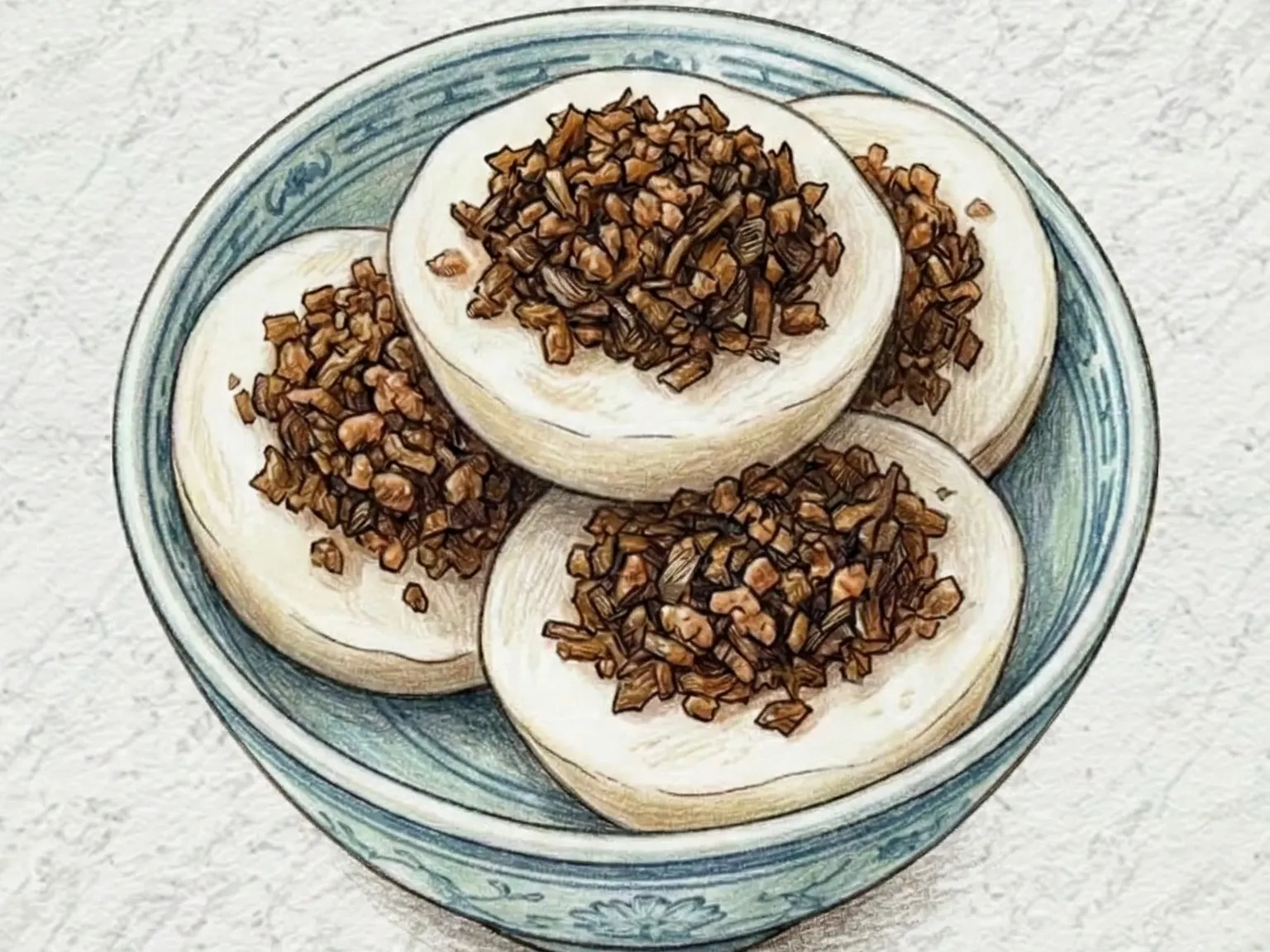
- Steamed Chwee Kueh rice cakes contain a signature dimple filled with savory caramelized radish.
- Center dimple designed specifically to hold caramelized chai poh
- Bland rice cake base lets the topping carry all the flavor
Key ingredients
Core cooking flow
- 1 Put 180g rice flour, 420ml water, and 1/2 tsp salt in a bowl.
- 2 Prepare small heatproof steaming cups and whisk the batter once more before...
- 3 Bring the steamer water to a full boil before setting in the cups, then cover the steamer.
Chwee kueh is a traditional steamed rice cake that is commonly eaten during breakfast in Singapore and Malaysia. The dish originated within the Teochew Chinese community and has been passed down through multiple generations of hawker vendors. These snacks are typically available during the earliest hours of the morning at specialized stalls that often do not sell any other types of food. The preparation involves pouring a batter made of rice flour into small, round ceramic molds. These molds are placed into a steamer until the batter solidifies into a soft and slightly concave cake. The natural indentation found in the center of the rice cake is designed to accommodate a spoonful of chai poh, which is a topping made from preserved radish. The radish is finely chopped and stir-fried with soy sauce and a small amount of sugar. This process creates a mixture that balances savory and sweet flavors while allowing some of the radish pieces to develop caramelized edges. The rice cake base is intentionally kept plain and carries only a very faint sweetness from the rice itself. As a result, the overall flavor of the dish is determined by the seasoned radish and the sambal chili that is provided on the side. The addition of sambal introduces a significant amount of heat and a savory element that sharpens the flavor profile of the entire combination. A typical order of chwee kueh consists of five or six individual cakes served at a very modest price. This affordability and consistent quality have helped the dish become a prominent symbol of daily breakfast culture in Singapore. Some hawker stalls have continued to operate and serve chwee kueh from the exact same location for over fifty years. The longevity of these establishments reflects how deeply this particular rice cake dish is integrated into the regional food history and the everyday lives of the local population.
Instructions
Read the steps as a cooking flow: prep, heat, seasoning, doneness control, and finish.
- 1Season
Put 180g rice flour, 420ml water, and 1/2 tsp salt in a bowl.
Whisk thoroughly, scraping the bottom and sides, until the batter is thin, smooth, and free of dry pockets or lumps.
- 2Prep
Prepare small heatproof steaming cups and whisk the batter once more before pouring, since rice flour settles quickly.
Fill each cup about 80% full, then skim surface bubbles with a spoon for a smoother top.
- 3Control
Bring the steamer water to a full boil before setting in the cups, then cover the steamer.
Steam over medium-high heat for about 12 minutes, keeping the lid closed so the centers set evenly.
- 4Prep
Insert a chopstick or skewer into a cake.
If it comes out clean, turn off the heat; if any surface water has pooled, tilt the cup gently, then rest the cakes in their molds for 1 minute.
- 5Finish
If the preserved radish tastes very salty, rinse it briefly and squeeze out excess water.
Heat 1 tbsp cooking oil in a pan over medium heat, then saute 1 tsp minced garlic for 30 seconds until fragrant, not browned.
- 6Finish
Add 100g preserved radish and stir-fry for about 2 minutes, until moisture reduces and the edges look lightly golden.
Stir in 1 tbsp soy sauce, spoon the topping into each rice cake indentation, and serve immediately.
After the steps
Pick a recipe that fits this dish.
Continue with shared ingredients, meal pairings, or a similar method.
Recipes That Go Well With This
More Asian →Based on shared ingredients and meal pairing
Pork Bossam Apple Mustard Salad
Bossam apple mustard salad uses thinly sliced cold boiled pork belly as its main component, arranged over shredded cabbage, cucumber, and crisp apple slices, then finished with a sharp mustard-soy vinaigrette. Chilling the boiled pork completely before slicing is not optional: warm pork crumbles under the knife, while cold pork yields clean, even cuts that hold their shape on the plate. Cabbage and cucumber provide a firm, crunchy base whose texture directly contrasts with the soft, fatty pork, and the apple slices introduce a cool sweetness along with a welcome burst of moisture. Korean hot mustard, dissolved generously into a soy-vinegar dressing, releases a nasal, sinus-clearing heat with each bite that cuts through the richness of the pork fat without the acidity becoming the dominant note. Perilla leaves placed underneath the pork act as both a flavoring layer and a suppressor of any residual pork odor, their herbal intensity complementing the mustard without competing with it. The salad works equally well as a standalone meal and as a second-day use for leftover bossam from the previous night, which is one reason it appears in Korean home kitchens as often as it does.
Korean Fish Cake Soup (Clear Anchovy Radish Broth)
Eomuk-tang is a Korean fish cake soup in which skewered fish cakes and thick radish slices simmer in a clear broth built from dried anchovies and kelp. The kelp must be removed the moment the water begins to boil, otherwise it releases a slimy texture that clouds the broth. Cutting the radish thick allows it to slowly release natural sweetness over the long simmer. Rinsing the fish cakes in hot water before adding them washes away surface oil and keeps the broth clear and clean. Soup soy sauce adjusts the seasoning, and green onion and black pepper finish the pot. Adding the radish before the fish cakes ensures it has enough time to fully soften and sweeten the broth, since it takes longer than the eomuk to cook through.
Korean Aged Kimchi Mackerel Bibim Noodles
Pan-searing mackerel until golden and pairing it with stir-fried aged kimchi creates a multi-layered Korean noodle bowl. Sprinkling salt over the fish for ten minutes draws out excess moisture to minimize any fishy scent. Once the fillet is crispy and flaked, the meat integrates easily into the noodles without the hindrance of bones. Stir-frying the aged kimchi for two minutes mellows its sharp acidity while anchoring the fermented profile of the dish. The dressing uses a base of gochujang and gochugaru, balanced with plum syrup, vinegar, and sesame oil to provide spicy, sweet, and tangy elements in every bite. Adding a touch of doenjang strengthens the connection to the fermented kimchi and builds a solid base of flavor. Draining the wheat noodles completely ensures the sauce stays concentrated and clings to each strand. Sliced cucumber and roasted seaweed flakes add texture and a hint of the sea to cut through the mackerel's natural oils, while julienned perilla leaves contribute a refreshing herbal scent. Mixing hot rice into the sauce remaining at the bottom of the bowl provides a final way to finish the meal.
Hainanese Chicken Rice (Poached Chicken on Fragrant Rice)
Hainanese chicken rice is the signature dish of Singapore and Malaysia, built on the deceptively simple technique of poaching bone-in chicken thighs in water seasoned with ginger and scallion at a consistently gentle temperature, then using the resulting broth to cook the rice. The temperature during poaching is the defining variable: the water must stay at a bare tremble rather than a rolling boil to keep the muscle fibers relaxed and the meat silky rather than fibrous or dry. For the rice, garlic and ginger are sauteed in oil or rendered chicken fat until fragrant, then raw jasmine rice joins the pot and the strained poaching broth replaces plain water for cooking. A spoonful of additional chicken fat stirred in before the lid goes on gives the finished rice a glossy sheen and noticeably richer aroma. The poached chicken is cooled, sliced across the grain to show a smooth, tender cross-section, and arranged alongside fresh cucumber slices that add a crisp, refreshing contrast to the soft meat. Two condiments accompany the dish and define its character: a chili-ginger sauce that provides heat and brightness, and a thick, dark soy sauce that contributes deep, caramel-like sweetness. Despite relying on few ingredients, the dish rewards careful attention to poaching temperature and broth management at every stage.
Similar recipes
Kaya Toast (Singaporean Coconut Jam Butter Toast)
Kaya toast is the defining breakfast of Singaporean coffee shops, built from two slices of crisped white bread filled with kaya and a thick slab of cold butter. Kaya is a jam made by cooking coconut milk, eggs, sugar, and fresh pandan leaf over low heat with constant stirring until the mixture thickens into a pale green spread that smells of vanilla, coconut, and floral sweetness simultaneously. The bread is toasted directly over charcoal or in a grilling rack until it shatters at the edges. Cold butter placed inside the hot toast begins to soften immediately at the center while retaining its chill at the edges, so each bite delivers a different ratio of fat and sweetness. The traditional pairing is two soft-boiled eggs cracked into a shallow bowl, seasoned with dark soy sauce and a grind of white pepper, then loosely mixed into a thin custard for dipping or dunking. Alongside these, a glass of kopi - coffee brewed through a cloth sock filter and sweetened with condensed milk - completes the set. This breakfast combination has changed very little in decades and remains the first meal of the day for many Singaporeans, served at everything from old neighborhood kopitiams to national chains like Ya Kun Kaya Toast.
Mee Siam (Singaporean Tangy Tamarind Shrimp Rice Vermicelli)
Mee siam is a rice vermicelli dish from Singapore and Malaysia defined by a tamarind-based sauce that balances sour, sweet, and spicy in one bowl. Thin rice noodles are stir-fried with a rempah, a pounded paste of dried shrimp, shallots, and chili, then finished with tamarind water, fish sauce, and sugar, with bean sprouts and tofu added near the end. A squeeze of fresh lime over the top introduces a bright acidity that cuts through the richness of the stir-fry. Despite the name referencing Siam, the dish is a distinctly Malay-Singaporean creation rather than Thai, most commonly eaten at breakfast or as a light meal at hawker centers. Soft-boiled eggs and whole shrimp are the standard toppings when the dish is served, and the heat level can be adjusted by varying the amount of chili in the rempah. Soaking the dried shrimp and pounding them finely before cooking deepens the umami in the rempah and spreads a consistent seafood richness throughout the sauce that whole or coarsely ground shrimp cannot achieve.
Hainanese Curry Rice (Mixed Curry Gravy Platter)
Hainanese curry rice is a Singaporean comfort plate that grew out of the island's Hainanese immigrant community, blending Japanese-style pork cutlet, Malay curry traditions, and the influence of British colonial cooking into a single unassuming dish. Crispy pork cutlet, boiled potato, and blanched cabbage are laid over steamed rice, then drenched in a combination of curry gravy and braised soy sauce that pool together on the plate. The curry begins with blooming curry powder in oil to coax out its full fragrance before coconut milk and water are added, simmering until the sauce thickens and takes on a gentle coconut sweetness alongside the layered spice. What truly distinguishes this plate is the intentional mixing of two contrasting sauces directly on the rice, where the heat and warmth of curry meets the saltier, deeper soy-braised gravy. The pork cutlet is sliced only at the moment of serving to preserve its crunch against the liquid. Soft potato pieces and slightly firm cabbage provide textural counterpoints to each bite of crunchy cutlet and saucy rice. In Singapore, this dish is served from early morning at hawker centres where each stall keeper holds their own closely guarded ratio of spices, making the quality of the gravy the true mark of each vendor.
Cullen Skink Recipe (Scottish Smoked Haddock Chowder)
Cullen skink is a creamy smoked fish soup from the northeastern Scottish fishing village of Cullen, traditionally made with smoked haddock, potato, and milk rather than cream or thickening flour. The fish is gently poached in milk with a bay leaf over low heat for eight minutes until the liquid is deeply infused with smoke, then removed and flaked. The starch-laden milk is strained and reserved. Butter-softened onions go into the pot first to draw out their sweetness, followed by diced potato and the infused milk. As the potato cooks through, its natural starch thickens the soup into a silky, spoonable chowder without any added cream. The reserved fish goes back in along with cracked black pepper and chopped parsley for a final three-minute simmer that brings smoke, potato, and herb into one cohesive flavor. Because salt levels in smoked fish vary considerably between producers, seasoning should always be adjusted at the very end after tasting. Served with dark rye bread or soda bread, one bowl makes a satisfying main course on its own.
Aloo Samosa (Indian Crispy Potato-Filled Fried Pastry)
Samosa first appears in written form in a 10th-century Central Asian cookbook under the name sambosa, then follows trade routes westward into Persia and east into the Indian subcontinent, where it settled into street-food culture so thoroughly that chai stalls sell hundreds before noon each morning. The dough is stiff - flour, water, and oil kneaded until firm - and rolled thin. Too soft a dough absorbs oil during frying and turns greasy rather than crisp. The filling is boiled potato mixed with cumin, fresh green chili, and cilantro; the cumin's earthy fragrance permeates the potato during the mixing. The dough folds into a cone, filling goes in, air is pressed out carefully before sealing - trapped air expands in the hot oil and splits the crust. Fried at the correct temperature, the layered shell blisters outward, turns golden brown, and shatters audibly on first bite. Inside is a warm, lightly spiced potato that has absorbed all that cumin. Mint chutney and tamarind sauce are served alongside, their sourness and sweetness doing what the filling alone cannot.