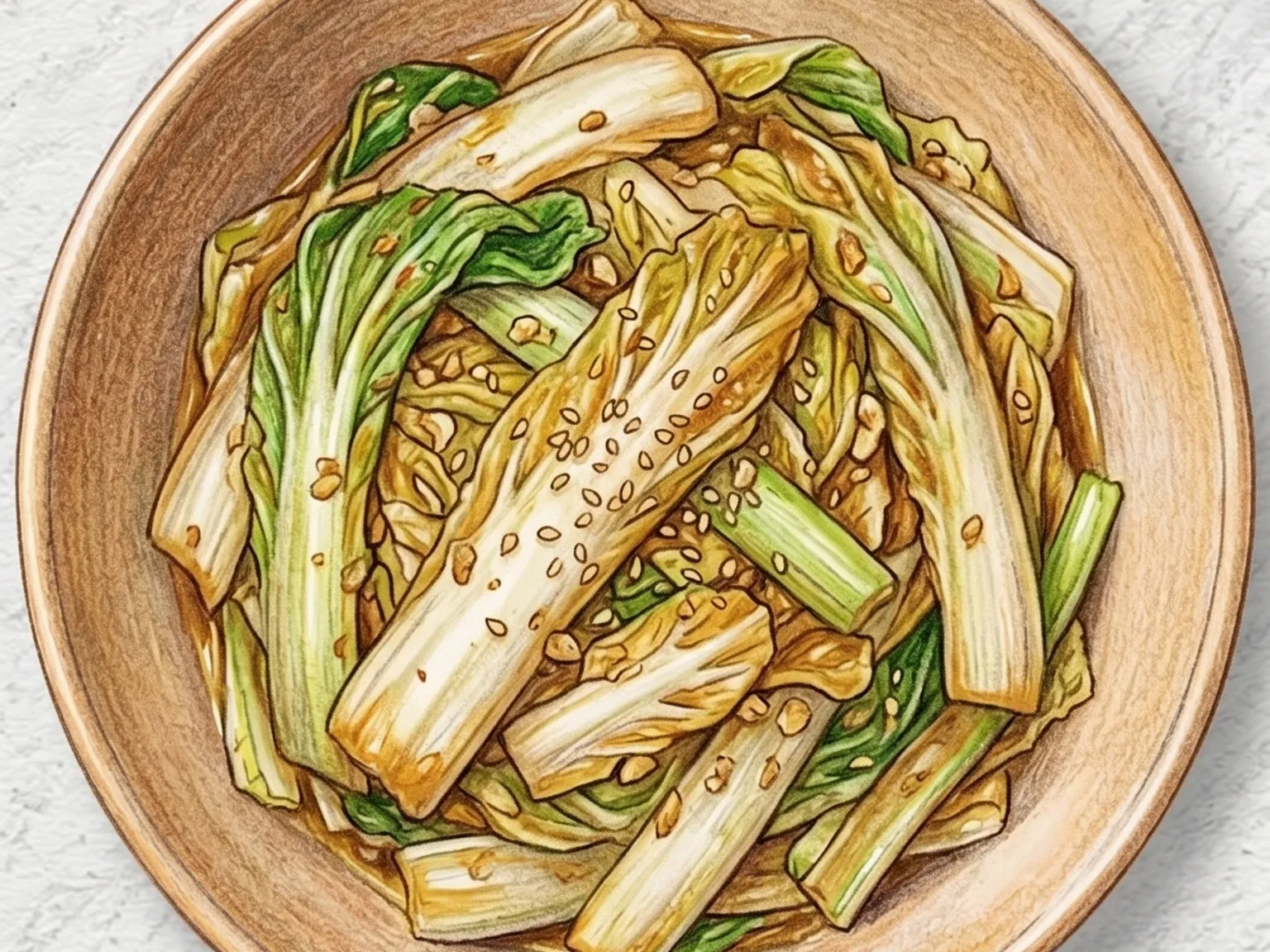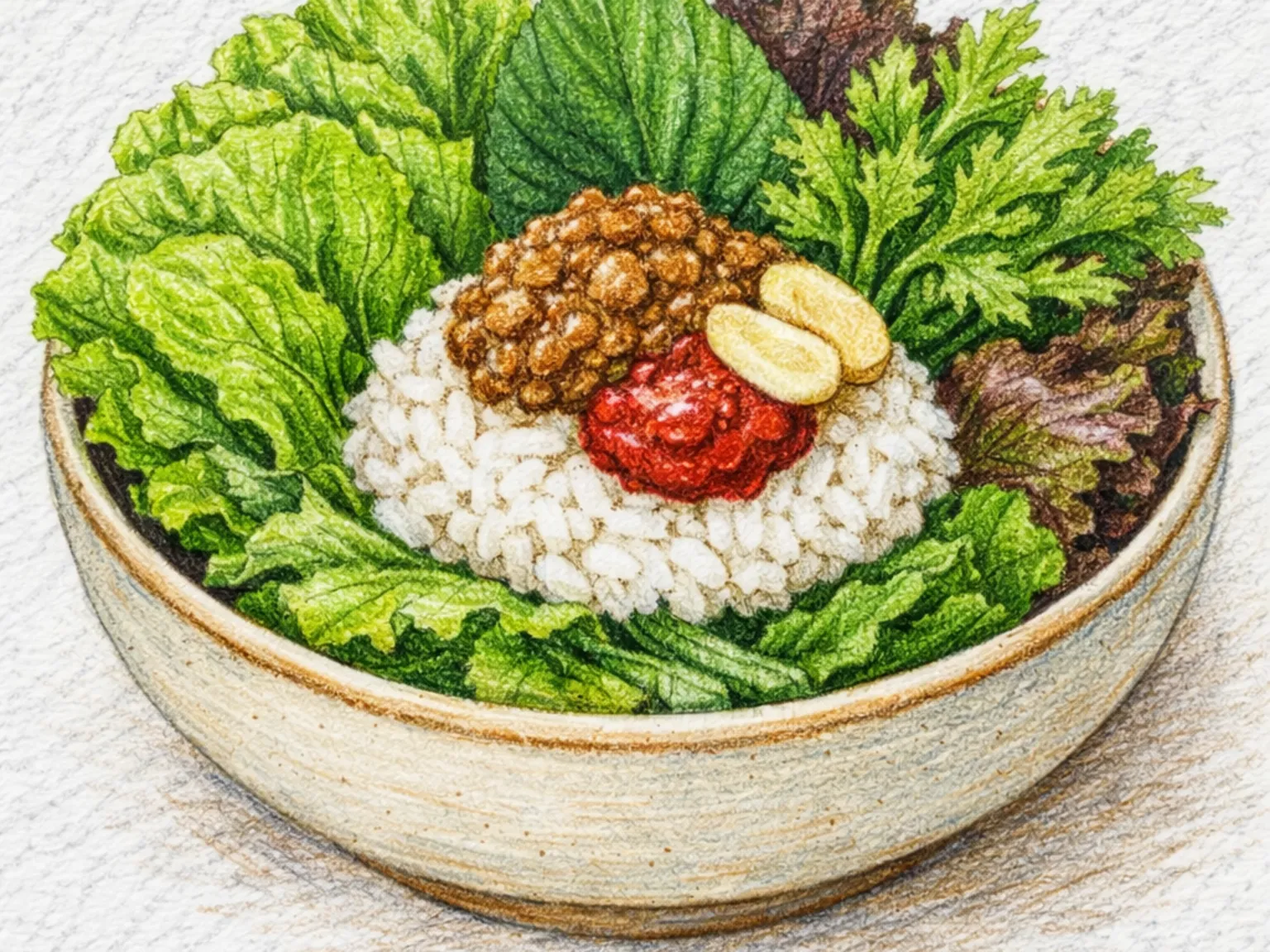
Korean Aster Herb Namul (Blanched Mountain Greens Seasoned)
Chwinamul - aster scaber - is among Korea's most beloved mountain herbs, foraged from hillsides every spring. Its broad leaves carry a bitter, herbaceous edge that sets it apart from milder greens. A one-to-two minute blanch tames rawness while preserving the woodland scent. Dressed with garlic, salt, and perilla oil instead of sesame, the herb's wild character stays front and center. Sauteing in perilla oil deepens the fragrance. A staple of bibimbap and temple cuisine.
Adjust Servings
Instructions
- 1
Blanch the aster herb in boiling salted water for 1-2 minutes.
- 2
Rinse in cold water and squeeze out excess moisture.
- 3
Season with garlic, perilla oil, and salt; sprinkle with sesame seeds.
As an Amazon Associate, we may earn from qualifying purchases.
Tips
Nutrition (per serving)
More Recipes

Korean Mugwort Soup (Spring Mugwort in Savory Doenjang Broth)
Ssuk-guk is a seasonal doenjang soup that appears on Korean tables during early spring, when young mugwort shoots are tender enough to eat. The base is an anchovy-kelp stock into which soybean paste is strained, creating a mellow, savory foundation. Fresh mugwort is added only at the very end of cooking - just long enough for the leaves to wilt - because extended heat dulls their vivid green color and drives off the fragrance that makes this soup worth making. When timed correctly, each spoonful delivers the herb's distinctive bittersweet aroma, somewhere between sage and chrysanthemum, layered over the fermented depth of the doenjang. Cubed tofu softens in the hot broth and provides a neutral, creamy texture that balances the herbal intensity. A scattering of sliced scallion on top adds a mild sharpness. The soup is deliberately simple, designed to let mugwort take center stage as a reminder that the long winter is finally over.

Korean Zucchini Namul (Sesame-Dressed Bibimbap Topping)
Hobak namul is julienned zucchini stir-fried with sesame oil and garlic - a foundational Korean namul that appears as one of the five-color toppings in bibimbap. Though it looks similar to hobak-bokkeum, the cut makes the difference: namul uses thin julienne strips rather than half-moons, so the strands integrate seamlessly with rice grains when mixed. Salting and thoroughly squeezing out moisture is essential; leftover water makes the pan soggy and turns bibimbap rice gummy. Seasoning stays minimal - salt and sesame oil - with garlic gently sauteed first to lay down an aromatic base without burning. Three minutes over medium heat is enough, and the cooked strands hold their shape well even after cooling, which makes this a reliable lunchbox option.

Korean Seaweed Salad (Tangy Chili-Vinegar Dressed Miyeok)
Miyeok-muchim is rehydrated seaweed dressed in cho-gochujang (vinegared chili paste) or cho-ganjang (vinegared soy sauce) - one of the most common ways Koreans consume miyeok outside of birthday soup. Thirty grams of dried miyeok expands eight to ten times its volume when soaked for twenty minutes, easily serving two - the most common beginner mistake is adding far too much dried seaweed. A brief blanch in boiling water deepens the color to a vivid green, reduces the marine odor, and a cold rinse afterward sets the slippery yet bouncy texture. Cho-gochujang dressing (gochujang mixed with vinegar and sugar) adds a sweet-sour-spicy layer that tempers the seaweed's natural brininess. Mixing in julienned cucumber creates a textural contrast between the silky seaweed and crunchy vegetable. At roughly fifty kilocalories per serving and rich in dietary fiber and iodine, this banchan is a mainstay of Korean health-conscious eating. Served chilled from the refrigerator, it is particularly refreshing in summer.

Korean Young Radish Kimchi
Young radish greens and their slender stems are salted briefly, dressed in a gochugaru-based paste, and fermented into a kimchi synonymous with Korean summer. The greens are more delicate than mature radish, absorbing the seasoning quickly while retaining a refreshing crunch that lasts well into fermentation. Gochugaru and anchovy fish sauce form the backbone of the paste, delivering heat and deep umami in equal measure, while garlic lends a pungent undercurrent that mellows as the fermentation progresses. Once dressed, the radish greens release their own moisture, creating a naturally occurring brine that becomes the hallmark of yeolmu kimchi: a tangy, chili-flecked liquid that can be spooned over cold noodles or rice. Even half a day at room temperature kicks off the fermentation, introducing a sharp, fizzy acidity that signals the kimchi is alive. Transferring it to the refrigerator slows the process and stabilizes the flavor at a bright, appetizing sourness. Draped over bibim-guksu or naengmyeon, it brings a cooling, spicy bite that defines the Korean summer table.

Korean Seasoned Eoseuri Herb Namul
Eoseuri - Korean cow parsnip, Heracleum moellendorffii - is a wild mountain herb foraged from Korea's central and northern highlands in early spring. Its thick stems and broad leaves carry a complex fragrance combining celery, parsley, and a faintly medicinal undertone that no cultivated vegetable can replicate. Blanched under a minute to soften the stems while keeping their slight resistance, the greens are dressed with gochujang, vinegar, garlic, and sesame oil. The bitterness is more pronounced than common namul like sigeumchi, giving eoseuri a polarizing reputation - those who enjoy it develop a craving that milder greens cannot satisfy. In Korean mountain villages, eoseuri has been gathered alongside chwinamul and chamnamul as part of the spring banchan spread.

Korean Perilla Leaf Beef Stir-Fry
Kkaennip sogogi bokkeum is a stir-fry of thinly sliced beef marinated briefly in soy sauce, cooked with garlic over high heat, and finished with roughly chopped perilla leaves added at the last moment. The perilla's bold herbal aroma sits on top of the beef's umami, giving this dish a flavor profile distinctly different from other beef stir-fries. The leaves darken and lose fragrance if overcooked, so they are wilted only by residual heat. Sesame oil rounds out the dish, which comes together in under twenty minutes with minimal ingredients.