Cinnamon Rolls
Quick answer
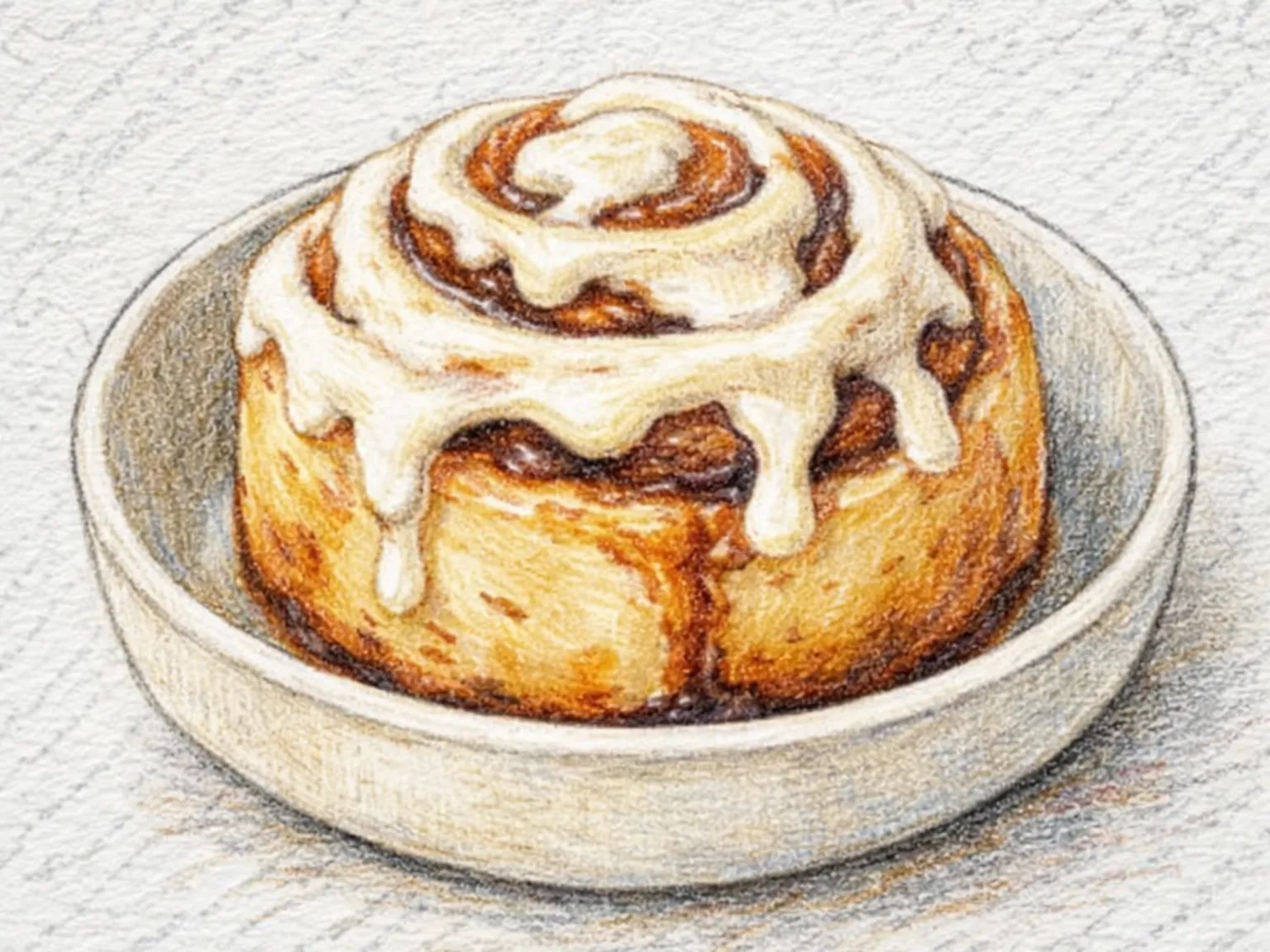
Cinnamon rolls are yeasted enriched dough baked into spirals of butter, cinnamon, and brown sugar, with roots in both Scandinavian and North American baking traditions.
What makes this special
- Brown sugar and cinnamon melt into caramel seams within these soft yeasted spirals.
- Cinnamon brown sugar melts into caramel seams through the spiral cross-section
- Full second proof gives the pull-apart feathery crumb characteristic
Key ingredients
Core cooking flow
- 1 Dissolve 7g yeast in 180ml water at about 40°C and let it stand for 5-10 minutes.
- 2 Add 40g butter and knead for at least 10 minutes.
- 3 Place the dough in a bowl, cover it with plastic wrap, and let it rise in a warm spot for about 1 hour.
Cinnamon rolls are yeasted enriched dough baked into spirals of butter, cinnamon, and brown sugar, with roots in both Scandinavian and North American baking traditions. The dough, enriched with milk, butter, and eggs, rises into a crumb soft enough to pull apart in layers by hand. A thick layer of softened butter and cinnamon-sugar is spread on the rolled dough before it is coiled tightly and sliced into rounds. During baking, the sugar melts and caramelizes between the coiled layers, and the cinnamon aroma filling the space is one of the most recognizable in all of baking. A cream cheese glaze poured over the hot rolls melts into a tangy coating that balances the sweetness. In Sweden the same concept appears as kanelbulle with less sugar and added cardamom; in the United States the rolls are rolled thicker and buried under a generous glaze.
Instructions
Read the steps as a cooking flow: prep, heat, seasoning, doneness control, and finish.
- 1Season
Dissolve 7g yeast in 180ml water at about 40°C and let it stand for 5-10 minutes.
When the surface looks foamy, combine 400g bread flour and 60g sugar, then pour in the yeast liquid.
- 2Step
Add 40g butter and knead for at least 10 minutes.
Continue until the dough feels smoother, sticks less to your hands, and stretches without tearing quickly, adding only minimal extra flour if it is too wet.
- 3Control
Place the dough in a bowl, cover it with plastic wrap, and let it rise in a warm spot for about 1 hour.
When it is nearly doubled, press it gently to release excess gas before rolling.
- 4Season
Roll the dough into a 30 x 45cm rectangle, keeping the thickness even so the rolls bake at the same pace.
Spread 40g butter over the surface, then sprinkle 2 tbsp cinnamon and sugar evenly to the edges.
- 5Prep
Starting from the long side, roll the dough into a firm cylinder without squeezing out the filling.
Cut it into 12-15 pieces about 2cm thick, then place them in a buttered baking pan with space between each roll.
- 6Control
Cover and proof for 30 minutes, until the rolls look puffed and closer together.
Bake at 180°C for 22-25 minutes until lightly browned, then spread the glaze made with 100g cream cheese while the rolls are still warm.
After the steps
Pick a recipe that fits this dish.
Continue with shared ingredients, meal pairings, or a similar method.
Recipes That Go Well With This
More Baking →Based on shared ingredients and meal pairing
Brown Sugar Cinnamon Rolls
Brown sugar replaces white sugar in the filling of these cinnamon rolls, contributing a molasses-like depth that elevates the pastry well beyond the standard version. The yeast dough, enriched with milk, egg, and butter, rises into a soft elastic sheet that rolls easily around the dark sugar and cinnamon mixture. During baking, the brown sugar melts into a sticky caramel layer that clings to every spiraled edge. The rolls emerge darker in color and richer in character, carrying a mineral sweetness that white sugar cannot replicate. Cinnamon warmth penetrates every layer from edge to center without fading at the core. A cream cheese glaze drizzled over the hot rolls immediately after baking introduces a tangy counterpoint that prevents the sweetness from becoming one-dimensional, and the contrast between the warm, dark filling and the cool, pale glaze makes each pull-apart layer worth eating slowly.
Coffee Cake
Coffee cake is an American snack cake topped with a buttery cinnamon streusel, designed to be eaten alongside coffee rather than containing coffee as an ingredient. Sour cream in the batter produces a noticeably moister, more tender crumb than a standard butter cake, and its mild acidity keeps the overall sweetness from feeling heavy. The streusel is made by rubbing brown sugar, cinnamon, flour, and cold butter together until the mixture forms coarse, irregular clumps; in the oven these bake into a sandy, crunchy topping that provides sharp textural contrast to the soft cake beneath. A widely used technique involves layering streusel into the center of the batter as well as on top, so that each slice reveals two distinct cinnamon-scented veins running through it. The cinnamon aroma is most pronounced when the cake is still warm from the oven, making the timing of serving worth paying attention to.
Ssiat Hotteok (Korean Sweet Seed Pancake)
Ssiat-hotteok is a Korean street snack made from a yeast-leavened dough stuffed with a mixture of brown sugar, cinnamon, sunflower seeds, and pumpkin seeds, then pressed flat in an oiled pan until the outside crisps and the inside turns molten. The dough must proof until it doubles in size before dividing into eight portions; each portion is filled and the seam pinched shut firmly, because a loose seal allows the melted sugar to escape and burn against the pan. Slow cooking on low heat develops a thin, crisp crust on the exterior while the brown sugar inside dissolves into a sticky syrup that carries the warmth of the cinnamon and the crunch of the seeds. Activating the yeast in warm milk rather than water adds a subtle dairy richness to the dough, producing a softer, more rounded result than versions made with water alone.
Butter Cookies
Butter cookies are a classic pastry built around the flavor of high-quality butter, aiming for a melt-in-the-mouth texture and a clean, rich aroma. Unsalted butter is creamed thoroughly with powdered sugar to incorporate air, creating the foundation for a crumbly, delicate crumb. Egg yolk and cake flour are mixed in just enough to form a smooth dough, and vanilla essence adds a sweet depth that complements the butter without distracting from it. Piped into flower or ring shapes, the cookies bake until the thin edges turn crisp and golden while the thicker centers remain tender and soft. Resting the piped shapes in the refrigerator for fifteen to twenty minutes before baking helps them hold their definition rather than spreading in the oven. The sweetness is deliberately restrained so the butter's own flavor comes through clearly. Stored in an airtight tin, the cookies maintain their snap and fragrance for over a week.
Serve with this
Calzone
Calzone rolls pizza dough into a circle, fills one half with ricotta, mozzarella, diced ham, and fresh basil, then folds into a half-moon shape, seals the edges with a fork, and bakes until golden at 220 degrees Celsius. Leaving a two-centimeter border free of filling is critical -- overstuffing causes steam pressure to burst the seam during baking. Brushing a thin line of water along the edge before pressing firmly with a fork creates a tighter seal that holds through the full bake. Fifteen to twenty minutes in a well-preheated oven produces a crisp, burnished exterior while the interior heats the ricotta into a soft cream and melts the mozzarella into long, stretchy strings. Brushing olive oil on the surface before baking adds a richer color and a slight nuttiness to the crust. Tomato sauce served on the side for dipping provides an acidic counterpoint that cuts through the dense cheese filling and keeps each bite feeling balanced.
Einspanner (Espresso with Vanilla Whipped Cream)
The Einspanner is a coffee beverage originating from Austria that features a distinct layered structure consisting of espresso at the bottom and a dense portion of whipped cream on top. This cream is typically seasoned with a small amount of sugar and vanilla extract to provide a subtle sweetness that complements the coffee. A primary characteristic of this drink is the sharp visual and textural contrast between the dark espresso base and the thick, pale cream that rests on the surface. Proper preparation of the cream is essential for the beverage to function as intended. It must be whipped until it reaches a specific consistency of approximately seventy percent stiffness, which allows it to remain fluid enough to float and spread evenly across the entire surface of the espresso. If the cream is over-whipped and becomes too firm, it will form clumps and fail to integrate naturally with the coffee as the person drinks it. The assembly process involves cooling the espresso for a short period before pouring it into a glass containing ice. The whipped cream is then added slowly by using the back of a spoon to guide it onto the surface of the coffee. This specific technique is used to ensure that the two layers remain separate and do not mix prematurely. To finish the preparation, a fine layer of cocoa powder is dusted over the top of the cream. This addition provides a light chocolate flavor that serves as a bridge between the bitter notes of the espresso and the sweet taste of the whipped cream. Customarily, an Einspanner is consumed without the use of a straw. The standard method is to sip the coffee directly through the layer of cream so that both components reach the palate at the same time. This allows for the simultaneous experience of the concentrated coffee and the flavored cream in every mouthful.
Roasted Mushroom Perilla Potato Salad
Potatoes are boiled skin-on and roughly mashed with a fork to keep a mix of fluffy interior and chunky structure rather than a smooth puree. King oyster mushrooms are torn lengthwise into thick strips and pan-roasted in olive oil until chewy and deeply savory, developing color on the cut surfaces. Perilla seed powder and Greek yogurt create a nutty, creamy binder that unifies the two main components without masking their individual flavors. Shredded perilla leaves release their bold, anise-like fragrance across the entire plate, while lemon juice and minced garlic cut through the richness and sharpen the overall aroma. Two distinctly Korean aromatics, perilla seed and perilla leaf, give the familiar potato salad format a flavor profile that diverges significantly from its Western counterpart. The salad is best at room temperature, where the potato texture stays fluffy and the mushrooms hold their chew; if refrigerated, pulling it out 30 minutes before serving restores the right consistency.
Similar recipes
Apple Cinnamon Rolls (Soft Yeast Dough with Apple Cinnamon Filling)
Apple cinnamon rolls build on the Scandinavian kanelbulle tradition of enriched yeast dough rolled with spiced brown sugar, adding a layer of fresh apple that transforms the filling from dry to fruity and moist. The dough is softened with butter and milk, then rolled flat, spread with a paste of brown sugar, cinnamon, and softened butter, and scattered with diced apple that has been tossed in lemon juice to prevent browning during baking. Rolling, slicing, and proofing the cut spirals in a buttered pan lets them expand until they press together, creating soft sides where the rolls meet and a slightly caramelized bottom where they contact the pan. During baking, apple pieces release juice that seeps into the surrounding dough layers, forming pockets of moist, cinnamon-scented fruit that a plain cinnamon roll cannot replicate. A cream cheese glaze drizzled while the rolls are hot melts into the crevices between spirals, coating the interior as well as the surface. The quantity of apple matters - too much makes the dough soggy, so a measured amount ensures the fruit contributes moisture without destabilizing the structure. The aroma of butter, cinnamon, and baked apple that fills the kitchen during baking is half the appeal of making these rolls.
Red Bean Pastry (Korean Gyeongju Soft Bun with Anko)
Gyeongju-ppang is a baked Korean pastry made from a yeast-leavened dough enriched with milk and butter, wrapped generously around a core of sweet red bean paste. The dough is rolled thin, formed around the filling with the seam placed down, and baked at 180 degrees Celsius until the top domes up smooth and the surface takes on a pale golden color. Because the filling-to-dough ratio is deliberately high, the dominant flavor in each bite is the dense, sweet red bean, with the thin enriched shell contributing a quiet dairy aroma. The pastry traces its lineage to hwangnam-ppang, originating in the Hwangnam district of Gyeongju, and has become one of the city's defining food souvenirs. It stays moist after cooling, which makes it practical both as a packaged gift and as an everyday snack eaten at room temperature.
Yuja Cheesecake Bars (Citron Cheesecake)
Yuja cheesecake bars are a baked dessert that begins with a pressed crust of cracker crumbs and melted butter, pre-baked for eight minutes to set a firm base before the filling goes in. The filling combines softened cream cheese, eggs, sugar, and yuja citron marmalade, poured over the crust and baked at 170 degrees Celsius until just set. Pre-baking the crust is essential for keeping the layers distinct, and room-temperature cream cheese is non-negotiable for a batter free of lumps. Seventy grams of yuja marmalade introduces the fruit's sharp, floral citrus fragrance alongside clean acidity that cuts through the dense richness of the cheese layer, preventing the aftertaste from feeling heavy or cloying. Chilling for two full hours in the refrigerator before slicing produces straight, clean edges on each bar, and the texture sits between dense and silky, dissolving slowly once it hits the palate.
Tips
Nutrition (per serving)
Variations
Cinnamon Rolls with Cream Cheese Frosting
Fluffy cinnamon rolls are finished with a creamy, tangy cream cheese frosting. The soft dough and sweet-spiced filling pair beautifully.
Brown Sugar Cinnamon Rolls
Brown sugar and cinnamon melt into a deep caramel-like filling inside fluffy rolls. The result is soft, fragrant, and richly sweet.