Cioppino (Italian-American Seafood Tomato Wine Stew)
Quick answer
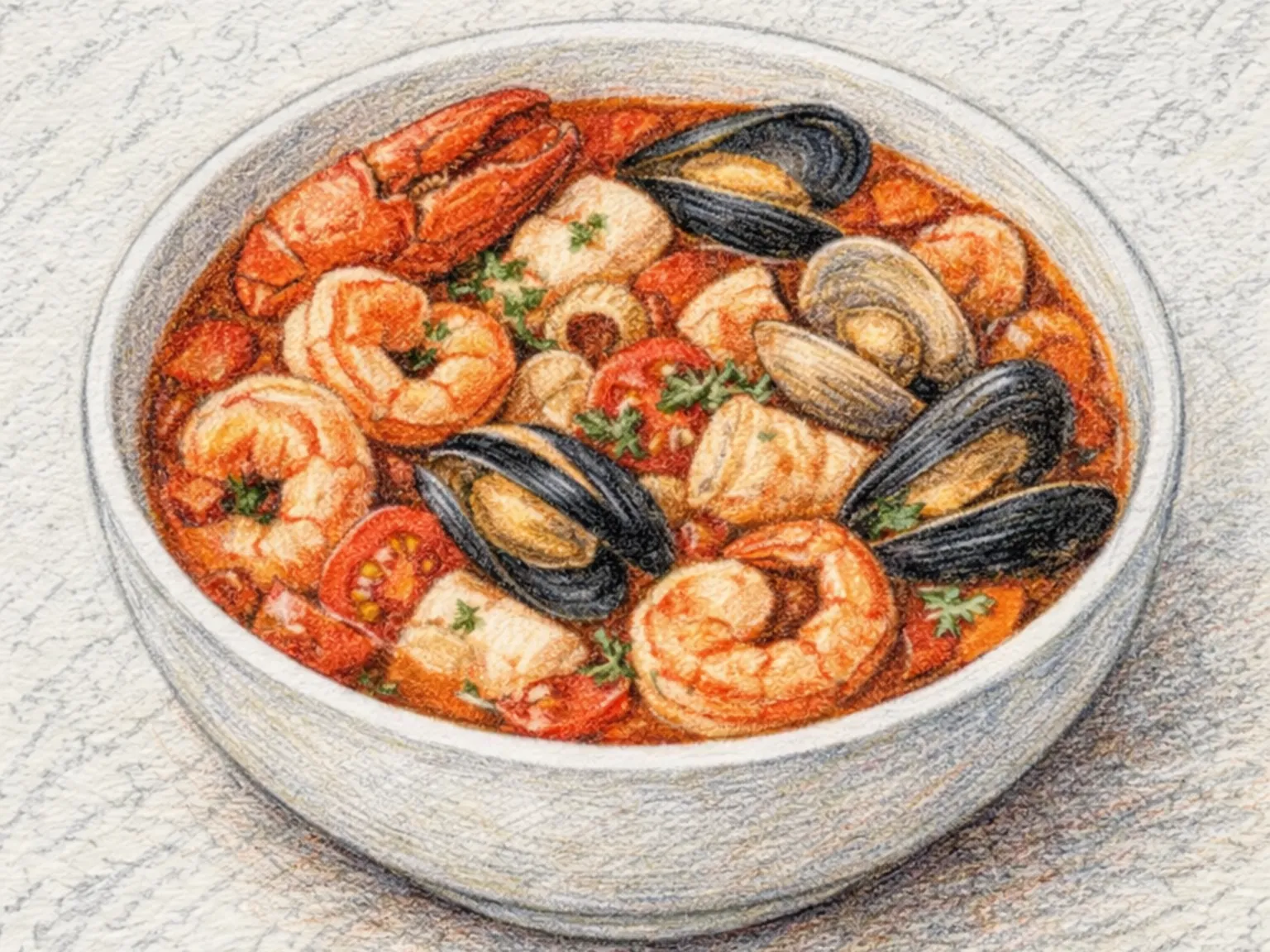
Cioppino is an Italian-American seafood stew where shrimp, mussels, and white fish are simmered in a tomato and white wine broth built on fish stock.
What makes this special
- Fish stock forms the base before shrimp, mussels, and white fish finish in the tomato and white wine broth.
- Deglazing with white wine then simmering fish stock 15 minutes builds broth depth
- Mussels first, then white fish, then shrimp keeps each seafood at perfect doneness
Key ingredients
Core cooking flow
- 1 Devein 250 g shrimp, pat them dry, and keep them chilled while the broth starts.
- 2 Warm 2 tbsp olive oil in a heavy pot over medium-low heat.
- 3 Pour in 150 ml white wine and raise the heat to medium for about 2 minutes to cook off the raw alcohol.
Cioppino is an Italian-American seafood stew where shrimp, mussels, and white fish are simmered in a tomato and white wine broth built on fish stock. Sauteing onion and garlic in olive oil until fully softened forms the aromatic base, then white wine is added and reduced for two minutes to cook off the raw alcohol before the tomatoes and stock go in. Fifteen minutes of simmering concentrates the broth and integrates the flavors before any seafood enters the pot. Adding mussels first, then fish fillets, then shrimp last accounts for their different cooking times and prevents any piece from going rubbery or dry. The broth that results combines the brine drawn from the shellfish, the acidity of tomatoes, and the clean brightness of the wine into a complex, deeply savory liquid. Crusty bread served alongside is not optional in the traditional sense; soaking it in the stew is the standard way to consume every last bit of the broth. The dish originated with Italian immigrant fishermen in San Francisco who pooled the day's leftover catch into a communal pot.
Instructions
Read the steps as a cooking flow: prep, heat, seasoning, doneness control, and finish.
- 1Prep
Devein 250 g shrimp, pat them dry, and keep them chilled while the broth starts.
Cut 250 g white fish into large pieces so they hold together instead of breaking apart in the pot.
- 2Control
Warm 2 tbsp olive oil in a heavy pot over medium-low heat.
Add 120 g onion and 20 g garlic, then cook until the onion turns translucent and the garlic smells sweet, without letting it brown.
- 3Heat
Pour in 150 ml white wine and raise the heat to medium for about 2 minutes to cook off the raw alcohol.
When the aroma softens, add 400 g canned tomatoes and 500 ml fish stock.
- 4Control
Once the broth boils, lower the heat and simmer gently for 15 minutes.
Stir occasionally so the bottom does not catch, and let the tomato acidity and fish stock settle into one balanced base.
- 5Control
Add 300 g mussels first, cover, and cook for 2 minutes so they start opening.
Add the white fish next, then the shrimp last, simmering only 6-8 minutes total to avoid tough seafood.
- 6Finish
Turn off the heat when the shrimp are pink and the mussels have opened.
Discard any mussels that stay closed, adjust with salt and pepper, and serve immediately with crusty baguette for the broth.
After the steps
Pick a recipe that fits this dish.
Continue with shared ingredients, meal pairings, or a similar method.
Recipes That Go Well With This
More Western →Based on shared ingredients and meal pairing
Shrimp Creole
Shrimp Creole builds its flavor base from the Cajun holy trinity - onion, celery, and bell pepper - sauteed in olive oil until softened and sweet. Garlic and paprika go in next for thirty seconds to bloom their aromas before canned tomatoes are added and simmered over medium heat for eight minutes, reducing the liquid into a thick, fragrant sauce. The shrimp are stirred in only at the end and cooked for three to four minutes until just pink, preserving their tender bite. The tomato's natural acidity balances the paprika's smokiness, and a dash of hot sauce pushes the dish toward its authentic Louisiana character. Served ladled generously over steamed white rice, the sauce soaks into the grains and carries every layer of flavor.
Korean Spicy Blue Crab Seafood Stew
Kkotge haemul jjigae is a Korean seafood stew that combines blue crab, Manila clams, and shrimp in 1.2 liters of anchovy-kelp stock to build the most layered possible ocean flavor. Each shellfish contributes a distinct profile to the broth: blue crab adds a sweet, nutty richness from the body and roe, clams release a clean briny depth, and shrimp fold in their characteristic sweetness and concentrated umami. Together they create a broth with complexity that no single ingredient could produce on its own. Radish and zucchini absorb the seafood-infused liquid as they cook, becoming tender and carrying the flavor deep into their flesh. Doenjang and gochugaru form the seasoning backbone, layering fermented savoriness and spice into what would otherwise be a straightforward clear broth. Cheongyang chili and sliced green onion go on last, brightening the surface and extending the clean, cool finish that is the hallmark of well-made Korean seafood stew. Adding the crab first and letting it simmer before introducing the other shellfish is the key step -- it gives the stock time to take on the crab's full flavor before everything else goes in.
Chicken Quinoa Power Salad
Chicken quinoa power salad brings together pan-seared chicken breast, quinoa simmered for 12 minutes then cooled, romaine lettuce, cucumber, and bell pepper in a single bowl built for a complete, balanced meal. Resting the chicken for three minutes after searing gives the juices time to redistribute inward so every slice stays moist rather than losing liquid at the cut surface. Rinsing the quinoa before cooking removes saponins that leave a bitter residue even after boiling. A dressing of Greek yogurt, lemon juice, and olive oil provides creamy tartness at a low calorie count, and the fermented tang of the yogurt complements the raw vegetables without overpowering them. Bell pepper's natural sweetness adds color and brightness alongside the lean chicken, and the combination of textures - crisp lettuce, tender grain, firm seared meat - makes each forkful more satisfying than its ingredients suggest individually.
Shrimp Boil
Shrimp boil is a Southern American one-pot dish where ingredients are added to seasoned boiling water in stages according to their cooking time. Potatoes go in first and cook for about ten minutes, followed by corn on the cob and smoked sausage for another seven minutes, and shrimp last for just two to three minutes. This staggered approach ensures every component reaches the table properly cooked - potatoes tender, corn sweet and snappy, sausage heated through, and shrimp firm rather than rubbery. The drained pile is tossed with melted butter and fresh lemon juice, which adds richness and acidity on top of the paprika-seasoned broth. Traditionally served poured out onto newspaper for communal eating by hand.
Serve with this
Fresh Lemon Ade
Fresh lemonade is a citrus drink assembled by pouring hand-squeezed lemon juice and simple syrup over ice, then topping slowly with sparkling water. The sharp acidity of fresh lemon is tempered by the syrup's rounded sweetness, creating a balance that bottled juice cannot replicate. A tiny pinch of salt amplifies both the sweet and sour notes simultaneously, a small addition with a noticeable effect. Lemon slices and mint leaves added to the glass release fragrance continuously as the drink sits. Pouring the sparkling water last and gently preserves the carbonation through every sip, so the order of assembly matters as much as the ingredients themselves.
Black Sesame Brownies
Black sesame brownies are built on a base of dark chocolate and butter melted together over a double boiler, with roasted black sesame powder sifted in before folding. The bitter edge of the chocolate meets the toasted, grain-like aroma of the sesame, adding a nutty depth that standard brownies lack. The cake flour ratio is kept low to produce a fudgy, dense center that stays slightly underdone-looking even after the full bake at 175 degrees Celsius for twenty to twenty-five minutes. Because black sesame powder is naturally oily and prone to clumping, it must be sifted together with the flour and salt before going into the batter - skipping this step leaves uneven pockets of undistributed sesame. Pull them from the oven with a faint wobble at the center, and the residual heat finishes the interior as the pan cools. Wait until fully cool before cutting for clean edges.
Kimchi Bacon Mac and Cheese
Kimchi bacon mac and cheese layers aged kimchi's lactic tang and smoky bacon into a classic American cheddar cheese sauce over elbow macaroni. A butter-flour roux forms the base, with milk whisked in to build a béchamel before cheddar is melted into a thick, clinging sauce. Crisp bacon pieces add salt and crunch throughout, while chopped ripe kimchi introduces fermented acidity that counteracts the richness of the cheese. A pinch of gochugaru runs underneath with mild, warming heat. The tubular macaroni shape traps sauce inside and out, ensuring each forkful carries the full spectrum of creamy, tangy, and smoky flavors.
Similar recipes
Shrimp Cocktail
Shrimp cocktail is an American appetizer where large shrimp are poached briefly in water seasoned with lemon and salt, then shocked immediately in ice water to halt cooking and lock in a firm, snappy texture. The poaching time is critical - two to three minutes is enough for the shrimp to turn pink and curl slightly, and any longer makes them tough. The cocktail sauce combines ketchup's sweetness, prepared horseradish's sinus-clearing heat, and Worcestershire sauce's fermented depth into a dip that elevates the clean, mild flavor of chilled shrimp. Resting the finished sauce in the refrigerator for at least ten minutes allows the flavors to meld while sharpening the horseradish's bite.
Crab Cake
Crab cakes are a signature seafood dish of the American East Coast, made by gently folding crab meat with mayonnaise, Dijon mustard, egg, breadcrumbs, parsley, and lemon juice, then shaping the mixture into patties and pan-frying in butter until golden on each side. Mixing the crab meat with a light touch preserves the large flakes that give each bite its distinctive texture. Lemon juice brightens the flavor and tempers any fishiness. Chilling the formed patties for thirty minutes firms them enough to flip in the pan without breaking apart. The finished crab cake has a crisp, buttery exterior enclosing moist, sweet crab.
Korean Shrimp Seaweed Soup
Saeu-miyeok-guk is a Korean seaweed soup made with shrimp rather than the more common beef, producing a lighter, ocean-forward bowl that carries a distinct marine clarity. The preparation begins by sauteing rehydrated seaweed and minced garlic together in sesame oil, a step that reduces any raw seaweed smell and builds a warm, nutty base before liquid is added. Shrimp are added to the pan and cooked just until they begin to turn pink, at which point their natural sweetness transfers into the seasoned oil. Water is poured in and the soup simmers on medium-low heat for twelve minutes, long enough for the mineral richness of the seaweed and the delicate shellfish umami to merge into a unified, clean-tasting broth. Soup soy sauce and salt provide the final seasoning without muddying the clarity of the stock. The textural interplay between the slippery, tender seaweed and the firm, bouncy shrimp makes each spoonful more satisfying than either ingredient would be on its own, and the overall lightness of the broth makes it a natural choice as a restorative meal or a birthday soup when a beef-heavy version feels too rich.