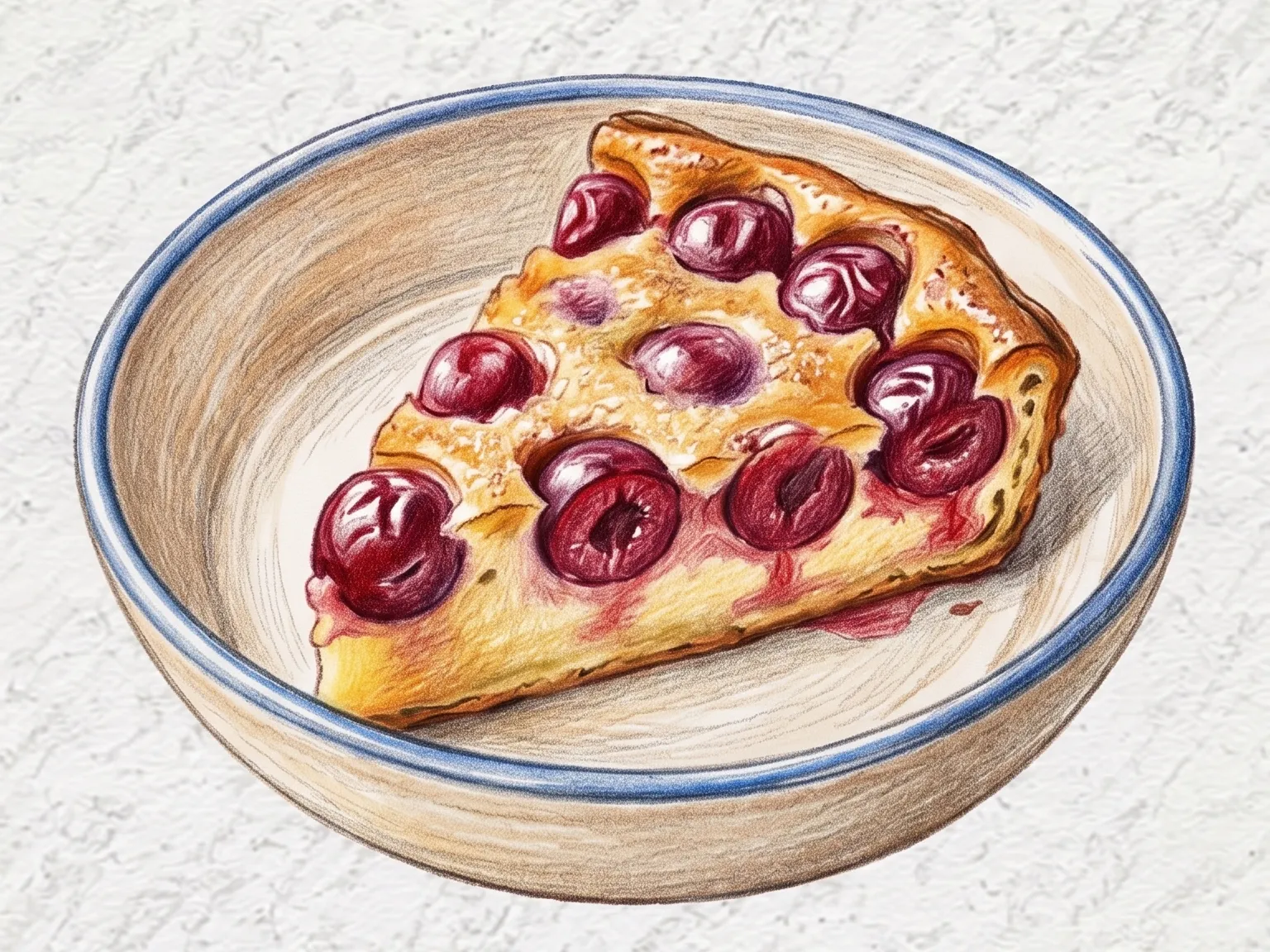
Clafoutis (French Baked Cherry Custard Dessert)
Clafoutis is a traditional French dessert from the Limousin region, made by pouring a thin batter of eggs, sugar, milk, and flour over fresh cherries arranged in a buttered baking dish. Baking at 180 degrees Celsius for thirty to thirty-five minutes puffs the batter into a texture between a pancake and a baked custard - golden and lightly set at the edges, moist and tender around the fruit. The cherries release their tart juice into the surrounding batter during baking, creating pockets of concentrated fruit flavor. Vanilla extract rounds out the egg-and-milk base. Serving the clafoutis slightly warm rather than fully cooled preserves its soft, custardy consistency.
Adjust Servings
Instructions
- 1
Preheat oven to 180C and butter a baking dish.
- 2
Whisk eggs with sugar, then add milk and vanilla.
- 3
Sift in flour and whisk until smooth.
- 4
Arrange cherries in the dish and pour batter over.
- 5
Bake 30-35 minutes until puffed and lightly golden.
As an Amazon Associate, we may earn from qualifying purchases.
Tips
Nutrition (per serving)
More Recipes

Fruit Clafoutis (Baked Custard with Fresh Fruit)
Clafoutis is a rustic French baked dessert that suspends fresh seasonal fruit in a thin custard batter and bakes it until the edges puff golden and the center sets to a silky cream. The batter, close to crepe batter in consistency, is made from eggs, milk, flour, and sugar whisked until smooth. Traditionally, unpitted cherries are used because the pits release a faint almond-like fragrance during baking that deepens the overall flavor. Strawberries, blueberries, and plums work equally well, their juices concentrating in the oven heat and creating pockets of intense sweetness against the mild custard. Because the method is little more than mixing and pouring, it requires no special technique. Served warm with a dusting of powdered sugar, the contrast between the crisp rim and the soft interior is what makes this dessert memorable.

Chocolate Lava Cake
Chocolate lava cake bakes a batter of melted dark chocolate, butter, eggs, sugar, and a small amount of flour in ramekins at high heat for a brief window, producing a set exterior with a molten chocolate core. At 220 degrees Celsius for ten to twelve minutes, the edges firm into a soft cake while the center stays liquid - breaking the surface releases a stream of warm, concentrated chocolate. The bittersweet depth of dark chocolate combines with the butterfat to create a dense, velvety richness, while vanilla extract rounds out the flavor. Timing is critical: overbaking by even two minutes solidifies the center and eliminates the signature lava effect.

Flan Parisien (Parisian Vanilla Custard Tart)
Flan Parisien is a Parisian bakery staple found in nearly every boulangerie in the city. A buttery shortcrust pastry shell holds a thick, firm vanilla custard that bakes slowly until the top develops caramelized brown spots. The custard is made from milk, eggs, sugar, and cornstarch, which gives it a denser, sliceable consistency that distinguishes it from softer baked custards like creme brulee. When properly cooled, the filling holds its shape when cut yet melts smoothly on the tongue with a clean vanilla flavor. Vanilla bean seeds speckled throughout the custard signal that the real ingredient was used rather than extract. The pastry shell must be blind-baked first to prevent sogginess, then filled and baked again until set. It is served cold, and the contrast between the crisp, buttery shell and the cool, trembling custard makes each bite satisfying.

Quiche Lorraine
Quiche Lorraine is a French savory tart that fills a buttery pastry shell with crisp-cooked bacon, grated Gruyere cheese, and a smooth custard made from eggs, heavy cream, and milk. Blind-baking the crust for ten minutes before adding the filling is essential to prevent a soggy base. The bacon must be drained well so excess fat does not make the custard greasy. Whisking the egg mixture gently avoids incorporating too many air bubbles, which would create an uneven surface after baking. The quiche is done when the center still has a slight jiggle - removing it at this point and resting for ten minutes allows residual heat to set the custard fully, producing a clean slice with a creamy interior.

Chestnut Madeleine (French Shell Cake with Chestnut Butter Batter)
Chestnut paste folded into a classic madeleine batter produces a small French cake with an unmistakably autumnal character. The batter bakes in shell-shaped molds, rising with the signature bump that signals proper technique. Inside, the crumb carries a subtle brown hue and a warm, starchy sweetness from the chestnut that harmonizes with butter and honey. The texture remains light and moist, allowing the chestnut flavor to come through without heaviness. These are the kind of small cakes that disappear quickly from a serving plate, as each bite invites the next. Warm milk or a latte amplifies the roasted chestnut aroma, and their compact size makes them ideal for packaging as gifts.

Chocolate Mousse
Chocolate mousse is a French dessert that achieves a paradox: it tastes intensely of chocolate yet feels weightless on the tongue. Dark chocolate is melted gently and cooled to a temperature warm enough to remain fluid but cool enough not to deflate the cream. Whipped cream is folded in three additions - the first loosens the chocolate, the second begins to lighten it, and the third introduces the airy volume that defines mousse. Some recipes add egg yolks for richness or beaten egg whites for extra lift, but the core is always the marriage of chocolate and cream. After chilling for at least two hours, the mousse sets to a consistency that holds its shape on a spoon yet dissolves immediately on the palate. The cacao percentage of the chocolate determines the bitterness and intensity - seventy percent or higher produces a mousse with pronounced dark chocolate character. A drop of vanilla extract rounds the edges without intruding.