Classic Bagel
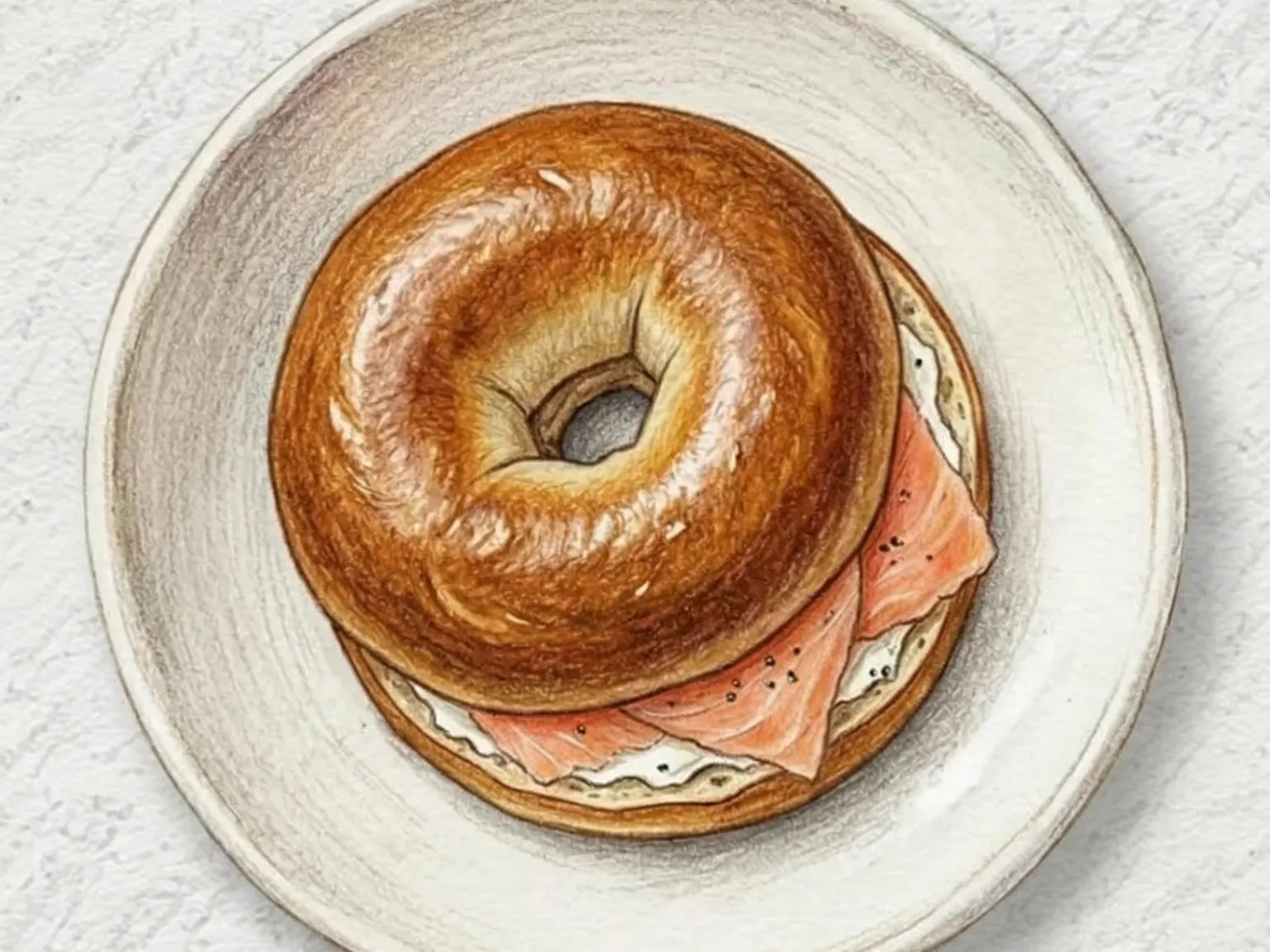
Classic bagels owe their distinctive chewy density to a two-stage cooking process: boiling followed by baking. The dough is made with high-gluten bread flour and relatively little water, then kneaded extensively to develop a strong gluten network. After shaping into rings and a brief proof, the bagels are dropped into boiling water - sometimes sweetened with honey or malt syrup - for about a minute per side. This boil gelatinizes the surface starch, creating a thin, glossy skin that restricts the dough's expansion in the oven. The result is a crust that is firm and slightly shiny, encasing an interior that is dense, chewy, and deeply satisfying to bite through. The low hydration and extensive kneading produce a texture entirely unlike soft sandwich bread - each chew rewards with resistance and a faint sweetness from the malt. Topped with cream cheese and smoked salmon in the New York tradition, or simply split and toasted with butter, a well-made bagel is defined by its structure.
Adjust Servings
Instructions
- 1
Mix flour, sugar, salt, and yeast; add water and knead into a firm dough for 10 minutes.
- 2
Cover and proof for 1 hour.
- 3
Divide into 6, round each, then poke a hole in the center to form a ring.
- 4
Rest in the fridge for 15 minutes to firm up.
- 5
Boil with honey, poach each bagel 1 minute per side, then drain.
- 6
Bake at 210°C for 18-20 minutes until golden.
As an Amazon Associate, we may earn from qualifying purchases.
Tips
Nutrition (per serving)
More Recipes

Banana Bread
Banana bread is a quick bread leavened with baking soda rather than yeast, eliminating the need for a rising period. Overripe bananas with heavily spotted peels are ideal because their elevated sugar content and softer texture mash easily and keep the crumb moist. Melted butter and a single egg provide richness and structure, while vanilla extract deepens the banana aroma. The batter comes together in one bowl and bakes at 170 degrees Celsius for roughly sixty minutes. Testing doneness by inserting a toothpick into the center is the most reliable method: it should come out clean. The flavor actually intensifies overnight as the banana sugars continue to permeate the crumb.

New York Cheesecake
New York cheesecake is distinguished by its heavy reliance on cream cheese, which gives the filling a dense, almost clay-like consistency when chilled and a rich dairy flavor that coats the palate. The crust - crushed graham crackers pressed together with melted butter - provides a sandy, slightly salty foundation that offsets the sweetness above. Sour cream folded into the batter introduces a mild acidity that keeps the richness from becoming monotonous. Baking at a moderate temperature and cooling gradually inside the closed oven minimizes the surface cracking that plagues rushed versions. After refrigeration overnight, the texture firms enough to hold a clean knife line, and the flavors consolidate into a unified creaminess. Each slice stands tall on the plate, pale and smooth, requiring nothing more than a fork to enjoy - though a spoonful of fruit compote alongside never hurts.

Lemon Meringue Pie
A blind-baked pie crust holds a tart lemon curd filling crowned by a billowy meringue that is briefly baked until its peaks turn golden. The curd is built by cooking lemon juice, water, sugar, and cornstarch until thick, then rapidly whisking in egg yolks and finishing with butter for a glossy, velvety consistency. The filling's sharp citrus bite meets the meringue's airy sweetness in the same forkful, creating a dramatic contrast that is the hallmark of this pie. Spreading the meringue directly over the hot curd helps the two layers bond and reduces the weeping that can form between them. A short burst at 200 degrees Celsius tips each meringue peak with a gradient of caramel brown while the interior remains soft and marshmallow-like. The pie crust contributes a third texture, short and crisp, that grounds the two softer layers above it. Chilling the assembled pie before cutting produces the cleanest slices, with each layer visible in cross-section. Adding lemon zest to the curd intensifies the citrus aroma beyond what juice alone provides.

Fluffy Pancakes
A straightforward American breakfast staple built from flour, egg, milk, and melted butter. Baking powder lifts the batter into thick, pillowy rounds with a golden-brown exterior. The key to a tender pancake is restraint when mixing: a few small lumps in the batter are preferable to a smooth but overworked one, which produces a tough, chewy result. Resting the batter for five to ten minutes lets the gluten relax and the leavener activate fully, yielding a noticeably fluffier rise on the griddle. Cooking over medium-low heat prevents the outside from scorching before the center sets. Maple syrup, fresh berries, or a pat of butter on the warm stack are the classic accompaniments.

Coleslaw
Coleslaw is built from finely shredded cabbage and carrot tossed in a mayonnaise-based dressing sharpened with apple cider vinegar and Dijon mustard. A small amount of sugar balances the acidity without making the salad noticeably sweet. Resting the dressed slaw in the refrigerator for at least 30 minutes allows the vegetables to soften slightly and absorb the dressing more evenly. It is one of the most common side dishes in American cooking, served alongside barbecue, fried chicken, and pulled pork sandwiches.

Club Sandwich
A club sandwich stacks three slices of buttered, golden-toasted bread with layers of sliced chicken breast, crisp bacon, fresh lettuce, and tomato in a double-decker arrangement. The salty crunch of bacon meets the lean protein of chicken, while juicy tomato slices and crisp lettuce add freshness and texture contrast. Mayonnaise spread on each bread layer acts as a binding agent that smooths the bite and balances the savory components. Drying the lettuce thoroughly is essential to prevent the toast from softening. Securing with picks and cutting diagonally produces clean cross-section layers.