Coconut Cream Pie
Quick answer
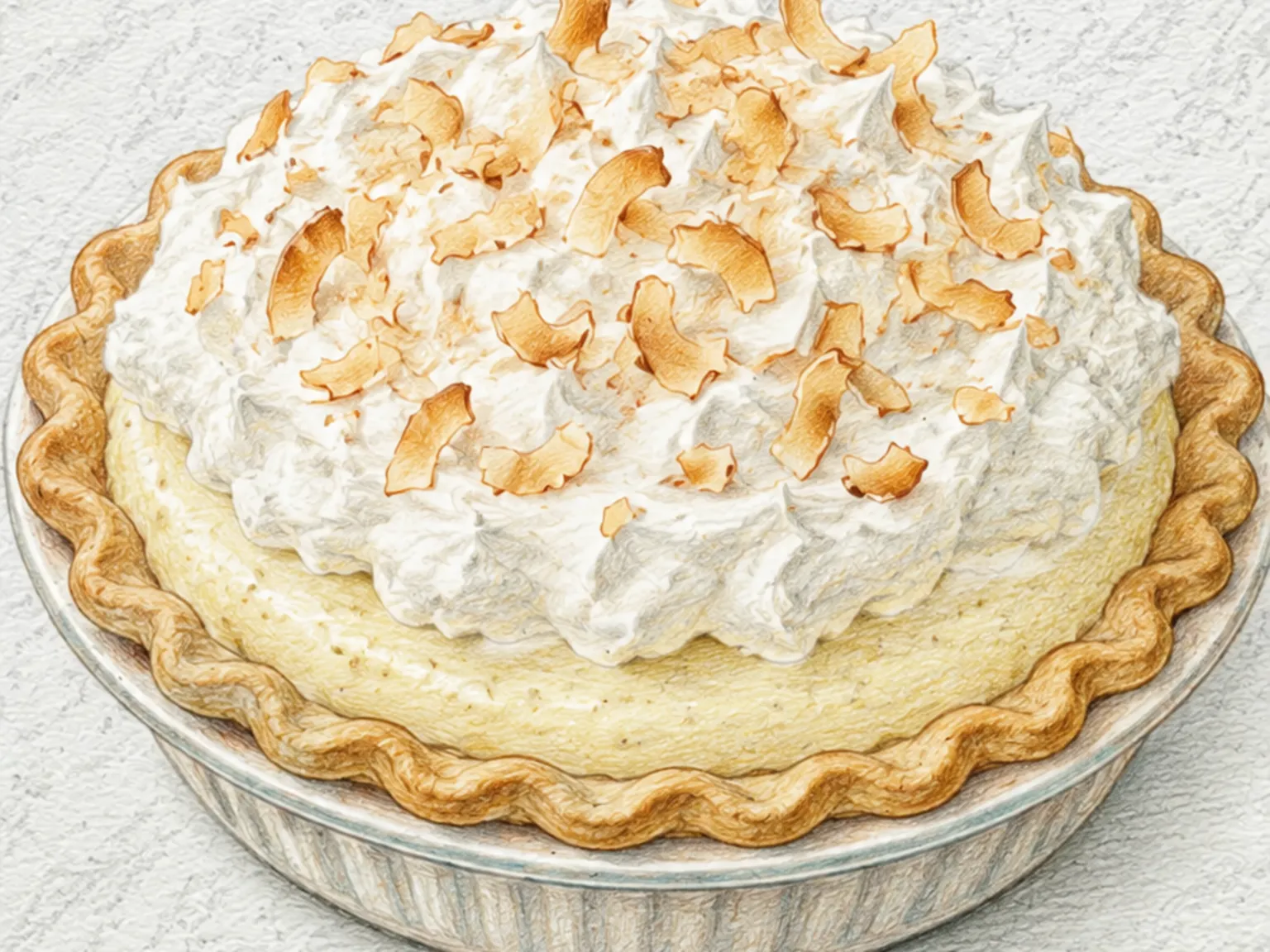
Coconut cream pie fills a blind-baked pastry shell with a thick, silky custard built from coconut milk, whole milk, egg yolks, and cornstarch.
What makes this special
- Cornstarch and egg yolks set the coconut milk custard firm enough for clean, sharp slices.
- Cornstarch and egg yolks set custard firm enough to slice clean
- Coconut milk blended with dairy gives layered tropical depth
Key ingredients
Core cooking flow
- 1 Blind bake 1 pie crust at 180C for 15 minutes, until the base looks lightly golden and dry.
- 2 Pour 300ml coconut milk and 200ml milk into a saucepan first, then whisk in...
- 3 Set the pan over medium-low heat and stir constantly, scraping the bottom and corners.
Coconut cream pie fills a blind-baked pastry shell with a thick, silky custard built from coconut milk, whole milk, egg yolks, and cornstarch. The custard is cooked directly on the stovetop, stirred constantly until it thickens enough to coat the back of a spoon without running. Once poured into the cooled crust and refrigerated for several hours, it sets firmly enough to slice cleanly, holding its shape on the plate. The coconut flavor is strong and tropical, drawing entirely from real coconut milk rather than extract or artificial flavoring, so the sweetness stays rounded and natural. A thick layer of freshly whipped cream spread over the top cuts through the density of the custard, and a generous scattering of toasted coconut flakes across the surface adds a nutty, crunchy contrast to the smooth layers below. When sliced, the cross section shows three distinct layers: a golden, crumbly crust at the base, a pale ivory custard in the middle, and white cream on top. The pie is served cold straight from the refrigerator, which keeps the custard firm and the whipped cream stable.
Instructions
Read the steps as a cooking flow: prep, heat, seasoning, doneness control, and finish.
- 1Heat
Blind bake 1 pie crust at 180C for 15 minutes, until the base looks lightly golden and dry.
Let it cool completely at room temperature before filling, because warm pastry will loosen the custard.
- 2Season
Pour 300ml coconut milk and 200ml milk into a saucepan first, then whisk in 90g sugar and 35g cornstarch until smooth.
Add 3 egg yolks and whisk again so no dry starch or yolk streaks remain.
- 3Control
Set the pan over medium-low heat and stir constantly, scraping the bottom and corners.
When the thin liquid starts turning glossy and creamy, lower the heat so the yolks thicken gently instead of curdling.
- 4Control
Cook until the custard coats the back of a spoon thickly and a line drawn through it closes slowly.
If the bottom smells toasted or starts catching, reduce the heat at once and keep stirring.
- 5Control
Fold part of the shredded coconut into the hot custard, then fill the cooled crust while the custard is still spreadable.
Smooth the surface, cover loosely if needed, and chill for several hours until firm enough to slice.
- 6Finish
Whip 180ml cream until stiff peaks hold, then spread it over the chilled custard without pressing hard.
Lightly toast the remaining shredded coconut, scatter it over the cream, and serve the pie cold.
After the steps
Pick a recipe that fits this dish.
Continue with shared ingredients, meal pairings, or a similar method.
Recipes That Go Well With This
More Baking →Based on shared ingredients and meal pairing
Chess Pie
Chess pie is a custard pie from the American South made from the shortest possible list of pantry ingredients: butter, sugar, eggs, a small amount of flour, and cornmeal. The simplicity of the ingredients does not predict the complexity of what happens in the oven. As the pie bakes, the top surface splits and forms a thin, crackled crust that shatters underfoot of a fork, while beneath it sits a dense, moisture-heavy custard carrying a deep caramel note. Cornmeal introduces a subtle grittiness and the faint sweetness specific to corn, while a splash of vinegar or buttermilk adds just enough acidity to prevent the sugar from going flat. The filling should be pulled from the oven when the edges have set but the center still trembles slightly; it continues to firm as it cools, eventually reaching a texture close to fudge. Served at room temperature, the custard softens into a smooth, yielding consistency. A spoonful of unsweetened whipped cream alongside cuts the richness without dulling the flavor.
Boston Cream Pie
Boston cream pie is, despite its name, a layered cake rather than a pie. Two rounds of tender sponge sandwich a thick vanilla pastry cream, and the top is cloaked in a glossy dark chocolate glaze. The sponge bakes from cake flour and eggs to a fine, pillowy crumb that compresses gently under a fork without crumbling. The pastry cream -- cooked from milk, cornstarch, and egg yolks -- sets into a thick, silky custard that holds its shape when sliced but melts smoothly on the tongue. The chocolate glaze cools into a thin, shiny shell that cracks cleanly when pressed, mixing with the cream beneath. Each forkful delivers the sequence of bitter chocolate, sweet vanilla custard, and plain sponge in quick succession. Making the custard a day ahead and refrigerating it overnight ensures it holds firmly when the layers are assembled and sliced. Pour the glaze when it has cooled slightly -- warm enough to flow but not so hot that it thins out and drips unevenly.
Baked Ziti
Baked ziti is an Italian-American oven pasta that delivers a lasagna-style flavor structure with far less assembly work. Tubular ziti noodles are boiled to al dente, tossed in a beef-and-tomato meat sauce, then layered in a baking dish with generous amounts of ricotta and shredded mozzarella. The tube shape traps sauce inside each piece, distributing flavor more evenly than flat pasta can. Parmesan spread across the top browns into a thin, crisp crust during the thirty-five-minute bake, while the interior melds into a cohesive mass of sauce-soaked pasta and melted cheese. Because no individual pasta sheets need to be layered, total hands-on preparation time is considerably shorter than classic lasagna. The dish scales easily to four or more servings in a single pan, making it well suited for family dinners and gatherings. Adding a small amount of water or sauce before reheating keeps leftovers from drying out.
Classic Apple Pie
Apple pie has been baked in America since the colonial era, though its origins lie in 14th-century English and Dutch recipes where apples were enclosed in pastry as a way to cook fruit without a proper oven. The filling is built from tart baking apples - Granny Smith or Braeburn - tossed with sugar, cinnamon, nutmeg, a squeeze of lemon, and a spoonful of flour or cornstarch to thicken the juices as they cook. The double crust is made from cold butter cut into flour until the dough resembles wet sand, producing flaky, shattering layers when baked. As the pie bakes, the apples soften and release their juice, which the starch captures into a syrupy glaze that holds the filling together when sliced. The top crust turns deep golden and pulls away slightly from the filling, creating a hollow where steam escapes. Served warm with a scoop of vanilla ice cream - a la mode - or a slice of sharp cheddar in the New England tradition, apple pie is as much a cultural symbol as it is a dessert.
Serve with this
Real Pineapple Sherbet
This refreshing fruit dessert is prepared by scooping out the flesh of a mini pineapple and using its hollowed shell as a serving vessel. The fruit pulp is blended until smooth to prevent icy lumps, then mixed with sugar, lemon juice, and oligosaccharide syrup to achieve a sweet and tangy flavor. After pouring the mixture back into the shell and covering it with the top lid, it is frozen for at least four hours. Stirring the mixture occasionally during freezing breaks up ice crystals, resulting in a smoother texture. The active bromelain enzyme present in the fresh fruit provides a subtle tingly sensation on the tongue. Serving the sherbet directly inside the pineapple skin minimizes juice loss and keeps the dessert cold. Letting it stand for five minutes before scraping and topping with fresh apple mint leaves makes it ready to serve.
Fruit Yogurt Salad
Apple, banana, strawberry, and blueberry are cut into bite-sized pieces and folded into plain yogurt for a fruit salad where the dressing serves as background rather than centerpiece. The yogurt provides gentle acidity that anchors the sweetness of the fruit without overwhelming it. Honey softens the sharper edge of the yogurt, and a squeeze of lemon juice does double duty: it slows the browning of cut apple and banana while leaving a clean citrus note on the finish. Roughly chopped walnuts scattered over the top introduce a crunchy, slightly bitter contrast to the soft fruit and smooth yogurt, breaking the monotony of texture. Swapping in seasonal fruit makes the recipe adaptable year-round without adjusting the base formula - peaches and melon in summer, persimmon and pear in autumn all work within the same yogurt, honey, and lemon framework. Light enough for a morning meal and refreshing enough after a heavy dinner, it sits comfortably in either role.
Citrus Espresso Tonic with Orange
Espresso tonic is a carbonated coffee drink built by slowly pouring espresso over chilled tonic water to form two distinct layers. The tonic must be thoroughly cold to maintain stable carbonation throughout; cooling the espresso for about thirty seconds before pouring it over a spoon produces a clean separation between the two liquids. The quinine bitterness in the tonic water meets the espresso's roast bitterness, creating a balanced interplay rather than one-note sharpness. Orange slices and lemon peel garnish the glass, releasing citrus oils that rise with the bubbles. Specialty espresso with pronounced fruit acidity works particularly well here, harmonizing with the tonic's effervescence and lending natural sweetness without added sugar. Pre-chilling the glass with ice before adding the tonic helps preserve carbonation. The drink gained popularity in Scandinavian coffee culture during the 2010s before spreading worldwide.
Similar recipes
Pumpkin Pie
Pumpkin puree is whisked with brown sugar, eggs, heavy cream, cinnamon, and nutmeg, then poured into a flaky pie crust and baked in two stages. An initial burst of high heat sets the crust and begins firming the custard, while a lower temperature for the remaining time cooks the filling gently to avoid cracking. The spices provide a warm, aromatic backbone that transforms the mild sweetness of pumpkin into something distinctly autumnal. Heavy cream in the filling produces a smoother, more luxurious texture than milk alone. The pie slices most cleanly after an overnight chill, which also allows the spice flavors to deepen and integrate. A dollop of lightly sweetened whipped cream on each slice adds contrast in both temperature and texture.
Bananas Foster
Bananas Foster is a New Orleans dessert invented in the 1950s at Brennan's Restaurant, built around the simple technique of caramelizing bananas in butter and brown sugar before serving them over vanilla ice cream. The sauce begins by melting butter in a skillet and stirring in brown sugar until the two combine into a thick, bubbling caramel. Halved bananas go in cut-side down and cook just long enough to absorb the syrup while holding their shape. Ground cinnamon folded into the sauce adds a warm spice layer that keeps the sweetness from reading as flat, and a squeeze of lemon juice sharpens the overall profile. Traditional preparation calls for igniting rum poured into the hot pan - the blue flame burns off the alcohol and concentrates the molasses notes in a few dramatic seconds. The step can be skipped at home without meaningfully altering the result. Spooning the hot caramelized bananas over cold ice cream generates immediate steam, and the contrast between molten caramel and frozen cream defines every bite. The entire dish takes roughly ten minutes.
Chicken Pot Pie
Chicken pot pie fills a butter pie crust with a mixture of cooked chicken, carrots, potatoes, and peas bound in a thick, creamy roux-based sauce, then bakes until the top crust turns golden and the filling visibly bubbles at the edges. The roux begins with butter and flour cooked together over medium heat until the raw flour smell disappears, at which point chicken broth and heavy cream are whisked in gradually to form a smooth, rich sauce that coats every piece of filling without clumping. Pre-boiling the carrots and potatoes is important because the oven time alone is not sufficient to cook dense root vegetables through, while peas are stirred in at the final moment to keep their bright green color and slight resistance when bitten. Brushing the top crust with beaten egg before it goes into the oven produces the characteristic glossy, deeply golden surface that distinguishes a well-made pot pie. After 35 minutes at 200 degrees Celsius, the filling should be audibly bubbling and the crust should be firm enough to hold its shape when the pie is cut. Breaking through the flaky top layer with a spoon releases the thick cream sauce and a cloud of steam carrying the aroma of braised chicken and cooked vegetables.