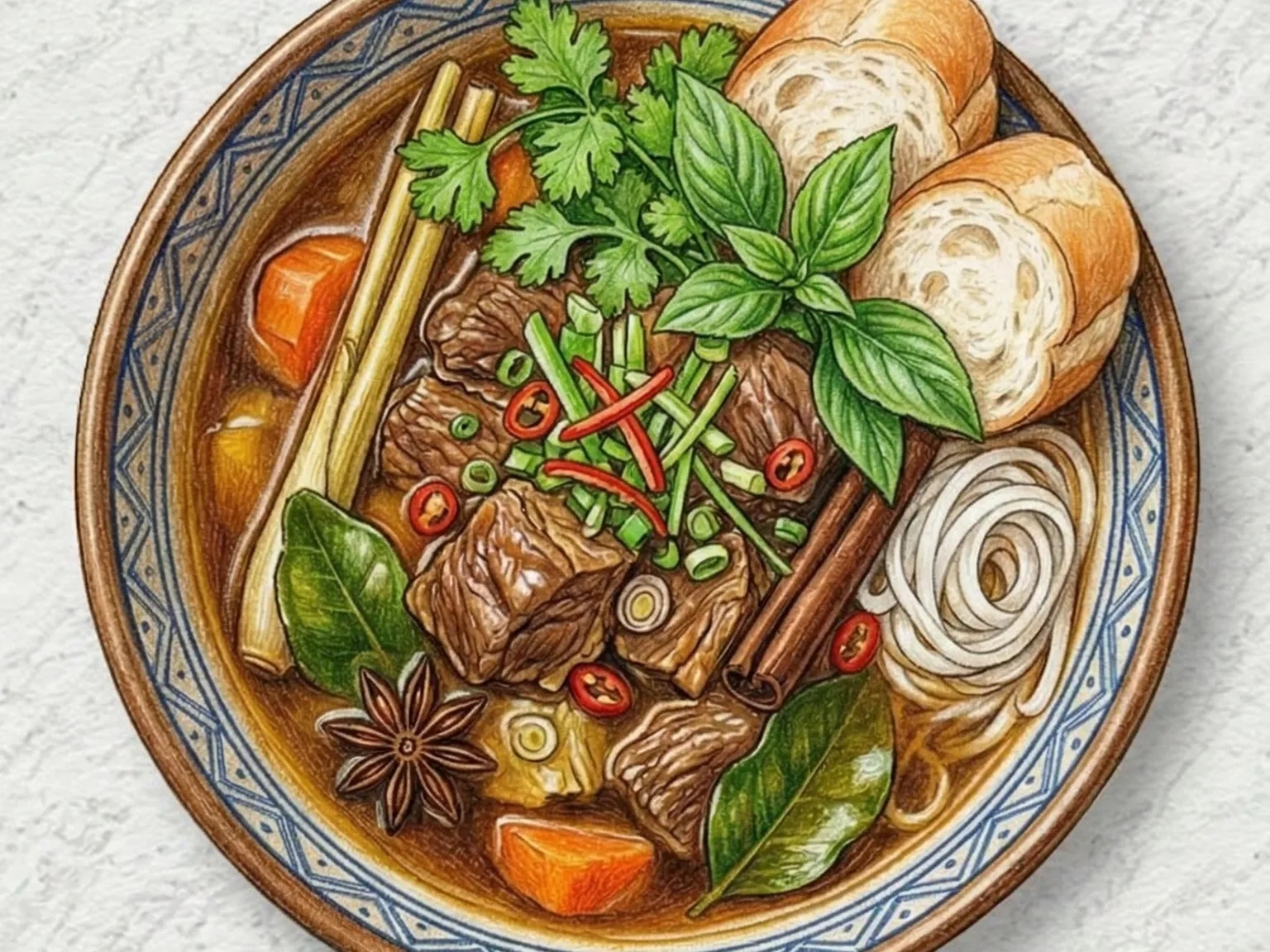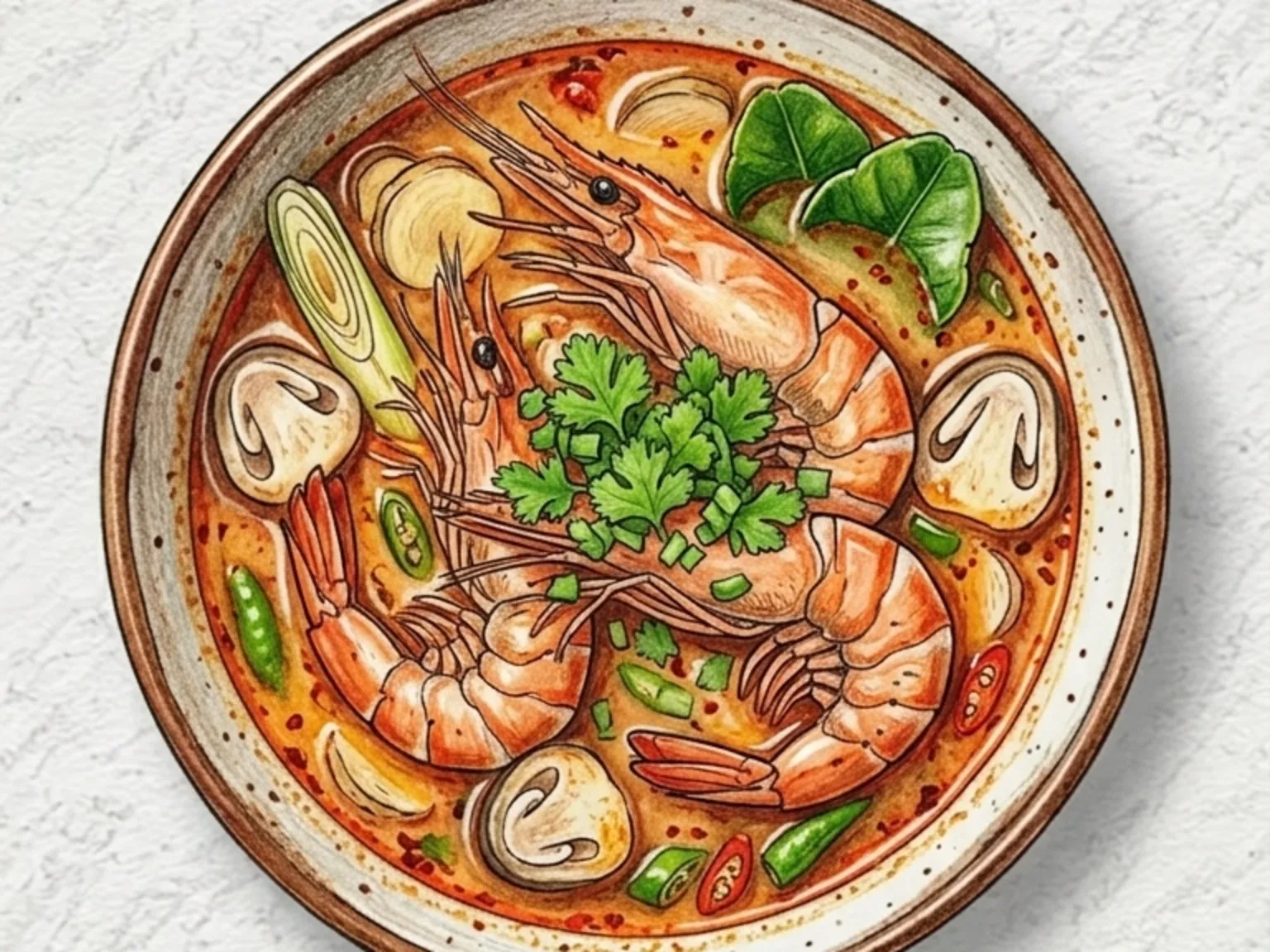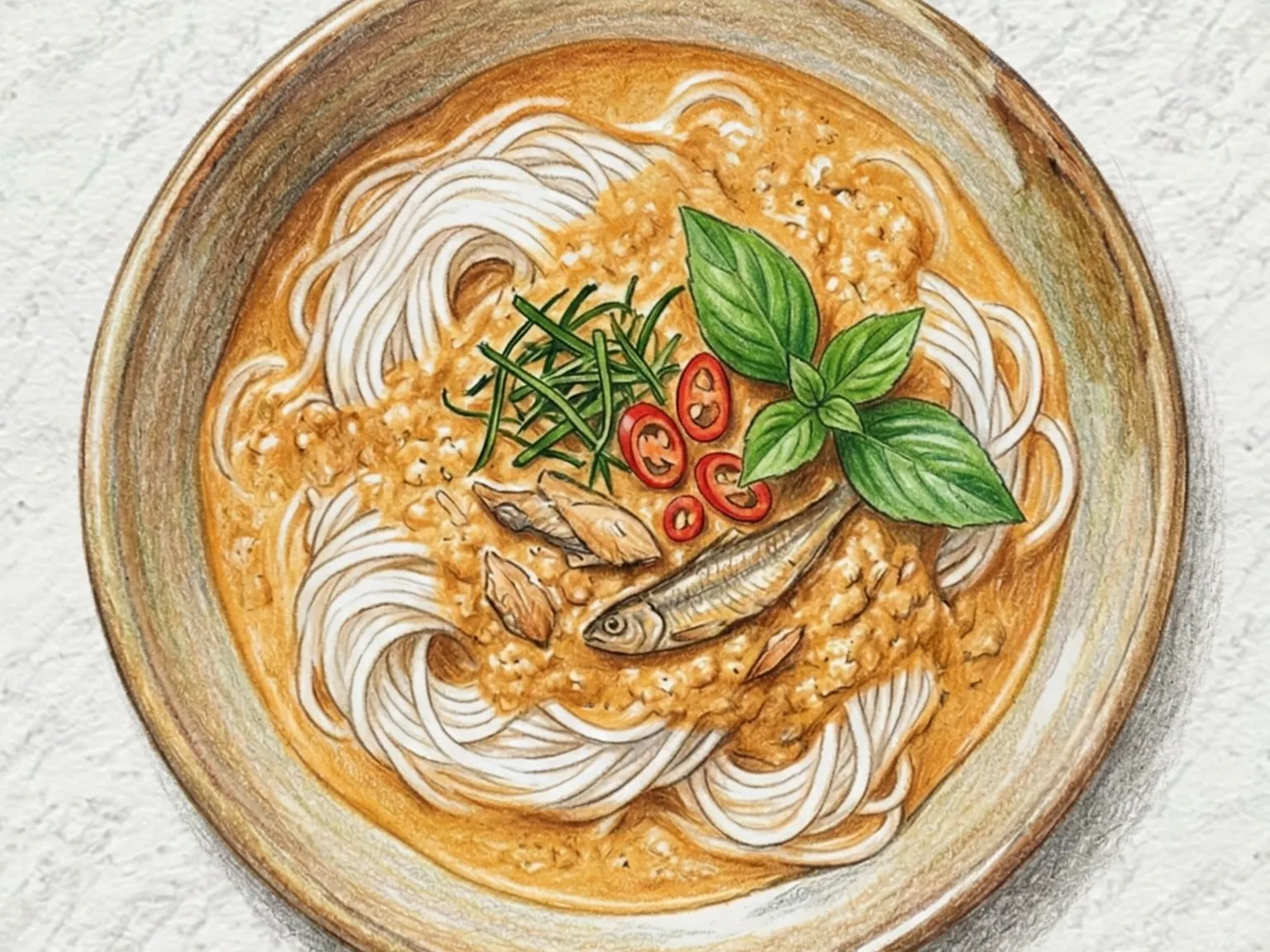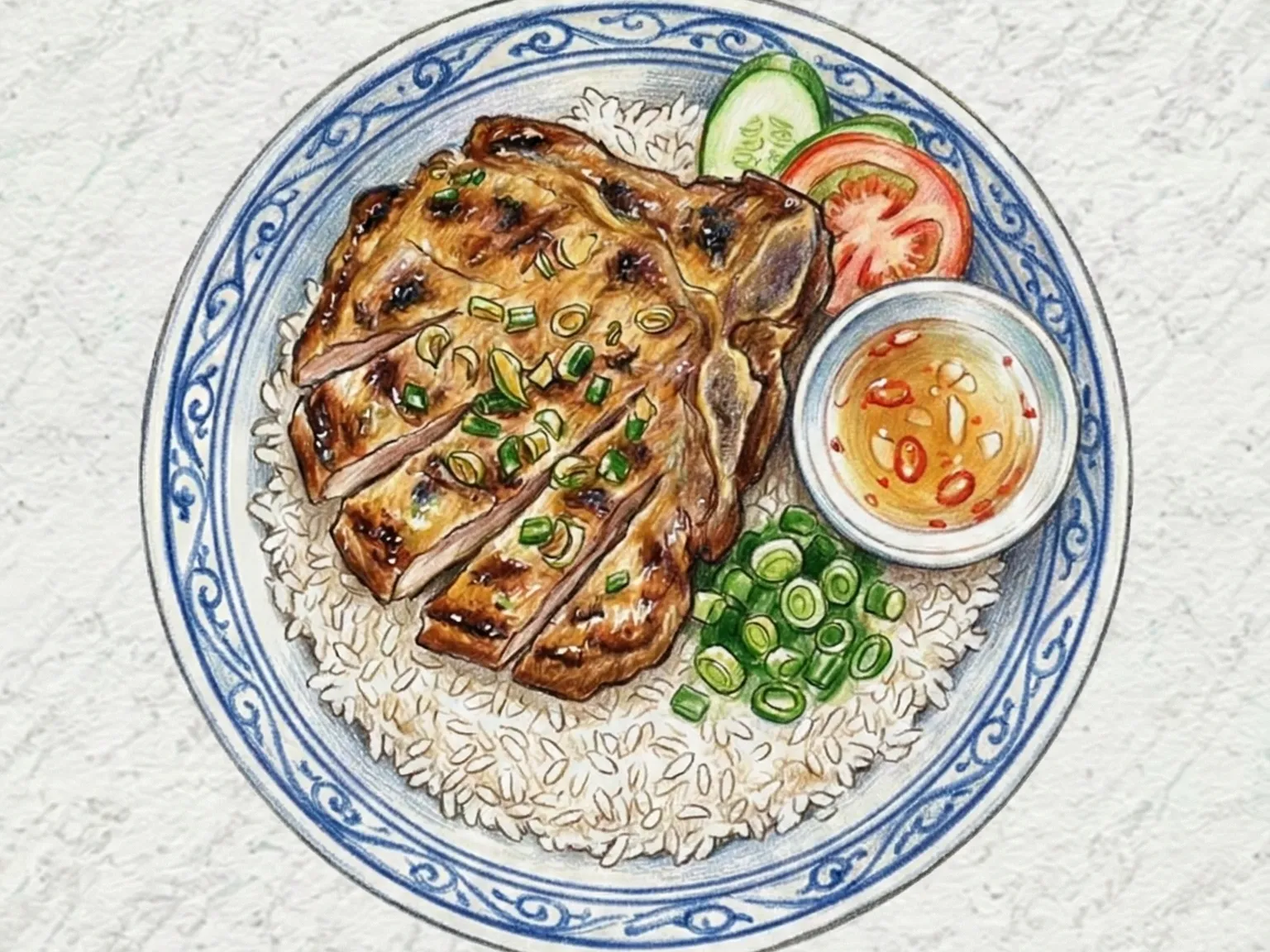
Com Tam Suon Nuong (Broken Rice with Grilled Pork)
Com tam - broken rice - gets its name from fractured rice grains that were once considered too inferior for sale, eaten only by the poor during Vietnam's lean years. These smaller grains cook drier and fluffier than whole rice, absorbing sauces and meat juices more readily, which turned a byproduct into a sought-after texture. Suon nuong - grilled pork chop - is marinated in lemongrass, garlic, fish sauce, and sugar, then charcoal-grilled until the marinade caramelizes into a sticky, charred crust that clings to the bone. The plate is assembled with the grilled chop over broken rice, topped with shredded egg crepe, pickled daikon and carrot, and a generous pour of nuoc mam pha - the sweet-salty-sour dipping sauce that ties the dish together. In Ho Chi Minh City, com tam stalls open before dawn, and the morning ritual of pulling over a motorbike to eat a quick plate at a plastic table on the sidewalk is woven into the city's daily rhythm.
Adjust Servings
Instructions
- 1
Rinse and cook the rice first.
- 2
Mix lemongrass, garlic, fish sauce, and sugar for marinade.
- 3
Coat pork with marinade and rest for 15 minutes.
- 4
Grill or pan-sear the pork over high heat until caramelized.
- 5
Serve pork over rice and drizzle a little extra sauce.
As an Amazon Associate, we may earn from qualifying purchases.
Tips
Nutrition (per serving)
More Recipes

Hanoi Bun Cha (Charcoal Grilled Pork Patties with Rice Noodles)
Bun cha is Hanoi's lunchtime identity - the dish that defines the city's midday eating rhythm, when charcoal grills line the sidewalks of the Old Quarter and the smell of caramelizing pork fills narrow alleyways. Two forms of pork are grilled: fatty sliced pork belly and hand-shaped patties of seasoned ground pork, both charred over coconut-shell charcoal until the edges blacken and the fat renders into smoky drippings. The grilled meat drops directly into a bowl of warm dipping broth - a sweetened fish sauce with vinegar, garlic, and chili that is closer to a light soup than a condiment. Rice vermicelli is served on a separate plate alongside a mountain of fresh herbs: perilla, mint, lettuce, and dill. The eating ritual is essential: dip noodles into the broth, catch a piece of pork, wrap with herbs, and eat in one bite. When Barack Obama and Anthony Bourdain ate bun cha at a Hanoi street stall in 2016, the restaurant preserved the table behind glass - a measure of how deeply this dish is woven into the city's identity.

Cao Lau (Hoi An Chewy Rice Noodles with Braised Pork)
Cao lau is a dish that exists in only one place - Hoi An, a UNESCO-listed port town in central Vietnam - because its unique chewy noodles were traditionally made using water drawn from a specific ancient Cham well and lye from the ash of trees on the nearby Cham Islands. The noodles are thicker and firmer than any other Vietnamese variety, with a distinctive amber color and an almost pasta-like al dente bite. Sliced pork - braised in soy sauce, five-spice, and sugar until deeply caramelized - sits on top alongside a handful of fresh herbs, bean sprouts, and torn pieces of crispy fried won ton skin. Only a few tablespoons of the pork braising liquid moisten the bowl - this is not a soup but a dry noodle dish where each element maintains its own texture. The Cham, Chinese, Japanese, and Vietnamese trading cultures that passed through Hoi An's port over centuries all left traces in cao lau - the soy seasoning echoes Japanese udon, the five-spice recalls Chinese cooking, and the fresh herb garnish is unmistakably Vietnamese. It is a dish that cannot be authentically reproduced elsewhere, making it one of the world's most geographically anchored foods.

Hu Tieu Nam Vang (Vietnamese Pork & Shrimp Noodle Soup)
Hu tieu nam vang is a clear-broth rice noodle soup from southern Vietnam, originally brought from Phnom Penh and now deeply embedded in Saigon street food culture. The pork bone broth is simmered slowly and skimmed carefully to keep it transparent, then seasoned with fish sauce and a touch of sugar for balance. Ground pork is pan-fried with garlic until crumbly and browned, creating a textured topping, while whole shrimp are blanched for just one minute to stay firm. Rice noodles are placed in bowls with raw bean sprouts on top, and the hot broth poured over wilts the sprouts slightly while leaving their centers crunchy. A spoonful of garlic oil floated on the surface releases fragrance with every sip. The dish is finished simply with scallion and pepper, relying on the depth of the clear broth to unify the components.

Vietnamese Grilled Pork Vermicelli
Charcoal-grilled pork sits atop a bed of cool rice vermicelli in this Vietnamese composed noodle bowl. The pork is marinated in fish sauce, sugar, and garlic before hitting the grill, where the sugars caramelize into a smoky-sweet crust while the interior stays moist. Fresh mint, cilantro, and crushed roasted peanuts are scattered over the top, building layers of herbal fragrance and crunch. A drizzle of nuoc cham, the sweet-sour-salty dipping sauce anchored by fish sauce and lime, ties every component together. Even without broth, the bowl feels generous and refreshing, thanks to the temperature contrast between the warm meat and the chilled noodles. Pickled daikon and carrot add a final note of acidity that keeps the palate engaged to the last strand.

Banh Cuon (Hanoi Steamed Rice Rolls with Pork and Mushroom)
Banh cuon is a Hanoi breakfast specialty - translucent rice sheets steamed on fabric stretched over boiling water, then filled and rolled in seconds by practiced hands. The batter is nothing more than rice flour and water, spread tissue-thin to produce a wrapper so delicate it tears if handled roughly. Inside, a filling of minced pork and finely chopped wood ear mushrooms provides a savory, slightly crunchy core. The rolls are served at room temperature with fried shallots, sliced Vietnamese sausage, and a bowl of nuoc cham for dipping. What sets banh cuon apart is its texture - silky, almost slippery on the tongue, with none of the chew associated with other rice-based wraps.

Vietnamese Mi Quang (Turmeric Noodles with Pork and Shrimp)
Mi quang is a central Vietnamese noodle dish built on turmeric-tinted rice noodles topped with pork, shrimp, and a small amount of concentrated broth - closer to a dressed noodle than a soup. The pork is marinated with fish sauce and turmeric, which simultaneously colors the meat yellow and infuses it with fermented depth. A brief five-minute simmer with chicken stock produces a small quantity of broth with intensely concentrated flavor. The noodles are cooked separately, rinsed, and served in bowls with just enough broth to moisten rather than submerge them, which is the hallmark of authentic mi quang. Bean sprouts and crushed roasted peanuts are added on top, contributing crunch and nuttiness that contrast with the soft noodles and rich broth.