Cong You Ban Mian (Scallion Oil Noodles)
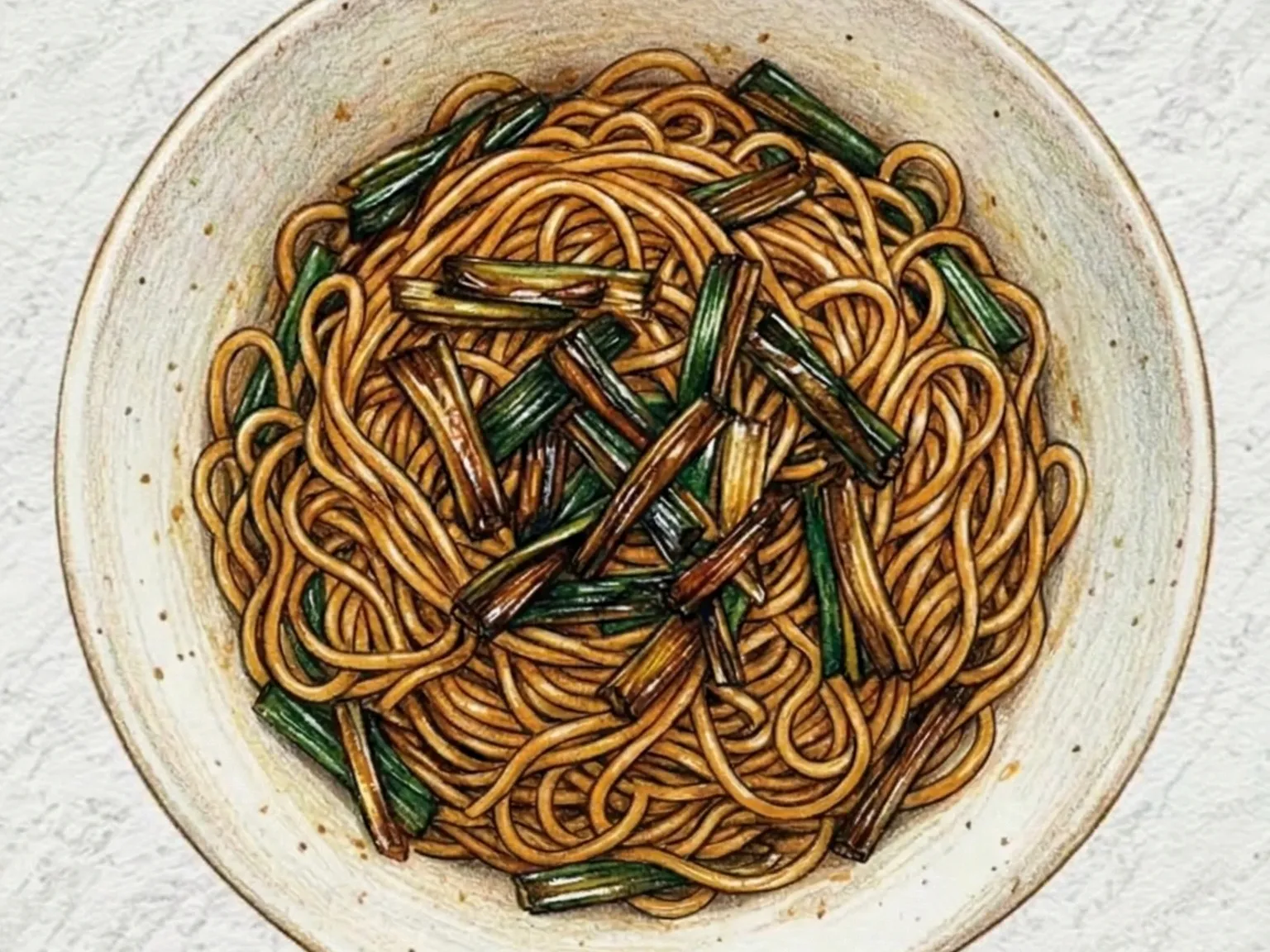
Cong you ban mian - Shanghai scallion oil noodles - is a dish that achieves remarkable depth from almost nothing: noodles, scallions, soy sauce, and oil. The secret lies in the scallion oil itself - scallions fried slowly in neutral oil over low heat for nearly thirty minutes until their moisture evaporates entirely and they turn a deep, dark brown, at which point the raw bite of the scallion has transformed into a sweet, caramelized fragrance. The technique demands patience; too much heat and the scallions burn bitter, too little and the oil never develops complexity. Freshly boiled noodles are tossed with soy sauce and a generous spoonful of the amber scallion oil, then topped with the crisp, shriveled scallion bits that crunch against the springy noodles. In Shanghai's lane-house noodle shops, a bowl costs three yuan and is eaten standing at the counter - a reminder that great food need not be complicated or expensive, only made with care.
Adjust Servings
Instructions
- 1
Cut scallions into 5 cm pieces and gently fry in oil over low heat.
- 2
Remove browned scallions and keep the infused oil.
- 3
Add soy sauce, sugar, and white pepper to the oil and simmer for 30 seconds.
- 4
Boil noodles, drain well, and toss with sauce while hot.
- 5
Top with crispy scallions and serve.
As an Amazon Associate, we may earn from qualifying purchases.
Tips
Nutrition (per serving)
More Recipes

Cong You Bing (Flaky Scallion Pancake)
Cong you bing - scallion pancake - is one of northern China's oldest street foods, built through a lamination technique that creates flaky layers within a simple flour dough. The dough is rolled flat, brushed with oil, scattered with chopped scallions and salt, then rolled up into a coil and flattened again - a process repeated multiple times to build the internal layers that define the pancake's texture. Pan-fried in oil over medium heat, the exterior crisps into a golden, shattering shell while the interior remains chewy with visible, pull-apart layers where steam has puffed between the dough sheets. The scallions trapped between layers soften in the heat, losing their raw sharpness and releasing a gentle sweetness into the surrounding dough. In Taiwanese night markets, a popular variation cracks an egg onto the pancake during the final fry, adding richness and extra crispness. Eaten any time of day - as a breakfast grab, a beer snack, or torn apart and shared at a hawker stall - scallion pancakes are one of the most universally satisfying flour-based foods.

Biang Biang Mian (Xi'an Hand-Pulled Belt Noodles with Chili Oil)
Biang biang mian takes its name from the sound the dough makes when the cook slaps it against the counter to stretch it into wide, belt-like ribbons - a technique practiced in Xi'an and across Shaanxi Province for centuries. The noodle dough is made from high-gluten flour and rested until pliable, then pulled by hand into strips as wide as a belt and as long as an arm, with an irregular thickness that creates varied chew in every bite. The cooked noodles are dressed with a simple topping of minced garlic, chili flakes, Sichuan peppercorn powder, and chopped scallion, over which smoking-hot rapeseed oil is poured at the table - the sizzle activates the aromatics and blooms the chili into a fragrant, rust-colored oil that coats each strand. Soy sauce and black vinegar are stirred through, adding a salty-sour backbone. The character of the biang biang - written in one of Chinese script's most complex characters with over fifty strokes - is said to encode the sounds of the kitchen: slapping dough, sizzling oil, and the satisfied sighs of eaters.

Cantonese Steamed Fish
Cantonese steamed fish - ching jing yu - embodies the Cantonese culinary philosophy of letting premium ingredients speak for themselves with minimal intervention. The technique demands the freshest possible whole fish - sea bass, grouper, or pomfret - because steaming hides nothing; any hint of staleness is immediately exposed. The fish is scored, placed on a plate with ginger slices tucked underneath and inside the cavity, then steamed over roiling water for exactly eight to ten minutes depending on thickness. Overcooking by even a minute turns the flesh from silky and translucent to dry and chalky. The moment the fish leaves the steamer, any accumulated liquid is drained - it carries a fishy taste that would spoil the dish. Julienned scallion and ginger are piled on top, then a ladle of smoking-hot oil is poured directly over them, sizzling the aromatics and releasing their fragrance into the fish. A final drizzle of seasoned soy sauce and a few drops of sesame oil complete the dish. In Cantonese banquet culture, the steamed fish course is often the most expensive item on the table, chosen live from a restaurant tank.

Hakka Noodles (Indo-Chinese Stir-Fried Noodles)
Hakka noodles belong to the Indo-Chinese tradition, a culinary fusion born in Kolkata's Chinese community that has since spread across India. Egg noodles are boiled just short of fully done, rinsed in cold water, and tossed with a little oil so they stay separate during stir-frying. The vegetables, julienned into matchstick-thin strips of cabbage, carrot, and bell pepper, are tossed in a smoking-hot wok for barely two minutes to keep their crunch. Seasoning is deliberately minimal: soy sauce for saltiness, rice vinegar for a faint tang, and black pepper for warmth. The speed of the cooking matters more than the ingredient list; the intense wok heat creates a smoky char on the noodles that no amount of seasoning can replicate at lower temperatures. Spring onions are stirred in only after the heat is off, keeping their bite and fresh aroma intact.

Chinese Red-braised Pork Belly
Hongshao rou is a traditional Chinese red-braised pork belly dish where thick-cut pork is slowly simmered in soy sauce, sugar, cooking wine, ginger, and scallion. The meat is first seared to render excess fat, then braised on low heat until the seasoning penetrates deeply. As it cooks, the pork becomes fork-tender and the sauce reduces into a thick, glossy glaze with a deep reddish hue. It is one of the most beloved home-cooked dishes across China, served simply over steamed rice.

Dan Dan Mian (Sichuan Spicy Noodles)
Dan dan mian is a Sichuan noodle dish that layers wheat noodles and browned ground pork over a thick sauce built from sesame paste, soy sauce, chili oil, and vinegar. Ground Sichuan peppercorn delivers its signature tingling numbness on the tongue, while the chili oil brings a direct, lingering heat that melds with the rich sesame base. Stir-frying the pork until well-browned develops a roasted meatiness that deepens the sauce's complexity. Blanched bok choy tucked alongside the noodles provides a clean, green crunch against the oily intensity. The peppercorn's numbing effect builds quickly, so adding it in small increments allows precise control.