Charim

2686 Korean & World Recipes

2686+ Korean recipes, clean and organized. Ingredients to instructions, all at a glance.

Cong You Bing (Flaky Scallion Pancake)
Asian Medium

Cong You Bing (Flaky Scallion Pancake)

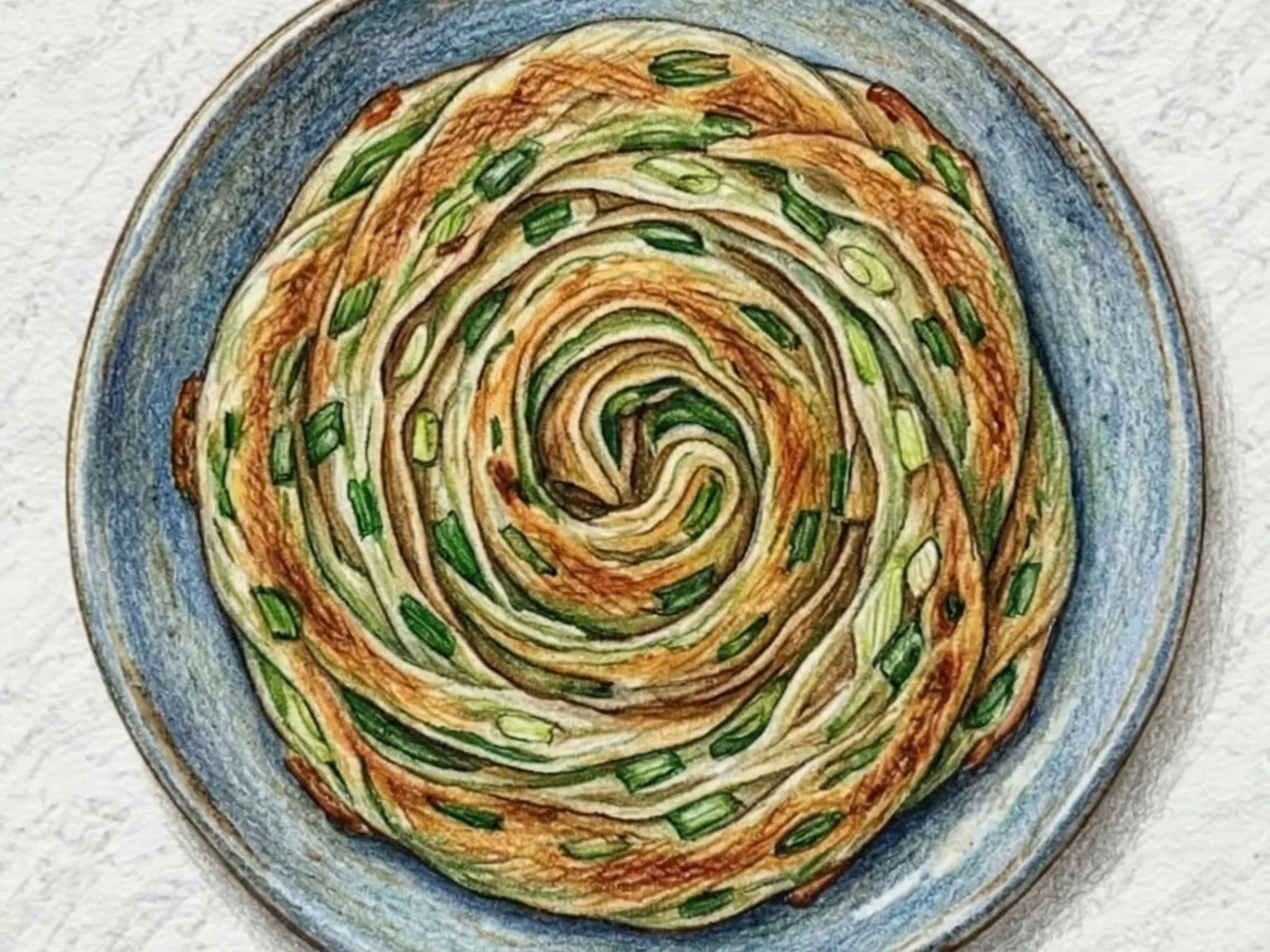
Cong you bing - scallion pancake - is one of northern China's oldest street foods, built through a lamination technique that creates flaky layers within a simple flour dough. The dough is rolled flat, brushed with oil, scattered with chopped scallions and salt, then rolled up into a coil and flattened again - a process repeated multiple times to build the internal layers that define the pancake's texture. Pan-fried in oil over medium heat, the exterior crisps into a golden, shattering shell while the interior remains chewy with visible, pull-apart layers where steam has puffed between the dough sheets. The scallions trapped between layers soften in the heat, losing their raw sharpness and releasing a gentle sweetness into the surrounding dough. In Taiwanese night markets, a popular variation cracks an egg onto the pancake during the final fry, adding richness and extra crispness. Eaten any time of day - as a breakfast grab, a beer snack, or torn apart and shared at a hawker stall - scallion pancakes are one of the most universally satisfying flour-based foods.

Prep 30min Cook 18min 4 servings

Adjust Servings

2servings
servings

Instructions

  1. 1

    Mix flour with hot water and knead for about 10 minutes.

  2. 2

    Rest dough for 20 minutes.

  3. 3

    Roll thin, spread sesame oil, salt, and chopped scallion.

  4. 4

    Roll up, coil into a spiral, then flatten again.

  5. 5

    Pan-fry both sides until golden and slice to serve.

🛒Shop Ingredients on Amazon

As an Amazon Associate, we may earn from qualifying purchases.

Tips

Roll gently to preserve flaky layers.
A pinch of salt before frying sharpens flavor.

Nutrition (per serving)

Calories
320
kcal
Protein
7
g
Carbs
46
g
Fat
11
g

More Recipes

Cong You Ban Mian (Scallion Oil Noodles)
AsianEasy

Cong You Ban Mian (Scallion Oil Noodles)

Cong you ban mian - Shanghai scallion oil noodles - is a dish that achieves remarkable depth from almost nothing: noodles, scallions, soy sauce, and oil. The secret lies in the scallion oil itself - scallions fried slowly in neutral oil over low heat for nearly thirty minutes until their moisture evaporates entirely and they turn a deep, dark brown, at which point the raw bite of the scallion has transformed into a sweet, caramelized fragrance. The technique demands patience; too much heat and the scallions burn bitter, too little and the oil never develops complexity. Freshly boiled noodles are tossed with soy sauce and a generous spoonful of the amber scallion oil, then topped with the crisp, shriveled scallion bits that crunch against the springy noodles. In Shanghai's lane-house noodle shops, a bowl costs three yuan and is eaten standing at the counter - a reminder that great food need not be complicated or expensive, only made with care.

🏠 Everyday🌙 Late Night
Prep 10minCook 15min2 servings
Cantonese Steamed Fish
AsianEasy

Cantonese Steamed Fish

Cantonese steamed fish - ching jing yu - embodies the Cantonese culinary philosophy of letting premium ingredients speak for themselves with minimal intervention. The technique demands the freshest possible whole fish - sea bass, grouper, or pomfret - because steaming hides nothing; any hint of staleness is immediately exposed. The fish is scored, placed on a plate with ginger slices tucked underneath and inside the cavity, then steamed over roiling water for exactly eight to ten minutes depending on thickness. Overcooking by even a minute turns the flesh from silky and translucent to dry and chalky. The moment the fish leaves the steamer, any accumulated liquid is drained - it carries a fishy taste that would spoil the dish. Julienned scallion and ginger are piled on top, then a ladle of smoking-hot oil is poured directly over them, sizzling the aromatics and releasing their fragrance into the fish. A final drizzle of seasoned soy sauce and a few drops of sesame oil complete the dish. In Cantonese banquet culture, the steamed fish course is often the most expensive item on the table, chosen live from a restaurant tank.

🥗 Light & Healthy
Prep 15minCook 12min2 servings
Jianbing (Chinese Savory Breakfast Crepe)
AsianMedium

Jianbing (Chinese Savory Breakfast Crepe)

Jianbing is a northern Chinese street breakfast crepe assembled on a flat griddle within minutes. A thin batter of mung bean flour and wheat flour is spread into a wide circle, then an egg is cracked directly on top and smeared across the surface while still liquid. Chopped scallion is scattered over the egg before the crepe is flipped briefly to set the other side. Sweet bean sauce and chili sauce are brushed on, followed by fresh cilantro and a crispy fried wonton sheet that provides the signature crunch. The mung bean flour gives the batter a distinctive nutty flavor and slightly crisp edge that plain wheat flour cannot replicate. The whole assembly is folded into a neat rectangle meant to be eaten by hand. Timing is critical for the wonton cracker, which should be added last to prevent sogginess, creating a layered contrast of soft crepe, runny egg, sharp sauce, and shattering crunch.

🏠 Everyday
Prep 20minCook 15min2 servings
Guo Bao Rou (Sweet and Sour Crispy Pork)
AsianMedium

Guo Bao Rou (Sweet and Sour Crispy Pork)

Guo bao rou - literally 'pot-wrapped meat' - is the signature dish of Northeastern Chinese cuisine, created in late Qing Dynasty Harbin to entertain Russian diplomats who found traditional Chinese flavors too unfamiliar. Pork tenderloin or loin is sliced thin and coated heavily in potato starch, fried once to set the crust, then fried a second time at higher temperature to puff the starch into a shatteringly crisp shell - this double-frying technique is non-negotiable. A sauce of vinegar, sugar, and soy sauce is reduced rapidly in a hot wok until it caramelizes, then the crispy pork is tossed through in a motion that must take no more than thirty seconds - any longer and the starch absorbs the liquid, destroying the crunch. The original Harbin version leans heavily on vinegar's sharp tang with a pale color, while versions that migrated south or into Korean-Chinese kitchens often substitute ketchup for a sweeter, redder result. Each piece delivers a triple texture: a glassy sauce coating on the outside, a shattering starch layer beneath, and soft, yielding pork at the center.

🎉 Special Occasion
Prep 20minCook 20min3 servings
Pork Baozi (Chinese Steamed Pork Cabbage Bun)
Street foodHard

Pork Baozi (Chinese Steamed Pork Cabbage Bun)

Baozi is a Chinese steamed bun made from yeast-leavened wheat dough filled with seasoned ground pork, cabbage, and scallion. The dough proofs for 40 minutes and puffs into a soft, pillowy shell in the steamer, while the filling is bound with soy sauce and sesame oil for a savory, aromatic center. Pleating the top seals in the juices during the 15-minute steam. Resting the buns for two minutes after turning off the heat prevents the delicate skin from collapsing due to sudden temperature change.

🎉 Special Occasion🧒 Kid-Friendly
Prep 55minCook 15min4 servings
Chinese Lo Mein
NoodlesEasy

Chinese Lo Mein

Lo mein is a Chinese noodle dish where boiled noodles are tossed gently with vegetables, protein, and a soy-based sauce, resulting in a soft, glossy finish that sets it apart from the crisper chow mein. The sauce - soy sauce, oyster sauce, and a small amount of sugar - is premixed so it coats evenly during the brief time in the pan. Shrimp is seared first until half-cooked, then broccoli and carrot are stir-fried just until they lose their raw crunch. The warm, drained noodles go in last, and everything is tossed together until the sauce is absorbed and the noodles gleam. The key is restraint: lo mein should stay moist and supple, not charred or dry. The protein can be swapped freely - chicken, beef, or tofu all work with the same sauce and technique.

🏠 Everyday🌙 Late Night
Prep 15minCook 10min2 servings
More Asian →