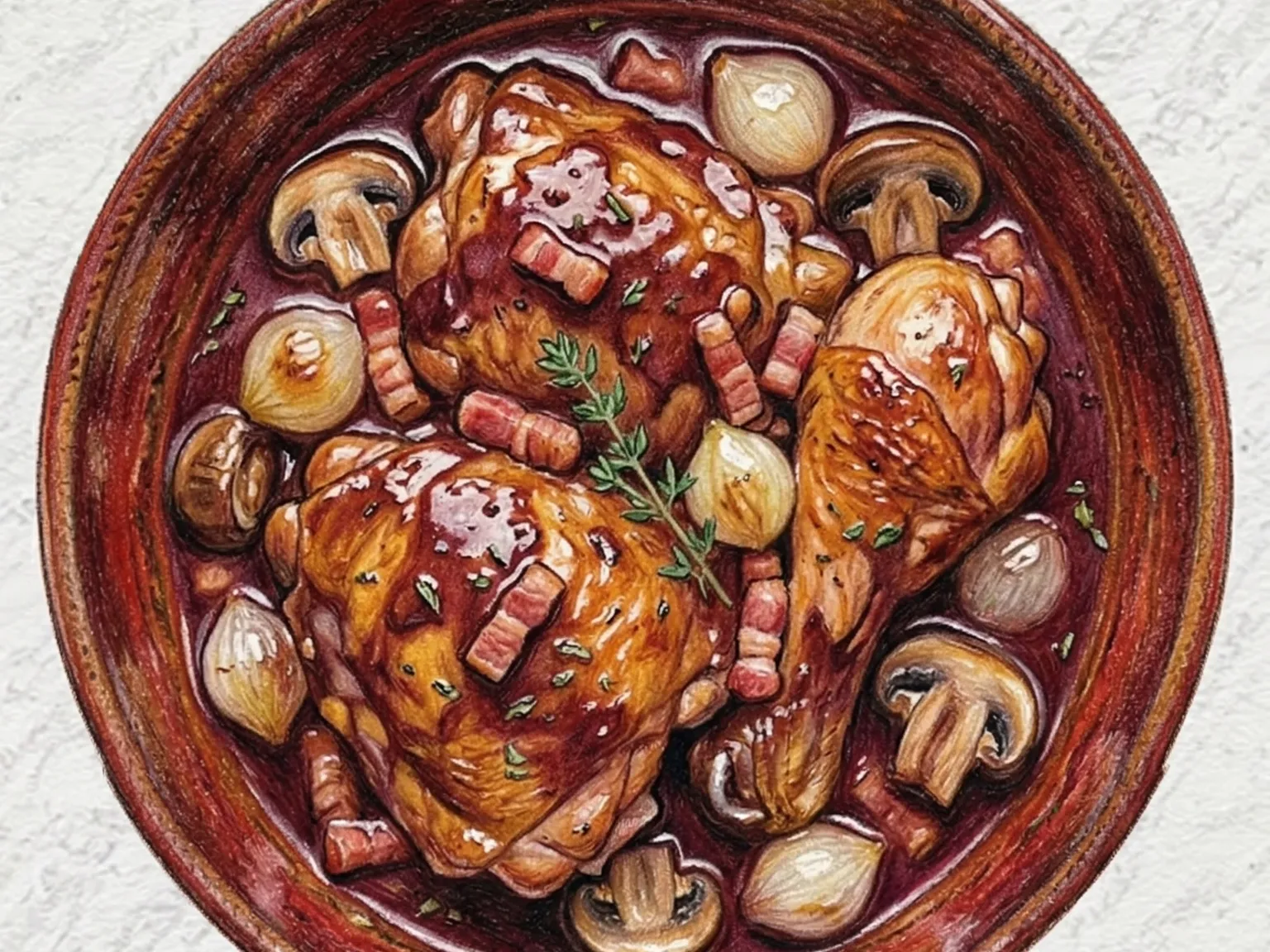
Coq au Vin (French Red Wine Braised Chicken with Mushrooms)
Western Medium

Coq au Vin (French Red Wine Braised Chicken with Mushrooms)

Quick answer

Coq au vin is a French braise in which chicken pieces are cooked slowly in red wine until the flesh is tender enough to pull apart and the braising liquid has reduced int...

What makes this special

  • Chicken browns first to render fat and build fond; red wine reduces around mushrooms into a glossy braising sauce.
  • Searing chicken until golden seals the surface before bacon and vegetables build flavor layers
  • 45 minutes of braising drives wine tannins and fruit notes deep into the chicken
Total time
90 min
Level
Medium
Servings
4 servings
Ingredients
10
Calories
480 kcal
Protein
38 g

Key ingredients

Chicken piecesRed wineBacon lardonsShallots (or pearl onions)Button mushrooms

Core cooking flow

  1. 1 Pat the chicken pieces dry, then season with salt and pepper.
  2. 2 Lift the chicken out and keep the pan on medium heat.
  3. 3 Pour in 500 ml red wine and scrape up the browned fond from the bottom of the pan.

Coq au vin is a French braise in which chicken pieces are cooked slowly in red wine until the flesh is tender enough to pull apart and the braising liquid has reduced into a glossy, deeply flavored sauce. The process begins by browning the chicken in batches over high heat, creating a caramelized crust that seals in juice and deposits flavor into the fond at the bottom of the pan. Bacon lardons, shallots, and garlic are cooked next in the same pan, adding savory, aromatic layers before the wine deglazes the accumulated fond. Chicken stock and a small amount of tomato paste deepen the body of the braise, and forty-five minutes of covered, low simmering allows the wine's tannins and fruit to permeate the meat completely. Mushrooms are added in the final fifteen minutes to prevent them from turning mushy during the long cook. Reducing the sauce after the chicken is removed concentrates it to a consistency that coats the back of a spoon, and whisking in cold butter at the end produces a glossy sheen and a silky mouthfeel. The dish improves significantly if made a day ahead and refrigerated overnight, as the rest allows the wine, meat, and aromatics to integrate more fully. When reheated the following day, the sauce is noticeably richer and more cohesive than it was straight from the pot.

Prep 30min Cook 60min 4 servings
Recipes by ingredient → garlic

Instructions

Read the steps as a cooking flow: prep, heat, seasoning, doneness control, and finish.

6 steps
  1. 1
    Control

    Pat the chicken pieces dry, then season with salt and pepper.

    Heat 2 tablespoons olive oil over medium-high heat and brown the chicken in batches until golden on all sides, avoiding crowding so the surface sears instead of steaming.

  2. 2
    Control

    Lift the chicken out and keep the pan on medium heat.

    Cook 150 g bacon lardons until the fat renders and the edges crisp, then add 200 g shallots and 4 garlic cloves and cook until the shallots look translucent at the edges.

  3. 3
    Heat

    Pour in 500 ml red wine and scrape up the browned fond from the bottom of the pan.

    Boil for 3 to 5 minutes until the harsh alcohol aroma softens, then stir in 300 ml chicken stock and 2 tablespoons tomato paste.

  4. 4
    Control

    Return the chicken to the pan and arrange it so the sauce comes about halfway up the pieces.

    Add 3 sprigs fresh thyme, cover, and keep at a gentle low simmer for 30 minutes, adjusting the heat if the liquid boils hard.

  5. 5
    Season

    Add 200 g button mushrooms for the final 15 minutes, pressing them gently into the sauce.

    Adding them earlier can make them collapse, so cook only until they are tender but still hold their shape.

  6. 6
    Finish

    When the chicken is tender, lift it out and keep it warm.

    Simmer the sauce over medium heat until it coats the back of a spoon, taste and adjust the seasoning, then spoon it over the chicken to serve.

After the steps

Pick a recipe that fits this dish.

Continue with shared ingredients, meal pairings, or a similar method.

Recipes That Go Well With This

More Western →

Based on shared ingredients and meal pairing

Beef Bourguignon
Shared ingredient: button mushrooms Western

Beef Bourguignon

Beef bourguignon is a Burgundian stew that slow-braises beef chuck in red wine for at least two hours, long enough for the tough connective tissue to dissolve into silky, fork-yielding meat and for the wine to condense into a glossy, concentrated sauce. Bacon is rendered first for its fat, which then sears the beef cubes into a deep, caramelized crust before the wine enters the pot, stacking smoky and browned notes into the base. As the wine reduces around the meat, it transitions from a thin liquid into a sauce that coats everything in the pot with an even, mahogany-colored gloss. Mushrooms and pearl onions absorb the sauce during the final stage of cooking, the mushrooms turning spongy and meaty, the onions sweet and yielding. Tomato paste and beef stock anchor the wine's natural acidity so the finished dish reads as deeply savory rather than sharp. The sauce should cling to the back of a spoon when done.

Chicken Chasseur
Shared ingredient: button mushrooms Western

Chicken Chasseur

Chicken chasseur is a French braised chicken dish where thighs are seared skin-side down until the skin renders crispy and golden, then set aside while button mushrooms, shallots, and garlic are sauteed in the same pan with butter. White wine goes in next to deglaze the fond left on the bottom of the pan, and after the wine reduces by half, tomato puree, chicken stock, and fresh thyme sprigs go in before the seared chicken returns to the pot for a covered braise of twenty-five minutes. The initial searing step is not optional from a flavor standpoint, because the caramelized residue left on the pan, the fond, is the primary source of the sauce's roasted depth. Rushing the sear causes the skin to stick and tear, and results in a paler, thinner-tasting sauce. Mushrooms need to be spread out in a single layer in a hot, wide pan so they brown before their moisture escapes, since crowding them generates steam that leaves them pale and soft rather than giving them the earthy intensity the dish depends on. As the wine reduces, its acidity concentrates and sharpens, which is what makes the sauce bright enough to balance the richness of the braised chicken. Tomato puree adds a quiet, rounded sweetness and deepens the red color of the sauce, while thyme brings an herbal warmth that accumulates slowly over the course of the braise. Removing the lid for the final five minutes allows the sauce to thicken to the right consistency. Mashed potatoes or crusty bread served alongside catch every bit of the sauce.

Beet and Goat Cheese Salad
Serve together Salads

Beet and Goat Cheese Salad

Beet and goat cheese salad begins with whole beets wrapped in foil and roasted at 200°C for forty-five to sixty minutes, long enough for their raw, earthy undertone to convert almost entirely into a concentrated, caramel-adjacent sweetness. Peeling the skins while the beets are still warm requires only the pressure of a paper towel - they slip off cleanly - and slicing them before they cool preserves the vivid crimson-purple cross-section that makes the dish visually striking. Crumbled goat cheese placed on the warm slices softens slightly, and its tangy acidity cuts through the dense sweetness of the roasted root rather than competing with it. Walnuts toasted briefly in a dry pan lose much of their raw bitterness, developing a nuttiness that bridges the mineral quality of the beet and the dairy sharpness of the cheese. Balsamic reduction does more than dress the plate: its concentrated sweet-tart intensity ties the separate components into a coherent whole. Arugula underneath the beet slices provides a peppery bitterness that sharpens the contrast against the sweetness, giving the salad a complexity well beyond what its short ingredient list suggests. A simple dressing of extra-virgin olive oil and lemon juice over the greens keeps the balance light and clear.

Chicken Fricassee (French White Wine Cream Braised Chicken)
Similar recipe Western

Chicken Fricassee (French White Wine Cream Braised Chicken)

Chicken fricassee is a French white braise where chicken thighs are lightly seared, just enough to firm the surface without deep browning, then set aside while mushrooms, onion, and garlic are sauteed in butter and dusted with flour to form a roux. Chicken stock is whisked in to dissolve the roux into a smooth base, the chicken returns for a twenty-five-minute covered simmer, and heavy cream is added for a final ten minutes of gentle reduction. The deliberately light sear is what distinguishes fricassee from darker braises; heavy browning would muddy the pale, delicate sauce. Drying the chicken thoroughly before it touches the pan is important: surface moisture causes the pan temperature to drop sharply, making it harder to develop even the modest color the dish calls for. When building the roux, the flour should cook in the butter for an extra minute or two after it is fully absorbed so the raw starch taste cooks out and the roux disperses smoothly when the stock is added. The roux provides body without heaviness, and the cream transforms the broth into a silky coating that clings to the meat. Mushroom earthiness and onion sweetness emerge quietly within the cream. Bread or boiled potatoes are the traditional side, used to soak up the sauce completely.

Serve with this

Dongdongju (Korean Unfiltered Fermented Rice Wine)
Drinks Hard

Dongdongju (Korean Unfiltered Fermented Rice Wine)

Dongdongju is a traditional Korean unfiltered rice wine made by steaming short-grain and sweet rice together, then fermenting the cooked grain with nuruk starter and a small amount of dry yeast for seven days. Unlike makgeolli, it passes through a coarse sieve only once, leaving rice grains floating on the surface -- a trait that gives the drink its name and provides a distinctly chewy grain texture with each sip. Stirring the mash twice daily ensures the nuruk breaks down the starches evenly throughout fermentation, and keeping the temperature low after day three prevents the batch from over-fermenting. A pinch of salt added at the finish tempers residual sweetness without flattening the fermented grain character. Home-brewed dongdongju tends to carry a more pronounced rice fragrance and a heavier body than commercial makgeolli, and its flavor shifts noticeably day by day as fermentation continues.

🍺 Bar Snacks 🎉 Special Occasion
Prep 30min Cook 40min 8 servings
Gotgam Cream Cheese Roll (Dried Persimmon Rolls)
Desserts Easy

Gotgam Cream Cheese Roll (Dried Persimmon Rolls)

Gotgam cream cheese roll is a no-cook Korean dessert that requires nothing more than a knife, a bowl, and a refrigerator. Dried persimmons are slit open and flattened into thin sheets, each one acting as the outer wrapper. The filling is cream cheese mixed with honey and fresh lemon juice to balance its natural richness with acidity, and finely chopped walnuts are folded in throughout to add a crunchy, nutty element to every bite. The filling is spread across the opened persimmon, which is then rolled tightly and wrapped in plastic wrap. Twenty minutes in the refrigerator firms the roll enough to slice cleanly. Dipping the knife in warm water and wiping it dry before each cut produces the smoothest cross-sections. The finished slices reveal clearly defined layers: the chewy, caramel-sweet dried persimmon on the outside, the tangy cream cheese in the middle, and flecks of walnut distributed throughout. The combination makes it a natural pairing with wine or a polished addition to a traditional holiday table.

🍺 Bar Snacks 🎉 Special Occasion
Prep 20min 2 servings
Gamtae Butter Scallop Spaghetti
Pasta Medium

Gamtae Butter Scallop Spaghetti

Preparing gamtae butter scallop spaghetti requires high heat to develop a properly caramelized exterior on the scallops. This process involves searing the scallops for ninety seconds on each side to create a deep brown crust. Before the scallops ever touch the pan, it is essential to ensure they are completely dry by patting them down thoroughly with paper towels. Removing all surface moisture prevents the scallops from steaming in the pan. If the scallops remain damp, they will turn out soft and pale instead of achieving the intended texture and color. After the scallops have been removed from the heat, the remaining browned bits, known as the fond, serve as the primary flavor foundation for the sauce. Garlic and butter are added to the same pan, followed by white wine which is used to deglaze the surface. As the liquid simmers, the alcohol evaporates, leaving behind a clean acidity that balances the richness of the other ingredients. The sauce is finished by swirling in cold butter at the final stage, which creates a smooth and stable emulsion that coats each spaghetti strand evenly. The final component is gamtae seaweed, which has a flavor profile that is notably more delicate and milder than standard nori. By crumbling this seaweed over the pasta immediately before it is served, you introduce a subtle oceanic quality that bridges the gap between the richness of the butter and the natural sweetness of the scallop meat. To complete the preparation, a measured amount of fresh lemon juice is squeezed over the dish. This acidity sharpens the various flavor components and reduces the perceived heaviness of the fats, ensuring that the pasta remains balanced throughout the meal.

🍺 Bar Snacks 🎉 Special Occasion
Prep 15min Cook 18min 2 servings

Similar recipes

Chicken Provençal (South French Tomato Olive Herb Chicken)
Western Medium

Chicken Provençal (South French Tomato Olive Herb Chicken)

Chicken Provencal sears chicken thighs skin-side down on high heat until deeply golden, then braises them with cherry tomatoes, black olives, capers, garlic, and thyme in white wine for a southern French home-style dish. A prolonged sear of the chicken skin develops both crispness and a rich layer of fond on the pan bottom, which the wine dissolves into the sauce during deglazing. As the cherry tomatoes burst during cooking, their juice combines with the salty olives and sharp capers to form a bright, layered Mediterranean sauce. Twenty minutes of covered simmering followed by eight to ten minutes uncovered concentrates the sauce and allows it to penetrate the chicken deeply. A small amount of lemon zest stirred in at the end clarifies and lifts the aromatics of the finished dish. Using whole unpitted olives rather than pitted ones during cooking lets a slight bitterness leach from the pits into the sauce, adding an extra dimension that rounds out the sweetness of the tomatoes.

🎉 Special Occasion 🍺 Bar Snacks
Prep 20min Cook 40min 4 servings
Pain au Chocolat
Baking Hard

Pain au Chocolat

Two sticks of dark chocolate are sealed inside laminated croissant dough and baked until the exterior shatters into golden, buttery flakes. As the pastry cools for a minute on the rack, the chocolate inside transitions from fully molten to a soft, fudgy state that clings to the layers when torn apart. Dozens of paper-thin sheets of dough, created through repeated folding with cold butter, give each bite an audible crunch followed by a yielding, airy interior. Using chocolate with at least fifty-five percent cacao ensures that the filling carries enough bitterness to stand up to all that butter. Shaped portions freeze well, allowing an overnight thaw and morning proof for fresh pastries without starting from scratch.

🎉 Special Occasion 🧒 Kid-Friendly
Prep 120min Cook 18min 8 servings
Gateau au Chocolat (Rich Flourless Chocolate Cake)
Baking Medium

Gateau au Chocolat (Rich Flourless Chocolate Cake)

Gateau au chocolat is a French-style chocolate cake built on an unusually high ratio of dark chocolate and butter relative to flour. Many versions use only a trace of flour or none at all, so the structure depends almost entirely on eggs and melted chocolate rather than on gluten development. Whipping the egg whites separately into a glossy meringue and folding them into the batter introduces just enough trapped air to prevent the result from feeling dense and leaden; the finished cake is simultaneously rich and melt-on-the-tongue light. Straight from the oven the center appears underset, but as the cake cools fully on a rack the interior firms to a fudge-like consistency and a thin, crackly shell forms across the top. Sliced, it reveals an intensely dark cross-section that looks as concentrated as it tastes. A fine dusting of powdered sugar provides visual contrast against the dark surface, and a generous spoonful of lightly whipped, unsweetened cream tempers the bittersweet intensity. The cake actually improves if left overnight: moisture redistributes evenly through the crumb and the chocolate flavor deepens noticeably, making it an ideal candidate for baking a full day ahead of birthdays or dinner gatherings where a reliable, make-ahead dessert is needed.

🎉 Special Occasion 🧒 Kid-Friendly
Prep 25min Cook 30min 8 servings

Tips

Use a wine you would drink - better wine means a more complex, flavorful sauce.

Nutrition (per serving)

Calories
480
kcal
Protein
38
g
Carbs
12
g
Fat
22
g