Corn Chowder
Quick answer
Corn chowder is a classic American cream soup that layers smoky bacon fat, sweet corn, and tender potato into a rich, warming bowl.
What makes this special
- Bacon fat renders out to sweat onion and garlic, building a smoky base for sweet corn and potato chowder.
- Cooking onion and garlic in bacon drippings lays a smoky base in the broth
- Blending only half the soup keeps corn kernel texture alongside the creamy base
Key ingredients
Core cooking flow
- 1 Dice 300 g potato into small even cubes so it cooks at the same pace.
- 2 Set a pot over medium low heat and render 100 g bacon slowly until the pieces are crisp and browned.
- 3 Add 2 tablespoons butter, the onion, and the garlic to the bacon fat.
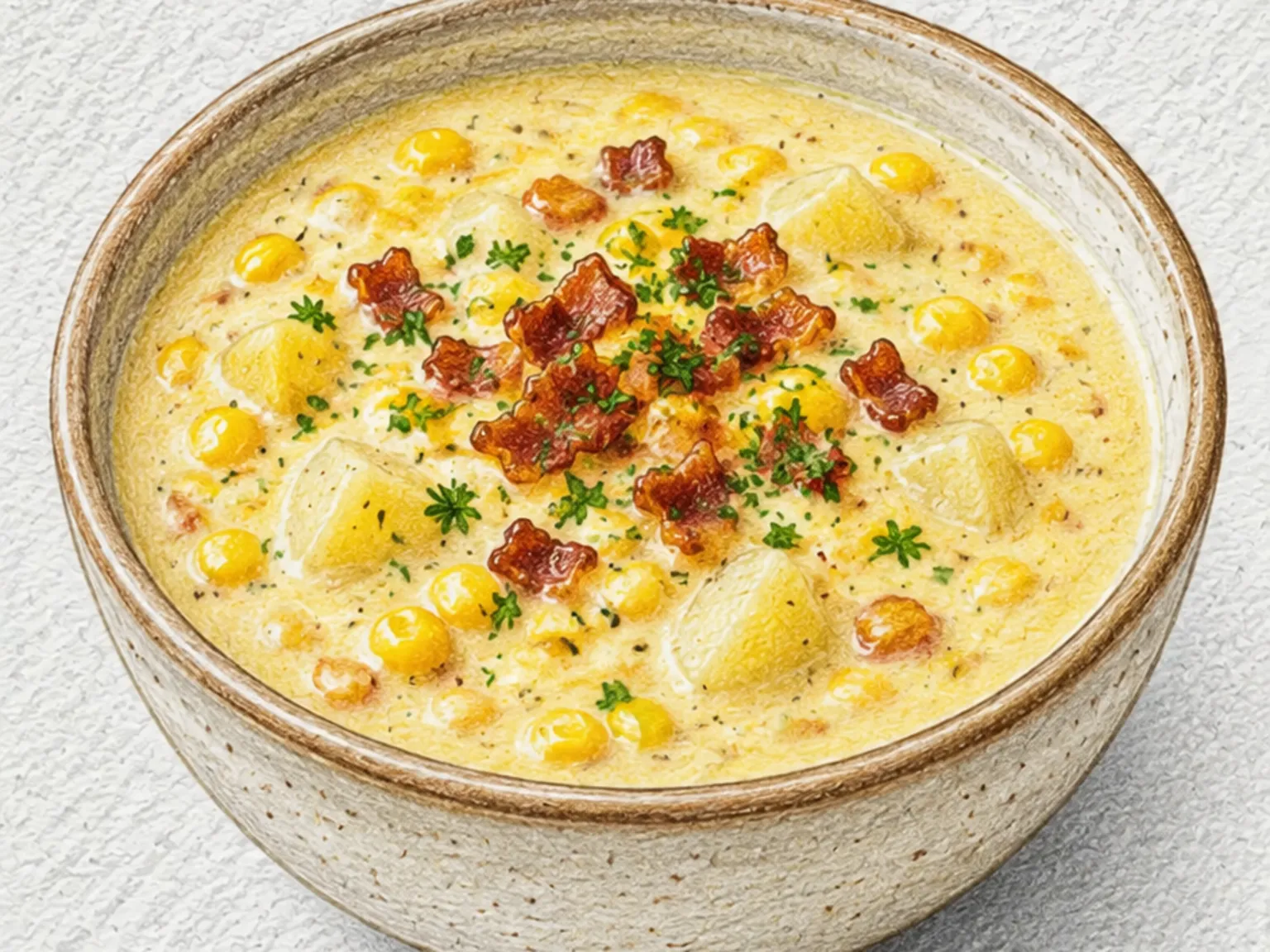
Corn chowder is a classic American cream soup that layers smoky bacon fat, sweet corn, and tender potato into a rich, warming bowl. Bacon is rendered until crispy and set aside, and the fat left in the pot is used to sweat onion and garlic, building a smoky, savory foundation. A small amount of flour stirred in before the stock thickens the base slightly, preventing the finished soup from being too thin. Diced potato simmers for fifteen minutes until tender, then corn kernels go in for five more minutes of gentle cooking. Blending only half the soup with an immersion blender and stirring it back in creates the ideal chowder texture: part creamy, part chunky, with intact corn kernels and potato pieces throughout. Heavy cream is added at the very end and brought just to a simmer - boiling it vigorously risks curdling. The corn's natural sweetness meets the cream's richness for a comforting, rounded flavor, finished with crispy bacon bits and chopped parsley. Fresh corn cut from the cob in season delivers noticeably better sweetness and texture than frozen or canned.
Instructions
Read the steps as a cooking flow: prep, heat, seasoning, doneness control, and finish.
- 1Heat
Dice 300 g potato into small even cubes so it cooks at the same pace.
Finely chop the onion and garlic, then drain 400 g corn well so excess liquid does not thin the chowder.
- 2Control
Set a pot over medium low heat and render 100 g bacon slowly until the pieces are crisp and browned.
Lift the bacon out for topping, leaving the smoky fat in the pot as the flavor base.
- 3Control
Add 2 tablespoons butter, the onion, and the garlic to the bacon fat.
Cook over medium heat until the onion turns translucent, then lower the heat if the garlic starts coloring too quickly.
- 4Control
Add the potato and 600 ml chicken stock, scraping the bottom of the pot to loosen any browned bits.
Once it boils, reduce to low heat and simmer about 15 minutes, until the potato is tender.
- 5Control
Stir in the corn and simmer 5 more minutes so it heats through and releases sweetness.
Blend only half the soup, then stir it back in, keeping some corn kernels and potato pieces intact.
- 6Finish
Stir in 200 ml heavy cream and 1 teaspoon salt, then warm just until the soup barely simmers.
Do not boil hard, or the cream can split. Serve topped with the reserved bacon and parsley.
After the steps
Pick a recipe that fits this dish.
Continue with shared ingredients, meal pairings, or a similar method.
Recipes That Go Well With This
More Western →Based on shared ingredients and meal pairing
Baked Potato Soup
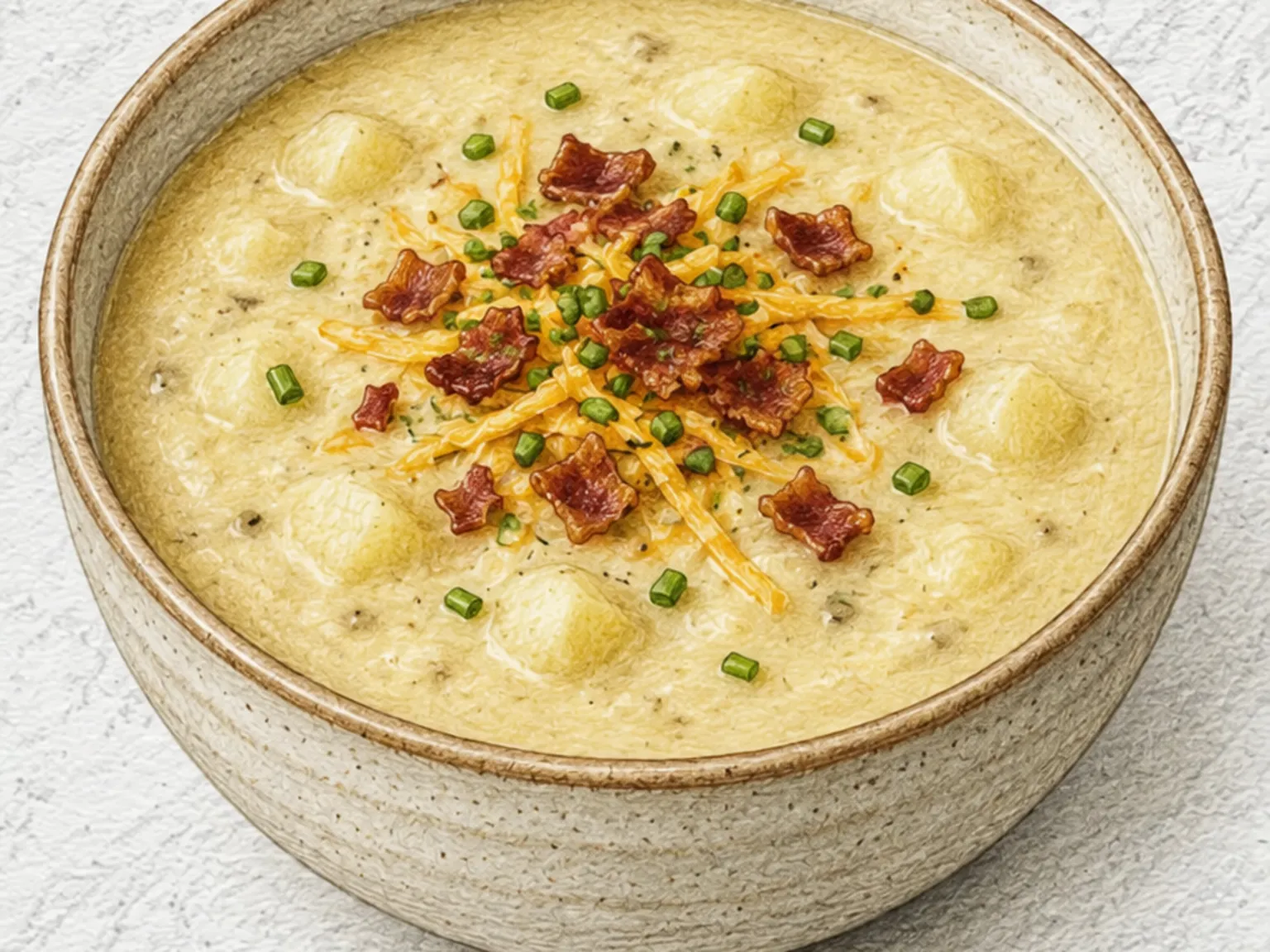
Baked potato soup is an American comfort food that translates the flavor of a loaded baked potato into a creamy bowl. Potatoes are first boiled or oven-roasted until tender, then partially mashed and simmered in chicken stock with heavy cream. The depth of the soup depends on sweating onions low and slow in butter before the liquid is added. Toppings replicate the classic baked potato format: crispy bacon bits, shredded cheddar, and finely sliced chives, added at serving. Leaving some potato chunks intact rather than fully blending gives the bowl a more varied texture throughout. The soup thickens overnight as the starch settles into the cream base, so portions reheated the next day are noticeably richer than the first serving. Bacon should go on at the last moment to stay crisp.
Keullaem Chaudeo (Clam Chowder)
Clam chowder is a thick American soup that combines clams, diced potatoes, onion, and celery in a milk-based broth thickened with a butter-and-flour roux. Sauteing the onion and celery in butter for three minutes draws out their natural sweetness before the flour goes in. Adding milk gradually while whisking prevents lumps and builds a smooth, creamy consistency. The potatoes simmer for twelve minutes until tender, and the clams are added only in the final three minutes to keep them from turning rubbery. Each spoonful delivers a balance of briny, oceanic depth from the clams and mild richness from the milk base.
Lentil Kale Salad
Lentil kale salad pairs the tender yet distinctly grainy bite of cooked green lentils with sturdy kale leaves, resulting in a bowl that satisfies like a full meal rather than a side salad. The vinaigrette of Dijon mustard, lemon juice, and olive oil does two things at once -- it brightens the kale's natural bitterness into something lively and it acts as the marinade that softens the leaves during the massage step. Massaging the kale by hand for about a minute before dressing it is the step that transforms the texture from tough and fibrous into something genuinely pleasant to chew, and it also opens up the leaf surface so the dressing clings rather than sliding off. Lentils benefit from careful timing: twenty to twenty-five minutes of simmering leaves them cooked through with a slight resistance at the center, and overcooking past that point turns them mushy and strips the salad of its textural contrast. Julienned carrot adds natural sweetness and a pop of color that keeps the bowl from looking uniformly green. Roughly chopped walnuts contribute a rich crunch and healthy fat that rounds out the nutritional profile. A shaving of Parmesan or a handful of roasted chickpeas makes a straightforward addition when more substance or complexity is wanted.
Beef Barley Soup
Beef barley soup begins with stew beef cut into one-inch cubes and seared in batches over high heat. Crowding the pan steams the meat instead of browning it, so working in batches is important to get the caramelized crust that forms the flavor base of the broth. Once the beef is browned, aromatics go in, followed by beef stock, pearl barley, diced carrots, celery, and onion. The soup simmers for over an hour on low heat, giving the barley time to absorb liquid and release its starch slowly, which naturally thickens the broth to a consistency between soup and stew. Long cooking also coaxes sweetness out of the carrots and celery and softens the beef until it breaks apart with light pressure. Bay leaves and dried thyme simmer with the soup from the beginning, building a quiet herbal layer through the base. Because the barley continues to absorb liquid as it sits, starting with more stock than seems necessary prevents the finished soup from becoming too dense. A bowl alongside crusty bread makes a complete, filling meal on a cold day.
Serve with this
Kimchi Bacon Mac and Cheese
Kimchi bacon mac and cheese layers aged kimchi's lactic tang and smoky bacon into a classic American cheddar cheese sauce over elbow macaroni. A butter-flour roux forms the base, with milk whisked in to build a béchamel before cheddar is melted into a thick, clinging sauce. Crisp bacon pieces add salt and crunch throughout, while chopped ripe kimchi introduces fermented acidity that counteracts the richness of the cheese. A pinch of gochugaru runs underneath with mild, warming heat. The tubular macaroni shape traps sauce inside and out, ensuring each forkful carries the full spectrum of creamy, tangy, and smoky flavors.
Citrus Espresso Tonic with Orange
Espresso tonic is a carbonated coffee drink built by slowly pouring espresso over chilled tonic water to form two distinct layers. The tonic must be thoroughly cold to maintain stable carbonation throughout; cooling the espresso for about thirty seconds before pouring it over a spoon produces a clean separation between the two liquids. The quinine bitterness in the tonic water meets the espresso's roast bitterness, creating a balanced interplay rather than one-note sharpness. Orange slices and lemon peel garnish the glass, releasing citrus oils that rise with the bubbles. Specialty espresso with pronounced fruit acidity works particularly well here, harmonizing with the tonic's effervescence and lending natural sweetness without added sugar. Pre-chilling the glass with ice before adding the tonic helps preserve carbonation. The drink gained popularity in Scandinavian coffee culture during the 2010s before spreading worldwide.
Real Pineapple Sherbet
This refreshing fruit dessert is prepared by scooping out the flesh of a mini pineapple and using its hollowed shell as a serving vessel. The fruit pulp is blended until smooth to prevent icy lumps, then mixed with sugar, lemon juice, and oligosaccharide syrup to achieve a sweet and tangy flavor. After pouring the mixture back into the shell and covering it with the top lid, it is frozen for at least four hours. Stirring the mixture occasionally during freezing breaks up ice crystals, resulting in a smoother texture. The active bromelain enzyme present in the fresh fruit provides a subtle tingly sensation on the tongue. Serving the sherbet directly inside the pineapple skin minimizes juice loss and keeps the dessert cold. Letting it stand for five minutes before scraping and topping with fresh apple mint leaves makes it ready to serve.
Similar recipes
Broccoli Cheddar Soup
Broccoli cheddar soup builds from a roux - butter and flour cooked together until the raw flour smell cooks out - which gives the soup its body and prevents the dairy from separating when added. Chicken stock and whole milk are whisked in gradually to keep lumps from forming, then broccoli florets go in and cook until fork-tender. The critical moment is adding the cheddar: heat must be reduced to low first, because the proteins in cheese seize and become grainy when exposed to high temperatures, rather than melting smoothly into the liquid. Sharp cheddar is the standard choice because its strong, salty punch holds up against the mild broccoli. Blending only half the soup while leaving florets intact creates a contrast between the velvety liquid and the chunks of green vegetable. A small addition of mustard or Worcestershire sauce deepens the savory complexity. Served inside a hollowed sourdough bread bowl, the crust absorbs the soup from the inside out, turning it into a satisfying complete meal rather than a starter.
Maple Bacon Cornbread Muffins
Cornmeal gives this American muffin a gritty, toasty crumb that sets it apart from all-flour versions, while crisp bacon bits and maple syrup create a pronounced sweet-salty dynamic in every bite. The batter combines cornmeal and all-purpose flour with buttermilk, whose acidity reacts with baking powder for a good rise and also keeps the crumb moist despite the cornmeal's tendency to dry out. Bacon is cooked until shattering-crisp, drained, crumbled, and folded into the batter just before portioning. Maple syrup contributes not only sweetness but also a woody, caramel-edged flavor that complements the smokiness of the bacon. Mixing the wet and dry ingredients just until the flour disappears is essential; over-stirring toughens the muffin. At 200 degrees Celsius, the muffins dome and crack across the top within 18 to 20 minutes, signaling that the center has set. Served warm with butter, the muffin becomes a one-piece brunch that needs nothing alongside it.
Monkey Bread
Small balls of yeasted dough are rolled in cinnamon sugar, layered into a buttered Bundt pan, and baked until the sugar melts and caramelizes into a sticky sauce that glues the pieces together. When inverted onto a plate, the golden caramel cascades over the mound of bread, coating every surface in a glossy, sweet shell. The traditional way to eat it is by pulling pieces apart by hand - each tear trails a thread of caramel and reveals the soft, pillowy interior beneath the crunchy, sugar-crusted exterior. The outer pieces absorb the most butter and caramel and become almost candy-like, while the inner ones stay lighter and breadier, giving each serving a different experience depending on where it came from in the pan. A drizzle of cream cheese glaze or a handful of chopped pecans tossed in with the dough balls are common additions that expand both flavor and texture.