Crab Cake
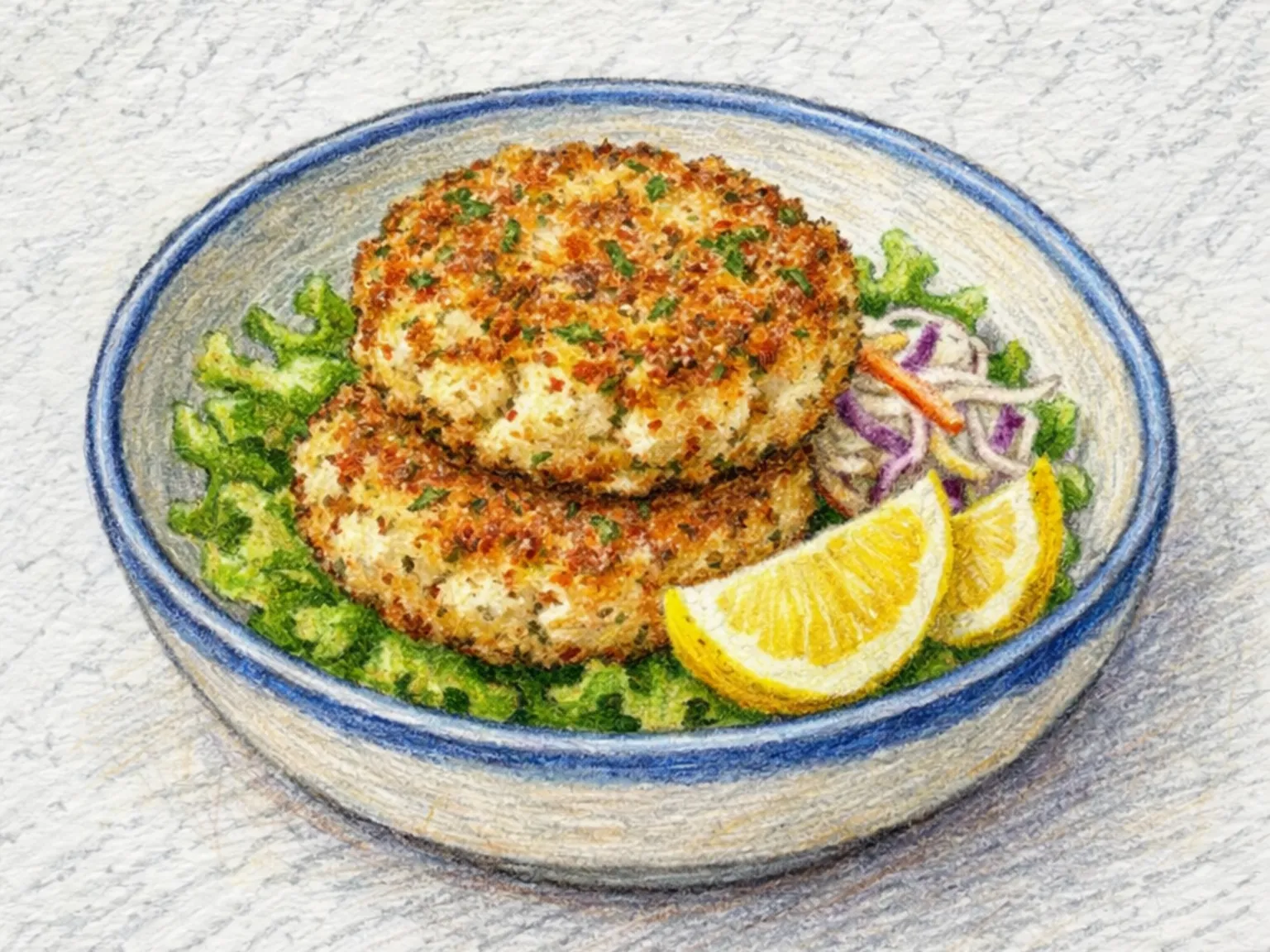
Crab cakes are a signature seafood dish of the American East Coast, made by gently folding crab meat with mayonnaise, Dijon mustard, egg, breadcrumbs, parsley, and lemon juice, then shaping the mixture into patties and pan-frying in butter until golden on each side. Mixing the crab meat with a light touch preserves the large flakes that give each bite its distinctive texture. Lemon juice brightens the flavor and tempers any fishiness. Chilling the formed patties for thirty minutes firms them enough to flip in the pan without breaking apart. The finished crab cake has a crisp, buttery exterior enclosing moist, sweet crab.
Adjust Servings
Instructions
- 1
Drain and dry the crab meat.
- 2
Mix mayonnaise, mustard, egg, breadcrumbs, parsley, lemon juice.
- 3
Fold in crab meat gently and shape into patties.
- 4
Refrigerate 30 minutes to firm up.
- 5
Pan-fry in butter 4 minutes per side until golden.
As an Amazon Associate, we may earn from qualifying purchases.
Tips
Nutrition (per serving)
More Recipes

Cioppino (Italian-American Seafood Tomato Wine Stew)
Cioppino is an Italian-American seafood stew that simmers shrimp, mussels, and white fish in a tomato and white wine broth enriched with fish stock. Building the base by sauteing onion and garlic in olive oil, then deglazing with white wine before adding canned tomatoes and stock, creates a layered flavor foundation. A fifteen-minute simmer concentrates the broth before the seafood goes in. Adding mussels first, then fish, then shrimp accounts for their different cooking times and prevents overcooking. The finished stew balances bright tomato acidity against the briny depth drawn from the shellfish.

Shrimp Boil
Shrimp boil is a Southern American one-pot dish where ingredients are added to seasoned boiling water in stages according to their cooking time. Potatoes go in first and cook for about ten minutes, followed by corn on the cob and smoked sausage for another seven minutes, and shrimp last for just two to three minutes. This staggered approach ensures every component reaches the table properly cooked - potatoes tender, corn sweet and snappy, sausage heated through, and shrimp firm rather than rubbery. The drained pile is tossed with melted butter and fresh lemon juice, which adds richness and acidity on top of the paprika-seasoned broth. Traditionally served poured out onto newspaper for communal eating by hand.

Shrimp Cocktail
Shrimp cocktail is an American appetizer where large shrimp are poached briefly in water seasoned with lemon and salt, then shocked immediately in ice water to halt cooking and lock in a firm, snappy texture. The poaching time is critical - two to three minutes is enough for the shrimp to turn pink and curl slightly, and any longer makes them tough. The cocktail sauce combines ketchup's sweetness, prepared horseradish's sinus-clearing heat, and Worcestershire sauce's fermented depth into a dip that elevates the clean, mild flavor of chilled shrimp. Resting the finished sauce in the refrigerator for at least ten minutes allows the flavors to meld while sharpening the horseradish's bite.

Chicken Pot Pie
Chicken pot pie fills a butter pie crust with chicken, carrots, potatoes, and peas bound in a creamy roux-based sauce, then bakes until the top turns golden and the filling bubbles. The roux - butter cooked with flour - thickens into a rich sauce when chicken broth and heavy cream are whisked in, coating every piece of filling. Pre-boiling the carrots and potatoes ensures they cook through evenly within the oven time, while peas go in last to keep their color and slight crunch. Brushing the top crust with egg wash produces a glossy, deeply golden surface during baking. After 35 minutes at 200 degrees Celsius, the filling should be visibly bubbling at the edges, and breaking through the flaky crust reveals the thick cream sauce underneath.

Red Velvet Cake
Red velvet cake is an American layer cake distinguished by its vivid crimson crumb and a tangy cream cheese frosting that offsets the sweetness. The batter contains only a modest amount of cocoa powder - enough to lend depth but not enough to taste overtly chocolatey - and relies on buttermilk for a subtle lactic acidity that keeps the flavor interesting. Vegetable oil replaces butter, producing an exceptionally moist sponge that stays soft for days after baking. A reaction between baking soda and a splash of white vinegar introduces fine air bubbles that give the crumb its characteristic velvety texture. The frosting is built from cold cream cheese beaten with butter and powdered sugar until thick enough to hold between layers without sliding. When the cake is sliced, the contrast between the deep red interior and the stark white frosting creates the visual impact that has made this cake a celebration staple. Substituting part of the food coloring with beet powder produces a more muted, natural shade for those who prefer it.

Whoopie Pie
Two dome-shaped cocoa cake cookies sandwich a generous swirl of marshmallow cream, creating an American classic that straddles the line between cookie and cake. The cookies are thicker and softer than standard drop cookies, with a moist, cakey crumb that yields gently when bitten. Cocoa provides a mild bitterness that grounds the filling, while the marshmallow cream is airy, sweet, and slightly sticky. Spacing the batter mounds well apart on the baking sheet is important, as they spread during baking into the flat, round shape that defines a whoopie pie. Filling must wait until the cookies are completely cool; warm cookies melt the cream and create a messy result. Matching pairs by size before assembly produces a uniform, professional look. Stored in the refrigerator, the cream firms and seeps into the cookies overnight, producing a denser, fudgier texture that many prefer to the freshly assembled version.