Korean Cream Tteokbokki (Chewy Rice Cake in Cream Butter Sauce)
Quick answer
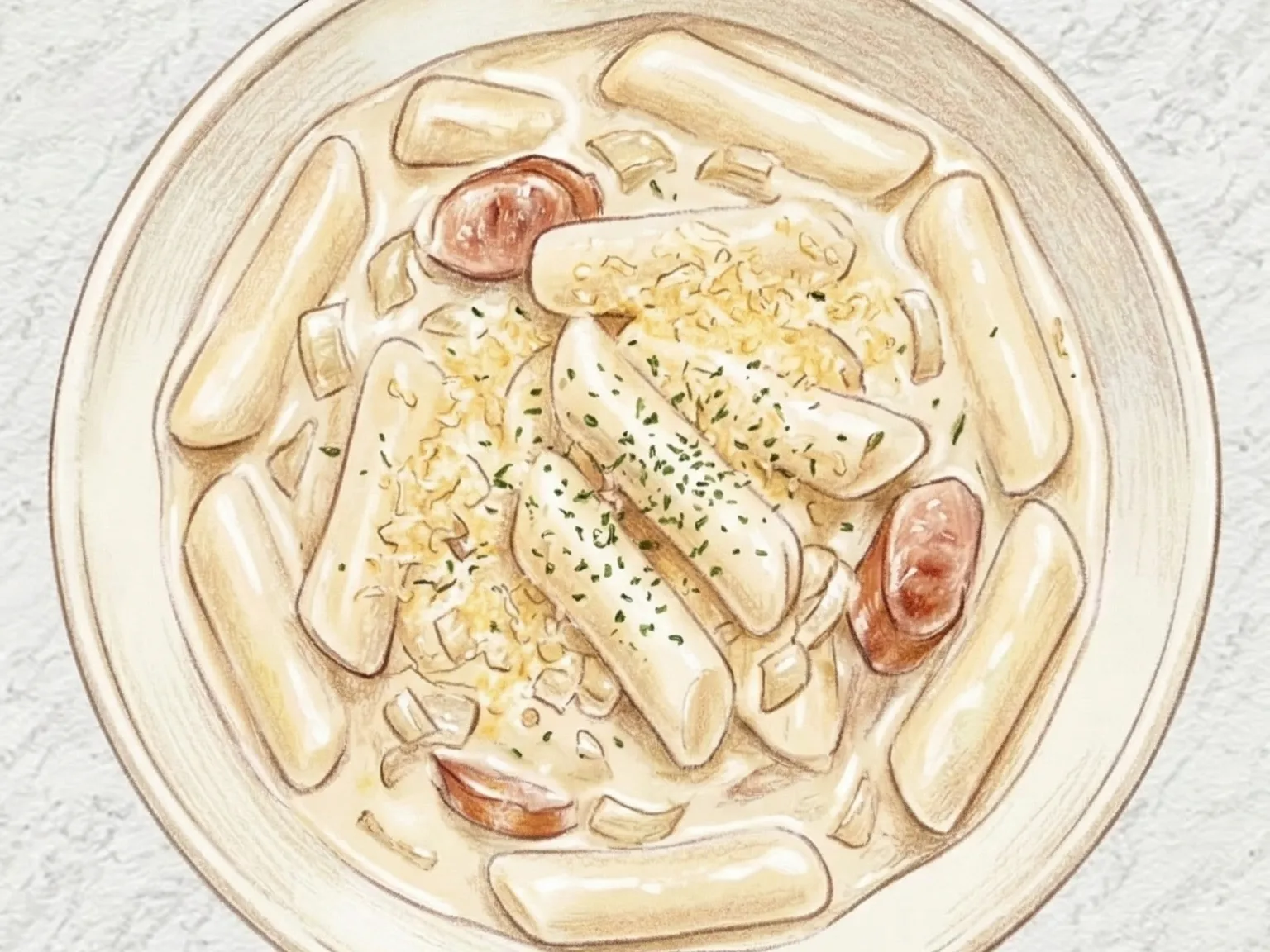
Cooking rice cakes in a mixture of heavy cream, milk, and butter offers a mild alternative to the spicy gochujang-based version.
What makes this special
- Heavy cream and milk form a mild, rich sauce for chewy rice cakes and sweet caramelized onions.
- Onion caramelized 10+ minutes on low heat builds natural sweetness without sugar
- No gochujang; heavy cream and milk only, so even spice-averse eaters can enjoy
Key ingredients
Core cooking flow
- 1 Soak 300g rice cake sticks in cold water for 5 minutes to loosen the surface.
- 2 Slice 80g onion into 0.5cm strips. Put 15g butter in a pan over medium-low h...
- 3 Add the onion and cook it slowly over low heat for about 10 minutes.
Cooking rice cakes in a mixture of heavy cream, milk, and butter offers a mild alternative to the spicy gochujang-based version. The process begins with sauteing onions in butter over low heat for at least ten minutes, which converts onion starches into sugar for a natural sweetness without added sugar. Once the cream and milk are added to the softened onions, the rice cakes simmer for seven to eight minutes over medium-low heat. This allows the cakes to absorb the liquid while maintaining their characteristic dense chewiness. A final addition of parmesan cheese provides a salty contrast to the heavy cream base. Because the flavor profile resembles a cream pasta, it serves as a common entry point for people avoiding chili heat. Maintaining a steady medium-low temperature prevents the sauce from separating during cooking. Adding bacon or shrimp introduces extra protein and savory elements to the pan. The sauce consistency thickens quickly as its temperature drops, making immediate service from the pan the best way to maintain the intended texture. Swapping the parmesan for cheddar or mozzarella changes the character of the finished sauce and provides a different eating experience.
Instructions
Read the steps as a cooking flow: prep, heat, seasoning, doneness control, and finish.
- 1Season
Soak 300g rice cake sticks in cold water for 5 minutes to loosen the surface.
Separate any pieces by hand, soak 2 minutes longer if they still feel firm, then drain them well before they go into the sauce.
- 2Control
Slice 80g onion into 0.5cm strips.
Put 15g butter in a pan over medium-low heat and let it melt until the foaming calms down, so the onion can cook gently without browning too fast.
- 3Control
Add the onion and cook it slowly over low heat for about 10 minutes.
When the edges look translucent and the onion smells sweet, stir from time to time to prevent scorching on the pan bottom.
- 4Step
Pour in 200ml heavy cream and 100ml milk, then raise the heat to medium.
When small bubbles appear around the edge, add the drained rice cakes and stir right away so they do not stick together.
- 5Control
Once the sauce begins to simmer, lower the heat to medium-low and cook for 7 to 8 minutes.
Stop before it gets too thick, when the cakes feel tender and the sauce lightly coats the spatula.
- 6Finish
Turn off the heat, then stir in 20g parmesan, 0.5 tsp salt, and 0.25 tsp black pepper.
Taste the sauce, adjust only if needed, and serve immediately while it is warm and still fluid.
After the steps
Pick a recipe that fits this dish.
Continue with shared ingredients, meal pairings, or a similar method.
Recipes That Go Well With This
More Street food →Based on shared ingredients and meal pairing
Korean Cream Chicken Rice Bowl
Cream chicken deopbap is a Korean fusion rice bowl where bite-sized chicken breast pieces are seared in butter to develop color and a light crust, then simmered in heavy cream and garlic until the sauce reduces into a glossy, velvety coating. Searing the chicken in butter first builds a Maillard layer that gives the final dish more depth than if the cream were added at the start. As the garlic cooks down in the cream, it loses its raw sharpness and releases a mild sweetness that permeates the entire sauce. A straightforward seasoning of salt and pepper is all the dish needs to come together. The concept takes the richness of a Western cream pasta sauce and serves it over steamed rice instead of noodles, letting the grains absorb the sauce and carry the flavor all the way through. A sprinkle of flat-leaf parsley or coarsely cracked black pepper over the top sharpens the finish.
Myeongran Lemon Cream Fettuccine
Myeongran lemon cream fettuccine wraps wide pasta ribbons in a sauce made from salted pollock roe, heavy cream, butter, and lemon zest. The small eggs of the roe are left intact and stirred into the sauce off the heat so they stay soft and burst with briny flavor when bitten rather than turning granular or hard. Garlic bloomed in butter forms the aromatic base, and a mixture of heavy cream with milk tempers the roe's saltiness into a smooth, balanced coating. Using lemon zest rather than juice adds a bright citrus fragrance without diluting the sauce or introducing acidity that would curdle the cream. Parmigiano-Reggiano deepens the savory foundation, and fettuccine's broad, flat surface holds the thick cream more effectively than thinner pasta shapes. The entire dish takes about twenty minutes from start to plate, making it a practical weeknight option that does not sacrifice depth of flavor for speed. The critical technique -- incorporating the roe off the heat -- keeps the texture creamy throughout and prevents the eggs from cooking into tough, unpleasant morsels.
Korean Sweet Spicy Pollock Floss Stir-fry
Myeongyeopchae-bokkeum stir-fries finely shredded dried pollock floss in gochujang and oligosaccharide syrup until each fiber strand is evenly coated and moist. Myeongyeopchae is thinner and softer-fibered than hwangtaechae, the wider dried pollock strips, arriving in a dense cotton-like bundle that must be loosened strand by strand before cooking. Running your fingers along the grain separates the fibers cleanly, allowing the seasoning to penetrate evenly and preventing the finished banchan from clumping together in the mouth. A dry toast of thirty seconds in an oil-free pan drives off residual moisture and coaxes out a toasted fish aroma before gochujang, gochugaru, oligosaccharide syrup, soy sauce, and minced garlic go in over the lowest heat for a rapid coating. The fine fibers absorb the sauce almost immediately and turn pliant and glistening, but heat held too long draws the moisture back out, leaving them tough and stiff, so the entire stir-fry must be completed within two minutes. A finishing drizzle of sesame oil and a scatter of sesame seeds deepen the nutty aroma. The resulting banchan occupies a middle ground between the chewier, more aggressively seasoned hwangtaechae-muchim and the bolder jinmichae-bokkeum, its mild sweet-spicy profile approachable enough for children. The relatively dry finish means the seasoning does not bleed into adjacent items in a lunchbox, and stored in an airtight container in the refrigerator the flavor holds well for up to five days.
Korean Oil Tteokbokki (Dry-Stir-Fried Rice Cakes in Chili Soy Glaze)
Gireum-tteokbokki is a dry-style tteokbokki where rice cakes are stir-fried in oil and coated with a concentrated paste of gochugaru, soy sauce, sugar, and garlic - no broth involved. Blooming the chili flakes briefly in oil draws out their nutty, toasted aroma rather than raw heat, and the soy sauce and sugar build layered sweetness and umami on top of that base. Without liquid, the seasoning clings tightly to each rice cake's surface. The key technique is restraint with stirring: letting each rice cake sit undisturbed long enough to develop a lightly crisped exterior while the inside stays chewy creates a dual texture that broth-based versions cannot replicate. Green onion and sesame seeds added at the end provide fresh fragrance and textural contrast against the rich coating. The seasoning should be applied generously so the flavors penetrate past the surface rather than sitting only on the outside. Believed to have originated in school-front snack shops in 1970s and 1980s Seoul, gireum-tteokbokki is milder than gochujang versions and accessible to those who find the spicier style too intense.
Serve with this
Korean Dalgona Coffee (Whipped Instant Coffee Foam Milk)
Dalgona coffee is made by whipping equal parts instant coffee, sugar, and hot water with a hand mixer for three to five minutes until stiff, caramel-colored peaks form, then spooning the foam over iced milk. The whipped layer carries a concentrated, bittersweet coffee flavor that gradually blends into the cold, neutral milk below as you stir. A light dusting of cocoa powder on top introduces a faint chocolate note, and increasing the sugar slightly helps the whipped cream hold its stiff structure longer.
Omija Bead Ice Cream
This dessert features omija syrup shaped into small frozen spheres using a molecular gastronomy technique. The natural five-flavored profile of omija berries is concentrated into each tiny bead. The recipe uses two types of base mixtures: a clear pink omija juice and an opaque pink liquid made by blending the juice with milk and yogurt powder. These liquids are dropped from a pipette into a cup of cooking oil that has been chilled in the freezer for at least one hour. Upon contact with the cold oil, the droplets solidify into round spheres. The frozen beads are scooped out with a strainer, rinsed in cold water to remove the oil coating, and stored in the freezer. The clear red and milky pink beads are served mixed together, and they can also be added to sparkling water to make a beverage.
Japaguri (Two-Pack Instant Noodle Mashup)
Japaguri - also known internationally as ram-don - is a Korean instant noodle mashup that cooks two different packets together in one pot: a black bean sauce variety and a spicy variety. The roasted-bean sweetness of the jjajang seasoning collides directly with the sharp chili heat of the spicy packet, producing a layered flavor that neither product can achieve on its own. Onion and green onion are sauteed in oil first so their natural sugars caramelize slightly and establish a savory-sweet base before the water and noodles go in. Using noticeably less water than either packet recommends is important because both seasoning powders need to be fully absorbed and the finished sauce should cling thickly to every strand. After a film introduced it to international audiences, the dish became shorthand for Korean instant noodle culture and has remained a genuinely popular preparation. Adding premium thinly sliced beef, such as Korean hanwoo, elevates it from a pantry meal to a full dinner.
Similar recipes
Korean Mala Cup Tteokbokki
This cup-style tteokbokki blends gochujang with mala sauce to combine Korean chili heat and the numbing tingle of Sichuan peppercorn in a single dish. Rice cakes and fish cake go into the pot with the sauce, then cook over medium heat for six to seven minutes with constant stirring as the liquid reduces into a thick, clinging glaze that coats each piece heavily. Stopping to stir is not optional: the rice cakes stick and scorch on the bottom without continuous movement. Sliced green onion goes in at the end for fragrance. Because mala sauce saltiness varies considerably between brands, beginning with one tablespoon and tasting as you add more prevents overseasoning. Additional gochugaru raises the chili heat independently of the numbing sensation, while increasing the mala sauce proportion amplifies the tingle. The format mirrors the convenience-store cup tteokbokki experience and requires minimal equipment, making it a fast option when few tools are available.
Korean Soupy Tteokbokki (Rice Cakes in Spicy Gochujang Broth)
Gukmul-tteokbokki is a soup-forward version of tteokbokki in which cylindrical rice cakes and fish cakes are simmered in a kelp-anchovy broth seasoned with gochujang, gochugaru, soy sauce, and sugar. Unlike dry or stir-fried versions, the generous broth saturates each rice cake from the outside in, while the fish cakes release their own savory juices into the liquid as they cook, building the stock to a richer baseline. Eight to ten minutes of medium-heat simmering leaves the exterior of each rice cake soft and yielding while the core stays chewy. Scallions go in at the end to cut through the heat with a bright, grassy note. The broth left over after the rice cakes and fish cakes are gone is widely regarded as the most prized part of the dish: regulars stir in a bowl of rice or drop in ramyeon noodles to make sure none of it goes to waste.
Korean Street Waffle (Crispy Folded Waffle with Jam and Cream)
Gilgeori waffle is a Korean street stall dessert made from a thin batter of cake flour, egg, milk, and melted butter, cooked in a waffle iron and folded around a filling of strawberry jam and whipped cream. Using cake flour and mixing the batter only until just combined keeps gluten development minimal, which is what produces the characteristic contrast between a crisply patterned exterior and a soft, airy interior. Overmixing develops gluten strands that result in a tough, chewy texture after baking. The waffle iron must be fully preheated before the batter is poured to ensure sharp grid definition and even browning, and a generous coating of oil or butter on the plates prevents sticking. Immediately after cooking, the waffle holds trapped steam inside its pockets, so a brief rest on a cooling rack is important -- skipping this step causes condensation to collect underneath, making the bottom layer soggy before the filling even goes in. Because the batter itself carries only a light butter fragrance rather than heavy richness, the gentle dairy sweetness of the cream and the tangy brightness of the strawberry jam come through with clarity. Folded in half and held in one hand, the waffle is designed for eating while walking -- a functional form that is central to its identity as street food.