Crêpe Cake
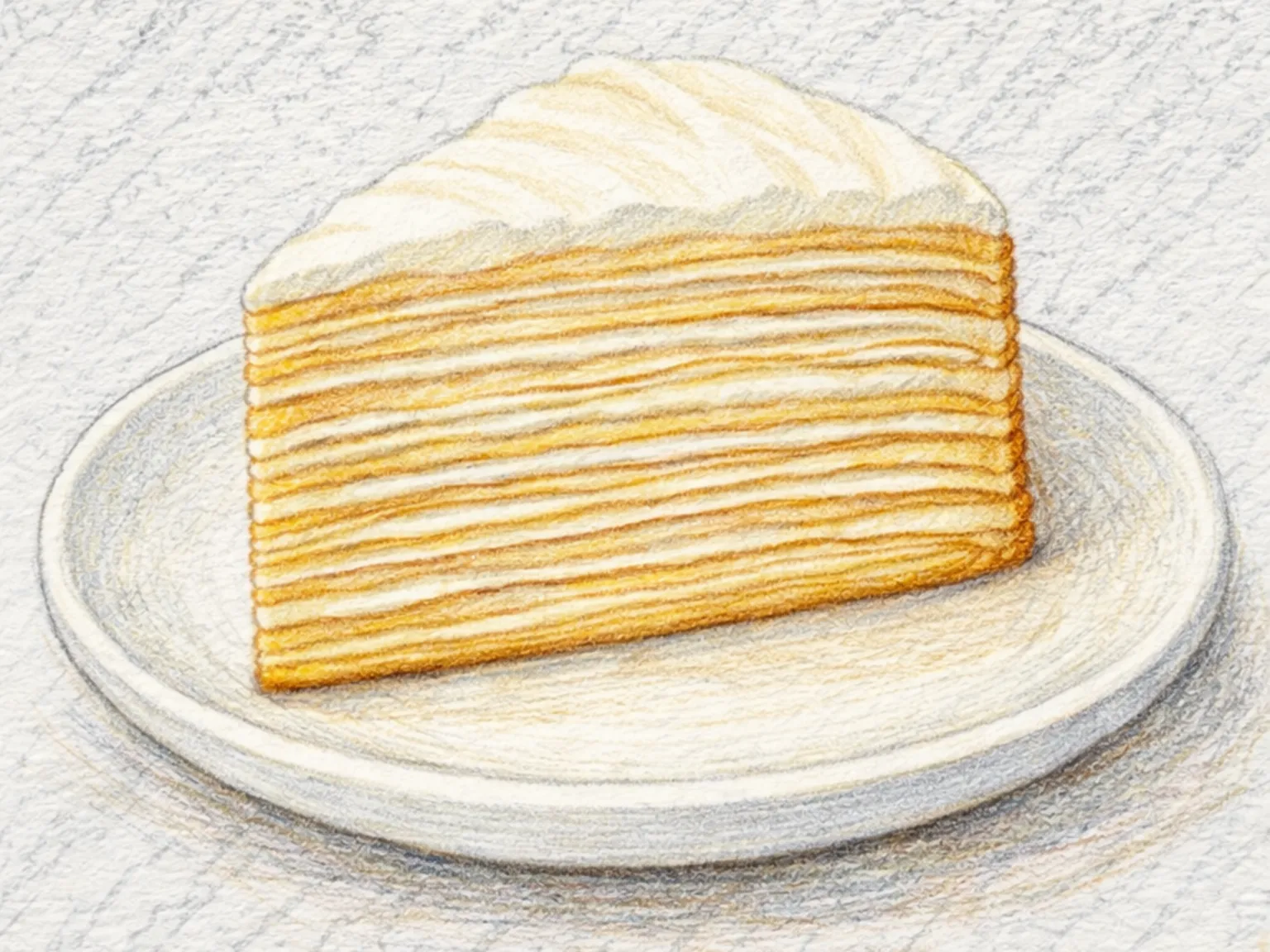
A crepe cake is built by stacking dozens of paper-thin crepes with a layer of cream between each one, creating a multi-layered dessert requiring no oven. Each cooled crepe receives a thin spread of whipped cream or pastry cream before the next is placed on top. A finished cake typically contains twenty to thirty layers, and the cross-section reveals an intricate striped pattern. The texture is unlike conventional cake - soft and yielding, with layers sliding gently against each other. The flavor is driven by eggs, butter, and dairy rather than sugar and flour. Thorough chilling is essential for structural stability and the best eating experience.
Adjust Servings
Instructions
- 1
Whisk flour, eggs, milk, and butter into a smooth crêpe batter.
- 2
Cook 20+ thin crêpes in a pan.
- 3
Whip cream with sugar to stiff peaks.
- 4
Layer crêpes and cream alternately; refrigerate until set.
As an Amazon Associate, we may earn from qualifying purchases.
Tips
Nutrition (per serving)
More Recipes

Opera Cake
This French patisserie classic stacks paper-thin layers of almond joconde sponge with coffee-infused buttercream and dark chocolate ganache. Because each layer is kept deliberately slim, a single forkful captures all three elements at once: the sponge's moist almond grain, the buttercream's concentrated espresso bitterness, and the ganache's dense cocoa richness. When sliced, the cross-section reveals precise horizontal stripes that mark the craftsmanship behind the cake. A mirror-smooth chocolate glaze seals the top, adding one final texture. The cake benefits from at least four hours of refrigeration, which melds the layers and firms the ganache so that each slice holds its shape on the plate while still yielding easily to a fork.

Mille-Feuille (Layered Puff Pastry with Vanilla Cream)
Mille-feuille stacks three sheets of puff pastry with layers of vanilla pastry cream between them, creating a dessert defined by the tension between crisp and soft. The pastry itself is built through repeated folding with cold butter, generating hundreds of paper-thin layers that puff apart in the oven into shatteringly flaky sheets. Pastry cream - egg yolks, sugar, milk, and a touch of flour cooked to a thick custard - fills the gaps with a smooth richness that yields immediately to the fork. The top is typically dusted with powdered sugar or glazed with fondant, sometimes decorated with a feathered chocolate pattern. Timing matters: once assembled, moisture from the cream migrates into the pastry, so the window for peak crispness is roughly one to two hours. When eaten fresh, each bite collapses with an audible crunch before the cream takes over.

Baba au Rhum (French Rum-Soaked Yeast Cake)
Baba au rhum traces to 18th-century Poland, where King Stanislaw Leszczynski supposedly dipped a dry kugelhopf cake in rum and named it after Ali Baba from One Thousand and One Nights. The dessert migrated to Paris through Naples, where French patissiers refined it into the small, cylindrical yeast cakes known today. The dough is enriched with butter and eggs, producing a tender, open crumb riddled with air pockets that act as reservoirs for the soaking syrup. After baking, the cakes are submerged in a hot rum syrup - sugar, water, and dark rum in generous proportion - until they swell to nearly double their size and the syrup reaches the center. The texture is spongy and saturated, releasing a warm rush of rum with each bite. A rosette of crème chantilly - lightly sweetened, vanilla-scented whipped cream - sits on top, its cold airiness contrasting the dense, boozy cake beneath. The alcohol is deliberate and undisguised, making this a distinctly adult dessert.

Kouign-Amann (Caramelized Butter Sugar Pastry)
This Breton pastry is constructed by folding generous amounts of butter and sugar into a simple yeasted bread dough, then baking until the sugar caramelizes into a glassy, deeply bronzed crust. The exterior shatters audibly at the first bite, giving way to an interior where dozens of buttery layers remain soft and slightly chewy. Three rounds of rolling and folding build the laminated structure, and keeping the butter cold throughout the process is what prevents the layers from merging into a dense mass. At 200 degrees Celsius, the sugar melts and pools at the bottom of each portion, so lining the pan with foil is a practical necessity to catch the drips. The aroma of caramelizing butter and sugar fills the kitchen long before the timer sounds. Despite containing only five ingredients, flour, butter, sugar, yeast, and salt, the technique demands precision: under-laminated dough bakes flat, and over-proofed dough loses its layered definition. The result, when executed well, is one of the richest pastries in the French repertoire.

Chocolate Lava Cake
Chocolate lava cake bakes a batter of melted dark chocolate, butter, eggs, sugar, and a small amount of flour in ramekins at high heat for a brief window, producing a set exterior with a molten chocolate core. At 220 degrees Celsius for ten to twelve minutes, the edges firm into a soft cake while the center stays liquid - breaking the surface releases a stream of warm, concentrated chocolate. The bittersweet depth of dark chocolate combines with the butterfat to create a dense, velvety richness, while vanilla extract rounds out the flavor. Timing is critical: overbaking by even two minutes solidifies the center and eliminates the signature lava effect.

Sole Meunière (Butter-Fried Sole with Brown Butter Sauce)
Sole meuniere is a French classic where delicate sole fillets are seasoned with salt and pepper, dredged lightly in flour, and pan-fried in butter for two to three minutes per side until a thin golden crust forms. The flour coating must be minimal - just enough to create a crisp barrier that protects the tender fish without masking its flavor. The fish is flipped only once because the fillets are fragile and break apart with repeated handling. After the fish is removed, the butter remaining in the pan is cooked further until it turns brown and smells of toasted hazelnuts, then finished with a squeeze of lemon juice and chopped parsley. This brown butter sauce is the heart of the dish, its nutty richness elevating the mild, sweet flesh of the sole while the lemon's acidity keeps every bite clean and bright.