Croquembouche (French Caramel-Glazed Cream Puff Tower Centerpiece)
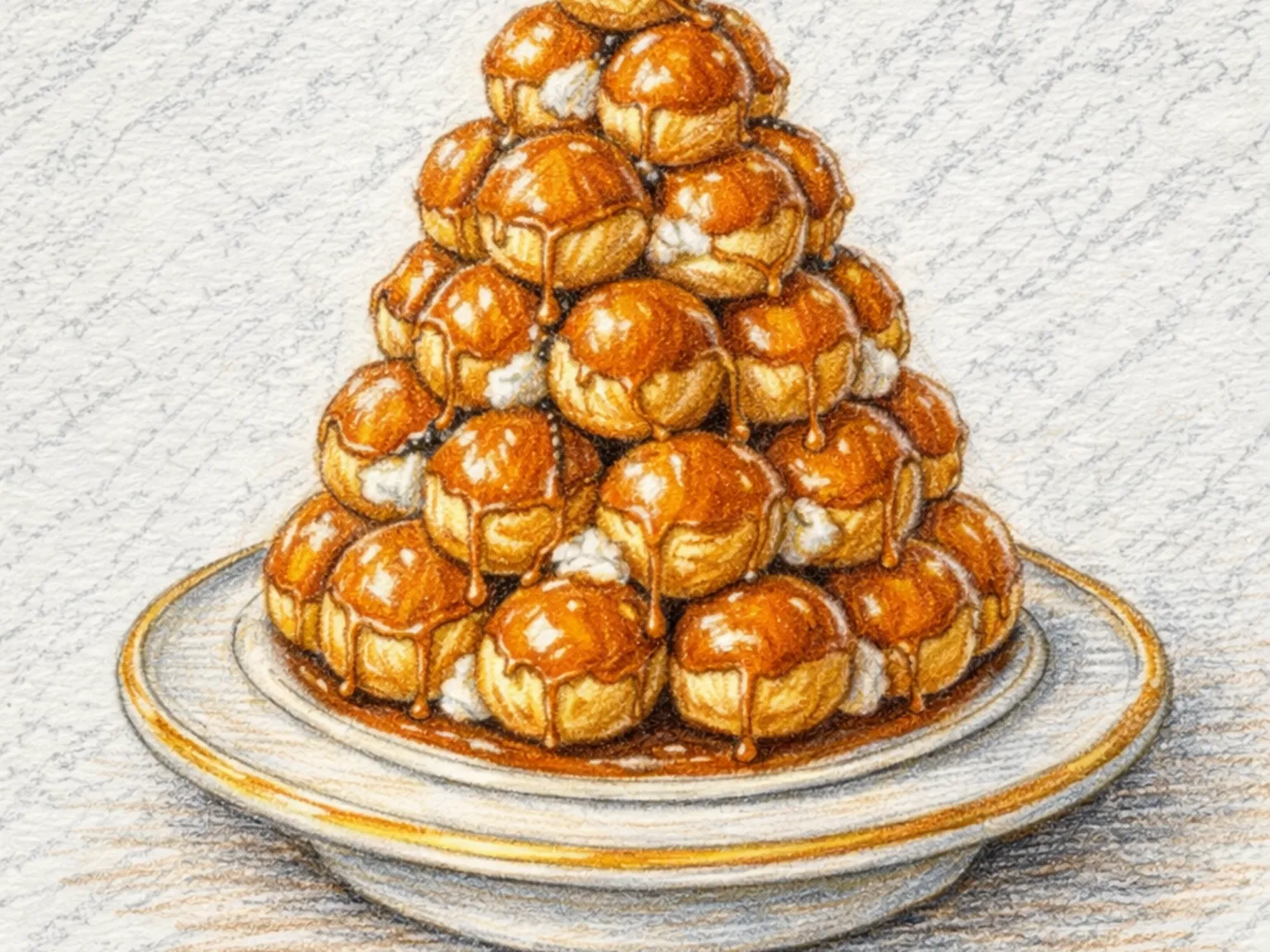
Croquembouche is a French celebration centerpiece where cream-filled profiteroles are dipped in hot caramel and stacked into a towering cone. Each choux puff is baked until hollow and crisp, filled with vanilla pastry cream, and coated in a thin layer of caramelized sugar that hardens on contact. As the tower is built, strands of spun caramel are pulled between the puffs, creating a golden web of sugar threads. A finished tower can stand several feet tall, and guests pull individual puffs from it to eat. Breaking through the hardened caramel shell reveals soft choux pastry and cold cream inside - a three-part contrast of textures in a single bite. In France, the croquembouche traditionally replaces a tiered wedding cake at celebrations and christenings.
Adjust Servings
Instructions
- 1
Boil water and butter, add flour for choux dough, cool, then incorporate eggs gradually.
- 2
Pipe small puffs, bake at 190C, then reduce heat to dry them thoroughly.
- 3
Cook pastry cream with milk, sugar, and cornstarch, add vanilla, cool, and fill the puffs.
- 4
Make deep amber caramel and dip puff bottoms to assemble a cone-shaped tower.
- 5
Use caramel threads for finishing decoration once the tower is stable.
As an Amazon Associate, we may earn from qualifying purchases.
Tips
Nutrition (per serving)
More Recipes

Choux Cream Puffs (French Hollow Pastry with Vanilla Custard)
Choux cream puffs begin with a cooked paste of water, butter, and flour - the pate a choux - into which eggs are beaten one at a time until the dough is smooth and glossy. Piped into mounds and baked at high heat, the moisture in the dough converts to steam, inflating each puff into a hollow shell with a crisp, golden exterior. Once cooled, the shells are filled with vanilla pastry cream through a hole in the bottom or side. The contrast is immediate upon biting: the thin, shattering crust gives way to cool, smooth custard that floods the palate. The pastry cream is made from milk, egg yolks, sugar, and starch, cooked until thick and then chilled. A vanilla bean split and scraped into the milk elevates the cream from ordinary to fragrant. The shells must be completely cool before filling, and filled puffs should be eaten within a few hours, before the moisture from the cream softens the pastry and erases the textural contrast that makes them compelling.

Sweet Potato Cream Cheese Galette
Cold butter is rubbed into flour to create a flaky pastry shell, which is rolled flat, spread with a blend of mashed sweet potato, cream cheese, honey, and cinnamon, and then folded at the edges into a free-form galette. The sweet potato contributes mellow sweetness while cream cheese adds a tangy counterpoint, and honey bridges the two into a cohesive filling. Cinnamon provides a warm spice note that suits the autumnal character of the galette. Keeping the butter cold throughout the process is essential for flaky layers - if the dough softens, it should return to the refrigerator immediately. Leaving a four-centimeter border of bare dough around the filling makes the folding step clean and prevents leaking. Drier sweet potato varieties, such as chestnut-type, absorb less moisture and keep the crust from turning soggy during baking. The galette is best served warm, when the pastry is at its crispest and the filling is still soft.

Chestnut Mont Blanc Cupcakes
Chestnut Mont Blanc cupcakes stack three distinct layers into a single handheld dessert: a moist sponge base, a dome of whipped cream, and a tangle of piped chestnut cream on top. The sponge is whisked to a fine, airy crumb that stays soft without being fragile. Whipped cream is mounded over each cupcake, then chestnut paste - made from boiled chestnuts blended with butter and sugar - is piped through a Mont Blanc nozzle into thin vermicelli-like strands that pile up into a peak. The chestnut cream has a powdery, almost sandy texture on the tongue that dissolves into the cream underneath, creating a flavor shift from dense, nutty richness to light dairy. Each bite moves through all three layers. A single marron glace placed at the summit serves as both garnish and concentrated flavor accent. These cupcakes are a bakery staple in Japan, where the Mont Blanc has been embraced as a seasonal autumn specialty.

Cream Horn Pastry (Spiral Puff Pastry Cone with Cream Filling)
Cream horns are made by wrapping thin strips of puff pastry around conical metal molds and baking until the layers separate into a crisp, spiraling shell. The hundreds of laminated layers in the pastry open up in the oven's heat, producing a horn that is simultaneously delicate and structurally sound. Once cooled, the metal cone is removed, leaving a hollow pastry ready for filling. A mixture of cream cheese and whipped cream is piped inside, delivering a smooth, tangy sweetness that contrasts with the shattering pastry exterior. The critical rule is timing - filling the horns just before serving preserves the crispness of the pastry, which softens rapidly once the cream introduces moisture.

Chocolate Lava Cake
Chocolate lava cake bakes a batter of melted dark chocolate, butter, eggs, sugar, and a small amount of flour in ramekins at high heat for a brief window, producing a set exterior with a molten chocolate core. At 220 degrees Celsius for ten to twelve minutes, the edges firm into a soft cake while the center stays liquid - breaking the surface releases a stream of warm, concentrated chocolate. The bittersweet depth of dark chocolate combines with the butterfat to create a dense, velvety richness, while vanilla extract rounds out the flavor. Timing is critical: overbaking by even two minutes solidifies the center and eliminates the signature lava effect.

Clafoutis (French Baked Cherry Custard Dessert)
Clafoutis is a traditional French dessert from the Limousin region, made by pouring a thin batter of eggs, sugar, milk, and flour over fresh cherries arranged in a buttered baking dish. Baking at 180 degrees Celsius for thirty to thirty-five minutes puffs the batter into a texture between a pancake and a baked custard - golden and lightly set at the edges, moist and tender around the fruit. The cherries release their tart juice into the surrounding batter during baking, creating pockets of concentrated fruit flavor. Vanilla extract rounds out the egg-and-milk base. Serving the clafoutis slightly warm rather than fully cooled preserves its soft, custardy consistency.