Cullen Skink Recipe (Scottish Smoked Haddock Chowder)
Quick answer
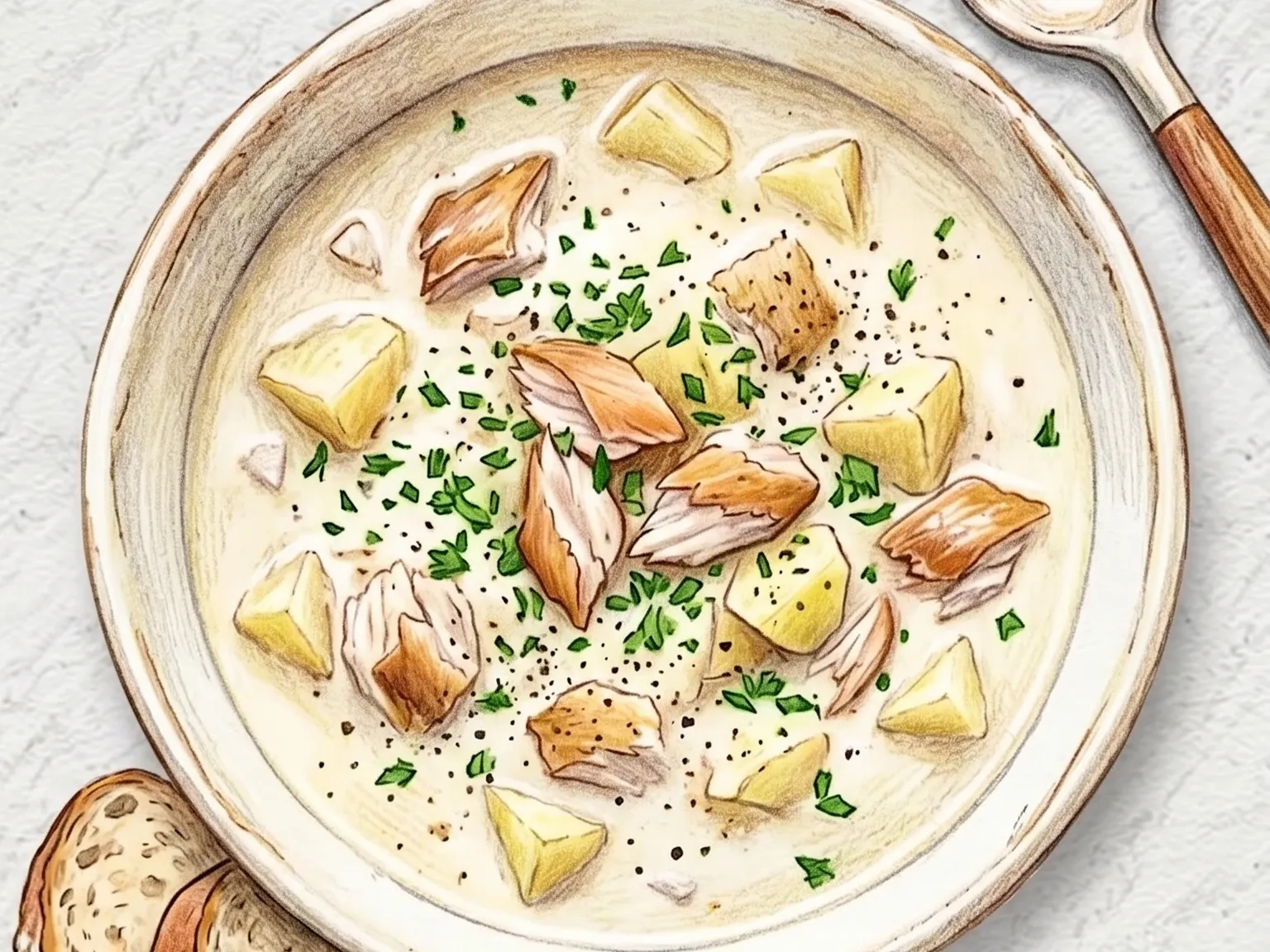
Cullen skink is a creamy smoked fish soup from the northeastern Scottish fishing village of Cullen, traditionally made with smoked haddock, potato, and milk rather than c...
What makes this special
- Smoked haddock poached in milk infuses this traditional Scottish chowder with depth.
- Smoked haddock poached in milk infuses the entire base with smoke
- Potato starch naturally thickens the broth; no cream needed
Key ingredients
Core cooking flow
- 1 Dice the 350 g potatoes into even bite-size cubes so they cook at the same rate.
- 2 Put the 700 ml milk, 350 g smoked haddock, and bay leaf in a pot.
- 3 Lift out the fish carefully and flake it into large pieces, keeping them intact for texture.
Cullen skink is a creamy smoked fish soup from the northeastern Scottish fishing village of Cullen, traditionally made with smoked haddock, potato, and milk rather than cream or thickening flour. The fish is gently poached in milk with a bay leaf over low heat for eight minutes until the liquid is deeply infused with smoke, then removed and flaked. The starch-laden milk is strained and reserved. Butter-softened onions go into the pot first to draw out their sweetness, followed by diced potato and the infused milk. As the potato cooks through, its natural starch thickens the soup into a silky, spoonable chowder without any added cream. The reserved fish goes back in along with cracked black pepper and chopped parsley for a final three-minute simmer that brings smoke, potato, and herb into one cohesive flavor. Because salt levels in smoked fish vary considerably between producers, seasoning should always be adjusted at the very end after tasting. Served with dark rye bread or soda bread, one bowl makes a satisfying main course on its own.
Instructions
Read the steps as a cooking flow: prep, heat, seasoning, doneness control, and finish.
- 1Control
Dice the 350 g potatoes into even bite-size cubes so they cook at the same rate.
Finely chop the 130 g onion, then chop the parsley and keep it aside for the final simmer.
- 2Control
Put the 700 ml milk, 350 g smoked haddock, and bay leaf in a pot.
Warm over low heat for 8 minutes, keeping the milk below a boil so it takes on smoke flavor without scorching.
- 3Finish
Lift out the fish carefully and flake it into large pieces, keeping them intact for texture.
Strain the infused milk to remove the bay leaf and small bits, then reserve the milk for the soup base.
- 4Control
Melt the 20 g butter in the empty pot, then cook the onion over medium-low heat.
Stir until it turns translucent and smells sweet, then add the diced potatoes before the onion browns.
- 5Control
Pour in the strained milk and stir so the potatoes are covered.
Simmer gently, not rapidly, until the potatoes crush easily against the spoon and release enough starch to thicken the soup.
- 6Control
Return the flaked fish, then add 0.5 tsp black pepper and 1 tbsp parsley.
Simmer for just 3 minutes to warm the fish through, taste, and adjust salt only at the end.
After the steps
Pick a recipe that fits this dish.
Continue with shared ingredients, meal pairings, or a similar method.
Recipes That Go Well With This
More Western →Based on shared ingredients and meal pairing
Kedgeree (British Smoked Fish Spiced Rice Dish)
Kedgeree is a British brunch dish of smoked haddock flaked into spiced rice with boiled eggs, descended from the Indian colonial-era dish khichri. The smoked fish is poached or steamed and broken into large pieces - keeping the flakes sizable preserves their texture and allows the smoky flavor to distribute through the rice in distinct pockets. Onion is sauteed in butter, then curry powder is bloomed for thirty seconds, releasing the warm aromas of cumin and turmeric into the fat, which tints and seasons every grain of rice. A squeeze of lemon juice at the end cuts through the richness of the butter and the heaviness of the spices with a bright acidity. Halved boiled eggs and chopped parsley finish the dish with contrasting texture and color.
Fish Pie
Fish pie is a staple of British home cooking, particularly during the colder months. Chunks of cod, salmon, and smoked haddock are folded into a cream sauce made with milk, butter, parsley, and a touch of English mustard, then topped with a thick layer of mashed potatoes and baked until the surface turns golden and slightly crisp. The combination of fresh and smoked fish creates layers of flavor - the cod contributes clean, mild sweetness, the salmon adds richness, and the smoked haddock provides a saline, smoky depth that permeates the sauce. Peeled prawns and halved boiled eggs are common additions that make the filling more substantial. In the oven, the sauce bubbles up around the edges of the potato crust, and the first scoop through the golden top reveals the creamy seafood filling beneath. It is a complete meal requiring nothing more than a side of steamed greens.
Black Tea Milk Tea (British Condensed Milk Sweet Tea)
Milk tea is prepared by steeping black tea bags in boiling water for exactly four minutes to extract a strong, tannic base, then combining it with whole milk and condensed milk over low heat. Steeping shorter than four minutes leaves the tea pale and thin; longer than four minutes introduces bitterness and astringency that no amount of milk can fully mask. The milk rounds out the tea's sharpness and adds a creamy body, while condensed milk layers on a dense, caramel-like sweetness that sets this version apart from tea simply sweetened with sugar. Regular sugar dissolved early provides the baseline sweetness, and the condensed milk fine-tunes the richness and texture in the final moments. Warming the milk before combining it with the brewed tea helps both blend more smoothly. For an iced version, the mixture must be cooled completely before pouring over ice, since adding hot liquid directly to ice dilutes the drink and washes out the flavor.
Rice Pudding
Rice pudding is made by simmering short-grain rice in milk over low heat, stirring regularly, until the grains swell and release their starch into the surrounding liquid. The result is a thick, porridge-like dessert with a creamy consistency that coats the back of a spoon. Vanilla extract infuses the dairy base with a warm, floral note, and a pour of heavy cream near the end pushes the richness further. A dusting of ground cinnamon on top adds an aromatic layer that greets the nose before the first spoonful reaches the mouth. The most common pitfall is scorching - rice and milk on a hot surface stick and burn quickly, so frequent scraping with a wooden spoon is non-negotiable. Because the pudding continues to thicken as it cools, pulling it off the heat when it looks slightly thinner than desired yields the best final texture. Served warm, it feels like a hug in a bowl; chilled overnight, it sets firmer and develops a denser, more custard-like character.
Serve with this
Abalone Seaweed Salad
This salad centers on abalone, the shellfish that haenyeo - Jeju Island's female free-divers - have harvested by hand for centuries, descending without oxygen tanks to pry the mollusks from the sea floor. The abalone is blanched for just 40 seconds, a precise window that preserves its springy texture and keeps the delicate sweetness and ocean flavor intact. Overcooked abalone turns tough quickly, so the short blanching time is more technique than convenience. Rehydrated sea mustard, thinly sliced cucumber, and red cabbage round out the bowl. The dressing - lemon juice, plum syrup, soup soy sauce, and a touch of vinegar - is calibrated to support the seafood's natural brininess rather than cover it. The combination of chewy abalone, slippery seaweed, and crunchy raw vegetables creates three distinct textures throughout, which sustains interest from first bite to last. Serve cold as a light appetizer before grilled dishes, or as a standalone side during summer. The quality of the abalone shows plainly with so few ingredients around it.
Honey Ginger Pastry (Korean Deep-Fried Layered Wheat Honey Cookie)
Yakgwa is a traditional Korean honey pastry made from wheat flour rubbed with sesame oil, then mixed with rice wine, ginger juice, and rice syrup, folded and rolled repeatedly to build up laminated layers before frying. A two-stage frying method is essential to the texture: first at 140 degrees Celsius to cook the dough through slowly without coloring, then briefly at 170 degrees to develop a golden, crisp exterior over a layered, flaking interior. Soaking the fried pastries in a warm syrup of honey, water, and ground cinnamon for at least two hours allows the sweetness to penetrate deep between the laminated layers, saturating each piece with moist, fragrant honey flavor from edge to center. Ginger juice surfaces gently in the finish, providing just enough warmth to temper the concentrated sweetness and keep the flavor from feeling cloying. The sesame oil rubbed into the dough from the start adds a persistent nutty backbone that ties together the honey, spice, and wheat flavors into the complex, layered profile that defines well-made yakgwa. Pine nuts or jujubes placed as garnish add visual elegance, and the pastry pairs particularly well with Korean teas, where its sweetness finds proper balance.
Myeongran Lemon Cream Fettuccine
Myeongran lemon cream fettuccine wraps wide pasta ribbons in a sauce made from salted pollock roe, heavy cream, butter, and lemon zest. The small eggs of the roe are left intact and stirred into the sauce off the heat so they stay soft and burst with briny flavor when bitten rather than turning granular or hard. Garlic bloomed in butter forms the aromatic base, and a mixture of heavy cream with milk tempers the roe's saltiness into a smooth, balanced coating. Using lemon zest rather than juice adds a bright citrus fragrance without diluting the sauce or introducing acidity that would curdle the cream. Parmigiano-Reggiano deepens the savory foundation, and fettuccine's broad, flat surface holds the thick cream more effectively than thinner pasta shapes. The entire dish takes about twenty minutes from start to plate, making it a practical weeknight option that does not sacrifice depth of flavor for speed. The critical technique -- incorporating the roe off the heat -- keeps the texture creamy throughout and prevents the eggs from cooking into tough, unpleasant morsels.
Similar recipes
Fish and Chips
Fish and chips began in the seaside towns of England and grew into one of the most recognized British dishes worldwide. A fillet of cod or haddock is dipped in a batter made with beer or sparkling water, then fried at high heat until the coating turns golden, crisp, and shatteringly light. The carbonation in the batter creates tiny air pockets during frying, producing a shell that is crunchy without being heavy or greasy. Inside, the fish remains moist and flakes cleanly along its natural grain. The chips - thick-cut potatoes fried twice - develop a golden crust around a fluffy, starchy interior. Malt vinegar splashed over the hot fish cuts through the oil with sharp acidity, and traditional accompaniments include mushy peas and tartar sauce. Eating them wrapped in paper, standing at the harbor, remains the definitive experience.
Crispy Pork Belly Roast
Crispy Pork Belly Roast is a British oven roast focused on achieving a perfectly shattered crackling atop tender, slow-rendered meat. The skin is scored in tight parallel lines and rubbed with coarse salt, then left uncovered in the refrigerator overnight to draw out surface moisture - the first condition for crackling that actually cracks. The initial thirty minutes at 230 degrees Celsius or higher blisters the skin and sets its structure, after which the temperature drops to 160 degrees to slowly melt the internal fat layer, leaving the meat soft and the skin glass-crisp. Garlic cloves and rosemary sprigs placed beneath the belly perfume the meat from below as the oven heat circulates. The rendered pan juices are deglazed to make a quick gravy that carries the pork's own flavor. A rest of at least ten minutes before slicing is essential to keep the juices locked inside the meat.
Shortbread Cookies
Shortbread is built on a high ratio of butter to flour, with just enough sugar to sweeten, producing a cookie that crumbles on contact and dissolves into a wave of pure butter flavor. The dough demands minimal handling - overworking it develops gluten and turns the tender crumb tough and biscuit-like. Cold butter cut into the flour creates the sandy, friable texture that defines a proper shortbread. Chilling the shaped dough before baking prevents spreading, ensuring clean edges and a uniform thickness. Powdered sugar yields a finer, more delicate crumb, while granulated sugar introduces a subtle crunch and slightly coarser grain. Traditionally scored into wedges or stamped into rounds, shortbread keeps well in a tin and actually improves after a day, as the butter flavor mellows and permeates the flour more evenly. It is the natural companion to a cup of strong black tea.