Korean Grilled Beef Daechang
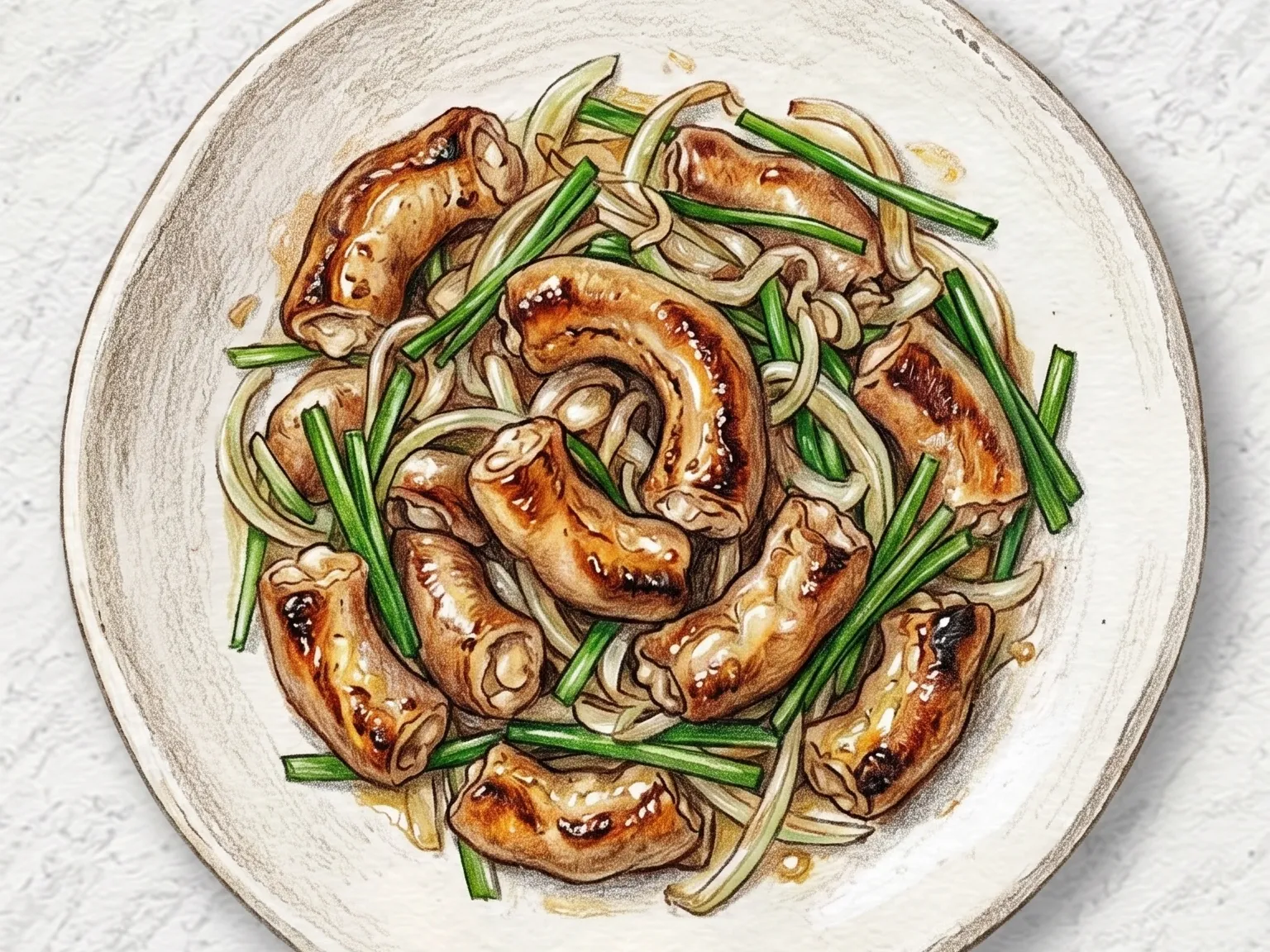
Daechang-gui is Korean grilled beef large intestine, cleaned and seasoned simply with salt, black pepper, minced garlic, and sesame oil before being seared on a high-heat pan. The thick layer of fat inside the intestine renders rapidly over intense heat, producing a rich, buttery flavor while the exterior crisps into a golden, slightly crunchy shell. Blotting excess rendered fat partway through cooking prevents the dish from becoming overly greasy, and tossing sliced onion and garlic chives into the pan at the end introduces moisture and fresh flavor that cuts through the richness. It is one of the most popular items at Korean gopchang restaurants, where the contrast between the fatty meat and cold beer or soju is central to the experience.
Adjust Servings
Instructions
- 1
Clean daechang and cut into bite-sized lengths.
- 2
Season lightly with salt, pepper, garlic, and sesame oil.
- 3
Heat a pan on high and add the daechang.
- 4
Lower to medium heat as fat renders; grill until golden.
- 5
Add onion and chives; toss for 1 minute to finish.
As an Amazon Associate, we may earn from qualifying purchases.
Tips
Nutrition (per serving)
More Recipes

Korean Grilled Beef Intestine
Crackling-crisp on the outside, bouncy and rich on the inside - gopchang-gui is the Korean grilled beef intestine dish that keeps barbecue lovers coming back for more. The offal is scrubbed with coarse salt and flour, blanched for five minutes to remove any raw organ smell, then seasoned with garlic, salt, pepper, and sesame oil before hitting a hot pan. As the intestine sears, its internal fat renders out, crisping the exterior into a crackling shell while the interior stays springy and chewy. Blotting away rendered fat with paper towels as it accumulates in the pan prevents the gopchang from frying in its own grease and keeps the texture cleanly crisp. Served immediately while still sizzling with a pile of fresh garlic chives on the side, the pungent green bite of the chives cuts through the richness.

Korean Grilled Pork Makchang
Makchang-gui is a Korean grilled pork large intestine dish where the offal is thoroughly cleaned, blanched for seven minutes to remove impurities and excess fat, then coated in a spicy marinade of gochujang, soy sauce, sugar, minced garlic, gochugaru, sesame oil, and black pepper. The blanching step is non-negotiable-it eliminates off-flavors and firms the intestine's texture so it holds up on the grill. After fifteen minutes of marinating, the wrinkled surface absorbs the sweet-spicy sauce, which caramelizes into a dark, sticky glaze over medium heat as the interior moisture slowly evaporates. The result is a chewy exterior with a rich, fatty interior that releases its flavor gradually with each bite, and patience with medium heat prevents the sugar-heavy sauce from burning.

Korean Grilled Beef Short Ribs with Scallions
Galbisal-pachae-gui is a Korean grilled beef rib finger dish where the meat is marinated in soy sauce, sugar, sesame oil, and garlic for at least an hour, seared over high heat, then topped with a generous mound of finely shredded green onion. Rib fingers sit between the rib bones and contain enough marbling to produce a concentrated, savory depth when the soy marinade chars at the edges-that charred glaze is a defining element of the dish. The shredded scallions are soaked in cold water first to mellow their sharpness and maximize crunch, then lightly dressed with sesame oil and ground sesame before being piled on the hot meat. Eating a piece of seared beef together with a tangle of cool, crisp scallions creates a contrast of temperature and texture in the same bite.

Korean Grilled Beef Plate Rib
Beef plate rib - a thick, fatty slab attached to the rib bone - delivers a more intense beef flavor than standard short ribs when grilled. After soaking in cold water to draw out blood, the scored meat marinates for at least thirty minutes in soy sauce, Korean pear juice, cooking wine, minced garlic, sesame oil, black pepper, and green onion. The marinade seeps into the score marks, seasoning the meat to its core. Grilled four to five minutes per side on medium-high heat and glazed with remaining marinade, the surface darkens to a lacquered finish. The meat near the bone has a pronounced chew, while fat-laced sections melt on the tongue with lingering umami.

Korean Beef Tripe Hot Pot
Naejang jeongol is a Korean tripe hot pot that simmers mixed beef offal in rich beef bone broth with onion, bean sprouts, and green onion. A touch of doenjang tames any gaminess, while gochugaru and garlic build a spicy, warming broth. The tripe offers a satisfyingly chewy bite against the milky, collagen-rich stock. This dish has long been a go-to accompaniment for soju and a popular hangover remedy.

Naejang-tang (Spicy Mixed Beef Tripe Soup)
Naejang-tang is a Korean offal soup that simmers a medley of beef innards - tripe, large intestine, abomasum, and omasum - in a robust broth seasoned with gochugaru, gochujang or doenjang, garlic, and green onion. Each organ brings a different texture to the bowl: tripe is chewy and ridged, large intestine is fatty and tender, and the stomach linings offer a firm, almost crunchy bite. As the innards cook for an extended period, their rendered fat and natural gelatin melt into the broth, producing a thick, savory liquid with a distinctive richness that leaner soups cannot approach. Some versions include seonji, coagulated ox blood, which darkens the broth and adds a mineral, iron-forward depth. The soup is characteristically spicy and served at near-boiling temperature, often in a stone pot that keeps it bubbling at the table. In Korea, naejang-tang is strongly associated with early-morning hangover recovery - specialized restaurants near traditional markets and drinking districts begin serving it well before dawn. The combination of fat, heat, and protein makes it one of the most physically restorative soups in the Korean repertoire.