Korean Jujube Tea (Simmered Dried Jujube Ginger Brew)
Quick answer
Daechucha is prepared by boiling pitted dried jujubes and sliced ginger in water over medium heat for thirty minutes, then removing the jujubes and pressing them through...
What makes this special
- Rubbing boiled jujube through a strainer creates a thick, naturally sweet body for Daechucha.
- Rubbing boiled jujube through a strainer and returning the pulp to the liquid builds natural body
- Ginger maintains a subtle heat after 30 minutes of simmering that breaks the jujube's sweetness
Key ingredients
Core cooking flow
- 1 Rub 120 g dried jujubes under running water to remove surface dust, then remove the pits cleanly.
- 2 Put 1400 ml water, the prepared jujubes, and ginger in a pot, then cover it.
- 3 When it begins to boil, reduce to medium low heat and simmer for 30 minutes.
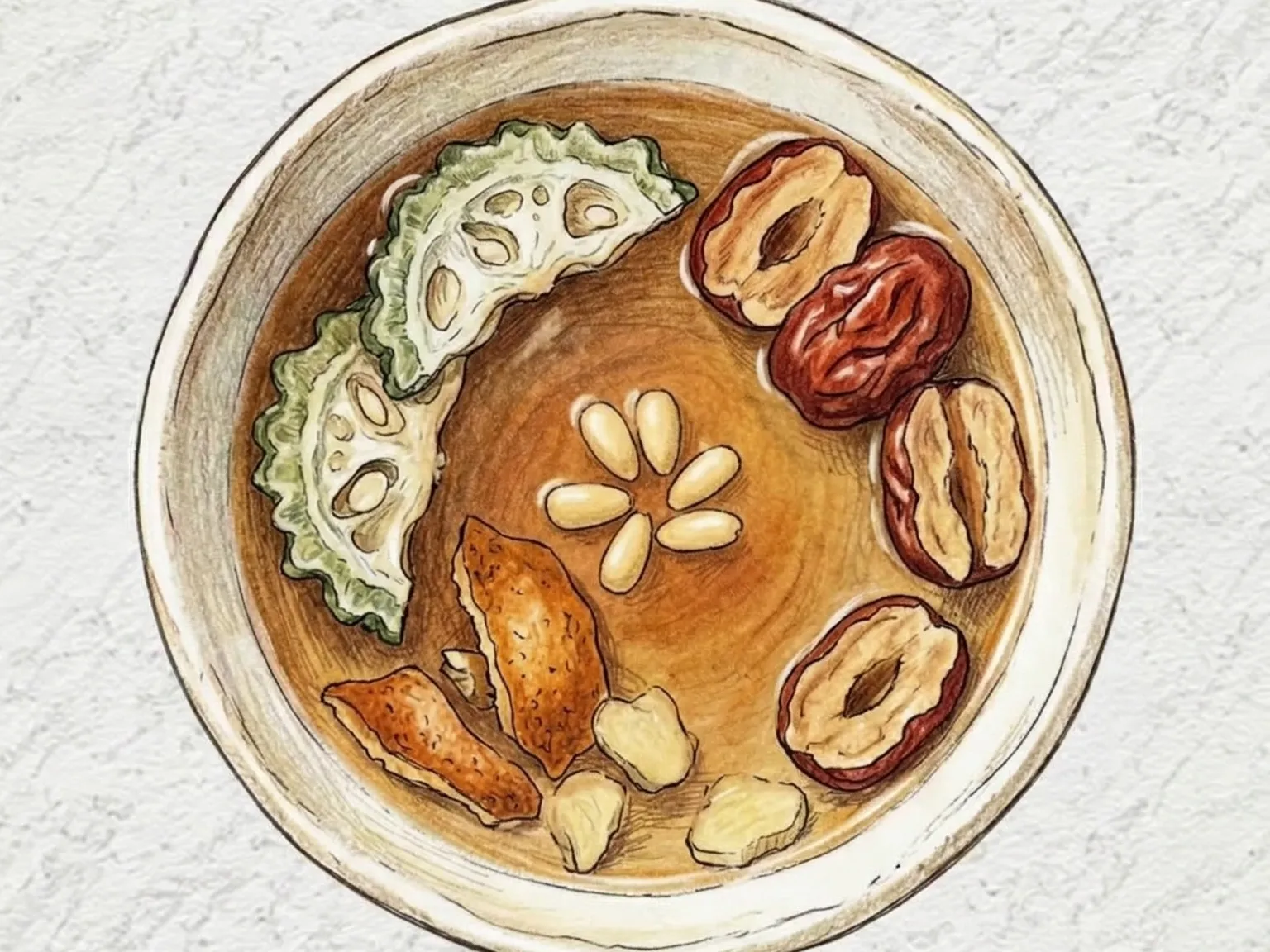
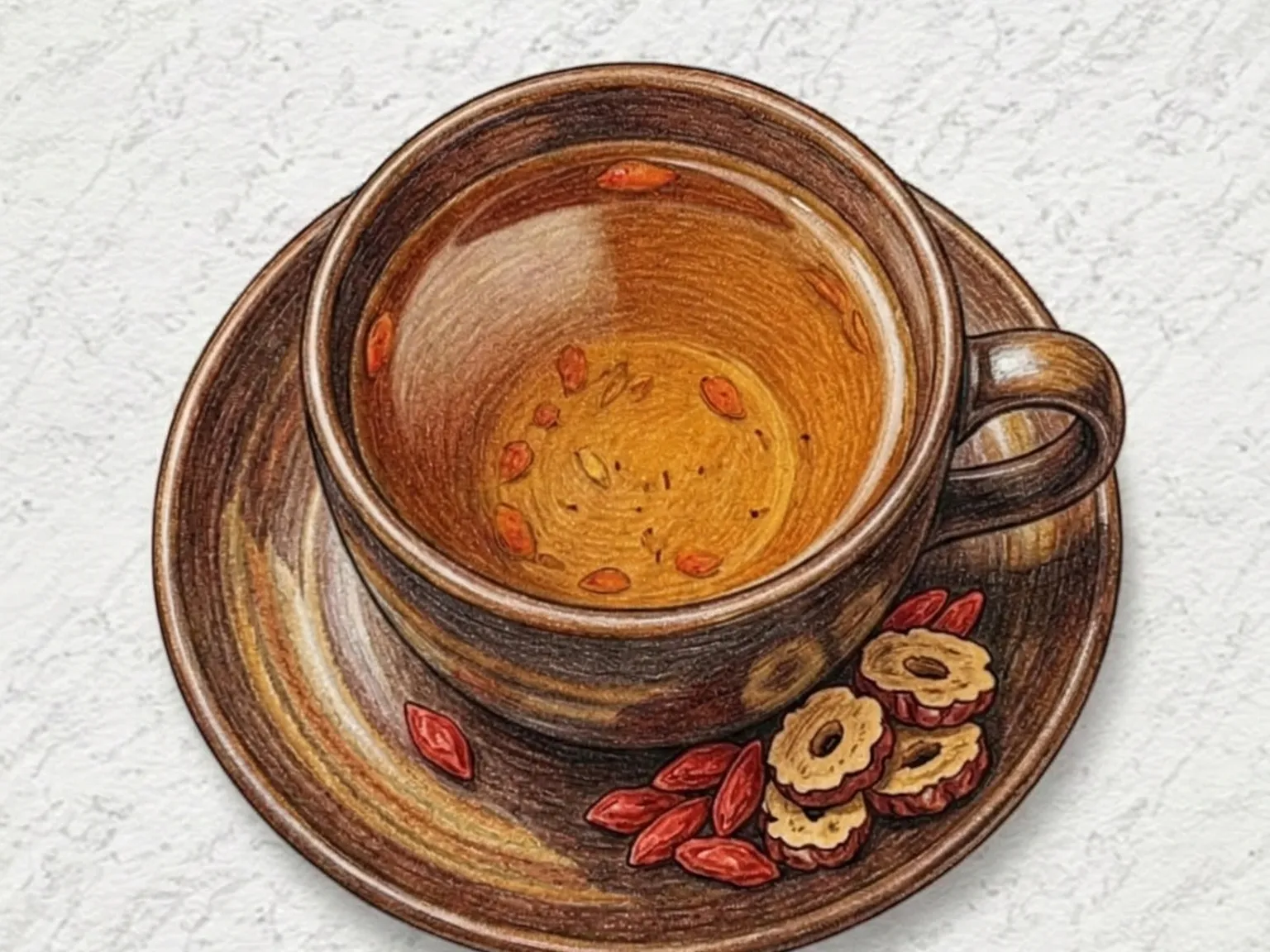
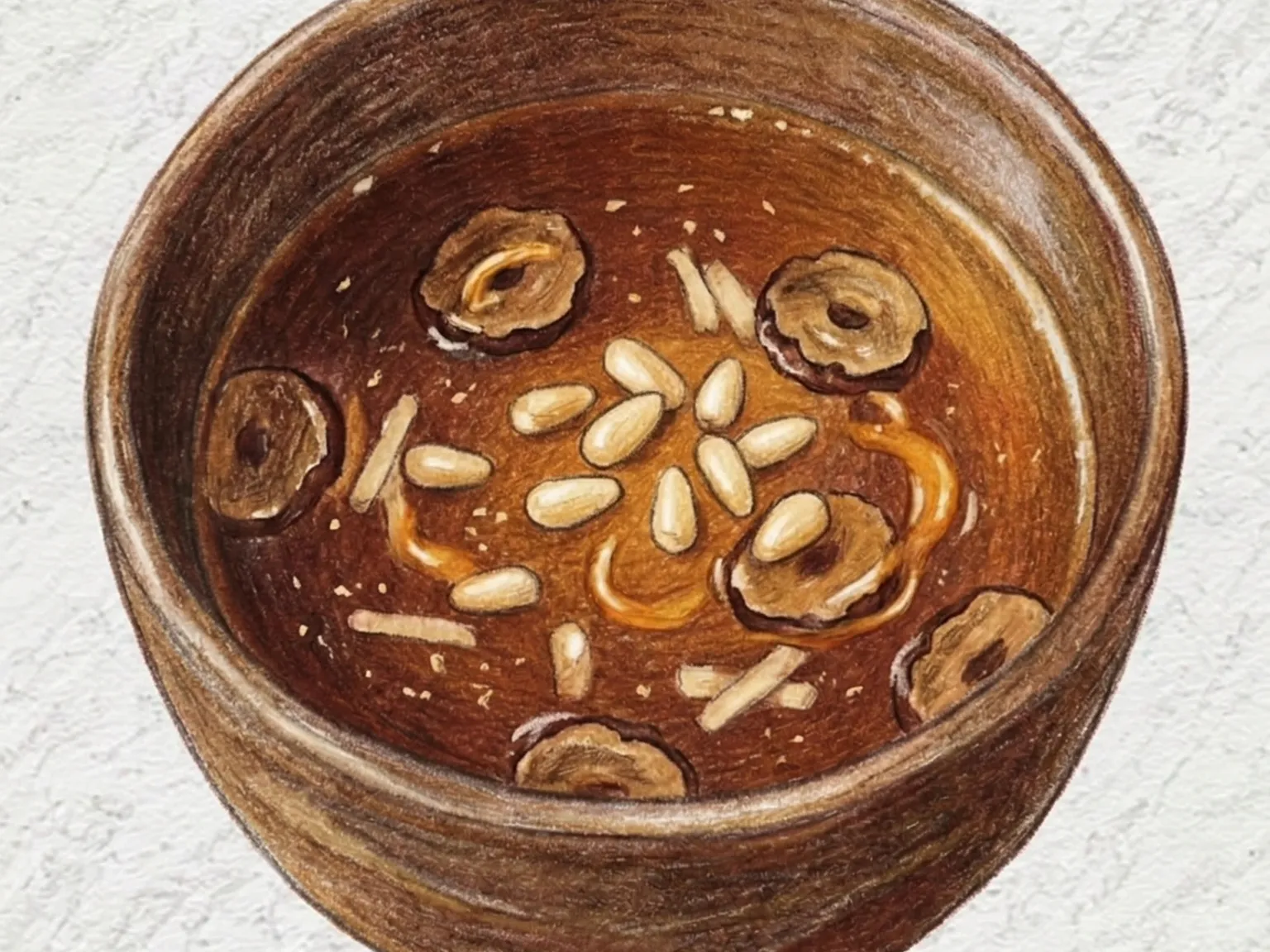
Daechucha is prepared by boiling pitted dried jujubes and sliced ginger in water over medium heat for thirty minutes, then removing the jujubes and pressing them through a strainer so only the smooth pulp returns to the pot. This technique gives the tea a naturally thick, sweet body without any added thickener. Ginger provides a quiet warmth underneath the jujube's dominant sweetness, and honey is stirred in off the heat to preserve its aroma. A few pine nuts floated on top contribute a subtle oily richness that extends the finish. The result is a warming, amber-colored tea served on cold days and during recovery from illness in Korean households.
Instructions
Read the steps as a cooking flow: prep, heat, seasoning, doneness control, and finish.
- 1Control
Rub 120 g dried jujubes under running water to remove surface dust, then remove the pits cleanly.
Peel 20 g ginger and slice it about 0.3 cm thick so it releases flavor evenly while simmering.
- 2Control
Put 1400 ml water, the prepared jujubes, and ginger in a pot, then cover it.
Set the pot over medium heat and warm it until small bubbles appear around the edges and the ginger aroma starts rising.
- 3Control
When it begins to boil, reduce to medium low heat and simmer for 30 minutes.
Leave the lid slightly open to prevent boiling over, and continue until the jujubes look swollen, soft, and partly collapsed.
- 4Step
Turn off the heat briefly and lift the jujubes into a fine strainer.
Press them firmly with a spoon so only the soft pulp returns to the tea, leaving skins and any firm bits behind.
- 5Control
Return the pot to low heat and add one pinch of salt, then simmer for 5 more minutes.
Stir slowly so the jujube pulp does not catch on the bottom and the texture stays evenly thick.
- 6Finish
Turn off the heat before adding 3 tablespoons honey, and stir until it dissolves fully so the aroma stays clear.
Pour into cups, divide 2 tablespoons pine nuts over the top, and serve warm.
After the steps
Pick a recipe that fits this dish.
Continue with shared ingredients, meal pairings, or a similar method.
Recipes That Go Well With This
More Drinks →Based on shared ingredients and meal pairing
Korean Goji Berry Tea (Herbal Jujube Ginger Brew)
Gugija-cha is a Korean herbal tea made by gently simmering dried goji berries, jujubes, and fresh ginger in water. The jujubes and ginger go in first and cook for fifteen minutes, slowly giving the liquid the jujube's quiet sweetness and the ginger's warming sharpness. The goji berries are then added for just five minutes over low heat so their red pigment and mild berry aroma steep into the tea without releasing the bitterness that comes from overcooking. Getting the timing right matters, because boiling the berries too long draws out an astringency that overpowers the rest of the flavors. Honey is stirred in after the heat is off to preserve its delicate fragrance, and a scattering of pine nuts floats on top to layer a soft, oily richness over the clean finish of the tea. The deep red color and gentle sweetness make this a tea that fits any season.
Korean Cinnamon Tea (Spiced Jujube Ginger Honey Brew)
Gyepi-cha is a traditional Korean cinnamon tea made by simmering whole cinnamon sticks and fresh ginger in water over low heat for at least twenty-five minutes. The long, gentle simmer is what separates gyepi-cha from an infusion: the bold, sweet-spicy aroma of the cinnamon builds gradually, saturating the liquid rather than merely scenting it. Ginger contributes a sharp, deeply warming bite that stays present long after each sip, creating a slow, spreading heat in the chest. Six jujubes are cooked alongside the spices; their flesh softens and eventually breaks down, lending the broth a faint fruitiness and a slight natural body. Dark brown sugar and honey are both used to construct a sweetness that is layered rather than flat, with the molasses depth of the sugar underpinning the floral brightness of the honey. Before serving, a few pine nuts are floated on the surface, where their oily richness drifts down to complement the spice. This is a drink associated with cold weather and recovering health, often prepared during winter or whenever warmth is needed from the inside out.
Crispy Seaweed Chips
Basak gim-bugak is a traditional Korean snack made of seaweed sheets coated with glutinous rice paste and fried until crispy. The process begins by cooking a thick mixture of water, glutinous rice flour, and salt. After cooling the paste, it is spread thinly onto half of a seaweed sheet. The sheet is folded in half and coated with another thin layer of paste to build a double-layer structure. Sesame seeds are scattered on top before drying. The sheets are dried in a dehydrator or an air fryer at 80 degrees Celsius until stiff and hard. Ensuring the seaweed is completely dry, especially at the edges, is crucial for a crisp outcome. The dried pieces are flash-fried in hot oil at 180 degrees Celsius for just two to three seconds. They puff up instantly and must be removed quickly to prevent burning.
Korean Kudzu Root Tea (Earthy Herbal Root Brew)
Chik-cha is a traditional Korean tea made by soaking dried kudzu root in cold water to remove dust, then slowly simmering it with sliced ginger, scored jujubes, and a cinnamon stick for at least twenty-five minutes on low heat. The kudzu root releases an earthy, starchy depth that forms the tea's backbone, while ginger adds warm pungency and cinnamon contributes a sweet, woody spice layer. Honey is stirred in only after the heat is turned off to preserve its floral aroma, and longer simmering intensifies the kudzu's flavor. In traditional Korean medicine, kudzu root has long been used to address fever and thirst, and the tea was commonly brewed at the first sign of a cold. Straining out the solids and storing the tea in a thermos keeps it warm and drinkable throughout the day.
Serve with this
Gotgam Cream Cheese Roll (Dried Persimmon Rolls)
Gotgam cream cheese roll is a no-cook Korean dessert that requires nothing more than a knife, a bowl, and a refrigerator. Dried persimmons are slit open and flattened into thin sheets, each one acting as the outer wrapper. The filling is cream cheese mixed with honey and fresh lemon juice to balance its natural richness with acidity, and finely chopped walnuts are folded in throughout to add a crunchy, nutty element to every bite. The filling is spread across the opened persimmon, which is then rolled tightly and wrapped in plastic wrap. Twenty minutes in the refrigerator firms the roll enough to slice cleanly. Dipping the knife in warm water and wiping it dry before each cut produces the smoothest cross-sections. The finished slices reveal clearly defined layers: the chewy, caramel-sweet dried persimmon on the outside, the tangy cream cheese in the middle, and flecks of walnut distributed throughout. The combination makes it a natural pairing with wine or a polished addition to a traditional holiday table.
Korean Crispy Kimchi Fried Dumplings
Kimchi gun mandu are pan-fried dumplings filled with finely chopped kimchi, squeezed tofu, ground pork, and green onion seasoned with soy sauce and garlic, shaped into half-moons. The bottoms are first crisped in oil, then water is added and the pan is covered for four minutes to steam the tops, achieving a contrast of crunchy base and moist upper wrapper. The kimchi's acidity and heat permeate the pork fat to create a more assertive umami than plain dumplings, and the tofu smooths out the filling's texture. A splash of vinegar in the soy dipping sauce cuts any greasiness.
Injeolmi Mochi Brownies (Chewy Rice Flour Cocoa Bars)
Injeolmi Mochi Brownies are a fusion dessert that combines cocoa batter with glutinous rice flour and a coating of toasted soybean powder. By replacing wheat flour with glutinous rice flour, these bars achieve an elastic, stretchy texture reminiscent of Korean rice cakes while maintaining a rich, fudgy interior. Brown sugar is used to impart a deep, caramel-like sweetness that complements the cocoa powder. To intensify the nutty aroma of traditional injeolmi, toasted soybean powder is dusted both inside the middle of the batter and on the top surface before baking. Once baked, the brownies are cooled completely to allow for clean, sharp slices. Serving them cold from the refrigerator firms up the crumb for a denser bite, whereas keeping them at room temperature keeps the mochi filling soft and pliable.
Similar recipes
Korean Heotgae Tea (Oriental Raisin Tree Hangover Herbal Brew)
Heotgae-cha is a traditional Korean herbal tea made by simmering dried oriental raisin tree fruit with jujubes, ginger, and cinnamon over low heat for thirty-five minutes. The dried heotgae fruit, small and knobby in appearance, is astringent and muted in raw form, but prolonged simmering draws out a deep, earthy sweetness that gradually fills the water. Jujubes add natural sweetness and a faint fruity note, ginger contributes a sharp warmth that lingers at the tip of the tongue, and cinnamon layers in a gentle, aromatic sweetness, building a multi-layered flavor that develops slowly over the long cooking time. Honey is stirred in at the end to adjust sweetness to taste. In Korean traditional medicine, the oriental raisin tree has long been associated with supporting liver function and alleviating hangover symptoms, which is why the tea has been consumed as a morning-after drink for generations. Among Korean office workers accustomed to frequent after-work drinking gatherings, heotgae-cha remains one of the most commonly reached-for hangover remedies.
Traditional Kimjang Cabbage Kimchi
Traditional Kimjang Cabbage Kimchi is a staple winter preparation made by seasoning salted cabbage with various vegetables and spices. The recipe calls for coating julienned radish with chili flakes first to secure a deep red color before mixing in anchovy fish sauce, fermented shrimp, and minced garlic. Fresh mustard greens and water parsley are cut and folded in, adding crisp and slightly bitter herbal notes to the mixture. Rinsed fresh oysters can be optionally folded in at the end to add a refreshing oceanic flavor. Each cabbage leaf is packed with this seasoning mixture and wrapped securely with its outer leaves. The seasoned cabbage is pressed tightly into airtight containers to minimize air contact, fermented at room temperature for one to two days, and then stored in the refrigerator to develop its flavor.
Baesuk (Korean Poached Pear Punch)
Baesuk is a traditional Korean punch made by slowly simmering whole or large-cut Korean pear with ginger, whole black peppercorns, and dried jujubes. As the pear cooks over low heat, its juice gradually dissolves into the liquid, building a natural sweetness that forms the drink's backbone. Ginger contributes a warm, peppery sharpness that interlocks with the pear's sweetness, producing a flavor that is comforting yet clean. Whole peppercorns are added sparingly and function as an aromatic element rather than a source of actual heat. Jujubes add a faint reddish tint and a mild fruity undertone to the liquid. Honey is stirred in after the heat is turned off and the temperature has dropped slightly to preserve its fragrance; because the pear already provides significant sweetness, the honey amount should start small and be adjusted by taste. Overnight refrigeration allows the ginger and pear flavors to penetrate more fully, rounding out the drink. Pine nuts floated on the surface before serving add a subtle oily richness to the finish of each sip. Historical records indicate that baesuk appeared on royal banquet tables during the Joseon dynasty and at aristocratic tea spreads, and Korean traditional medicine has long recommended it as a remedy for cold prevention and digestive support. Even today it remains a seasonal drink associated with holidays and ancestral rite preparations.