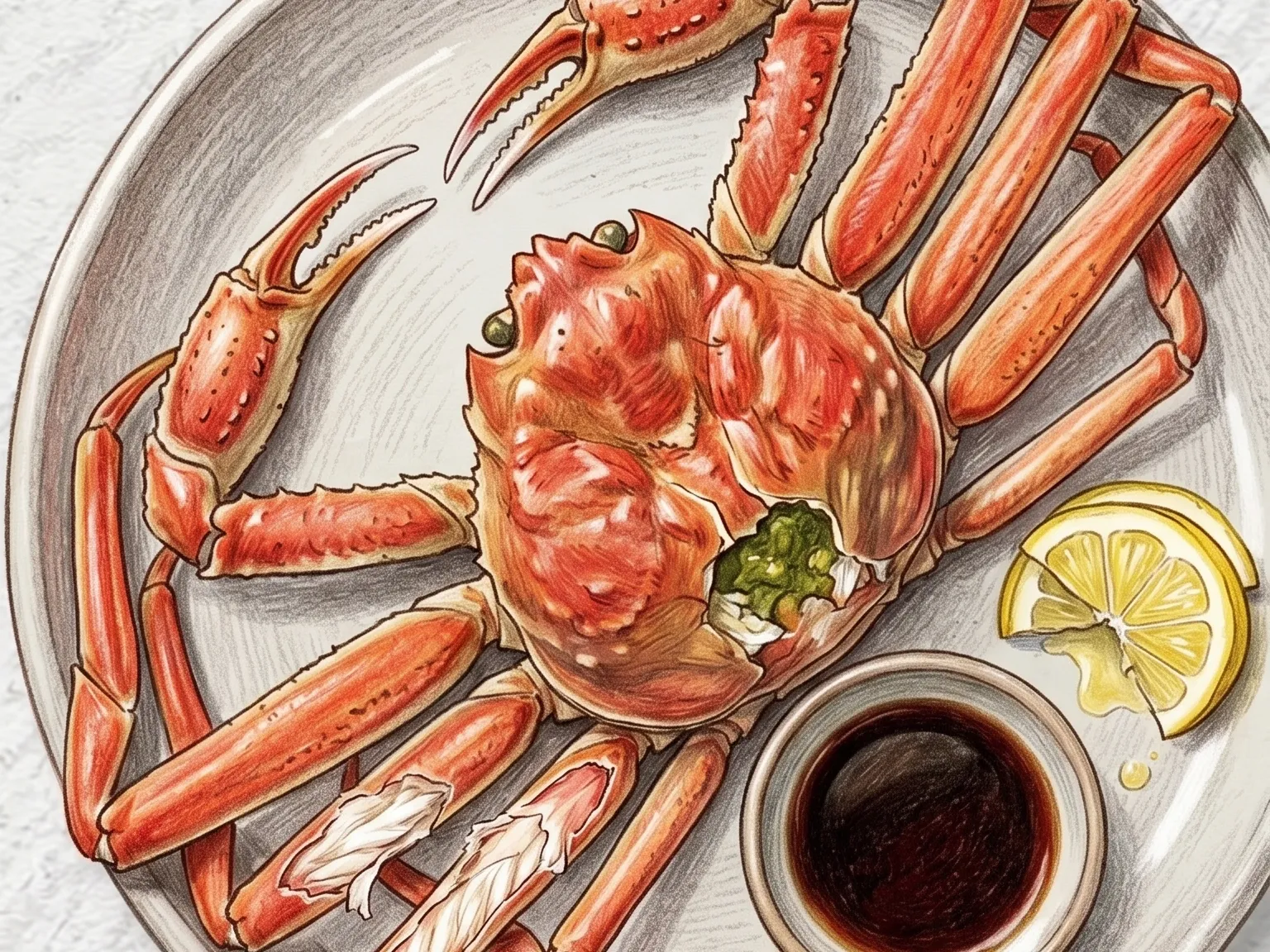
Korean Steamed Snow Crab (Whole Crab with Soy Vinegar Dip)
Daege-jjim is steamed snow crab cooked whole in lightly salted water, served with lemon wedges and a vinegar soy dipping sauce. Cracking open the long legs reveals moist, delicate meat carrying the clean salinity of the sea. A squeeze of lemon sharpens the natural sweetness of the crab without masking it. The preparation is intentionally minimal, letting the quality of the crab speak for itself, which makes it well suited as a centerpiece dish for gatherings or celebratory meals.
Adjust Servings
Instructions
- 1
Scrub the snow crab gently under running water.
- 2
Boil water with salt in a steamer pot.
- 3
Place crab belly-up once the water is boiling.
- 4
Steam over medium heat for 18 minutes, then rest for 3 minutes.
- 5
Serve with soy, vinegar, and lemon dipping sauce.
As an Amazon Associate, we may earn from qualifying purchases.
Tips
Nutrition (per serving)
More Recipes

Korean Steamed Blue Crab (Whole Shell Aromatics)
Kkotge-jjim is a Korean steamed blue crab dish cooked whole in a steamer with lightly salted water and aromatic vegetables. Steaming preserves the natural sweetness inside the shell, so each piece of extracted meat delivers a concentrated, briny flavor. A dip in vinegar soy sauce adds acidity that lifts the crab's inherent sweetness even further. Blue crabs caught during their spring and fall peak seasons come loaded with roe, producing the richest flavor, and the hands-on process of cracking shells and picking meat is part of what makes this dish an experience.

Korean Steamed Oysters
Gul-jjim is Korean steamed oysters cooked in their shells over high steam until they pop open. The shell acts as a natural vessel, trapping the briny liquor and keeping the oyster meat plump and moist. A dipping sauce of soy sauce, vinegar, and red pepper flakes adds a sharp contrast to the oyster's mild sweetness, while lemon wedges provide a clean finish. With minimal preparation and a cooking time under ten minutes, this is one of the simplest ways to enjoy fresh winter oysters at their peak.

Korean Steamed Shrimp
Saeu jjim is a Korean steamed shrimp dish where whole shrimp are placed over a bed of onion, green onion, and garlic in a steamer. The aromatic vegetables infuse the shrimp as it cooks, while a splash of rice wine neutralizes any off-odors. Steaming with the shells on minimizes moisture loss, keeping the flesh firm and naturally sweet. A squeeze of lemon juice just before serving lifts the flavor with bright acidity. The entire process takes under ten minutes, producing a high-protein dish that needs no dipping sauce to taste satisfying.

Korean Steamed Pomfret (Whole Fish with Soy Ginger Sauce)
Whole pomfret is gently steamed with soy sauce, rice wine, ginger, and green onion. Pomfret has thin, delicate flesh that separates easily from the bone after steaming, with a mild, clean flavor. Ginger and green onion work together to neutralize any fishiness, while soy sauce provides subtle seasoning. A light touch of sesame oil finishes the dish, making this a gentle, non-spicy preparation suitable for all ages.

Korean Steamed Shishito Pepper Banchan
Kkwarigochu-jjim steams flour-dusted shishito peppers rather than frying them, yielding an oil-free banchan with a moist, tender bite. The wrinkled surface of shishito peppers catches flour naturally, and that thin coating traps steam during cooking to keep the flesh juicy - but too much flour causes the peppers to clump into a sticky mass, so the trick is to toss them in a sieve with a light dusting. Five to six minutes of steaming wilts the peppers and turns the flour coat translucent. A quick toss in soy sauce, gochugaru, garlic, and sesame oil layers savory-spicy seasoning over the pepper's own mild sweetness. Because no oil is used, the calorie count stays low, and the steaming method preserves more of the pepper's vitamin C compared to stir-frying. This is a go-to for anyone looking for a lighter approach to shishito pepper banchan.

Korean Steamed Eggplant Namul
Gaji namul strips eggplant down to its quietest expression - steamed until completely soft, then dressed with just soy sauce, garlic, and sesame oil. No chili, no vinegar, no fermented paste. The eggplant is halved and steamed for seven minutes until the flesh is uniformly tender, then torn into long shreds by hand along its natural fibers. This tearing technique creates rough surfaces that grip the minimal seasoning better than knife-cut pieces would. The dressed namul has a glossy, dark sheen from the sesame oil and soy sauce soaking into the porous flesh. Among Korean namul dishes, gaji namul stands out for its exceptionally soft, almost melting texture - it practically dissolves when mixed into warm rice. A traditional banchan in Korean Buddhist temple cuisine, where simplicity is a principle rather than a limitation.