Korean Cod and Radish Soup
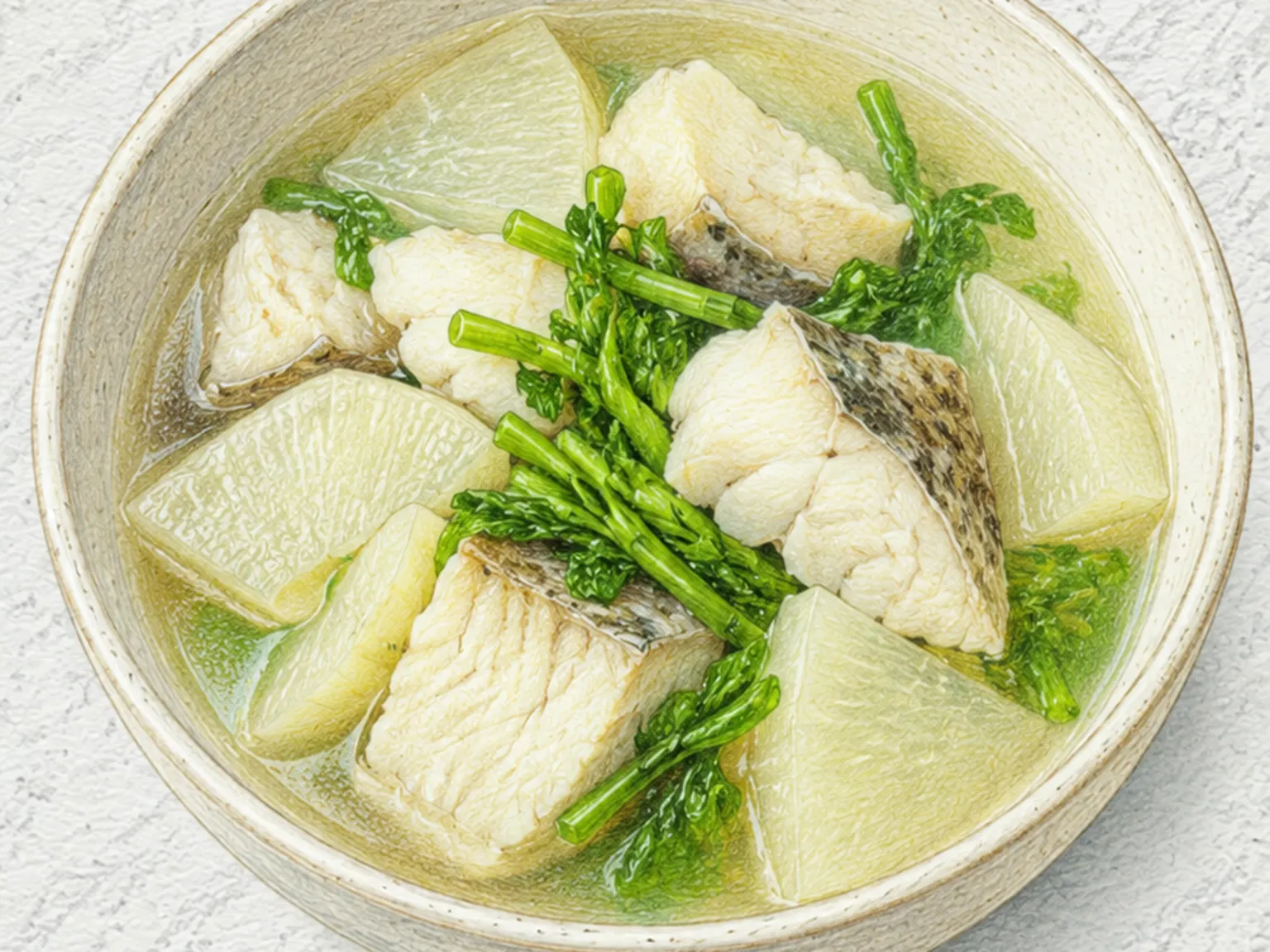
Daegu mu-tang is a Korean cod and radish soup where the radish simmers first in anchovy broth for eight minutes, drawing out its natural sweetness before the fish goes in. Cod fillets are marinated briefly in rice wine to neutralize any fishiness, then cooked gently for six minutes - stirring must be minimal to keep the flesh in large, intact pieces. The finished broth is remarkably clear and light because cod carries very little fat, and the radish sweetness merges with the fish's mild umami to create a clean, layered flavor. Crown daisy added in the final thirty seconds releases a sharp herbal fragrance that lifts the entire bowl.
Adjust Servings
Instructions
- 1
Cut cod into chunks and marinate with rice wine for 10 minutes.
- 2
Slice radish thinly and diagonally slice green onion.
- 3
Boil radish in anchovy broth for 8 minutes to bring out sweetness.
- 4
Add cod and simmer 6 minutes on medium, skimming any foam.
- 5
Season with soy sauce, garlic, and salt, then add green onion for 3 more minutes.
- 6
Add crown daisy just before turning off heat and serve immediately.
As an Amazon Associate, we may earn from qualifying purchases.
Tips
Nutrition (per serving)
More Recipes

Korean Monkfish Soup (Spicy Southern Coastal Fish Broth)
Agwi-tang is the soup version of Korea's monkfish preparations, originating from the fishing villages along the southern coast where monkfish - called agwi or agu depending on dialect - is landed fresh. Unlike braised or stir-fried monkfish dishes, the tang form prioritizes a clear, brothy base built on anchovy stock. Radish simmers first for eight minutes, sweetening the liquid before the monkfish enters. The fish cooks gently at medium heat, its collagen dissolving into the broth and giving it body. Bean sprouts go in last, contributing a clean crunch that contrasts the soft fish flesh. A final addition of sliced green onion and a punch of gochugaru turns the broth a hazy red. This is hangover food in Korea's coastal towns - hot, spicy, and restorative, traditionally served steaming at dawn markets.

Maeuntang (Spicy White Fish Radish Stew)
Maeuntang is a spicy Korean fish soup that uses white-fleshed fish such as cod or frozen pollock as its centerpiece. The fish is salted for ten minutes beforehand to firm the flesh and draw out impurities, while radish simmers in water to create a clean, sweet base. Gochujang, gochugaru, soup soy sauce, and garlic are stirred into the broth, and the fish and tofu are added together and cooked for ten minutes without flipping, using ladled broth to cook the top side evenly. Zucchini, green onion, and cheongyang chili are added in the final three minutes for color and crunch.

Korean Octopus Clear Soup
Yeonpo-tang is a clear Korean octopus soup that keeps seasoning to a minimum and lets the seafood speak for itself. The octopus is cleaned by rubbing with coarse salt, then cut into manageable pieces. Radish simmers in anchovy stock for ten minutes to build a sweet, clean base before the octopus and garlic go in for only three minutes of cooking, which is enough to cook the tentacles through without making them rubbery. Water dropwort is added right before serving, contributing a bright, herbal fragrance that contrasts with the briny depth of the broth.

Korean Seafood Scorched Rice Soup
Haemul nurungji-tang is a Korean seafood soup built around scorched rice crust that transforms in texture as it sits in the hot broth. Shrimp, squid, and mussels are simmered together to create a concentrated seafood stock full of marine umami. The nurungji - dried, golden-brown sheets of rice that clung to the bottom of the pot - goes in last and immediately begins absorbing the liquid, turning from brittle and crunchy to chewy and slightly gummy within minutes. This evolving texture is the defining feature of the dish. Bok choy provides a crisp, green contrast to the soft seafood, and a touch of oyster sauce deepens the overall savoriness. Timing matters at the table: those who prefer the crunch should eat quickly, while waiting a few minutes rewards with a softer, porridge-like consistency. Either way, the combination of toasted rice flavor and seafood broth is deeply satisfying.

Korean Monkfish Spicy Stew
Bold, spicy, and deeply savory -- this Korean monkfish stew delivers a thick, gochugaru-laced broth with chunks of gelatinous monkfish, crunchy bean sprouts, and fragrant minari. Radish cooks first in plain water, building a sweet base. Gochugaru and a small amount of doenjang are stirred in - the doenjang quietly neutralizes any fishiness while adding a fermented undertone the radish absorbs. The monkfish simmers until just cooked through, its gelatinous flesh holding together in large pieces. Bean sprouts add crunch and volume, and water dropwort - minari - enters last, wilting in the residual heat with its distinctive herbal fragrance. The broth is cloudier and thicker than a clear tang, with enough substance to eat as a main course. On a cold evening, this stew with a bowl of rice constitutes a complete and warming meal.

Korean Daegu Doenjang Gui (Doenjang-Grilled Cod)
Daegu-doenjang-gui is a Korean grilled cod dish where fillets are coated with a mixture of doenjang, minced garlic, and sesame oil, then cooked until the paste forms a thin, savory crust over the fish. Cod's mild, white flesh is an ideal canvas for doenjang's deep, fermented soybean flavor-the seasoning does not compete with the fish but rather defines it. As the paste dries slightly on the surface under heat, it creates a concentrated savory shell while the flesh underneath stays moist and flaky. Adjusting the amount of doenjang is key since it can easily oversalt the delicate fish, and serving with sliced green onion or perilla leaves provides an herbal counterpoint to the earthy paste.