Korean Scallion Egg Soup (Quick Two-Ingredient Clear Broth)
Quick answer
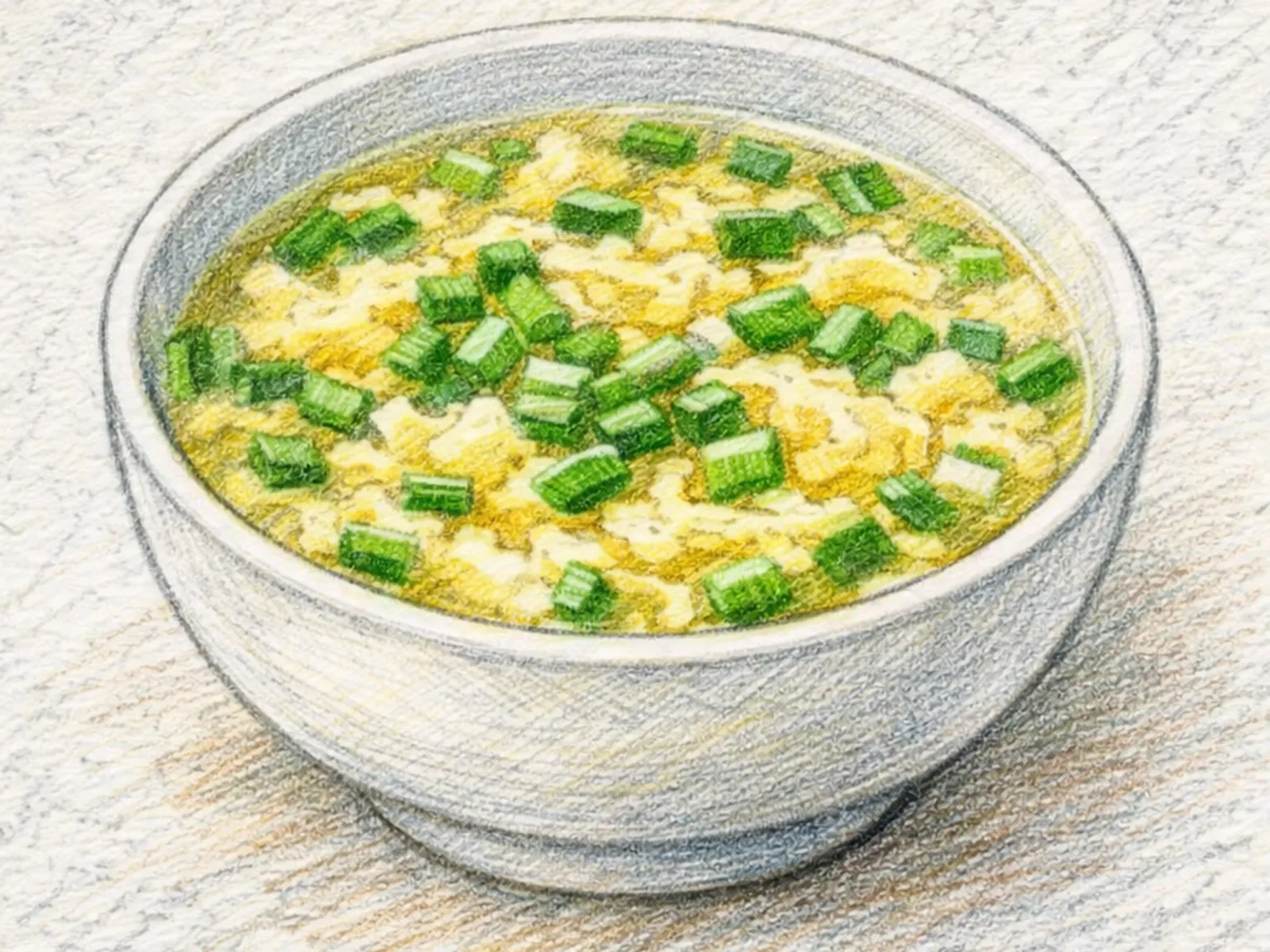
Daepa gyeran-guk is a Korean scallion and egg soup that comes together in under ten minutes with just two main ingredients.
What makes this special
- Daepa gyeran-guk produces a quick, aromatic broth of scallions and silky egg ribbons in under ten minutes.
- Scallion added in two stages captures both sweetness and sharp raw aroma
- Egg left undisturbed for 30 seconds on low heat forms silky strands
Key ingredients
Core cooking flow
- 1 Rinse and slice 1.5 large green onion stalks on a diagonal, then divide them...
- 2 Put 800 ml water and 0.5 tbsp minced garlic in a pot, then bring it to a boil over high heat.
- 3 Season first with 1 tbsp soup soy sauce, then add two thirds of the sliced green onion.
Daepa gyeran-guk is a Korean scallion and egg soup that comes together in under ten minutes with just two main ingredients. Adding the green onion in two separate stages is what gives the broth complexity: the first portion simmers for three minutes, sweetening and deepening the stock, while the second goes in raw at the very end for a sharp, grassy bite. The egg must be drizzled in a thin, steady stream over reduced heat and left completely undisturbed for thirty seconds - this produces silky, delicate ribbons rather than broken scrambled pieces. Adding the egg over high heat or stirring immediately causes the broth to turn cloudy and the egg to clump. Soup soy sauce seasons the broth cleanly without darkening it, and a single drop of sesame oil finishes the bowl with a subtle, nutty fragrance that underscores the sweetness of the green onion.
Instructions
Read the steps as a cooking flow: prep, heat, seasoning, doneness control, and finish.
- 1Prep
Rinse and slice 1.5 large green onion stalks on a diagonal, then divide them into two portions: two thirds and one third.
Beat 2 eggs until no streaks of white remain, so they pour smoothly later.
- 2Control
Put 800 ml water and 0.5 tbsp minced garlic in a pot, then bring it to a boil over high heat.
When it starts bubbling, skim any foam so the broth stays clean and clear.
- 3Control
Season first with 1 tbsp soup soy sauce, then add two thirds of the sliced green onion.
Simmer over medium heat for 3 minutes, until the onion softens, turns slightly translucent, and sweetens the broth.
- 4Control
Lower the heat to medium-low and make sure the boil has calmed to a gentle simmer.
Pour the beaten egg in a thin circular stream, starting near the edge of the pot and moving inward.
- 5Step
After adding the egg, leave it untouched for 30 seconds.
Once the edges turn pale and set, push through the soup once with a spoon, using a broad motion to keep the ribbons intact.
- 6Finish
Add the remaining green onion, 0.25 tsp salt, 0.1 tsp black pepper, and 0.5 tsp sesame oil, then turn off the heat right away.
Taste once, adjust only lightly if needed, and serve hot.
After the steps
Pick a recipe that fits this dish.
Continue with shared ingredients, meal pairings, or a similar method.
Recipes That Go Well With This
More Soups →Based on shared ingredients and meal pairing
Korean Dried Pollack Egg Soup
Hwangtae-gyeran-guk is a Korean clear soup that pairs dried pollock with silken egg threads in the same bowl. Toasting the pollock strips in sesame oil at the start is what gives the broth its foundation: the oil absorbs the nutty, roasted fragrance and carries it throughout the liquid as it simmers. Radish and green onion add a clean sweetness and mild sharpness, and once the broth is seasoned with soup soy sauce and garlic, beaten egg is streamed in slowly to form wispy, floating ribbons. The chewy pollock and the soft egg offer a changing texture from one spoonful to the next. Hwangtae is produced on outdoor racks in the Gangwon-do mountains through a winter-long cycle of freezing and thawing that breaks down the protein into a more digestible form and increases the amino acid content. In Korean households this soup appears at both the breakfast table and the post-drinking recovery meal, favored because the protein-rich pollock is gentle on a tired stomach and the whole pot comes together in under twenty minutes.
Gyeran-guk (Egg Drop Anchovy Broth Soup)
Gyeran-guk is Korea's most accessible comfort soup: a clear, golden broth seasoned with soy sauce and garlic into which a beaten egg is drizzled in a thin stream. When the egg hits the rolling boil, it sets almost instantly into delicate, flower-like ribbons that drift through the liquid in pale yellow sheets. Sliced green onion and a drop of sesame oil added at the end bring a gentle fragrance that lifts the otherwise clean, mild broth. The result is soothing and restorative, mild enough for a sick day yet substantial enough to anchor a full meal of rice and side dishes. Its near-universal appeal on Korean dinner tables comes partly from the fact that nearly every household keeps eggs, soy sauce, and garlic on hand, making it the soup most likely to appear with no planning at all. From start to finish the bowl is ready in under ten minutes.
Korean Vegetable Fried Rice
Carrots, onions, zucchini, and bell peppers are finely diced and tossed with rice in a hot wok, moving fast enough that each grain separates and picks up a light char. The vegetables release just enough moisture to keep the rice from drying out while the high heat ensures the grains stay individually distinct. Soy sauce and sesame oil provide a clean, nutty seasoning that lets the vegetable flavors come through. Topping with a fried egg or a shower of crushed nori turns this simple fried rice into a satisfying meal.
Korean Garlic Chive Egg Soup
This simple home-style soup combines garlic chives, egg, and tofu in a light broth seasoned with soup soy sauce and garlic. Tofu cubes go in first to warm through for two minutes, then beaten egg is poured in a slow, circular stream and left undisturbed for thirty seconds to form silky ribbons. Chives and sesame oil are added in the final half-minute so their aroma stays vivid in the finished bowl. Because the ingredient list is short, cutting the tofu into even cubes and managing the heat carefully are what separate a polished result from a cloudy one. Pouring the egg too forcefully or stirring immediately breaks up the ribbons and muddies the broth.
Serve with this
Korean Seasoned King Oyster Mushroom
Saesongi-beoseot-muchim steams 250 grams of king oyster mushrooms, torn into strips along the grain, for six minutes over high heat to preserve their chewy, fibrous texture better than boiling would. After cooling slightly and squeezing out excess moisture, the strips are tossed in a dressing of soy sauce, vinegar, chili flakes, garlic, and sugar. The vinegar provides a tangy lift, while the chili flakes introduce gentle warmth without overwhelming the mushroom's mild flavor. Sesame oil and sesame seeds finish the dish with a nutty aroma. It holds up well when chilled and served cold, making it a convenient banchan to prepare ahead of time.
Korean Wild Chive Pickle (Spring Chive Soy Brine)
Dallae jangajji is a seasonal Korean pickle made by submerging spring wild chives in a brine of soy sauce, vinegar, and sugar alongside sliced Cheongyang chili and sesame seeds. Cleaning the soil from the bulb-like roots and cutting the chives to five-centimeter lengths prepares the main ingredient; the brine must then be cooled fully before pouring, because residual heat drives off the chives' volatile, peppery aroma rapidly. Pouring while still hot can strip much of the sharp fragrance in seconds. After one day of refrigeration the pickle is ready to eat, but by day three the brine penetrates the stalks fully and the flavor deepens. Served alongside grilled meat, the sharp garlicky bite of the chives and the tangy acidity of the brine cut through the fat cleanly -- a pairing that makes this a prized springtime side dish.
Korean Dried Radish Greens Pancake
Boiled dried radish greens are combined with doenjang and pan-fried into a dense, rustic jeon with deep fermented character. The fibrous texture of the radish greens gives the pancake a satisfying chew, and the soybean paste saturates the batter so thoroughly that no dipping sauce is necessary. Buckwheat flour adds an earthy coarseness that suits the greens well. Cheongyang chili provides a spicy accent throughout. Minced garlic benefits from a brief saute in oil before being mixed into the batter-the raw edge cooks off and the garlic's savory depth integrates fully into the finished pancake. Cooking over low heat lets the inside set without burning the outside, producing a crisp surface and a tender, flavorful center.
Similar recipes
Hobeop-guk (Korean Zucchini Shrimp Soup)
Hobak-guk is a mild, clear Korean soup built around thinly sliced half-moon zucchini. Small shrimp go in with the zucchini, infusing the broth with a gentle seafood sweetness that supports rather than overpowers the vegetable's own delicate flavor. The seasoning is deliberately restrained - soup soy sauce and minced garlic only - so the zucchini's natural softness and subtle sweetness define the bowl. As the slices simmer, they turn translucent and tender while still holding their shape on a spoon. The entire soup comes together in about fifteen minutes, making it one of the fastest and most low-effort side soups in the Korean home kitchen. A handful of sliced green onion stirred in at the end brings a bright herbal finish to an otherwise quiet, comforting bowl.
Korean Shrimp Mulmandu in Light Broth
Saeu-mulmandu-broth is a Korean dumpling soup where shrimp-filled mandu are simmered in a clear broth seasoned with soup soy sauce and garlic. The shrimp is added to the pot first and allowed to cook in the liquid before the dumplings go in, establishing a seafood base that the wrappers gradually absorb during cooking. As the dumplings simmer, their skins turn translucent and the filling becomes faintly visible through the surface. They are ready when they float to the top, at which point the wrappers are tender but still intact. Green onion is stirred in at the end for a fresh, mild sharpness, and the broth is adjusted with salt and white pepper. Despite its clear, light appearance, the soup carries real depth: the gentle sweetness drawn from the shrimp combines with the savory notes released from the filling inside each dumpling, building a broth that tastes more complex than its short ingredient list would suggest. A full bowl with several dumplings makes a complete light meal, and the soup is particularly comforting during cooler months. Frozen store-bought shrimp dumplings work well in this recipe, making it a practical option for quick weeknight cooking.
Korean Street Egg Toast (Cabbage Egg Omelet Sandwich with Sweet Ketchup)
Gilgeori egg toast is a Korean street food sandwich built around a rectangular omelet of shredded cabbage, carrot, and beaten egg, layered between slices of bread that have been toasted in butter until golden. The defining touch is a sprinkle of white sugar over ketchup applied directly to the bread before the omelet goes in. That sugar-ketchup combination produces a sweet-tangy sauce that balances the savory egg and the mild crunch of the vegetables in a way that no other condiment quite replicates. The egg and vegetable batter is folded over itself on the pan to create a thick, layered patty, so each bite delivers alternating textures of soft egg and crunchy toasted bread. Street vendors began selling this sandwich in front of Korean schools during the 1990s, and it has remained a constant fixture of Korean street food culture ever since, available at food stalls and snack trucks across the country as both a breakfast option and an afternoon snack.