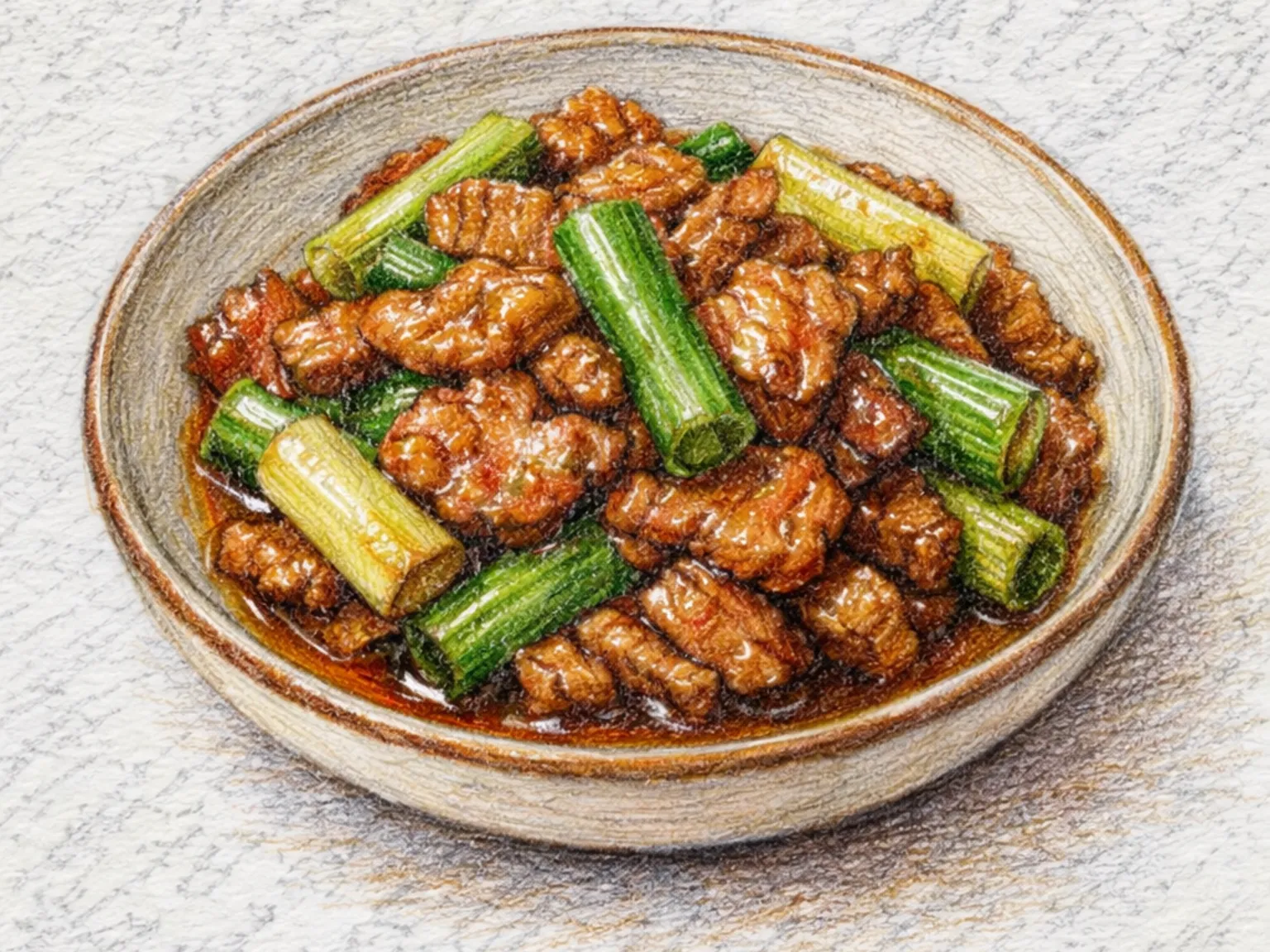
Korean Soy Glazed Pork Neck Stir-fry
This dish stir-fries thinly sliced pork neck with soy sauce and oyster sauce over high heat. The two sauces form a glossy coating on the meat's surface, delivering a balance of salty and sweet in each bite. Large diagonal-cut green onion pieces soften in the heat, turning translucent and releasing their natural sweetness and sharp fragrance. Onion cooks down alongside, losing moisture and lightly caramelizing to thicken the sauce. The quick, high-heat cooking keeps the pork neck moist and prevents it from toughening.
Adjust Servings
Instructions
- 1
Slice pork neck thinly; cut green onion diagonally and onion into thick strips.
- 2
Mix soy sauce, oyster sauce, sugar, and garlic in a bowl for the sauce.
- 3
Heat oil over medium-high heat and stir-fry pork for 4 minutes to brown the surface.
- 4
Add onion and stir-fry 2 more minutes to reduce moisture and build sweetness.
- 5
Add sauce and stir-fry 3 minutes until glossy, then add green onion and cook 2 more minutes.
- 6
Turn off heat, sprinkle sesame seeds, and serve immediately with rice.
As an Amazon Associate, we may earn from qualifying purchases.
Tips
Nutrition (per serving)
More Recipes

Korean Gaji Dwaejigogi Bokkeum (Eggplant Pork Stir-fry)
Gaji-dwaejigogi-bokkeum is a Korean stir-fry of eggplant and thinly sliced pork seasoned with garlic and fresh chili. The eggplant absorbs oil and sauce as it cooks, turning silky and melding seamlessly with the pork. Garlic infuses the dish with an intense aroma while the chili adds a clean, sharp heat throughout. It is especially flavorful in summer when eggplant is at its seasonal peak.

Korean Soy-Glazed Shrimp Stir-Fry
Ganjang saeu bokkeum coats plump shrimp in a sweet-savory soy glaze built on a base of melted butter and garlic. A single cheongyang chili adds a subtle kick that lifts the buttery richness without overpowering it. The key is to add the sauce the moment the shrimp turn pink, preventing them from becoming rubbery while allowing the glaze to caramelize lightly. With only 8 minutes of cooking time, this dish works equally well as a quick banchan alongside rice or as an appetizer with drinks.

Korean Soy-Glazed Chicken Stir-Fry
This stir-fry cooks chicken thigh meat in soy sauce, sugar, and oligosaccharide syrup for a sweet-salty glaze. Garlic and ginger go into the oil first so their fragrance infuses the fat before the chicken is added, allowing the aromatics to penetrate deep into the meat. The oligosaccharide heats into a tacky gloss that coats each piece of chicken. Sesame oil and whole sesame seeds scattered on top at the end bring a nutty finish. The flavor profile resembles Japanese teriyaki, but the heavier use of garlic and ginger gives it the more direct, punchy spice character of Korean cooking.

Korean Aseuparageoseu Dak Ganjang Bokkeum (Asparagus Soy Chicken Stir-fry)
This Korean stir-fry marries chicken tenderloin with asparagus in a soy-based glaze - a modern home-cooking creation that balances lean protein with a vegetable that arrived in Korean kitchens only in the last few decades. The chicken is sliced thin against the grain and marinated briefly in soy sauce, garlic, and sesame oil so it stays moist during the fast stir-fry. Asparagus is cut on a sharp diagonal to expose maximum surface area for the sauce to cling to, and its woody ends are snapped off rather than cut. High heat is essential: the chicken sears quickly without releasing moisture, and the asparagus retains its bright green color and crisp snap. A finishing glaze of soy sauce, sugar, and oyster sauce caramelizes lightly in the pan, coating both ingredients in a thin, glossy layer. The dish is deliberately light - clean soy saltiness and vegetal freshness without the heaviness of a gochujang-based sauce.

Korean Busan-Style Soy Fish Cake Stir-Fry
Busan - Korea's largest port city - is synonymous with eomuk, pressed fish cake sold at Gukje-sijang market. This version stir-fries sliced fish cake with onion and cheongyang chili in soy sauce, sugar, and cooking wine. Onion cooks first to release its sugars before the fish cake absorbs the glaze. Cheongyang chili adds sharp, lingering heat distinguishing this from milder Seoul versions. Cools well and holds up for hours in lunchboxes.

Korean Pickled Green Onion
Daepa jangajji is a quick Korean pickle made by cutting large green onions into five-centimeter lengths and submerging them in a boiled-and-cooled brine of soy sauce, vinegar, and sugar with garlic and dried chili. Using primarily the white portions yields a crisper texture, and cooling the brine thoroughly before pouring prevents the onions from softening. The soy-vinegar combination tames the raw pungency of the green onion while preserving its aromatic depth. After two days of refrigeration the seasoning penetrates evenly, producing a sharp, savory condiment that cuts through the richness of grilled pork belly and other fatty meats.