Korean Salt-Grilled Green Onion
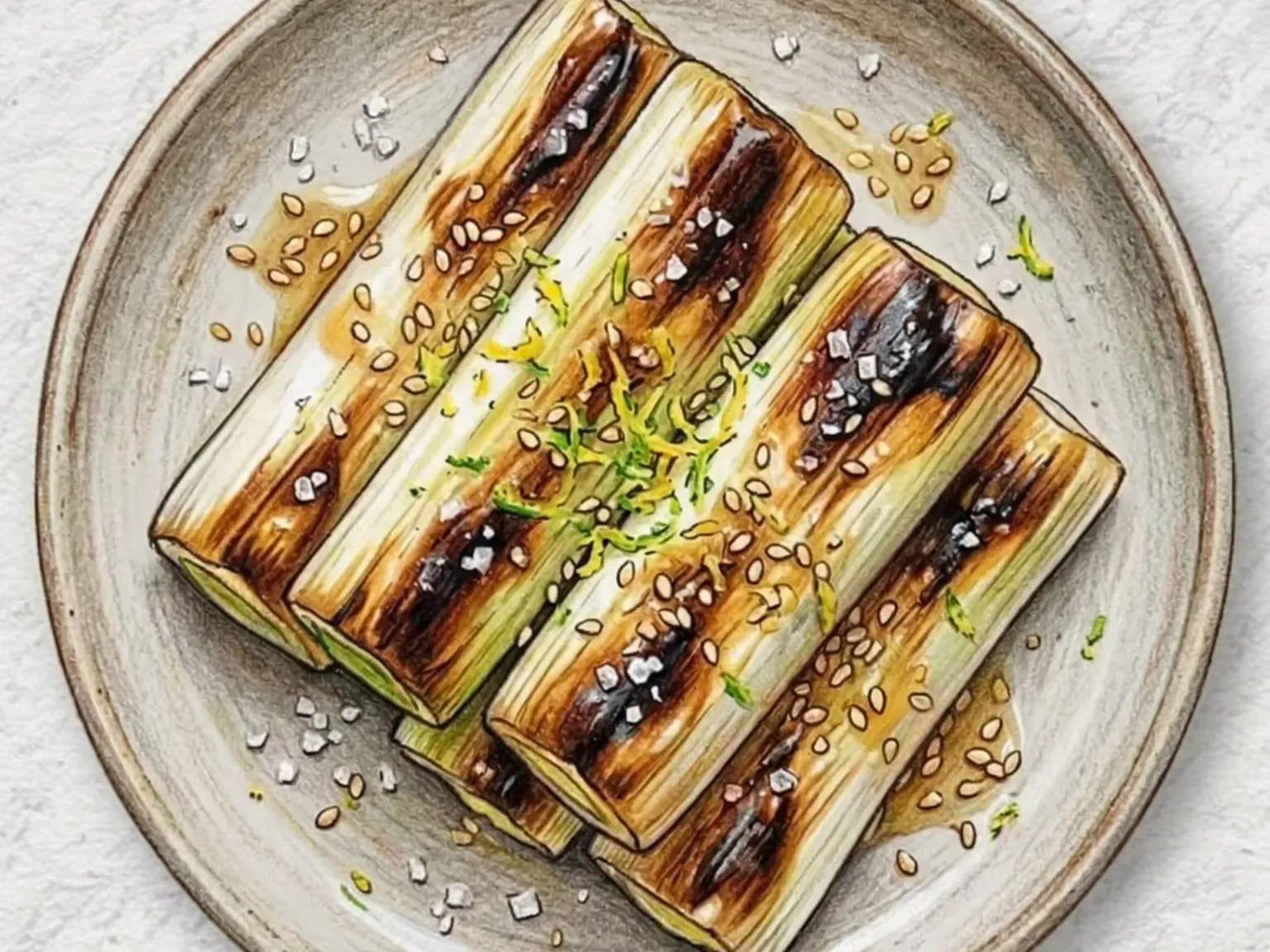
Daepa-sogeum-gui is a minimalist Korean dish of green onion whites cut into 7-8 cm lengths, brushed with olive oil, sprinkled with coarse salt, and grilled over high heat. The outer layers char slightly, developing a light smokiness, while the inner core softens and turns remarkably sweet as starch converts to sugar under intense heat. Only the white parts are used because the green tops burn too quickly, and pressing each piece flat against the grill for two to three minutes per side ensures the center cooks through. A drizzle of sesame oil, a scattering of toasted sesame seeds, and a pinch of lemon zest layer nuttiness and citrus brightness over the onion's caramelized sweetness.
Adjust Servings
Instructions
- 1
Wash green onions and cut mostly white parts into 8 cm lengths.
- 2
Peel off one tough outer layer if needed, then dry thoroughly.
- 3
Lightly coat with olive oil and season evenly with coarse salt.
- 4
On a very hot grill pan, char each side for about 2 minutes while rolling.
- 5
Turn off heat and finish with sesame oil, sesame seeds, and lemon zest.
As an Amazon Associate, we may earn from qualifying purchases.
Tips
Nutrition (per serving)
More Recipes

Korean Pickled Green Onion
Daepa jangajji is a quick Korean pickle made by cutting large green onions into five-centimeter lengths and submerging them in a boiled-and-cooled brine of soy sauce, vinegar, and sugar with garlic and dried chili. Using primarily the white portions yields a crisper texture, and cooling the brine thoroughly before pouring prevents the onions from softening. The soy-vinegar combination tames the raw pungency of the green onion while preserving its aromatic depth. After two days of refrigeration the seasoning penetrates evenly, producing a sharp, savory condiment that cuts through the richness of grilled pork belly and other fatty meats.

Korean Grilled Shishito with Doenjang
Kkwarigochu-doenjang-gui is a Korean grilled shishito pepper dish where the peppers are first dry-blistered in a hot pan until their skins wrinkle and char, then quickly tossed with a sauce of doenjang, gochujang, oligosaccharide syrup, and minced garlic. Blistering the peppers without oil first drives off moisture, removes the raw grassy taste, and concentrates their natural sweetness before any sauce is introduced. Pricking each pepper with a fork before cooking lets the seasoning penetrate the interior and prevents them from ballooning and bursting from steam. The sauce goes in only for the final two minutes so the fermented soybean paste keeps its full aroma, and a drizzle of sesame oil with toasted seeds at the end adds a roasted nuttiness.

Korean Soy-Glazed Grilled Lotus Root
Lotus root slices are soaked in vinegar water to reduce astringency, blanched briefly, then pan-grilled with a soy sauce, oligosaccharide syrup, and garlic glaze. The coating turns glossy as it reduces, giving each slice a balanced salty-sweet finish while the interior stays crisp and clean-tasting. Topped with sesame seeds, this vegetable side holds up well in packed lunches and as an everyday banchan.

Korean Grilled Doenjang Onions
Onions are sliced into 2 cm rings, secured with skewers, and grilled over medium heat while being brushed with a sauce of doenjang, gochujang, minced garlic, perilla oil, and water. Over eight to ten minutes of flipping and re-brushing, the onion's moisture evaporates and its natural sugars concentrate into pronounced sweetness, while the doenjang chars lightly at the edges to add a toasted, earthy note. Perilla oil softens the salt intensity of the doenjang, and a finish of sliced green chili and ground sesame layers in mild heat and nuttiness. At 146 calories per serving, this is a low-calorie side dish that also works as a light accompaniment to drinks.

Korean Scallion Salad (Spicy Green Onion Grilled Meat Side)
Pa-muchim is a julienned green onion salad that serves as a classic accompaniment to Korean grilled meat. The onions are soaked in cold water for 10 minutes to draw out harsh sulfur compounds, leaving only a clean crispness behind. A dressing of soy sauce, red pepper flakes, sugar, vinegar, and sesame oil coats the thin strands, delivering a balance of salty, sweet, sour, and spicy notes in each bite. Toasted sesame seeds scattered on top contribute a lingering nuttiness. The salad should be eaten promptly after tossing, as the onions begin to wilt within minutes; placed on top of grilled pork belly or bulgogi, the sharp freshness cuts through the richness of the meat.

Korean Soy-Glazed Kabocha Grill
Danhobak-ganjang-gui is a Korean soy-glazed kabocha squash dish where thick half-moon slices are pre-steamed or microwaved until just softened, then pan-grilled with a glaze of soy sauce, corn syrup, minced garlic, and sesame oil. Pre-cooking the squash is essential-it eliminates the need for prolonged grilling, so the glaze can caramelize quickly without the interior remaining raw. The natural sugars in kabocha meet the salt of the soy sauce to create a pronounced sweet-salty contrast, and the corn syrup melts into a shiny, lacquer-like coating on the surface. Sesame oil should be added only after removing from heat to preserve its fragrance, and a scattering of toasted sesame seeds finishes the dish with a crunchy, nutty accent.