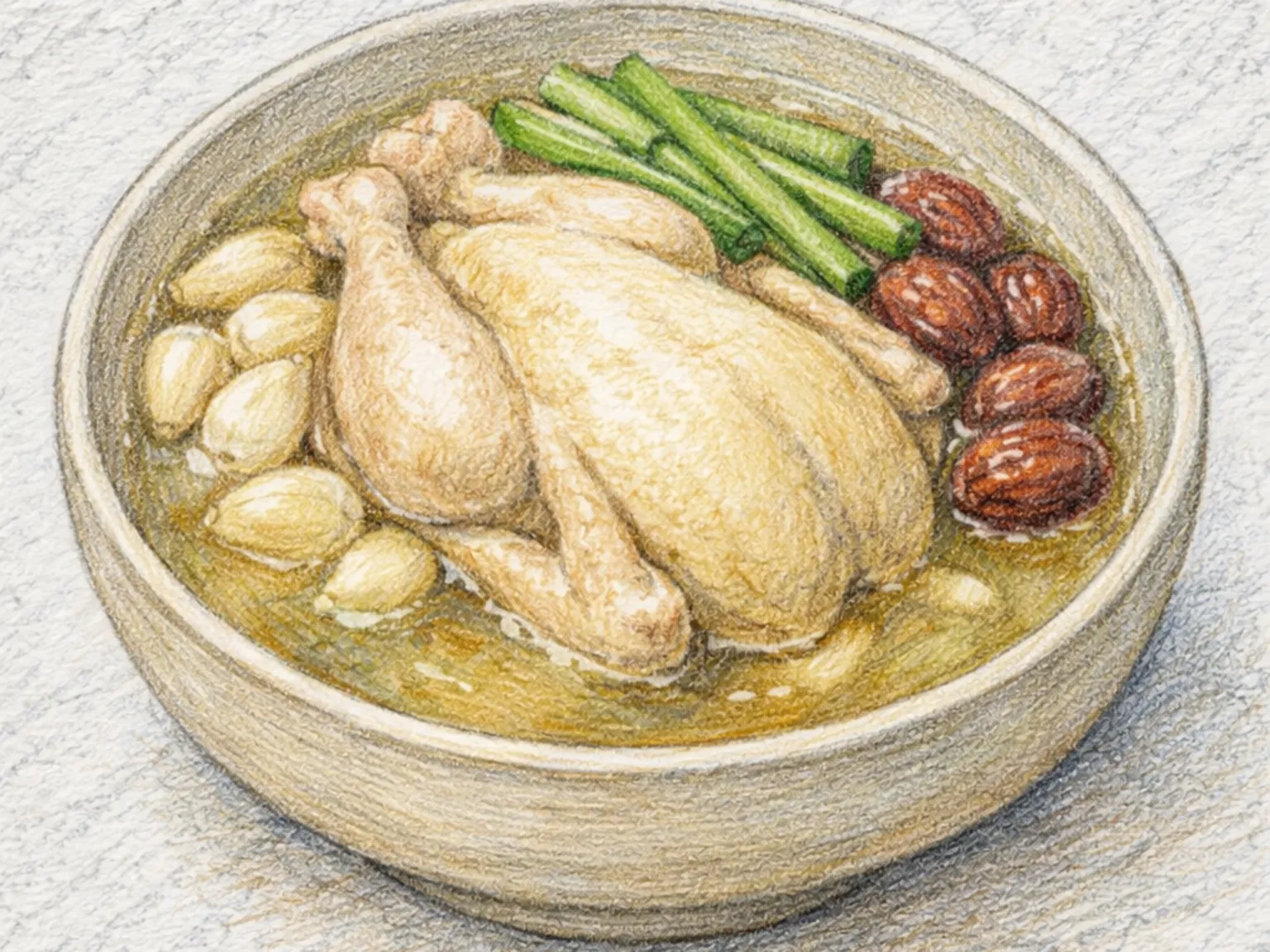
Korean Boiled Chicken Soup
Dak-baeksuk is a Korean whole-chicken soup simmered for over fifty minutes with whole garlic cloves, jujubes, green onion, and ginger in a large pot of water. Skimming fat and foam throughout the cooking process is essential to achieving the signature clear broth - neglecting this step leaves the soup greasy and cloudy when reheated. The jujubes lend a subtle sweetness and the garlic, softened to a paste after the long simmer, dissolves into the liquid to create a mellow depth that needs nothing more than salt and pepper. The chicken is shredded against the grain for the softest possible texture, then returned to the hot broth so every bite of meat is saturated with the clean, aromatic stock.
Adjust Servings
Instructions
- 1
Clean the whole chicken thoroughly and pat dry.
- 2
Boil water with ginger, half the green onion, garlic, and jujubes.
- 3
Add chicken and simmer over medium heat for 50 minutes.
- 4
Skim foam and excess fat during cooking for a cleaner broth.
- 5
Remove and shred chicken, then simmer broth with remaining green onion for 5 minutes.
- 6
Season with salt and pepper, return chicken to the soup, and serve hot.
As an Amazon Associate, we may earn from qualifying purchases.
Tips
Nutrition (per serving)
More Recipes

Korean Astragalus Chicken Soup
Hwanggi-dak-tang is a Korean herbal chicken soup built around astragalus root, a staple of traditional East Asian medicine valued for its restorative properties. A whole chicken simmers for well over an hour with the dried root, jujubes, and garlic, producing a clear yet full-bodied broth with a faintly sweet, earthy undertone from the herb. The extended cooking dissolves collagen from the skin and joints, giving the liquid a velvety weight that coats the palate. The chicken meat, by the time the soup is ready, pulls apart effortlessly. Jujubes soften into the broth and add a subtle fruity sweetness that bridges the medicinal and culinary sides of the dish. Seasoning is limited to salt, keeping the focus on the herb-infused stock. In Korea, this soup appears most often during seasonal transitions or after illness, served steaming in a stone pot.

Korean Chicken Radish Soup
Dak mu-guk is a Korean chicken and radish soup where blanched chicken thigh meat and thinly sliced radish simmer together into a clear, deeply flavored broth. Blanching the chicken for one minute before the main simmer removes impurities and is the key to keeping the broth transparent. Onion and ginger build the aromatic foundation over twenty minutes of gentle cooking, and the radish - cut into thin, flat squares rather than thick chunks - turns translucent quickly, releasing its natural sweetness into the liquid in just ten minutes. Soup soy sauce and diagonally sliced green onion finish the bowl, balancing the chicken's richness with a clean, vegetal note.

Korean Ginger Chicken Gomtang
This ginger chicken gomtang is a clear, restorative soup made by simmering a whole chicken with fresh ginger, onion, garlic, and green onion until the broth turns golden and deeply flavorful. The ginger cuts through the richness of the chicken fat, lending a sharp, warming note that distinguishes this from heavier beef-bone soups. After straining, the broth is remarkably clean-tasting despite its depth, and the chicken is pulled into tender shreds and returned to the bowl. Seasoning is kept to soup soy sauce, salt, and a generous amount of black pepper, which amplifies the ginger's heat. This is the kind of soup that Korean households turn to when someone is feeling under the weather or recovering - light enough to sip without strain, yet nourishing enough to rebuild strength. It also works as an elegant first course when served in small portions before a larger meal.

Korean Chicken and Neungi Mushroom Soup
Neungi-dak-gomtang is a Korean chicken soup elevated by neungi mushrooms, a wild variety prized for their intense, almost truffle-like fragrance. The chicken is blanched first to remove impurities, then simmered for fifty minutes with onion, garlic, and ginger to build a clear, rich stock. After straining, the torn chicken meat is returned to the pot along with the neungi mushrooms, which steep in the hot broth for fifteen minutes - long enough to release their deep, earthy perfume without losing its complexity. The mushroom's aroma permeates the entire liquid, transforming an already satisfying chicken soup into something far more layered and aromatic. Seasoning is kept to soup soy sauce and salt, ensuring nothing competes with the interplay between poultry richness and mushroom fragrance. In Korea, this soup is considered both nourishing and luxurious, often served during autumn when neungi mushrooms are freshly foraged.

Korean Andong Guksi (Clear Beef Broth Celebration Noodles)
Andong guksi is a noodle tradition from the city of Andong in North Gyeongsang Province, where it has been served at weddings, ancestral rites, and important family events for centuries - in Korean culture, long noodles symbolize longevity. The broth is made by simmering beef brisket and bones for hours until the liquid is clear yet deeply flavored, with a clean gelatin richness that coats the lips. Wheat noodles - historically hand-pulled but now usually dried - are boiled separately, rinsed, and placed in the strained broth. The toppings are deliberately understated: thin strips of egg jidan, julienned zucchini, and perhaps a few slices of the boiled brisket. Seasoning with soup soy sauce and a touch of garlic keeps the broth transparent and lets the beef flavor speak. Unlike the bold, chili-heavy soups of Andong's other famous dish (jjimdak), guksi is an exercise in restraint and clarity.

Korean Grilled Chicken Skewers
Dak-kkochi-gui is a Korean grilled chicken skewer inspired by street-stall cooking, made by threading bite-sized pieces of chicken breast or thigh onto bamboo sticks and brushing them with a sauce of gochujang, soy sauce, honey, and minced garlic. Thigh meat works best because its higher fat content resists drying out over direct heat, and applying the glaze in two or three separate coats builds up a thick, sticky, caramelized layer. Cutting the chicken into uniform cubes ensures every piece finishes cooking at the same time, and alternating with slices of green onion or bell pepper between the meat adds moisture and color. The interplay of gochujang's fermented heat and honey's sweetness against charcoal smoke captures the unmistakable flavor of Korean street food.