Korean Spicy Braised Chicken
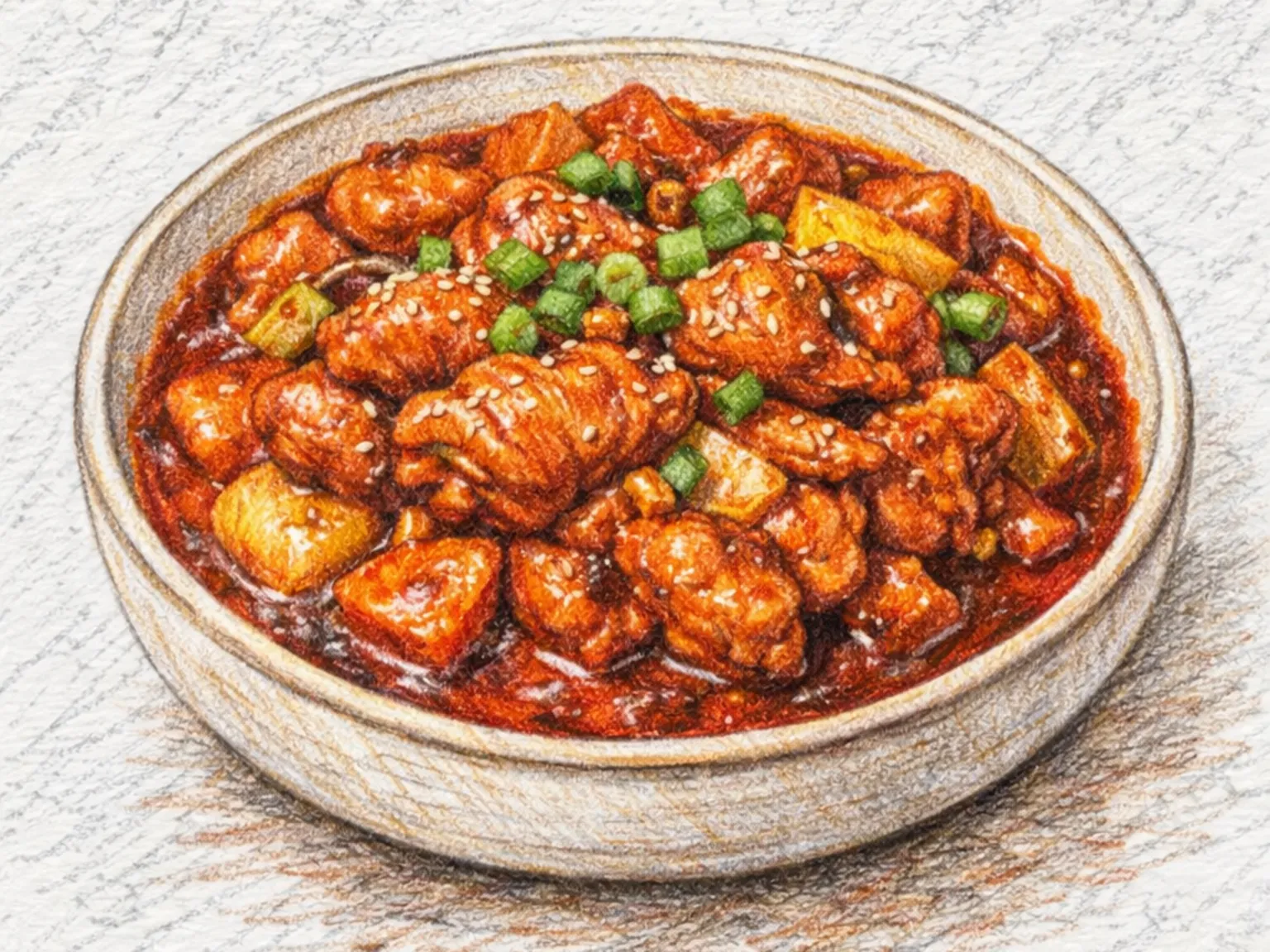
Dak-bokkeum-tang starts by stir-frying chicken pieces in a gochujang and soy sauce mixture, then adds water and simmers until the liquid reduces to a thick, clinging sauce. Potato chunks absorb the braising liquid and become flavorful throughout, while onion dissolves into the sauce adding sweetness. Gochujang provides the heat backbone and soy sauce supplies the umami depth, creating a layered flavor profile. The longer it simmers, the deeper the seasoning penetrates into the meat and bones. Spooning the sauce over rice turns it into a quick seasoned rice bowl.
Adjust Servings
Instructions
- 1
Clean the chicken; cut potato and onion into large chunks.
- 2
Mix gochujang, soy sauce, sugar, and garlic for the sauce.
- 3
Combine chicken, water, and sauce in a pot; bring to a boil.
- 4
Add potato and onion; braise until the sauce thickens.
As an Amazon Associate, we may earn from qualifying purchases.
Tips
Nutrition (per serving)
More Recipes

Korean Spicy Braised Chicken
Dakdoritang is a spicy braised chicken dish where bone-in pieces are simmered with potato, carrot, and onion in a thick sauce of gochujang, gochugaru, soy sauce, and sugar. The chicken releases its juices into the sauce as it cooks, creating a glossy, clinging glaze that coats every piece of vegetable. The potatoes break down just enough to thicken the braising liquid, while the sugar tempers the chili heat into a warm, lingering spice.

Korean Squid Stew
Ojingeo jjigae simmers a whole scored squid in an anchovy broth enriched with gochujang, yielding a sweet-spicy stew. Tofu and zucchini cook alongside, soaking up the bold red pepper paste flavor. Scoring the squid allows the seasoning to penetrate, so each bite releases the savory broth. The natural sweetness of gochujang pairs well with the mild squid, making this a straightforward but flavorful side dish stew.

Korean Spicy Chicken Soup
Dakgaejang is a spicy Korean chicken soup modeled on the classic beef yukgaejang, using a whole chicken boiled and shredded as the protein base. The shredded meat, rehydrated bracken fern, and bean sprouts are tossed in a seasoning of gochugaru, soy sauce, and sesame oil, then simmered in the reserved chicken broth. As the chili flakes dissolve into the oil, they create a broth that is simultaneously fiery and layered rather than one-dimensionally hot. Bracken adds a chewy, almost meaty resistance alongside the snappy bean sprouts, and making chili oil separately before stirring it in deepens the heat with a roasted, smoky undertone.

Korean Spicy Webfoot Octopus Stir-Fry
Jjukkumi-bokkeum is a Korean seafood stir-fry of small webfoot octopus tossed with vegetables in a fiery gochujang and gochugaru sauce over high heat. The octopus must be cooked quickly to stay chewy; overcooking turns it tough, so heat control is key. The bold, spicy kick from the chili paste is the defining character of this dish, tempered by the natural sweetness of onions and scallions. Spring jjukkumi with roe inside adds a popping texture when bitten, making the seasonal version especially prized.

Korean Stir-Fried Chicken
Dak-bokkeum is a Korean stir-fried chicken dish in a soy sauce-based seasoning. A mix of soy sauce, sugar, and minced garlic coats the chicken evenly, producing a salty, umami-forward flavor. Onion and carrot cook together with the chicken, and their released moisture blends with the seasoning to form a natural sauce. A final drizzle of sesame oil wraps everything in a nutty aroma. Using breast meat yields a leaner result, while thigh meat produces a more moist, succulent texture.

Korean Soy Braised Chicken
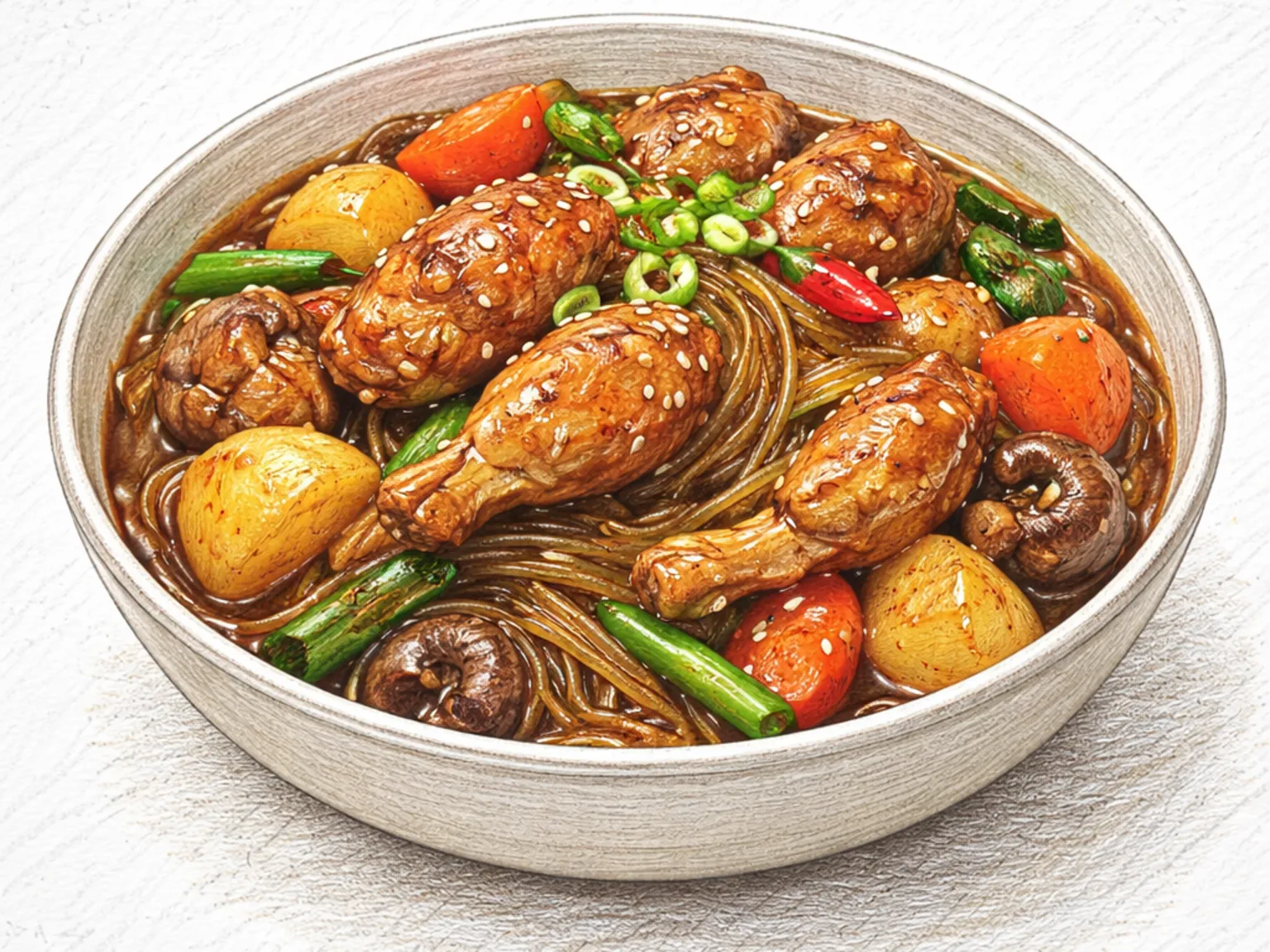
Dak-jjim is bone-in chicken braised with potato, carrot, and onion in a sauce of soy sauce, sugar, and garlic. Juices released from the bones meld with the soy seasoning to form a glossy, concentrated gravy, and the vegetables absorb this liquid so they are seasoned all the way through. Sugar tempers the saltiness of the soy into a clear sweet-salty balance that coats every piece. Served in a hot stone pot at the center of the table, it is one of the most familiar home-cooked dishes in Korean cuisine.