Korean Soy-Glazed Chicken Stir-Fry

Korean Soy-Glazed Chicken Stir-Fry

Quick answer

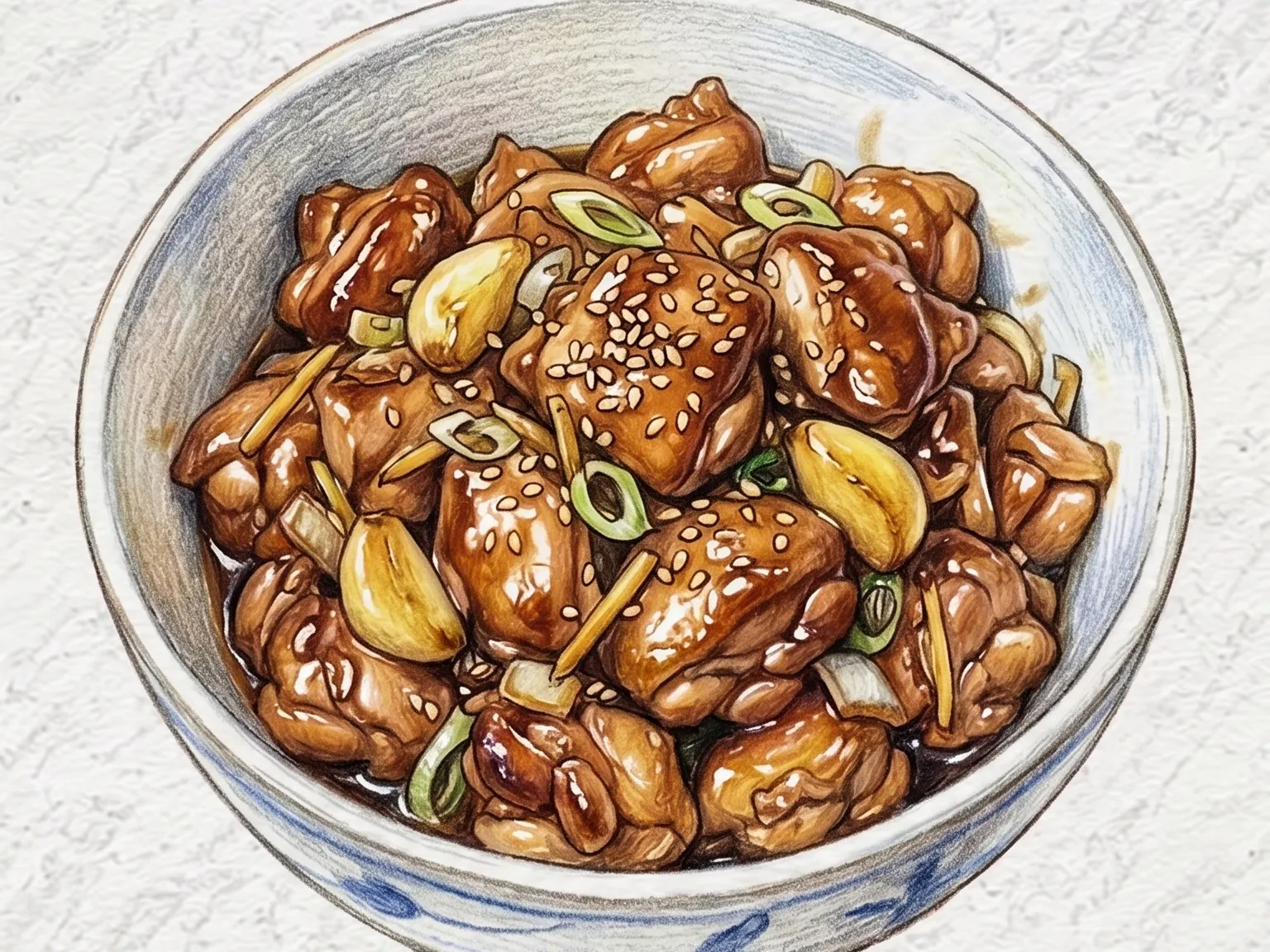
Chicken thigh meat stir-fries in soy sauce, sugar, and oligosaccharide syrup for a sweet-salty glaze.

What makes this special

  • Chicken thigh meat stir-fried in a sweet and salty glaze of soy sauce and oligosaccharide.
  • Oligosaccharide caramelizes into a sticky lacquer coating over the chicken
  • Higher garlic-ginger ratio gives sharper aromatics than teriyaki-style
Total time
30 min
Level
Easy
Servings
2 servings
Ingredients
8
Calories
310 kcal
Protein
25 g

Key ingredients

chicken thighsoy saucesugaroligosaccharide syrupgarlic

Core cooking flow

  1. 1 Cut 300 g chicken thigh into 3 to 4 cm bite-size pieces, then pat every surface dry with kitchen towels.
  2. 2 Mix 3 teaspoons soy sauce, 1 teaspoon sugar, and 1 teaspoon oligosaccharide...
  3. 3 Heat the pan well over high heat, add a thin layer of oil, then add the sliced garlic and ginger.

Chicken thigh meat stir-fries in soy sauce, sugar, and oligosaccharide syrup for a sweet-salty glaze. Garlic and ginger go into the oil first to infuse the fat with fragrance before the chicken is added, letting the aromatics penetrate deep into the meat as it cooks. The oligosaccharide heats into a tacky gloss that coats each piece evenly as the liquid reduces. Sesame oil and whole sesame seeds scattered over the top at the end bring a nutty, aromatic finish. The flavor profile runs close to Japanese teriyaki, but the heavier use of garlic and ginger pushes it toward the more direct, punchy spice character typical of Korean cooking. Boneless thighs cut into bite-sized pieces cook more evenly than larger pieces, and keeping the heat high through most of the cook ensures the surface caramelizes without turning rubbery.

Prep 15min Cook 15min 2 servings

Instructions

Read the steps as a cooking flow: prep, heat, seasoning, doneness control, and finish.

6 steps
  1. 1
    Control

    Cut 300 g chicken thigh into 3 to 4 cm bite-size pieces, then pat every surface dry with kitchen towels.

    Dry chicken browns faster over high heat and reduces splattering in the pan.

  2. 2
    Season

    Mix 3 teaspoons soy sauce, 1 teaspoon sugar, and 1 teaspoon oligosaccharide syrup until the sugar starts dissolving.

    Slice 3 garlic cloves and 5 g ginger thinly so their aroma releases quickly in hot oil.

  3. 3
    Control

    Heat the pan well over high heat, add a thin layer of oil, then add the sliced garlic and ginger.

    Stir only 20 to 30 seconds, just until fragrant, so the aromatics do not burn.

  4. 4
    Heat

    Add the chicken in a single layer and stir-fry for 3 to 4 minutes.

    Leave it mostly undisturbed for the first minute so one side browns before tossing the pieces through the aromatic oil.

  5. 5
    Control

    Pour in the prepared sauce and reduce the heat to medium, then simmer for 2 to 3 minutes.

    The sauce should move from large bubbles to smaller sticky bubbles and coat the chicken with a glossy surface.

  6. 6
    Finish

    Turn off the heat once the chicken is cooked through and only a little sauce remains on the pan bottom.

    Add 1 teaspoon sesame oil and 1 teaspoon sesame seeds, toss lightly, and serve warm.

After the steps

Pick a recipe that fits this dish.

Continue with shared ingredients, meal pairings, or a similar method.

Recipes That Go Well With This

More Stir-fry →

Based on shared ingredients and meal pairing

Korean Soy-Glazed Chicken Stir-Fry
Shared ingredient: ginger Stir-fry

Korean Soy-Glazed Chicken Stir-Fry

This soy-glazed chicken stir-fry marinates thinly sliced chicken breast in soy sauce, garlic, and ginger before a quick pan-fry over high heat. Slicing the breast thin ensures each piece absorbs the marinade rapidly and cooks through without drying out, avoiding the rubbery texture that plagues overcooked white meat. The ginger cuts through any poultry aroma while the soy sauce provides a steady umami backbone throughout. A drizzle of sesame oil at the end ties together the flavors with a warm, nutty finish. A single cheongyang chili added during cooking gives the dish a clean heat, and it holds up well for meal prep or packed lunches. Practical for diet-conscious cooking or post-workout protein without sacrificing flavor.

Korean Blue Crab Soy Stir-Fry
Shared ingredient: ginger Stir-fry

Korean Blue Crab Soy Stir-Fry

Kkotge ganjang bokkeum is a Korean blue crab stir-fry where halved crabs are lightly dusted with flour, pan-seared until the shells turn deep red, then braised briefly under a lid in a sauce of soy sauce, sugar, garlic, ginger, and gochugaru. The flour coating seals in moisture and helps the sweet-salty sauce cling to the shell surface, leaving a sticky, aromatic glaze that is meant to be licked off the fingers. Ginger neutralizes the briny smell that crabs can carry, while scallion and sesame oil are stirred in at the end to build the final aromatic layer. Using live crabs and cooking them immediately after cleaning ensures the meat stays firm and sweet; frozen crabs lose moisture during thawing and produce a noticeably softer result. Scoring the claws before cooking allows the sauce to penetrate the thicker sections of shell.

Korean Wild Chive Soy Butter Rice
Serve together Rice

Korean Wild Chive Soy Butter Rice

Dallae ganjang butter bap is a Korean one-bowl meal that comes together in under ten minutes by folding melted butter, soy sauce, and wild chives into warm rice. The butter coats each grain with richness, soy sauce provides a salty backbone, and the wild chives, called dallae, deliver a sharp, garlicky bite that lifts the bowl out of plainness. A raw egg yolk placed on top breaks into a golden sauce when stirred in, binding the ingredients into a velvety mixture. The chives are best in spring when their pungency is at its peak, and they need only twenty seconds in the buttered pan to release their aroma before the heat drives it off. With just a handful of pantry staples, this dish fills the gap on evenings when the refrigerator offers little else. Green onion or garlic chives can substitute for dallae, but the particular sharpness of wild chives is unique and worth seeking out when spring is in season.

Korean Soy-Glazed Shrimp Stir-Fry
Similar recipe Stir-fry

Korean Soy-Glazed Shrimp Stir-Fry

Ganjang saeu bokkeum coats plump shrimp in a sweet-savory soy glaze built on a base of melted butter and garlic. A single cheongyang chili adds a subtle kick that lifts the buttery richness without overpowering it. The key timing rule is to add the sauce the moment the shrimp turn pink: any longer and they become rubbery, but the glaze needs just enough heat to caramelize lightly and coat. Stir-frying the garlic in the butter before the shrimp go in lays a nutty base across the entire sauce. A final splash of soy sauce over high heat at the end creates the lacquered sheen that defines the finished dish. With only eight minutes of cooking time total, this works equally well as a quick banchan alongside rice or as an appetizer with drinks.

Serve with this

Korean Kimchi Mandu Jjigae (Kimchi Dumpling Stew)
Stews Easy

Korean Kimchi Mandu Jjigae (Kimchi Dumpling Stew)

Kimchi mandu jjigae drops whole frozen kimchi dumplings straight into a simmering pot of aged kimchi, tofu, and anchovy stock. The dumpling wrappers absorb the broth as they cook, swelling plump and moist, while the kimchi filling inside echoes the stew's tangy base and doubles the fermented depth. Gochugaru and soup soy sauce add a clean chili heat, and firm tofu cubes absorb the spiced broth for a softer textural contrast. Because the dumplings themselves carry seasoning, it is better to start with less sauce and adjust after tasting the broth. This is a filling, no-fuss meal that needs nothing more than a bowl of steamed rice alongside it.

🏠 Everyday ⚡ Quick
Prep 8min Cook 15min 2 servings
Korean Soft Tofu Soup (Mild Clear Broth with Silken Tofu)
Soups Easy

Korean Soft Tofu Soup (Mild Clear Broth with Silken Tofu)

Sundubu-guk is the gentler sibling of the more widely known sundubu-jjigae, trading the latter's fiery red broth for a clear, mild soup that puts silken tofu front and center. The base is a simple anchovy and kelp stock, seasoned with soup soy sauce and nothing more assertive, so the broth stays transparent and clean on the palate. Blocks of unpressed soft tofu are slipped into the simmering liquid and heated just until they are warmed through - overcooked sundubu loses the trembling, custard-like texture that defines the dish. Each spoonful collapses gently on the tongue, releasing a faint, sweet soybean flavor that pairs effortlessly with the umami-rich stock. A small addition of salted shrimp paste can be stirred in at the table to introduce a subtle marine depth without disrupting the soup's calm character. This is the soup Koreans turn to when appetite is low, digestion needs rest, or the body simply craves something warm and uncomplicated. It is equally suitable for young children and elderly diners, and its quiet simplicity is precisely its strength.

🏠 Everyday ⚡ Quick
Prep 5min Cook 15min 4 servings
Korean Seasoned Carrot Namul
Side dishes Easy

Korean Seasoned Carrot Namul

Carrot namul is one of the five-color banchan Koreans prepare for ancestral rites, where the orange of carrot represents fire in the traditional symbolic scheme. Julienned thin, the carrots are salted briefly to pull out excess moisture, then stir-fried with minced garlic over medium heat for two to three minutes - just enough to cook off the raw edge while preserving an audible crunch in every strand. No soy sauce or chili powder enters the pan; seasoning is kept to salt alone so that the carrot's natural sweetness remains the central flavor rather than being buried under stronger condiments. A final drizzle of sesame oil and a scatter of sesame seeds round out this clean, single-ingredient side dish that earns its place on both ceremonial tables and everyday meals.

🏠 Everyday 🍱 Lunchbox
Prep 8min Cook 6min 2 servings

Similar recipes

Korean Soy-Glazed Mushroom Stir-Fry
Stir-fry Easy

Korean Soy-Glazed Mushroom Stir-Fry

Oyster mushrooms and shiitake are sauteed in melted butter, then finished with a measured pour of soy sauce that reduces into a glossy, caramelized glaze across the surface of each piece. Sliced garlic goes into the butter first and cooks until fragrant, building an aromatic base before the mushrooms are added. Cooking over strong heat is the non-negotiable step: moderate temperatures cause the mushrooms to release moisture and stew in their own liquid rather than sear, losing the slightly crisp exterior that defines the dish. Once the mushrooms are colored and their edges firm up, soy sauce is added and tossed rapidly so it coats every surface and reduces rather than pools. The butter infuses the mushrooms during cooking with a rich, almost nutty undertone, while the soy sauce caramelizes under heat to produce a salty-sweet lacquer. A small knob of additional butter stirred in off the heat gives the sauce a final sheen. With only five ingredients, the dish depends entirely on the interplay between butter depth and soy intensity to deliver flavor well beyond its simplicity. Spooned over steamed rice, it turns a plain bowl into a complete meal.

🏠 Everyday 🌙 Late Night
Prep 10min Cook 10min 2 servings
Korean Busan-Style Soy Fish Cake Stir-Fry
Side dishes Easy

Korean Busan-Style Soy Fish Cake Stir-Fry

Busan, Korea's largest port city, is closely identified with eomuk: thick, pressed fish cake sold at stalls around Gukje-sijang market. This Busan-style stir-fry slices the fish cake into strips and cooks it with onion and cheongyang chili in soy sauce, cooking wine, sugar, and minced garlic over high heat. Onion goes into the pan first to caramelize and release its sugars, creating a sweet base before the fish cake joins and absorbs the glaze into its porous interior. Cheongyang chili adds a sharp, lingering heat that sets this version apart from the milder soy-braised fish cake common in Seoul. The dish holds its flavor well after cooling, making it a reliable lunchbox side that tastes just as good a few hours later.

🏠 Everyday 🍱 Lunchbox
Prep 10min Cook 12min 4 servings
Korean Soy-Glazed Chicken Wings
Grilled Easy

Korean Soy-Glazed Chicken Wings

Daknalgae-ganjang-gui is a Korean soy-glazed chicken wing dish coated in a sauce of soy sauce, oligosaccharide syrup, minced garlic, ginger powder, and a splash of vinegar, then baked in an oven or air fryer. The vinegar softens the saltiness of the soy while cutting through the richness of the chicken skin. The oligosaccharide syrup thickens under heat into a glossy, clinging glaze that coats each wing evenly. Scoring the joints before cooking allows the marinade to seep into the inner crevices and promotes even heat distribution so the meat near the bone cooks through completely. A finish of sesame oil and toasted sesame seeds rounds out the savory soy glaze with a warm, nutty aroma. When using an air fryer, baking at 180 degrees Celsius for twenty minutes and then flipping for five more produces a satisfyingly crisp skin without drying out the meat.

🍺 Bar Snacks
Prep 20min Cook 30min 4 servings

Tips

Chicken thigh stays juicier than breast in stir-fries.

Nutrition (per serving)

Calories
310
kcal
Protein
25
g
Carbs
12
g
Fat
18
g