Korean Dak Ganjang Jorim (Soy Braised Chicken)
Quick answer
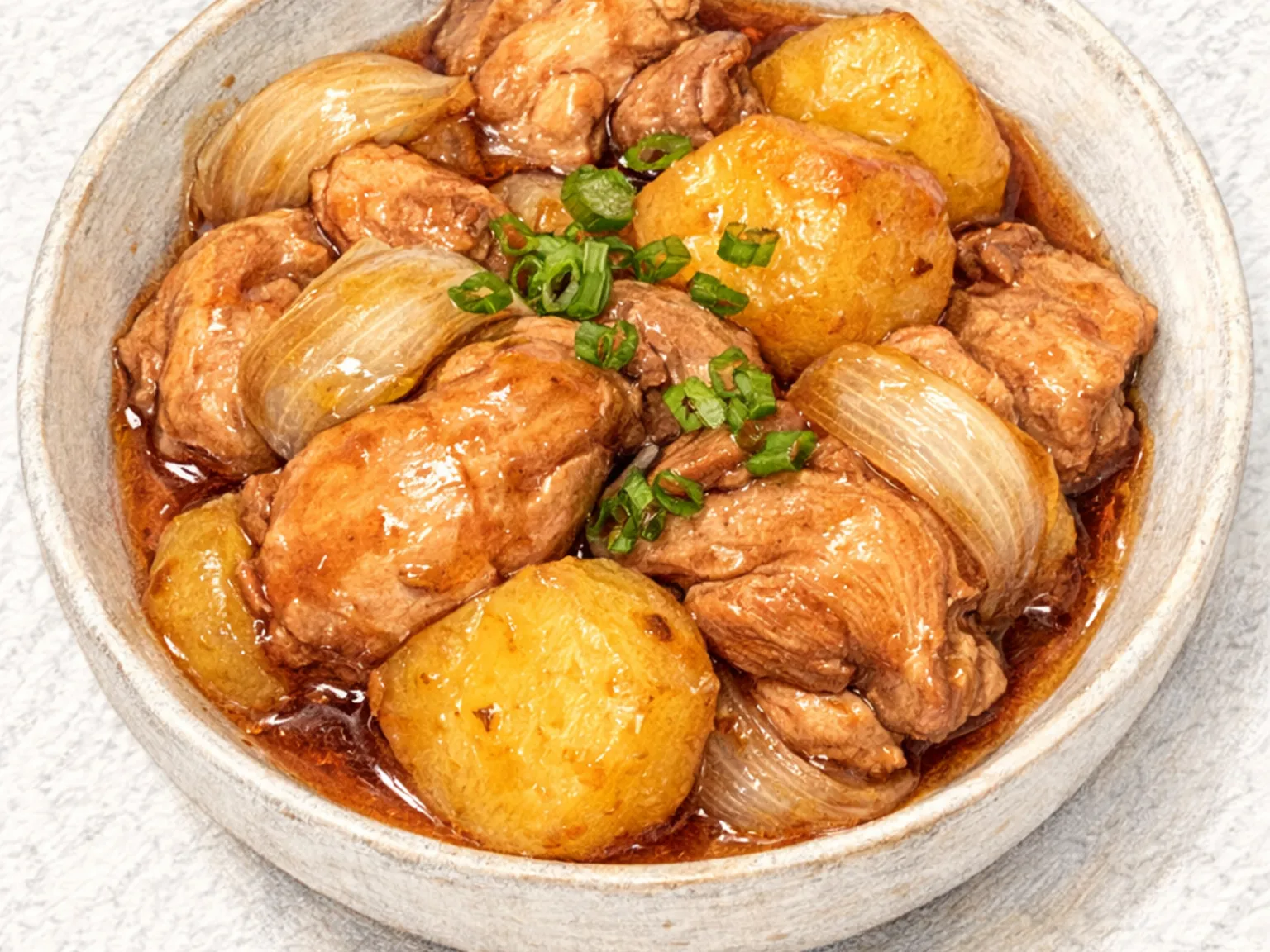
Dak ganjang-jorim is chicken thigh braised with potato in a soy sauce glaze enriched with oligosaccharide syrup, garlic, and ginger juice.
What makes this special
- Dak ganjang jorim needs thorough drying before searing to build a deep Maillard aroma.
- Thorough drying before searing builds Maillard aroma that braising alone cannot
- Lid-off final 5 minutes reduces sauce to a clingy glaze
Key ingredients
Core cooking flow
- 1 Cut 700 g boneless chicken thigh into bite-size pieces and pat thoroughly dry with paper towels.
- 2 Cut 220 g potato into large cubes and slice 160 g onion into thick strips.
- 3 Combine 5 tbsp soy sauce, 450 ml water, 2 tbsp oligosaccharide syrup, 1 tbsp...
Dak ganjang-jorim is chicken thigh braised with potato in a soy sauce glaze enriched with oligosaccharide syrup, garlic, and ginger juice. As the thighs simmer, the soy base works its way between the muscle fibers, leaving the meat deeply seasoned with a glossy brown finish. Potato chunks break down slightly at the edges and soak up the braising liquid, turning starchy and satisfying. A single cheongyang chili added to the pot gives a mild, lingering kick that keeps the sweet-salty profile from becoming one-note. Patting the chicken thighs thoroughly dry before searing them in the pan builds a Maillard-browned surface that adds another layer of savory depth, and removing the lid for the final five minutes lets the sauce reduce into a thick, clingy glaze.
Instructions
Read the steps as a cooking flow: prep, heat, seasoning, doneness control, and finish.
- 1Season
Cut 700 g boneless chicken thigh into bite-size pieces and pat thoroughly dry with paper towels.
Removing moisture helps the sauce coat evenly later.
- 2Prep
Cut 220 g potato into large cubes and slice 160 g onion into thick strips.
- 3Season
Combine 5 tbsp soy sauce, 450 ml water, 2 tbsp oligosaccharide syrup, 1 tbsp garlic, and 1/2 tsp ginger juice in a bowl to make the braising sauce.
- 4Control
Place the chicken and braising sauce in a pot and simmer over medium heat for 15 minutes.
Skim off any foam that rises to keep the broth clear.
- 5Control
Add potato and onion and braise over medium-low heat for 15 more minutes.
The potatoes absorb the broth and turn tender as the seasoning soaks in.
- 6Control
Add 1 sliced cheongyang chili diagonally and braise 5 more minutes until the sauce reduces to a thin glossy coat.
After the steps
Pick a recipe that fits this dish.
Continue with shared ingredients, meal pairings, or a similar method.
Recipes That Go Well With This
More Steamed →Based on shared ingredients and meal pairing
Korean Soy Braised Chicken Chunks
Dakganjang-jjim is a Korean soy-braised chicken dish where bone-in thigh pieces are combined with potatoes, carrots, and onion in a seasoned soy sauce base and simmered over low heat until the liquid reduces and the flavors concentrate. As the braising liquid cooks down, the salinity and umami of the soy sauce penetrate through the chicken skin and into the meat, seasoning it throughout rather than just coating the surface. The thigh cut is intentional - the fat and collagen in bone-in thighs keep the meat moist through the extended cooking time, preventing it from drying out the way leaner cuts would. The vegetables absorb the rendered chicken fat and soy-based cooking liquid as they soften, taking on a deep savory-sweet flavor that requires no additional seasoning. Because the dish contains no chili paste or gochugaru, it is mild in heat and broadly accessible, working equally well as a weeknight dinner main, a side dish over rice, or packed into a lunch box where the flavors continue to develop. The ratio of soy sauce to sugar in the braising liquid can be adjusted to suit individual taste - leaning toward saltier or sweeter without fundamentally changing the character of the dish.
Korean Braised Chicken with Radish
This braise combines bone-in chicken pieces with Korean radish and potato in a soy-and-gochugaru sauce. The radish absorbs both the chicken stock and the spiced seasoning, turning amber on the outside while going translucent within. Potato edges break down during the long simmer, thickening the sauce into a sticky glaze. Gochugaru and black pepper build a layered heat that soy sauce and sugar round off, so the dish is assertively spicy without being harsh. Reducing the liquid until it barely coats the bottom concentrates all the flavors onto the surface of each piece.
Korean Mushroom Japchae (Shiitake Glass Noodle Stir-Fry)
Beoseot japchae replaces beef with shiitake mushrooms as the primary source of savory depth, making it a staple of Buddhist temple cuisine and vegetarian tables alike. Sweet potato noodles are soaked and boiled, then rinsed in cold water immediately to lock in a firm, springy texture. Shiitake, spinach, carrot, and onion are each cooked separately - their moisture levels and heat tolerances differ enough that combining them prematurely flattens every component. Soy sauce, sugar, minced garlic, and sesame oil bring the noodles and vegetables together, and the finished dish rests for ten minutes so the seasoning penetrates the noodles evenly. The result is a japchae where the mushroom carries genuine umami weight without any meat.
Korean Soy Braised Chicken Wings
Dak-bong jorim is a Korean braised chicken wingette dish where pieces are slowly reduced in a sweet soy glaze over medium-low heat until the sauce thickens into a glossy coating around each piece. As the liquid reduces, the seasoning concentrates and adheres to the surface, leaving the skin sticky and lacquered from absorbing the sauce while the meat inside turns soft enough to pull cleanly from the bone. Adding ginger and green onion from the start neutralizes the poultry's gaminess and keeps the braising liquid clean. Starting with the lid off at higher heat to bring the sauce to a boil, then reducing the heat and covering the pot, prevents the meat from drying out during the long braise. A large batch keeps well in the refrigerator and reheats without any loss of seasoning, making it a practical banchan to prepare in advance and portion out over several days or pack into a lunch box.
Serve with this
Korean Sashimi Rice Bowl (Flounder Sashimi with Cho-Gochujang)
Sliced flounder sashimi sits atop julienned cucumber, lettuce, and perilla leaves over slightly cooled rice, dressed with cho-gochujang just before eating. The rice must not be piping hot because residual heat softens the sashimi and dulls its clean texture, so resting it until just warm is essential. The vinegar tang and chili warmth in cho-gochujang lift the mild fish flavor, while sesame oil and seeds leave a nutty finish on the palate. Keeping the vegetables well chilled before assembly creates a temperature contrast against the warm rice that sharpens every bite. Adding the cho-gochujang right before eating rather than in advance prevents the vegetables from weeping moisture and going limp.
Korean Lettuce Root Kimchi
Godeulppaegi kimchi is a seasonal Korean kimchi made from the bitter wild herb godeulppaegi (Korean lettuce root), which is soaked in salted water for about a week to extract most of its sharp bitterness before being dressed in gochugaru, anchovy fish sauce, and glutinous rice paste for fermentation. The extended soak rounds off the bitter edge so that only a pleasant, lingering bitterness remains after fermentation, creating a complex interplay with the lactic acidity. The roots have a chewy, fibrous bite while the leaves turn soft, giving each stalk a dual texture in a single bite. This is a regional autumn kimchi from the Jeolla and parts of Gyeongsang provinces, traditionally prepared in fall to last through winter. The preparation is labor-intensive, requiring patient soaking and careful seasoning, but the resulting depth of flavor is what has kept this variety treasured across generations of Korean home cooking.
Korean Loach Soup (Blended Loach and Dried Radish Greens Tonic)
Chueo-tang is a southern Korean tonic soup made by blending blanched loach into a smooth puree, straining out bones and skin, then simmering the liquid with doenjang and gochujang for depth. The straining step is what separates a clean, richly flavored broth from a gritty one; every bit of bone and skin must be removed before the long simmer begins. Dried radish greens, siraegi, are added midway and cooked for twenty-five minutes, contributing a fibrous chew that contrasts the velvety broth. Perilla seed powder stirred in near the end thickens the soup to a creamy, pale consistency and layers in a pronounced nutty fragrance that carries through each spoonful. A final pinch of ground sansho pepper leaves a tingling numbness on the tongue that clears any lingering earthiness from the freshwater fish. Loach is high in protein and calcium, and the soup has long been eaten as a summer restorative; a broth that is thick and deeply concentrated is the standard by which a well-made chueo-tang is judged.
Similar recipes
Korean Samgyeopsal Ganjang Jorim (Soy-Braised Pork Belly)
Samgyeopsal ganjang jorim is a Korean soy-braised pork belly dish where blanched pork belly is simmered with radish and onion in a soy sauce base for over forty-five minutes. Blanching first removes impurities and excess fat, leaving a clean-tasting braise. The long simmer allows soy sauce to penetrate the layered pork, building a deep flavor that is savory without being greasy. Radish chunks absorb the pork-enriched liquid and develop a richness of their own, while oligosaccharide syrup lends a natural sheen. Cooling and reheating concentrates the seasoning further, making this a strong choice for gatherings or holiday meals.
Korean Braised Chicken with Burdock
Ueong dak jorim is a Korean braised dish that simmers boneless chicken thigh and burdock root together in soy sauce, sugar, and ginger juice until the liquid reduces and the glaze thickens around each piece. Soaking the burdock in vinegar water draws out the astringent bitterness that raw burdock carries, and marinating the chicken in cooking wine and ginger beforehand removes any lingering gamey odor. Once both are added to the pot, low heat does the work over at least eighteen minutes, bringing the braising liquid down by half and building a glossy, clinging sauce. A final drizzle of sesame oil at the end ties the aroma together and rounds out the flavor. The finished dish sets the crisp yet slightly chewy texture of burdock against the moist tenderness of chicken thigh, with a sweet-savory profile that makes it a reliable companion to steamed rice.
Korean Yeongeun Ganjang Jorim (Soy-Braised Lotus Root)
Yeongeun ganjang jorim is a Korean soy-braised lotus root side dish simmered in soy sauce, oligosaccharide syrup, vinegar, and cooking wine. The starchy surface of the lotus root develops a glossy glaze from the reduced sauce while the interior stays distinctly crunchy. Vinegar brightens the soy's salinity, and the syrup contributes a gentle sweetness and visible sheen. This banchan improves overnight in the refrigerator as the seasoning continues to penetrate, making it one of the most practical make-ahead side dishes in Korean home cooking.