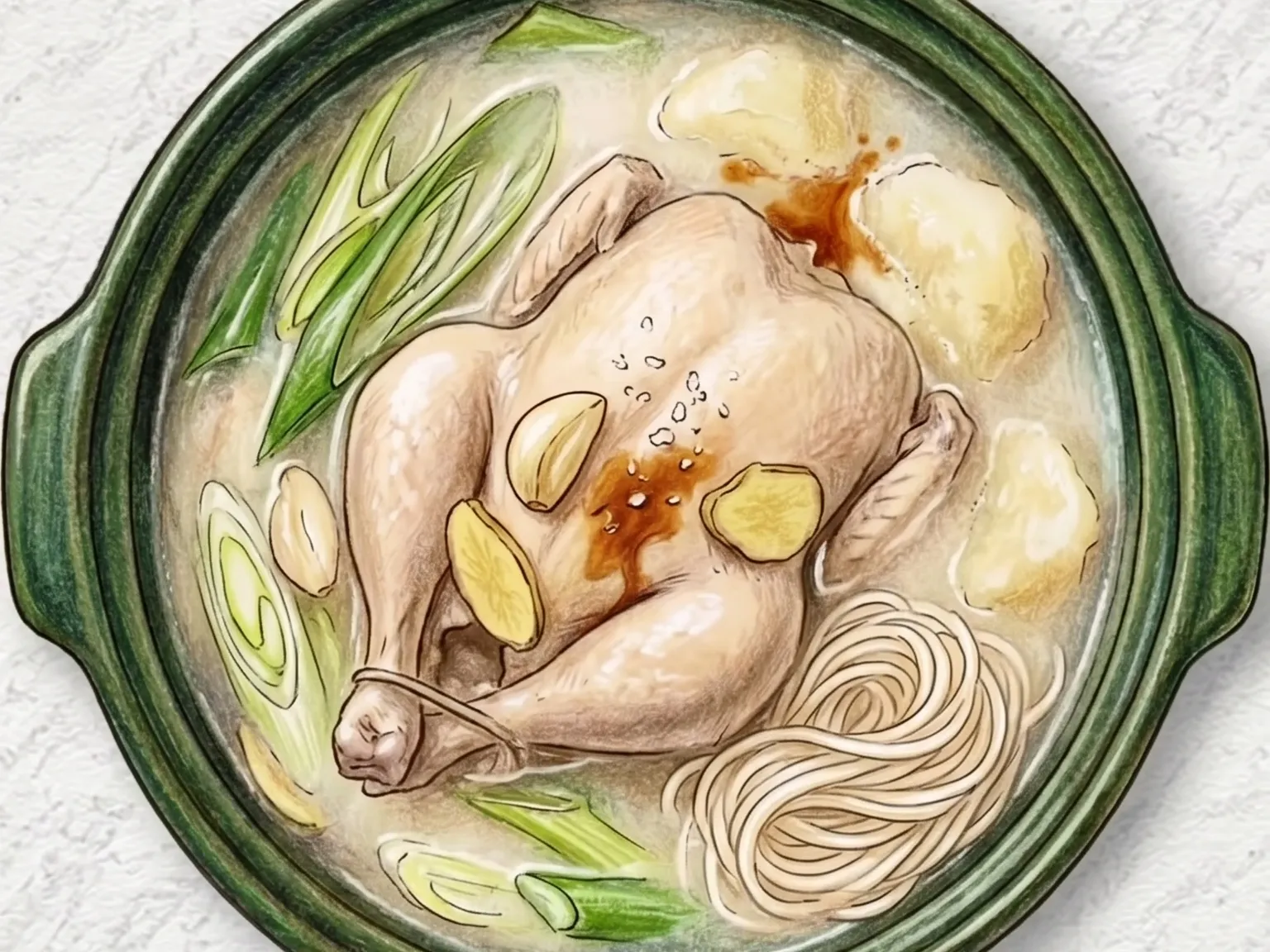
Korean Dak Hanmari (Whole Boiled Chicken with Potato Broth)
Steamed Medium

Korean Dak Hanmari (Whole Boiled Chicken with Potato Broth)

Quick answer

Dak-hanmari simmers a whole chicken with potato, green onion, garlic, and ginger in plain water for an extended time.

What makes this special

  • Dak-hanmari boils a whole chicken until the broth turns milky and rich with natural collagen.
  • Whole chicken simmered 50 minutes on the bone turns broth milky with collagen
  • Only soup soy sauce and salt let the pure chicken stock come through
Total time
70 min
Level
Medium
Servings
4 servings
Ingredients
8
Calories
470 kcal
Protein
42 g

Key ingredients

whole chickenpotatogreen oniongarlic clovesginger

Core cooking flow

  1. 1 Trim the 1.2 kg whole chicken, removing the tail fat, any remaining feathers...
  2. 2 Place the chicken in a large pot with 1800 ml water, 10 garlic cloves, 20 g...
  3. 3 When the pot reaches a boil, skim off the gray foam and floating fat carefully with a ladle.

Dak-hanmari simmers a whole chicken with potato, green onion, garlic, and ginger in plain water for an extended time. Collagen released from the bones turns the broth milky and slightly thick, while the potatoes cook until their edges begin to break down, adding body to the liquid. Seasoning stays minimal - soup soy sauce and salt only - so the natural depth of the chicken stock remains unobscured. The dish traces back to the street stall alleys of Seoul's Dongdaemun district, and the traditional way to finish the meal is to add knife-cut noodles directly into the remaining broth at the table.

Prep 20min Cook 50min 4 servings

Instructions

Read the steps as a cooking flow: prep, heat, seasoning, doneness control, and finish.

6 steps
  1. 1
    Step

    Trim the 1.2 kg whole chicken, removing the tail fat, any remaining feathers, and visible blood inside the cavity.

    Rinse it briefly under cold water, then shake off excess water so the broth starts clean.

  2. 2
    Control

    Place the chicken in a large pot with 1800 ml water, 10 garlic cloves, 20 g ginger, and half the green onion.

    Press the chicken down so it is mostly covered, then bring it to a boil over high heat.

  3. 3
    Control

    When the pot reaches a boil, skim off the gray foam and floating fat carefully with a ladle.

    Lower to medium heat, leave the lid slightly open, and simmer for 30 minutes to keep the broth clean.

  4. 4
    Control

    Cut the 250 g potato into large chunks and add it to the pot, then simmer for 15 more minutes.

    It is ready when the edges look slightly broken down and a chopstick slides in easily.

  5. 5
    Control

    Once the broth looks milky and the leg meat begins to pull from the bone, add 1 tbsp soup soy sauce and 1 tsp salt.

    Simmer briefly, taste the broth, and adjust only with a small pinch of salt if needed.

  6. 6
    Finish

    Add the remaining green onion and simmer for only 2 minutes so it stays aromatic.

    Serve the chicken hot, cut it with kitchen scissors at the table, and boil fresh knife-cut noodles in the remaining broth if desired.

After the steps

Pick a recipe that fits this dish.

Continue with shared ingredients, meal pairings, or a similar method.

Recipes That Go Well With This

More Steamed →

Based on shared ingredients and meal pairing

Korean Soy Braised Chicken
Shared ingredient: potatoes Steamed

Korean Soy Braised Chicken

Dak-jjim is bone-in chicken braised with potato, carrot, and onion in a sauce of soy sauce, sugar, and garlic. Juices released from the bones meld with the soy seasoning to form a glossy, concentrated gravy, and the vegetables absorb this liquid so they are seasoned all the way through. Sugar tempers the saltiness of the soy into a clear sweet-salty balance that coats every piece. Cooking with the lid on over medium heat first, then removing the lid to reduce the sauce, is what creates the glossy coating that defines a well-made dak-jjim. Served in a hot stone pot at the center of the table, it is one of the most familiar home-cooked dishes in Korean cuisine, well-suited for a shared family meal.

Korean Braised Chicken with Burdock
Shared ingredient: green onion Steamed

Korean Braised Chicken with Burdock

Ueong dak jorim is a Korean braised dish that simmers boneless chicken thigh and burdock root together in soy sauce, sugar, and ginger juice until the liquid reduces and the glaze thickens around each piece. Soaking the burdock in vinegar water draws out the astringent bitterness that raw burdock carries, and marinating the chicken in cooking wine and ginger beforehand removes any lingering gamey odor. Once both are added to the pot, low heat does the work over at least eighteen minutes, bringing the braising liquid down by half and building a glossy, clinging sauce. A final drizzle of sesame oil at the end ties the aroma together and rounds out the flavor. The finished dish sets the crisp yet slightly chewy texture of burdock against the moist tenderness of chicken thigh, with a sweet-savory profile that makes it a reliable companion to steamed rice.

Eomuk-guk (Fish Cake Radish Clear Soup)
Serve together Soups

Eomuk-guk (Fish Cake Radish Clear Soup)

Eomuk-guk is a straightforward Korean soup centered around fish cakes and a base liquid prepared by simmering sliced radish. The initial step involves boiling the radish in water for a sufficient duration so that it releases a mild, natural sweetness into the broth while the liquid itself takes on a slightly translucent appearance. Depending on individual preference, the radish can be taken out of the pot or left in as part of the final dish. Once the base is ready, pieces of fish cake are added to the boiling liquid along with soup soy sauce and minced garlic. The mixture then simmers for approximately six minutes, a period during which the fish cakes soften and absorb the saltiness of the soy sauce while simultaneously contributing their own flavor back into the soup base. To finish the preparation, thinly sliced green onions and a sprinkle of black pepper are stirred in. These final additions provide a sharp fragrance and a gentle heat that helps recreate the specific taste found at traditional Korean snack bars and street food carts. The entire cooking procedure is completed in about twenty minutes. Because the required ingredients are minimal and often staples, this recipe serves as a practical option for times when there are few groceries available in the kitchen. This makes the dish accessible even when the refrigerator is nearly empty and only basic pantry items remain.

Korean Seoul-style Gopchang Jeongol
Similar recipe Stews

Korean Seoul-style Gopchang Jeongol

Seoul-style gopchang jeongol is a hot pot of beef intestines cooked in beef bone broth, where the key distinction from other regional versions is the use of soup soy sauce rather than gochujang as the primary seasoning. Gochujang-based hot pots run thick and heavy; this Seoul version stays clear and clean-tasting, with the depth coming from the bone broth and the intestines themselves rather than from fermented paste. Six hundred grams of cleaned beef intestines go into the pot along with cabbage, oyster mushrooms, and perilla leaves. The perilla leaves are added toward the end and contribute a distinctive herbal scent that cuts through the richness of the intestines. Gochugaru provides color and a measured level of heat. The intestines need to cook for at least twenty minutes after the broth reaches a boil to eliminate any off-odors and reach the tender, slightly chewy texture that defines the dish. This preparation traces back to the gopchang alley restaurants concentrated around Seoul's Euljiro and Majang-dong districts, where the combination of gopchang and soju has been the standard order for decades.

Serve with this

Korean Beef & Shiitake Japchae
Side dishes Medium

Korean Beef & Shiitake Japchae

Japchae originated as a Joseon royal court dish of stir-fried vegetables before sweet potato glass noodles were added to create the form recognized today. This version pairs glass noodles with soy-marinated beef and sliced shiitake mushrooms. Each component cooks separately: beef and mushrooms stir-fried with garlic, spinach blanched and squeezed dry, carrots and onions sauteed until just tender. A final toss with sesame oil brings everything together. The noodles should be translucent and springy, carrying a sweet-salty soy glaze into each forkful. A standard presence on every Korean holiday table at Chuseok, Seollal, and birthday celebrations alike.

🏠 Everyday 🎉 Special Occasion
Prep 20min Cook 18min 4 servings
Korean Sesame Oil Abalone Porridge
Rice Medium

Korean Sesame Oil Abalone Porridge

Both abalone flesh and innards are used together with a generous two tablespoons of sesame oil to maximize nuttiness in this porridge. The innards carry a concentrated brininess unique to abalone, and sauteing them with minced garlic in sesame oil infuses the fat with both marine and roasted flavors simultaneously, forming the aromatic foundation for the entire pot. Soaked rice is stirred into that same seasoned oil and cooked until each grain turns translucent, a step that coats the starch in fat and gives the porridge a fuller, rounder flavor. Water is then added and the mixture simmers for 25 minutes while the grains slowly dissolve their starch into a naturally thick consistency. Stirring regularly throughout this stage prevents the rice from settling and scorching on the pot floor. Soup soy sauce and salt are added at the finish, their saltiness anchoring the nuttiness of the sesame oil rather than competing with it. Chopped chives provide both color and a light onion fragrance. An extra drizzle of sesame oil just before serving deepens the aroma and gives the surface a subtle sheen.

🎉 Special Occasion
Prep 20min Cook 35min 2 servings
Korean Stuffed Bossam Kimchi
Kimchi Hard

Korean Stuffed Bossam Kimchi

Bo-kimchi is a premium Korean stuffed kimchi where brined napa cabbage leaves are wrapped around a filling of julienned radish, water dropwort, chestnuts, jujubes, shrimp, and pine nuts, then tied into bundles and left to ferment. Each ingredient in the stuffing develops its own flavor during fermentation, building a complex, layered taste enclosed in a single neat package. Shrimp and pine nuts contribute richness and a roasted note, while chestnuts and jujubes add subtle sweetness that lifts this well above everyday kimchi. Originating in the Gaeseong region and tracing its lineage through Goryeo-era court cuisine, it is a kimchi reserved for holidays and formal occasions.

🎉 Special Occasion 🥗 Light & Healthy
Prep 70min Cook 15min 4 servings

Similar recipes

Royal Korean Hot Pot (Court-Style Beef & Tofu Banquet)
Stews Hard

Royal Korean Hot Pot (Court-Style Beef & Tofu Banquet)

Sinseollo is a traditional Korean royal court hot pot featuring ground beef, tofu, shiitake mushrooms, carrot, and napa cabbage arranged in a rich beef broth. Seasoned with soup soy sauce and finished with beaten egg, the broth develops a velvety body. Historically served in a brass charcoal-heated vessel at the royal table, each ingredient is placed with care to showcase its color and shape. The layered umami from the diverse ingredients creates a remarkably complex flavor. Adding seasoning in stages makes it easier to adjust saltiness, sweetness, and heat without covering the base ingredients.

🎉 Special Occasion 🥗 Light & Healthy
Prep 45min Cook 30min 4 servings
Korean Seafood Hot Pot Soup
Soups Medium

Korean Seafood Hot Pot Soup

Haemul-tang is a Korean seafood hot pot that throws together crab, shrimp, clams, and squid in a fiery, brick-red broth. The liquid starts with gochugaru and plenty of garlic, building a spicy base that the seafood then amplifies with its own briny juices. Radish chunks soften as the pot bubbles, thickening the broth slightly and adding a cool sweetness behind the heat. Green onions and cheongyang peppers go in toward the end for a sharp, vegetal bite. The magic of haemul-tang lies in the convergence of flavors: crab shells release a sweet, crustacean stock; clams open to spill their liquor; shrimp and squid contribute distinct textures from snappy to chewy. The pot is brought to the table still at a rolling boil, and diners pick through the shells and tentacles while the broth continues to concentrate.

🏠 Everyday 🎉 Special Occasion
Prep 25min Cook 30min 4 servings
Korean Tofu Hot Pot (Tofu & Beef Kelp Broth Pot)
Stews Medium

Korean Tofu Hot Pot (Tofu & Beef Kelp Broth Pot)

Dubu jeongol is a Korean hot pot centered on tofu and beef simmered in kelp broth at the table. Shiitake mushrooms contribute a deep savory note, while napa cabbage and green onion add freshness and textural variety. The broth is seasoned with soup soy sauce, keeping it light and clear enough to let each ingredient's flavor come through without becoming heavy. Thin-sliced or ground beef works equally well; marinating it briefly in soy sauce and minced garlic before adding it to the pot layers the broth with additional depth. Pan-frying the tofu slices lightly in oil before placing them in the jeongol prevents them from breaking apart during the long simmer and gives each piece a slightly firmer exterior. Traditionally served bubbling directly on the table, this is a communal dish meant to be eaten at a relaxed pace, with diners adding broth and pieces to their own bowls throughout the meal.

🎉 Special Occasion 🥗 Light & Healthy
Prep 25min Cook 20min 4 servings

Tips

Cut the chicken with kitchen scissors at the table for easier serving.
You can add fresh knife-cut noodles at the end.

Nutrition (per serving)

Calories
470
kcal
Protein
42
g
Carbs
18
g
Fat
24
g