Korean Chicken Janchi Guksu
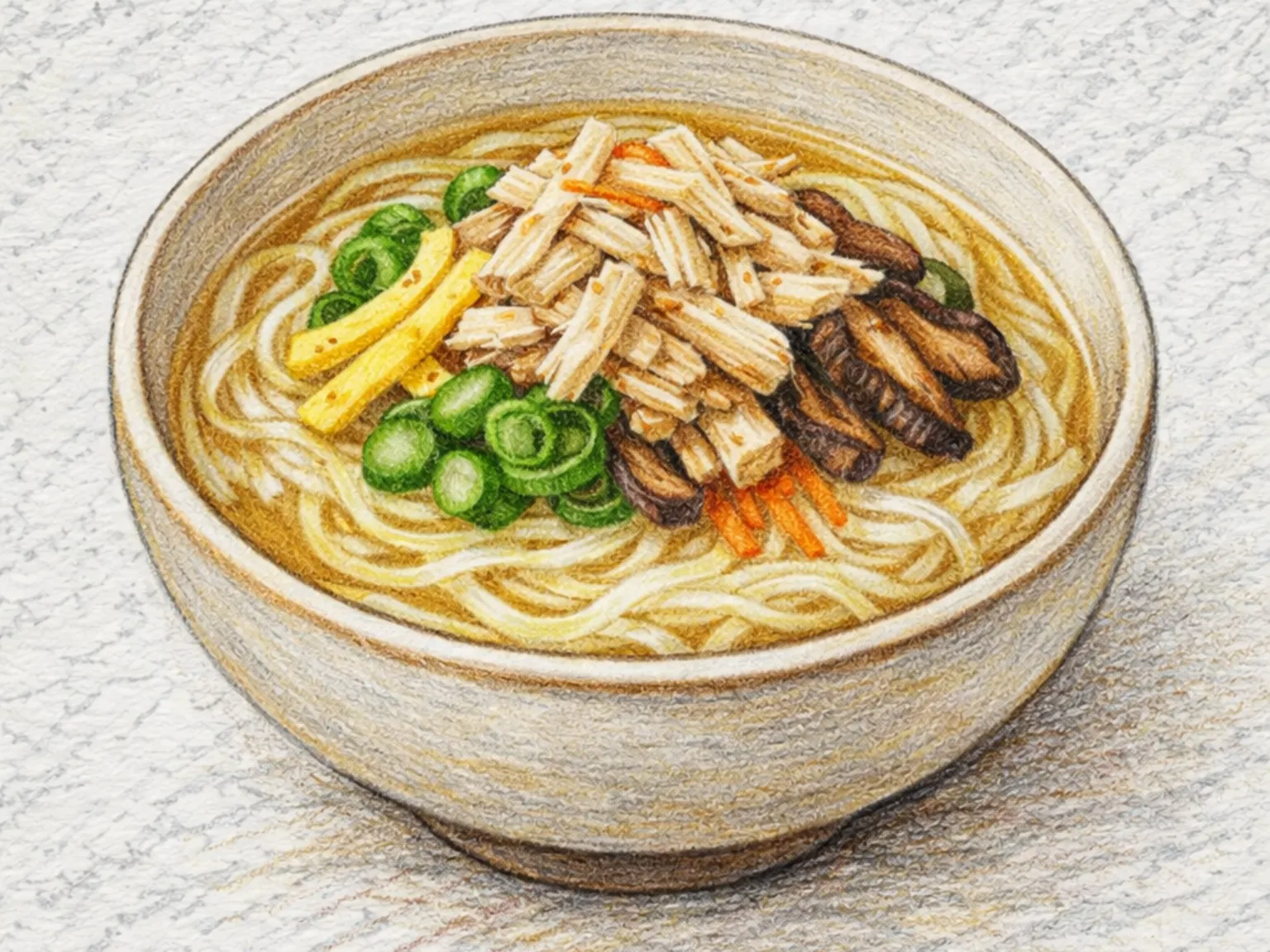
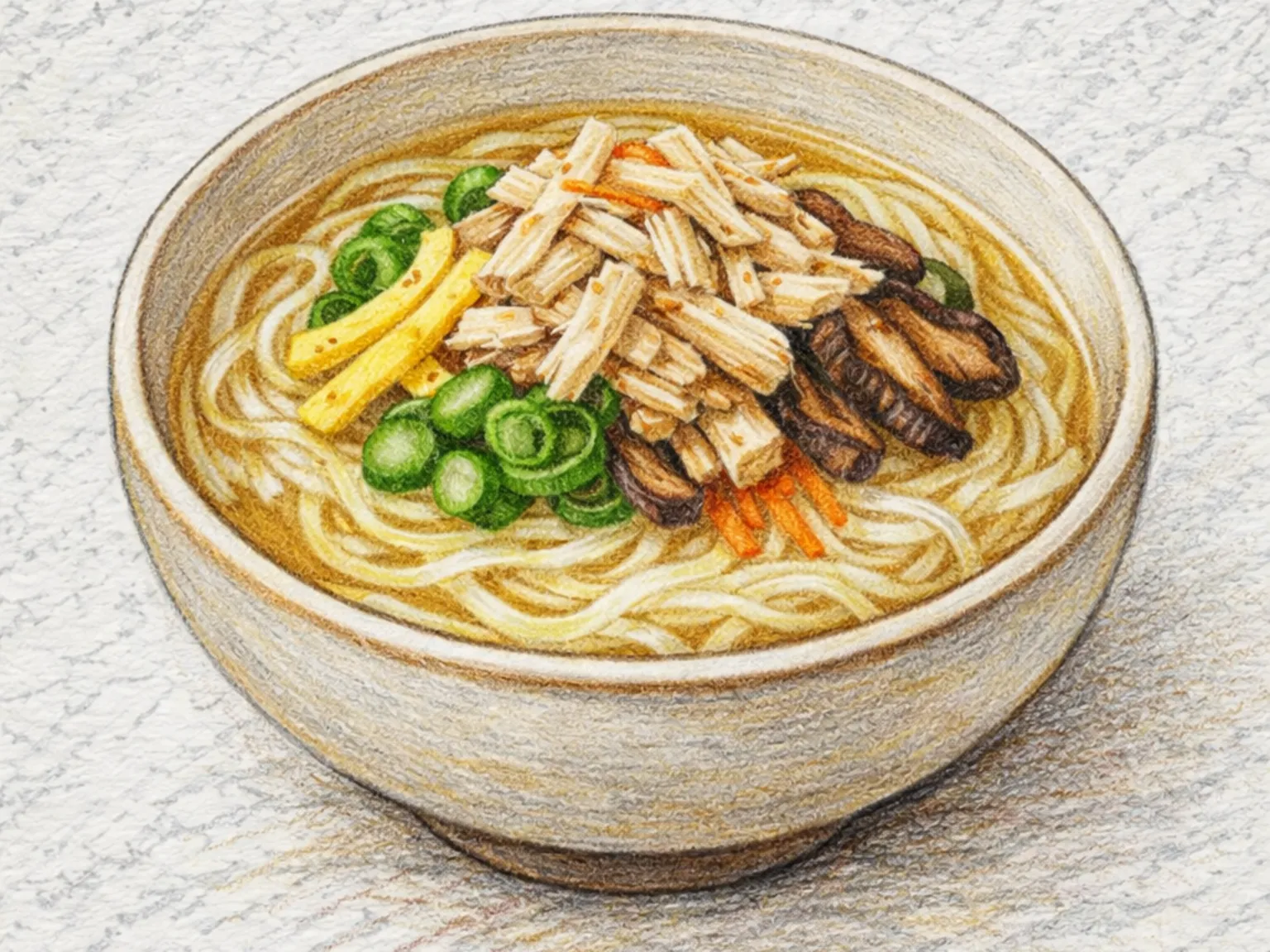
This variation of Korean janchi guksu places generous shreds of poached chicken breast on top of thin wheat noodles in a clear anchovy-kelp broth. The chicken adds a layer of lean protein that makes the bowl more filling than the classic version, while the broth retains its light, clean character. Julienned zucchini, shredded dried seaweed, and thin egg crepe strips bring color and varied texture. A small dish of soy-based dipping sauce on the side lets diners adjust the seasoning to taste. The noodles are boiled separately, rinsed in cold water to maintain their chew, and then placed in the hot broth just before serving, so they stay firm rather than turning mushy. Because the recipe scales easily, it remains a go-to choice for gatherings and celebrations where a warm, comforting noodle dish is needed.
Adjust Servings
Instructions
- 1
Rinse the chicken breast, then poach it in boiling anchovy stock for 12 minutes and remove.
- 2
Shred the cooked chicken and lightly season with sesame oil and a pinch of salt.
- 3
Add zucchini, carrot, minced garlic, and soup soy sauce to the same stock and simmer for 5 minutes.
- 4
Cook the noodles in boiling water, rinse thoroughly in cold water, and drain well.
- 5
Make a thin egg omelet and slice into strips for garnish.
- 6
Place noodles in bowls, pour over hot broth, and top with chicken and egg strips.
As an Amazon Associate, we may earn from qualifying purchases.
Tips
Nutrition (per serving)
More Recipes

Korean Banquet Noodles (Thin Noodles in Anchovy Kelp Broth)
Janchi-guksu is a classic Korean celebration noodle soup with thin wheat noodles served in a clear broth made from dried anchovies and kelp. The broth achieves a gentle, layered umami from the anchovies, complemented by kelp's subtle sweetness, and seasoned with soup soy sauce for a clean taste. Sauteed zucchini and carrot sit on top as garnishes alongside egg crepe strips and crumbled roasted seaweed, adding color and textural variety. Originating as a dish served at weddings and festive gatherings, it remains a symbol of simple hospitality.

Korean Soft Tofu Noodle Soup
Sundubu guksu is a Korean noodle soup made by simmering silken tofu in anchovy-based broth with knife-cut wheat noodles. As the soft tofu breaks apart during cooking, it naturally thickens the broth into a creamy consistency without any dairy. The combination of anchovy umami and mild tofu keeps the flavor clean yet full. Total cooking time is around 25 minutes, and the recipe requires minimal seasoning. It is one of the simpler Korean noodle soups to prepare at home.

Korean Anchovy Broth Thin Noodle Soup
Anchovy somyeon is the noodle soup Korean families turn to when the kitchen has nothing special - dried anchovies, a strip of kelp, and a bundle of thin wheat noodles are all it takes. The broth is built by simmering dried anchovies and dashima in water for fifteen minutes, then straining for a clear, umami-rich liquid with a faint oceanic sweetness. Somyeon - hair-thin wheat noodles - cook in a separate pot to prevent their starch from clouding the broth, then are rinsed under cold water until the strands separate cleanly. The noodles sit in a bowl of the hot broth, topped with sliced scallion, a drop of sesame oil, and sometimes a sheet of toasted gim. The appeal lies in its restraint: no chili, no fermented paste, just clean anchovy flavor meeting springy noodles. Korean mothers have served this as a quick lunch for generations, and it remains comfort food in its most distilled form.

Chogye Guksu (Korean Cold Chicken Noodles)
Shredded poached chicken and julienned cucumber top thin wheat noodles served in an icy mustard-vinegar chicken broth. The broth starts as a clear chicken stock, then gains its signature punch from dissolved mustard powder and rice vinegar, delivering a sharp nasal tingle followed by bright acidity that revives the appetite on sweltering days. The chicken, torn along the grain into thin strips, provides lean protein without heaviness, while sliced Korean pear adds a crisp, subtly sweet counterpoint. Mustard heat flares briefly and fades, leaving behind the clean savory finish of well-made stock. Keeping the broth thoroughly chilled is essential: it prevents the noodles from going soft and preserves the refreshing temperature contrast. Floating a few ice cubes in the bowl ensures the dish stays cold through the last bite.

Korean Perilla Chicken Soup
Deulkkae samgye-guk is a Korean perilla-enriched chicken soup that delivers the nourishing depth of samgyetang with a simpler preparation - no glutinous rice or ginseng, just chicken and perilla seed powder. The chicken is cut into large pieces and started in cold water, simmered for forty minutes until the broth turns milky and rich. Perilla powder must be pre-dissolved in a small amount of water before adding to prevent lumps, and ten more minutes of gentle simmering allows its oils to emulsify fully into the chicken stock. The result is a broth with a thick, nutty coating on each sip, seasoned with nothing more than soup soy sauce and salt.

Korean Chicken Radish Soup
Dak mu-guk is a Korean chicken and radish soup where blanched chicken thigh meat and thinly sliced radish simmer together into a clear, deeply flavored broth. Blanching the chicken for one minute before the main simmer removes impurities and is the key to keeping the broth transparent. Onion and ginger build the aromatic foundation over twenty minutes of gentle cooking, and the radish - cut into thin, flat squares rather than thick chunks - turns translucent quickly, releasing its natural sweetness into the liquid in just ten minutes. Soup soy sauce and diagonally sliced green onion finish the bowl, balancing the chicken's richness with a clean, vegetal note.