Korean Soy Braised Chicken
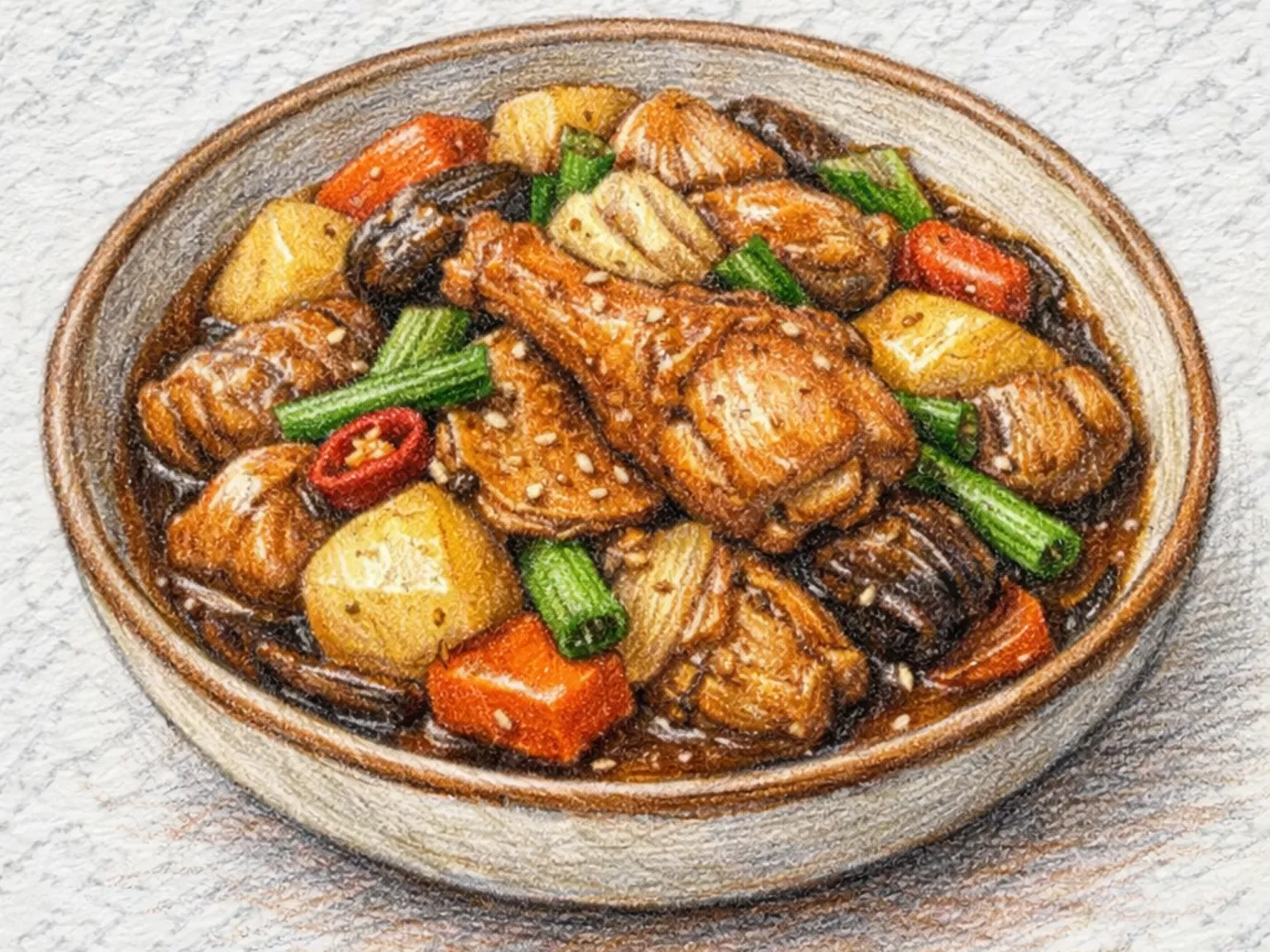
Dak-jjim is bone-in chicken braised with potato, carrot, and onion in a sauce of soy sauce, sugar, and garlic. Juices released from the bones meld with the soy seasoning to form a glossy, concentrated gravy, and the vegetables absorb this liquid so they are seasoned all the way through. Sugar tempers the saltiness of the soy into a clear sweet-salty balance that coats every piece. Served in a hot stone pot at the center of the table, it is one of the most familiar home-cooked dishes in Korean cuisine.
Adjust Servings
Instructions
- 1
Soak chicken in cold water for 10 minutes to remove blood.
- 2
Cut potato, carrot, and onion into large chunks.
- 3
Add chicken, water, soy sauce, sugar, and garlic to a pot and bring to a boil.
- 4
Reduce to medium heat, simmer 20 minutes, then add vegetables.
- 5
Braise 15 more minutes until vegetables are tender and sauce is reduced.
As an Amazon Associate, we may earn from qualifying purchases.
Tips
Nutrition (per serving)
More Recipes

Korean Soy Braised Chicken Chunks
Dakganjang-jjim is a Korean soy-braised chicken dish where bone-in thigh pieces are slowly simmered with potatoes and carrots in a soy sauce marinade. The chicken absorbs the salty-sweet seasoning deeply, yielding meat that is moist and full of umami. The vegetables cook down in the braising liquid, taking on a concentrated flavor without any added spice. It is a mild, comforting dish that works well as a main or a generous side over steamed rice.

Korean Braised Pork Backbone
Deungppyeo-jjim is pork backbone braised with potato and green onion in a sauce of doenjang, gochugaru, and soy sauce. After a long simmer, the meat and cartilage between the vertebrae pull away from the bone effortlessly. Doenjang lays a deep, fermented base note while chili flakes add a sharp heat on top. The potatoes cook until they are soft enough to break apart with a spoon, melding into the thick broth. Picking the meat from between the bones is part of the appeal, making this a popular dish to share over drinks.

Korean Andong Braised Chicken
Andong jjimdak is said to have originated in Andong's old market - Gu-sijang - during the 1980s, though its roots in soy-braised chicken cooking go back much further in Gyeongsang Province. Whole chicken pieces braise in a dark, concentrated sauce of soy sauce, sugar, gochugaru, garlic, and ginger until the meat nearly separates from the bone. Glass noodles - dangmyeon - are added toward the end, absorbing the braising liquid until they turn translucent and deeply stained. Potatoes and carrots provide bulk and sweetness, while dried red chilies and sliced cheongyang pepper deliver a layered heat that builds slowly. The finished dish arrives at the table in a wide, shallow pot, glossy and dark, with every component coated in the reduced soy glaze. It became a nationwide phenomenon in the early 2000s and remains one of Korea's most popular communal dishes, typically shared by two or three people over steamed rice.

Korean Braised Chicken with Burdock
Ueong dak jorim is a Korean braised chicken and burdock dish where boneless thigh meat and burdock root are simmered in soy sauce, sugar, and ginger juice. Soaking the burdock in vinegar water first removes its astringent edge, and marinating the chicken in cooking wine and ginger eliminates any gamey odor. Braising on low heat for at least eighteen minutes reduces the liquid by half, creating a glossy sauce that coats each piece. Sesame oil stirred in at the end ties the flavors together. The finished dish balances the crisp-chewy texture of burdock against the moist tenderness of chicken thigh, with a sweet-savory profile that pairs naturally with steamed rice.

Korean Dak Ganjang Jorim (Soy Braised Chicken)
Dak ganjang-jorim is chicken thigh braised with potato in a soy sauce glaze enriched with oligosaccharide syrup, garlic, and ginger juice. As the thighs simmer, the soy base works its way between the muscle fibers, leaving the meat deeply seasoned with a glossy brown finish. Potato chunks break down slightly at the edges and soak up the braising liquid, turning starchy and satisfying. A single cheongyang chili added to the pot gives a mild, lingering kick that keeps the sweet-salty profile from becoming one-note.

Korean Soy Braised Chicken Wings
Dak-nalgae-ganjang-jorim braises chicken wings in a soy sauce, sugar, and garlic mixture over medium-low heat for an extended time. The thin skin on the wings absorbs the seasoning and takes on a glossy brown coating, while the cartilage near the joints softens the longer it cooks. Ginger and green onion clean up any off-flavors and add a fresh note. As the braising liquid reduces, the remaining sauce becomes thick and concentrated. Eating the wings by hand adds a tactile element that makes this dish popular as a drinking snack as well.