Korean Chicken Knife-Cut Noodle Soup
Noodles Medium

Korean Chicken Knife-Cut Noodle Soup

Quick answer

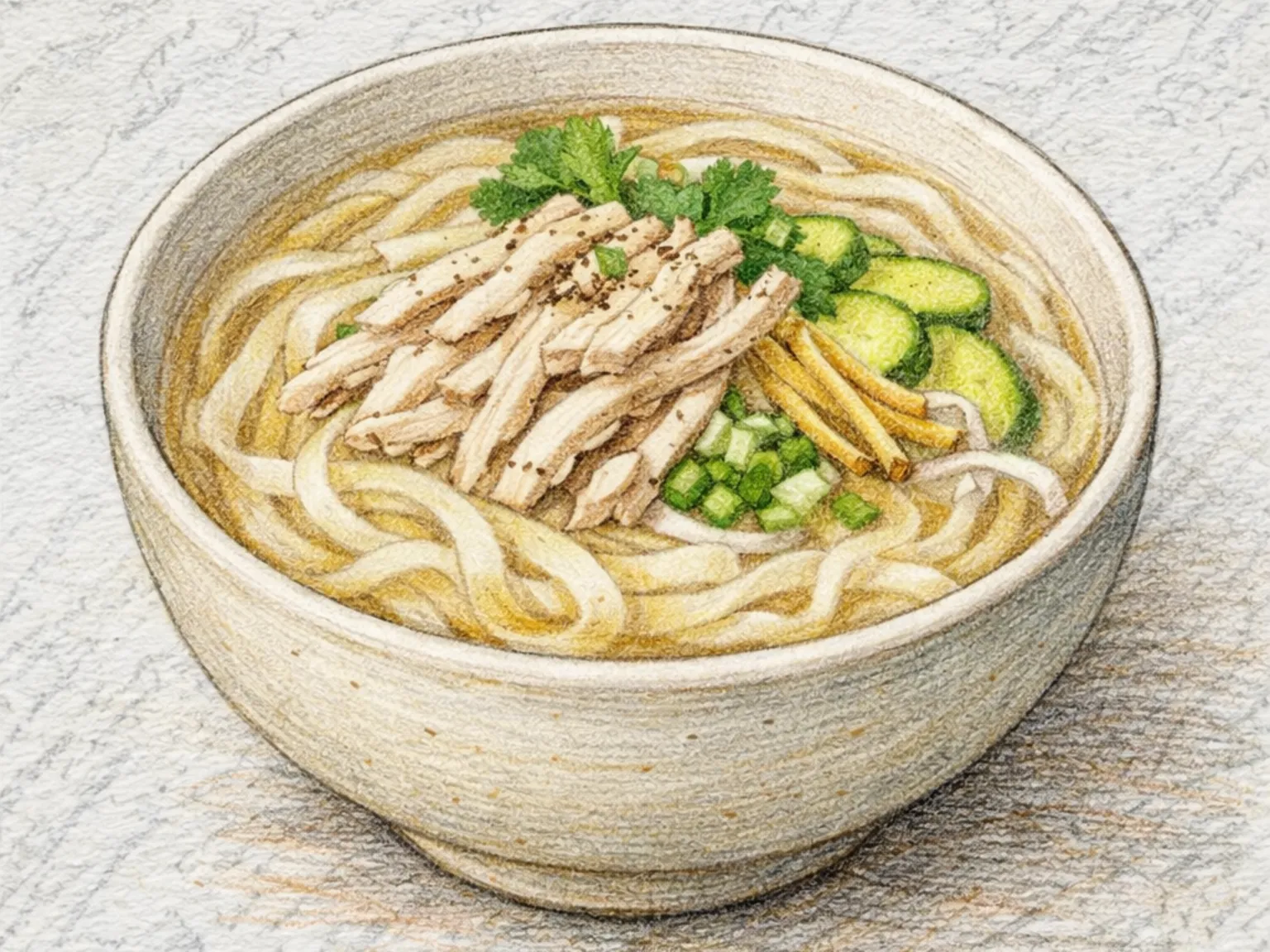
A whole chicken is simmered with green onion, garlic, and ginger until the broth turns opaque, deeply savory, and rich with collagen, then hand-cut wheat noodles are cook...

What makes this special

  • Noodles simmered directly in whole chicken broth create a thick, savory dak kalguksu soup with natural starch.
  • Noodles cooked directly in broth; starch thickens the soup naturally
  • Chicken thighs, green onion, and garlic simmered 25 min for milky broth
Total time
65 min
Level
Medium
Servings
4 servings
Ingredients
9
Calories
610 kcal
Protein
33 g

Key ingredients

kalguksu noodleschicken thighoniongreen onionminced garlic

Core cooking flow

  1. 1 Rinse 500 g chicken thighs briefly under cold water and cut 1 onion and 1 green onion into large pieces.
  2. 2 Put the chicken, onion, green onion, and 2 L water in a pot and bring it to a boil over high heat.
  3. 3 Remove the chicken and let it cool just until it can be handled, then shred it along the grain.

A whole chicken is simmered with green onion, garlic, and ginger until the broth turns opaque, deeply savory, and rich with collagen, then hand-cut wheat noodles are cooked directly in that liquid. Boiling the noodles in the broth rather than separately is the defining technique: the starch they release naturally thickens the soup into a silky, coating consistency, and the noodles themselves absorb the concentrated chicken flavor at every surface. Shredded chicken, pulled apart along the grain, goes on top just before serving. Potato and zucchini are added during the final minutes for their gentle sweetness and soft texture. A generous amount of ground black pepper stirred in or sprinkled on top sharpens the chicken aroma and adds a mild warmth that the broth on its own does not carry. Unlike ramyeon or rice noodle dishes, dak-kalguksu has no complex seasoning beyond salt, pepper, and the depth built from the chicken itself, making it one of the most comforting and straightforward noodle soups in Korean home cooking.

Prep 25min Cook 40min 4 servings

Instructions

Read the steps as a cooking flow: prep, heat, seasoning, doneness control, and finish.

6 steps
  1. 1
    Finish

    Rinse 500 g chicken thighs briefly under cold water and cut 1 onion and 1 green onion into large pieces.

    Slice a small portion of the green onion thinly for garnish, keeping the rest for the broth.

  2. 2
    Control

    Put the chicken, onion, green onion, and 2 L water in a pot and bring it to a boil over high heat.

    Once it boils, skim off foam, reduce to low heat, and simmer for 25 minutes.

  3. 3
    Step

    Remove the chicken and let it cool just until it can be handled, then shred it along the grain.

    Strain the broth back into the pot, pressing the onion and green onion lightly to capture their flavor.

  4. 4
    Control

    Add 1 tbsp minced garlic, 2 tbsp soup soy sauce, 1 tsp salt, and 0.5 tsp black pepper to the broth.

    Bring it back to a simmer over medium heat and taste before adding the noodles.

  5. 5
    Heat

    Shake excess flour from 600 g kalguksu noodles and scatter them into the boiling broth.

    Cook for 6 to 7 minutes, stirring down to the bottom often so the noodles do not clump or stick.

  6. 6
    Finish

    When the noodles are tender and the broth looks slightly thickened, return the shredded chicken and simmer for 2 more minutes.

    Ladle into bowls, top with the reserved green onion, and serve very hot.

After the steps

Pick a recipe that fits this dish.

Continue with shared ingredients, meal pairings, or a similar method.

Recipes That Go Well With This

More Noodles →

Based on shared ingredients and meal pairing

Korean Chicken Radish Soup
Shared ingredient: boneless chicken thigh Soups

Korean Chicken Radish Soup

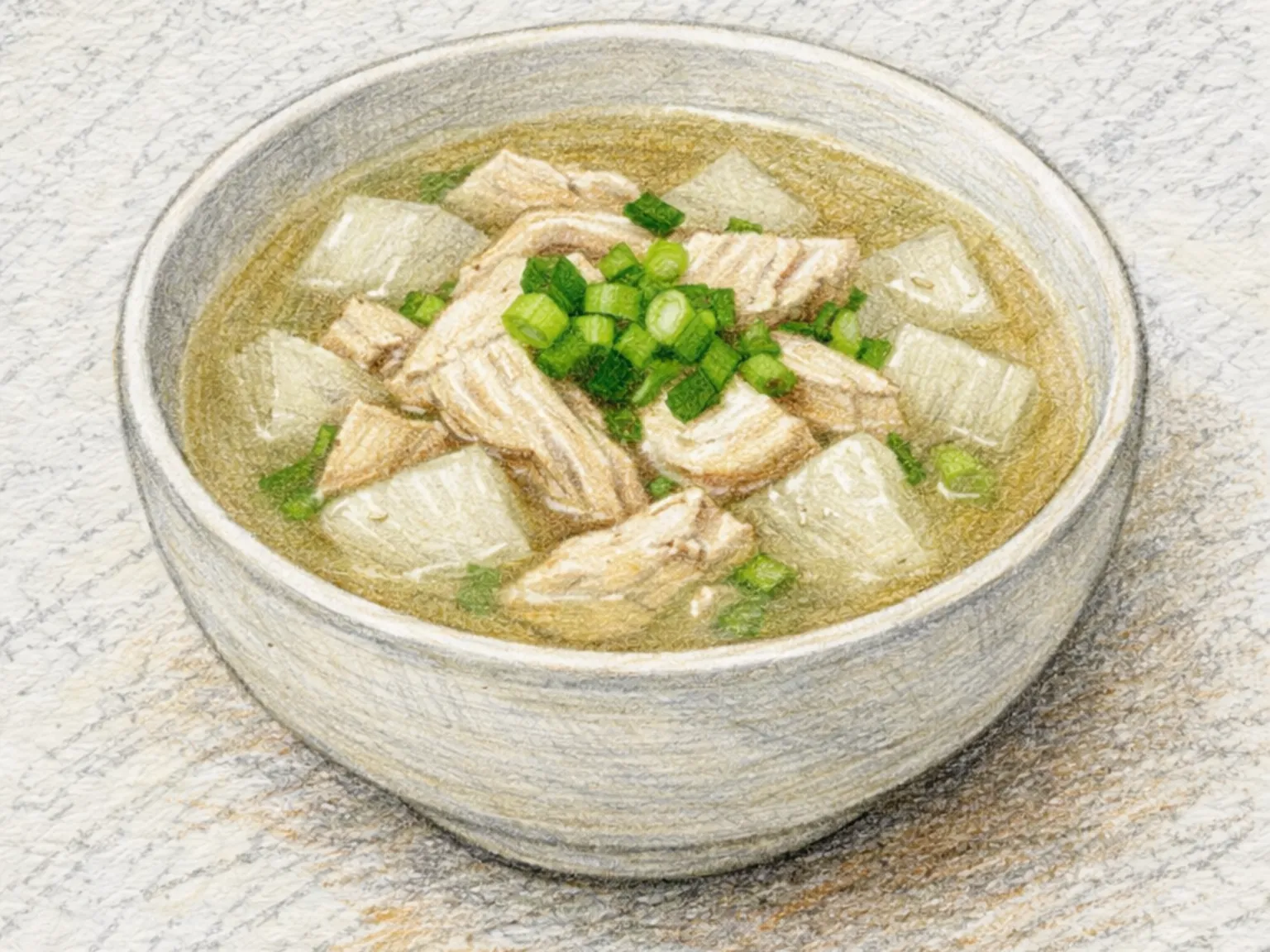
Dak mu-guk is a Korean chicken and radish soup that produces a clear, deeply flavored broth from two simple main ingredients. Chicken thigh meat, cut into bite-sized pieces, is blanched for one minute in boiling water before the main simmer - this step removes impurities and blood, which is the most reliable way to achieve a transparent broth rather than a cloudy one. Onion and ginger then build the aromatic backbone over twenty minutes of gentle, low heat, allowing the chicken's natural depth to develop without aggressive boiling. The radish is cut into thin, flat squares rather than thick slabs; this shape turns translucent within ten minutes and releases its clean sweetness into the liquid quickly and evenly. Soup soy sauce and salt season the broth, and diagonally sliced green onion goes in just before the heat is turned off to preserve its color and mild bite. The result balances the richness of chicken stock against the cool, vegetal sweetness of radish in a soup that is light enough to eat when recovering from illness yet satisfying as an everyday meal.

Korean Clam Kalguksu (Hand-Cut Noodles in Clam Broth)
Shared ingredient: kalguksu noodles Noodles

Korean Clam Kalguksu (Hand-Cut Noodles in Clam Broth)

Baekhap kalguksu is a Korean knife-cut noodle soup in which the broth is derived entirely from hard clams rather than the more standard anchovy base. Purged clams are placed in cold water and brought to a boil; once the shells open, the clams are lifted out and the broth is strained through cheesecloth to remove any residual sand or shell fragments. Thinly sliced daikon radish and Korean zucchini cook in the strained broth for five minutes, contributing vegetal sweetness. The hand-cut noodles go in next and are boiled for six to seven minutes until they turn translucent; starch released from the noodles thickens the broth naturally into a lightly viscous, silky consistency without any additional thickener. Once the noodles are cooked, the reserved clam meat returns to the pot, and the soup is seasoned with minced garlic and guk-ganjang. Onion added with the vegetables deepens the broth's sweetness further. Because clam liquor rather than dried anchovy forms the base, the soup carries a distinctly marine, mineral character that permeates every strand of noodle, setting baekhap kalguksu apart from all other regional kalguksu variations. Along the coastal areas of South Chungcheong and Jeolla Provinces, this style of noodle soup has been a local specialty for generations, best in the seasons when clams are most abundant.

Korean Shepherd's Purse & Napa Pancake
Serve together Pancakes

Korean Shepherd's Purse & Napa Pancake

Naengi Baechu Jeon is a seasonal Korean pancake that features wild shepherd's purse and sweet napa cabbage. To prepare this dish, the roots of the shepherd's purse are thoroughly scrubbed to remove soil and chopped into short lengths, while the cabbage is sliced, lightly salted to draw out moisture, and squeezed. The batter consists of Korean pancake mix, rice flour, an egg, cold water, and soup soy sauce, which provides a clean base that allows the flavors of the vegetables to stand out. Mixing rice flour into the batter ensures that the edges of the pancake turn crispy and remain tender even after cooling. The prepared greens are gently folded into the mixture, then pan-fried in oil over medium heat until both sides are golden brown. It is sliced on a board and served warm.

Korean Spicy Gangwon Knife-Cut Noodles
Similar recipe Noodles

Korean Spicy Gangwon Knife-Cut Noodles

Jang kalguksu is a Gangwon Province style of knife-cut noodle soup defined by dissolving both gochujang and doenjang directly into an anchovy-kelp stock, a combination that sets it apart from standard kalguksu at a fundamental level. The fermented chili paste brings a spicy, rounded sweetness while the soybean paste contributes a dense, earthy richness, and together they build a broth with a complexity that neither ingredient could produce alone. An additional measure of gochugaru piles on a sharper chili heat, giving the soup its signature fiery edge. Potato breaks down as it simmers, naturally thickening the broth without any added starch, while zucchini releases sweetness, and onion and green onion round out the aromatics. Fresh-cut noodles have a smooth exterior and a springy, slightly resistant bite that clings well to the thick, rust-red broth. The dish originates from the mountainous interior of Gangwon Province, where it warmed workers through cold seasons, and the combination of deep umami and lingering heat still makes it one of the most satisfying one-bowl meals in Korean regional cooking.

Serve with this

Korean Konjac Noodle Salad
Side dishes Easy

Korean Konjac Noodle Salad

Silgonyak-chae-muchim tosses 250 grams of blanched konjac noodles with julienned cucumber, carrot, and onion in a gochujang-based dressing spiked with vinegar, sugar, soy sauce, and garlic. Blanching the noodles for two minutes removes their faint alkaline smell and softens their rubbery chew to a pleasant springiness. The vegetables provide crisp contrast - cucumber adds a cool snap, carrot a mild sweetness, and onion a sharp bite. The dressing clings to the translucent noodles, turning them a vivid reddish hue. At only 95 calories per serving, this banchan relies on texture and bold seasoning rather than fat for its appeal. Chilling for 10 minutes before serving firms up the noodles and intensifies the tangy-spicy flavor profile.

🥗 Light & Healthy 🏠 Everyday
Prep 12min Cook 3min 2 servings
Korean Celery Jangajji (Blanched Soy Lemon Pickle)
Kimchi Easy

Korean Celery Jangajji (Blanched Soy Lemon Pickle)

Celery jangajji is a Korean soy pickle made by briefly blanching celery stalks to tame their fibrous exterior, then submerging them in a boiled brine of soy sauce, vinegar, and sugar. Peeling away the tough outer strings and cutting into five-centimeter lengths before a thirty-second blanch removes the raw grassy edge while leaving the celery's distinctive cool, herbal scent intact. Lemon slices and whole garlic cloves added to the jar contribute a gentle citrus brightness and mild pungency that build quietly as the pickle rests. After two days in the refrigerator the brine penetrates evenly, producing a crisp, tangy side dish that pairs particularly well with grilled or braised pork. By the fourth or fifth day the flavors deepen further, and even those put off by raw celery's sharpness tend to find the pickled version approachable.

🍱 Lunchbox 🏠 Everyday
Prep 15min Cook 8min 4 servings
Grilled King Oyster and Perilla Salad
Salads Easy

Grilled King Oyster and Perilla Salad

Grilled king oyster and perilla salad dry-sears thick-sliced king oyster mushrooms in an oil-free pan until golden, then tosses them with chiffonaded perilla leaves, bite-sized lettuce, and cucumber in a perilla oil and soy dressing. Cutting the mushrooms into 0.8 cm planks and spacing them apart in the pan is critical: overcrowding traps steam and turns a sear into a braise, losing the golden crust and chewy interior. Patting the mushroom surfaces dry with a paper towel before placing them in the pan helps the Maillard reaction start faster and produces a more even color without the sputtering caused by surface moisture. The dressing blends perilla oil, soy sauce, lemon juice, and oligosaccharide syrup, pairing the deep nuttiness of perilla oil with a light citrus acidity that supports the mushroom's umami. Grinding extra sesame seeds into the dressing amplifies the nutty character, and a small pinch of gochugaru adds a mild heat that lingers at the back of the palate. Perilla leaves lose their fragrance quickly once dressed, so the salad should be served immediately after tossing.

🥗 Light & Healthy ⚡ Quick
Prep 15min Cook 12min 2 servings

Similar recipes

Korean Knife-cut Noodle Soup
Noodles Medium

Korean Knife-cut Noodle Soup

Kalguksu is a Korean noodle soup made with hand-cut wheat noodles simmered in anchovy-kelp broth. The noodles are rolled flat and sliced with a knife, giving them a rough surface that absorbs broth and a satisfying chew distinct from machine-made pasta. Sliced potato, half-moon zucchini, and onion go into the pot, with the potato releasing starch that naturally thickens the broth as it cooks. Seasoning stays minimal - soup soy sauce, salt, minced garlic, and green onion added at the end - so the clean, savory depth of the stock comes through clearly. The dish is traditionally associated with rainy days in Korea, and adding clams turns it into a popular seafood variation.

🏠 Everyday 🌙 Late Night
Prep 15min Cook 25min 2 servings
Korean Seafood Knife-Cut Noodle Soup
Noodles Medium

Korean Seafood Knife-Cut Noodle Soup

Haemul kalguksu simmers hand-rolled, knife-cut wheat noodles in a broth built from dried kelp, Manila clams, shrimp, and squid. The kelp forms the stock's clean mineral base, and as the clams open during cooking they release a briny liquor that enriches the broth considerably without any additional seasoning. Sliced zucchini adds a mild sweetness while green onion brings a fresh fragrance to the pot, and soup soy sauce with minced garlic rounds out the flavor into something clean and umami-rich without heaviness. Because kalguksu noodles are rolled thin and cut wide by hand, they release some starch into the broth as they cook, giving the soup a subtle natural body. The wide, flat noodles have a distinctive chewy texture and soak up the seafood broth with every bite, so that lifting a chopstick-full of noodle and clam delivers a concentrated taste of the sea in a single mouthful.

🏠 Everyday 🌙 Late Night
Prep 15min Cook 25min 2 servings
Korean Chicken Bone Broth Soup
Soups Medium

Korean Chicken Bone Broth Soup

Dak-gomtang is a Korean clear chicken bone broth soup made by simmering a whole chicken with onion, garlic, and ginger over medium-low heat for at least fifty minutes. After the meat is removed and hand-shredded, the bones return to the pot for another fifteen minutes, releasing gelatin that gives the broth a silky body. When refrigerated, the liquid sets into a soft gel, a sign of its collagen richness. Skimming the fat layer after refrigeration produces a noticeably cleaner, clearer taste on reheating. The broth is seasoned simply with soup soy sauce and salt, and sliced green onion added at the end brings a fresh, sharp contrast to the mellow chicken flavor. Unlike samgyetang, which is stuffed with ginseng and glutinous rice, dak-gomtang relies entirely on the chicken itself for depth, representing a more restrained approach to Korean restorative cooking. The soup dates back to the Joseon era and is traditionally eaten during convalescence or hot summer days. Adding cooked rice or thin noodles turns it into a complete one-bowl meal.

🏠 Everyday
Prep 20min Cook 70min 4 servings

Tips

Add a slice of ginger early if you want less chicken odor.
Stir often after adding noodles to avoid clumping and cloudiness.

Nutrition (per serving)

Calories
610
kcal
Protein
33
g
Carbs
72
g
Fat
20
g