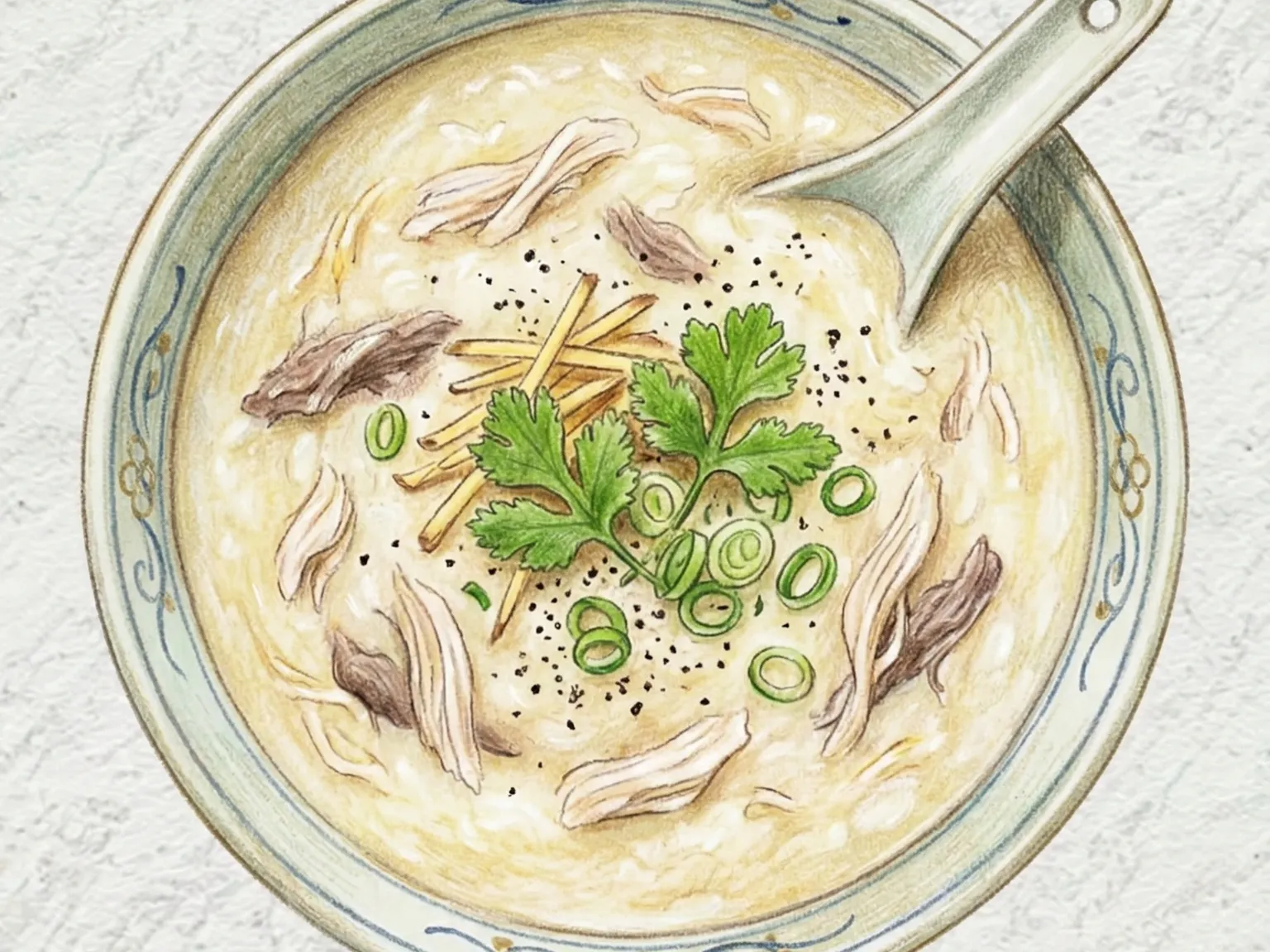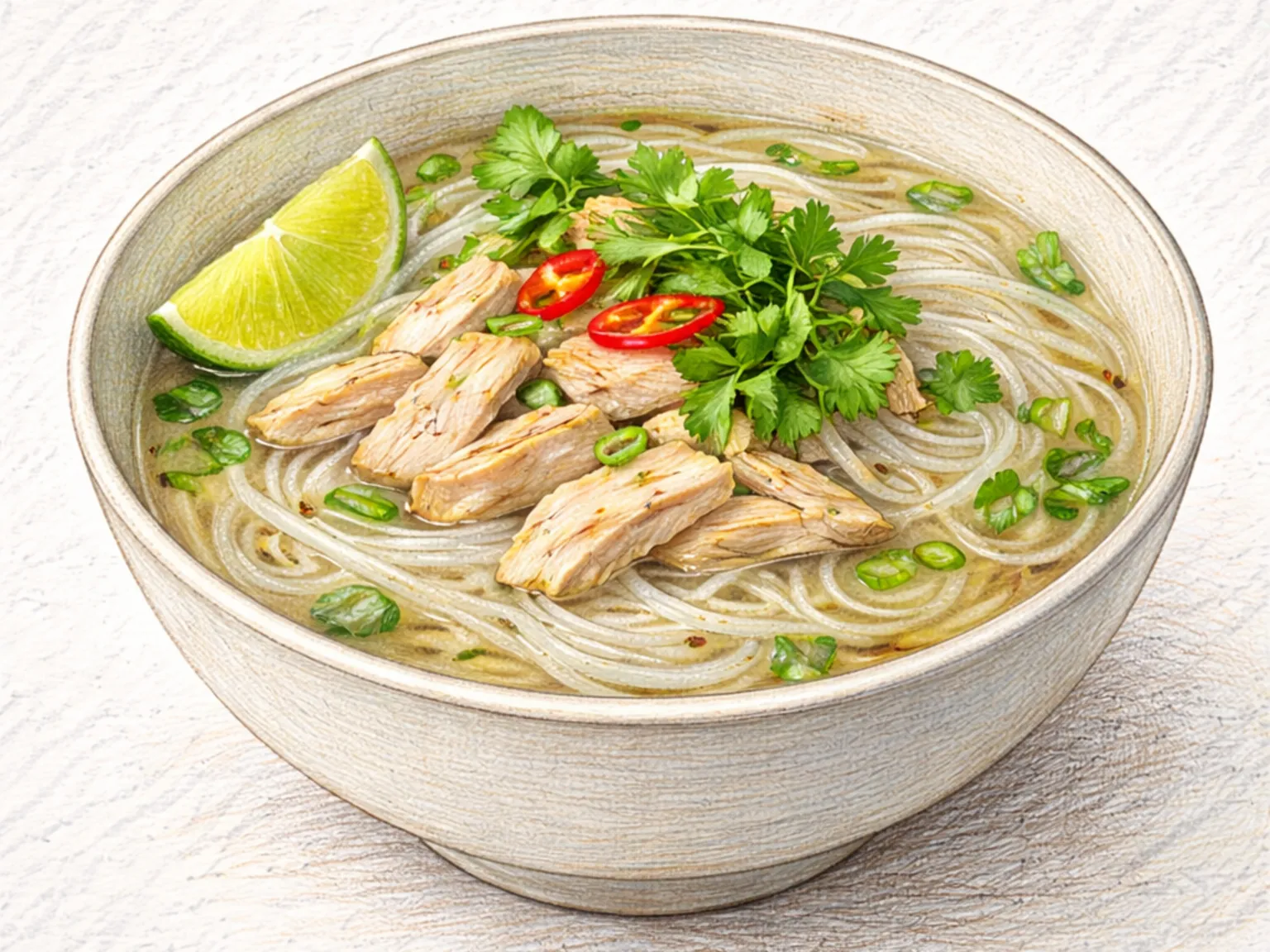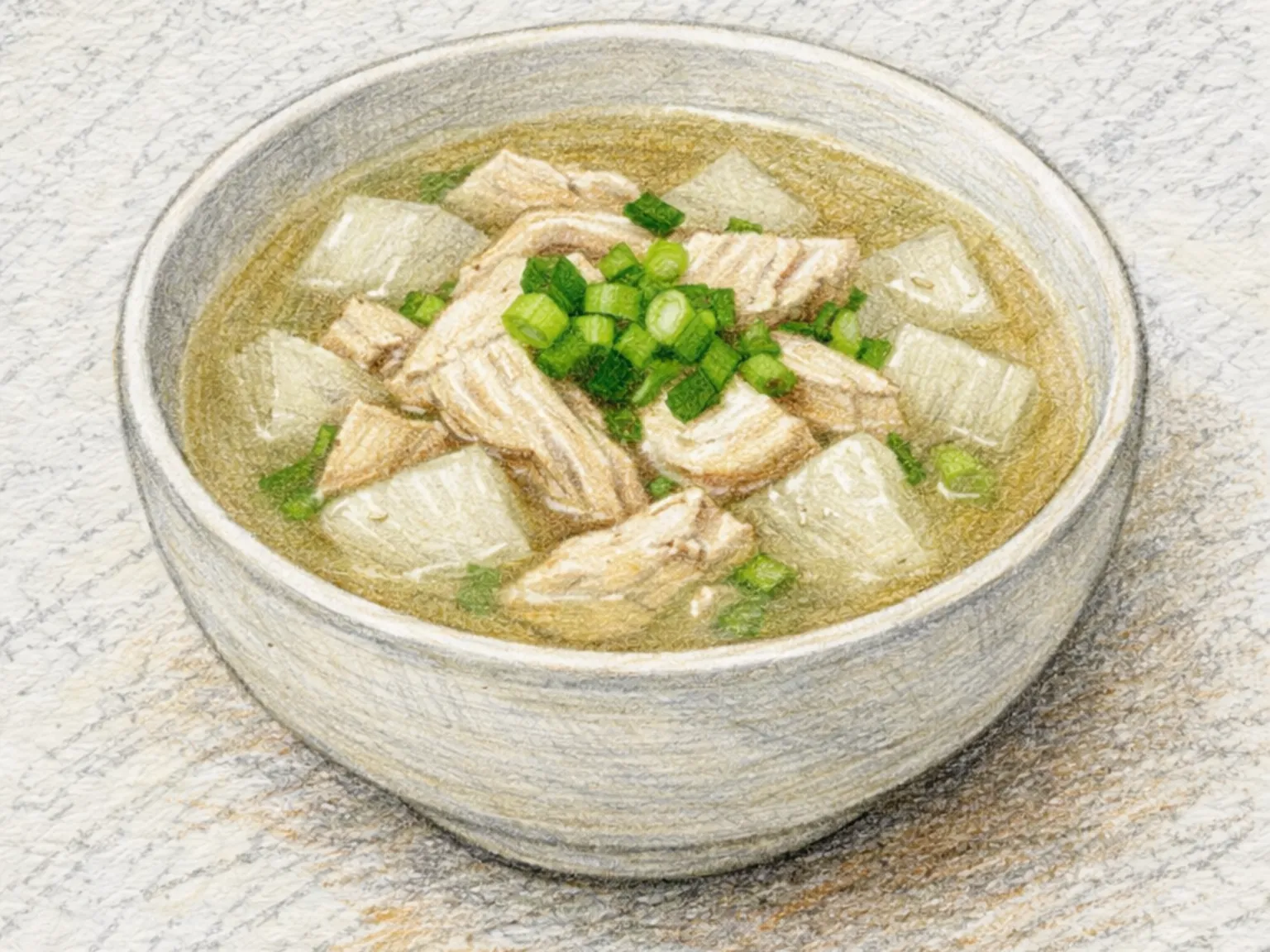
Korean Chicken Radish Soup
Quick answer
Dak mu-guk is a Korean chicken and radish soup that produces a clear, deeply flavored broth from two simple main ingredients.
What makes this special
- Dak mu-guk draws deep flavor from blanched chicken thigh meat and sweet radish in a clear, light soup.
- Blanching thigh meat 1 minute removes impurities and keeps the broth clear
- Thin nabok-cut radish turns translucent in 10 minutes, releasing sweetness fast
Key ingredients
Core cooking flow
- 1 Cut 500 g chicken thigh meat into bite-size pieces.
- 2 Slice 350 g radish into thin, flat squares so it can turn translucent quickly.
- 3 Put 1600 ml water, the blanched chicken, 8 g ginger, and the onion in a pot.
Dak mu-guk is a Korean chicken and radish soup that produces a clear, deeply flavored broth from two simple main ingredients. Chicken thigh meat, cut into bite-sized pieces, is blanched for one minute in boiling water before the main simmer - this step removes impurities and blood, which is the most reliable way to achieve a transparent broth rather than a cloudy one. Onion and ginger then build the aromatic backbone over twenty minutes of gentle, low heat, allowing the chicken's natural depth to develop without aggressive boiling. The radish is cut into thin, flat squares rather than thick slabs; this shape turns translucent within ten minutes and releases its clean sweetness into the liquid quickly and evenly. Soup soy sauce and salt season the broth, and diagonally sliced green onion goes in just before the heat is turned off to preserve its color and mild bite. The result balances the richness of chicken stock against the cool, vegetal sweetness of radish in a soup that is light enough to eat when recovering from illness yet satisfying as an everyday meal.
Instructions
Read the steps as a cooking flow: prep, heat, seasoning, doneness control, and finish.
- 1Finish
Cut 500 g chicken thigh meat into bite-size pieces.
Blanch it in boiling water for 1 minute, just until foam and blood rise, then lift it into a strainer so the finished broth stays clear.
- 2Finish
Slice 350 g radish into thin, flat squares so it can turn translucent quickly.
Cut 100 g onion into thick strips, slice 60 g green onion diagonally, and keep the green onion aside for the finish.
- 3Control
Put 1600 ml water, the blanched chicken, 8 g ginger, and the onion in a pot.
Once it boils, lower to medium-low heat and simmer for 20 minutes, keeping the bubbling gentle rather than rough.
- 4Control
Add the radish and 1 tbsp minced garlic, then simmer for 10 more minutes.
Keep the heat steady and gentle until the radish edges look translucent, because hard boiling can cloud the broth.
- 5Control
Season with 2 tbsp soup soy sauce and 0.5 tsp salt, then taste the broth.
Add the sliced green onion and simmer for only 2 minutes so it keeps some color and a mild bite.
- 6Finish
Turn off the heat and skim off any fat or foam from the surface.
Serve the soup hot when the chicken is tender and the radish looks clear through the center, not opaque or firm.
After the steps
Pick a recipe that fits this dish.
Continue with shared ingredients, meal pairings, or a similar method.
Recipes That Go Well With This
More Soups →Based on shared ingredients and meal pairing
Korean Ginger Chicken Gomtang
This ginger chicken gomtang is a clear, restorative Korean soup made by simmering a whole chicken low and slow with fresh ginger, onion, garlic, and green onion until the broth turns golden and develops a quietly complex flavor. Unlike beef-bone soups, which derive their richness from marrow and connective tissue, chicken gomtang achieves its depth through the prolonged extraction of collagen and gelatin from the bones and skin, resulting in a broth that coats the palate softly without feeling heavy. The ginger is added early so its sharp, warming oils can fully disperse through the liquid, while sliced onion gradually sweetens the broth as it cooks down. Once the broth is strained, it is remarkably clean-tasting despite its depth: a quality that Korean cooks describe as siwonhada, a coolness and clarity that settles the stomach while nourishing the body. The chicken is pulled from the bones and shredded along the grain into generous pieces before being returned to the bowl. Seasoning is kept minimal, a small pour of soup soy sauce, a pinch of salt, and a very generous amount of freshly cracked black pepper, whose heat amplifies the ginger and warms the whole dish. Korean households reach for this soup when someone is ill or recovering from fatigue, but it is equally at home as a restorative weekday dinner or a refined first course when served in small portions before a larger meal.
Korean Chicken and Neungi Mushroom Soup
Neungi-dak-gomtang is a Korean chicken soup elevated by neungi mushrooms, a wild variety prized for their intense, almost truffle-like fragrance. The chicken is blanched first to remove impurities, then simmered for fifty minutes with onion, garlic, and ginger to build a clear, rich stock. After straining, the torn chicken meat is returned to the pot along with the neungi mushrooms, which steep in the hot broth for fifteen minutes - long enough to release their deep, earthy perfume without losing its complexity. The mushroom's aroma permeates the entire liquid, transforming an already satisfying chicken soup into something far more layered and aromatic. Seasoning is kept to soup soy sauce and salt, ensuring nothing competes with the interplay between poultry richness and mushroom fragrance. In Korea, this soup is considered both nourishing and luxurious, often served during autumn when neungi mushrooms are freshly foraged.
Korean Pine Nut Porridge (Creamy Nutty Nourishing Rice Porridge)
Pine nuts are blended with water into a smooth milk, then stirred into soaked rice that has been sauteed in sesame oil to bring out its starch aroma. The pine nut milk is added after the rice has already simmered for ten minutes, because prolonged boiling diminishes the nuts' volatile fragrance. The finished porridge has a pale cream hue and leaves a lingering resinous pine-nut note on the palate. Thinly sliced jujube garnish adds a pop of red color and gentle natural sweetness that complements the nuttiness.
Korean Boiled Chicken Soup
Dak-baeksuk is a Korean whole-chicken soup simmered for over fifty minutes with whole garlic cloves, jujubes, green onion, and ginger in a large pot of water until the broth runs clear and deeply flavored. Skimming fat and foam throughout the cooking process is essential for the signature clarity of the broth. Neglecting this step leaves the soup greasy and cloudy when reheated the next day. The jujubes contribute a subtle sweetness and the garlic, softened to near-paste after the long simmer, dissolves into the liquid to create a mellow depth that needs nothing more than salt and pepper to taste complete. The chicken is shredded against the grain for the softest possible texture, then returned to the hot broth so every bite of meat is saturated with the clean, aromatic stock. Unlike samgyetang, dak-baeksuk skips ginseng, making it simpler to prepare while remaining a staple restorative meal eaten during Korea's hottest summer days.
Serve with this
Korean Mixed Seaweed Salad
Haecho-muchim gathers several types of ocean seaweed - often including miyeok julgi (seaweed stems), tot (sea mustard), parae (green laver), and kkosiraegi - into one bowl and dresses them in cho-gochujang, a tangy-sweet sauce made by blending gochujang with vinegar and sugar. Each strand and leaf brings a different texture: some chewy, some slippery, some with a gentle pop. The seaweed is blanched for no longer than twenty seconds to preserve that textural variety - longer cooking turns everything uniformly soft. Squeezing out all residual water before dressing is critical, otherwise the sauce dilutes into a watery puddle. Julienned cucumber threaded through the seaweed adds a crisp, garden-fresh counterpoint to the briny marine flavors. Served chilled, this low-calorie banchan is especially welcome in hot weather.
Korean Fresh Eggplant Kimchi
Gaji kimchi is a fresh eggplant kimchi that requires no fermentation and can be eaten immediately after preparation. Eggplant is steamed until it becomes pliable and soft throughout, then torn by hand along the grain rather than cut with a knife. Tearing along the natural fibers creates a rough, open surface that allows the seasoning of gochugaru, fish sauce, garlic, and sesame oil to penetrate deep into the flesh rather than merely coating the outside. The result is an even distribution of spicy, salty flavor throughout every bite rather than concentrated only at the surface. Scallions folded in at the end add a fresh, sharp lift, and toasted sesame seeds provide a nutty, fragrant finish. Because no fermentation is involved, this kimchi is best suited to seasons when eggplant is at its peak, particularly summer, when the vegetable is widely available and a quick, no-cook banchan is most welcome. Piled over a bowl of cold leftover rice and mixed together, the seasoning soaks into the grains while the soft steamed eggplant adds body, making it a satisfying one-bowl meal without needing additional soup or side dishes.
Korean Dried Radish Greens Pancake
Boiled dried radish greens are combined with doenjang and pan-fried into a dense, rustic jeon with deep fermented character. The fibrous texture of the radish greens gives the pancake a satisfying chew, and the soybean paste saturates the batter so thoroughly that no dipping sauce is necessary. Buckwheat flour adds an earthy coarseness that suits the greens well. Cheongyang chili provides a spicy accent throughout. Minced garlic benefits from a brief saute in oil before being mixed into the batter-the raw edge cooks off and the garlic's savory depth integrates fully into the finished pancake. Cooking over low heat lets the inside set without burning the outside, producing a crisp surface and a tender, flavorful center.
Similar recipes
Korean Chicken Bone Broth Soup
Dak-gomtang is a Korean clear chicken bone broth soup made by simmering a whole chicken with onion, garlic, and ginger over medium-low heat for at least fifty minutes. After the meat is removed and hand-shredded, the bones return to the pot for another fifteen minutes, releasing gelatin that gives the broth a silky body. When refrigerated, the liquid sets into a soft gel, a sign of its collagen richness. Skimming the fat layer after refrigeration produces a noticeably cleaner, clearer taste on reheating. The broth is seasoned simply with soup soy sauce and salt, and sliced green onion added at the end brings a fresh, sharp contrast to the mellow chicken flavor. Unlike samgyetang, which is stuffed with ginseng and glutinous rice, dak-gomtang relies entirely on the chicken itself for depth, representing a more restrained approach to Korean restorative cooking. The soup dates back to the Joseon era and is traditionally eaten during convalescence or hot summer days. Adding cooked rice or thin noodles turns it into a complete one-bowl meal.
Korean Chicken Knife-Cut Noodle Soup
A whole chicken is simmered with green onion, garlic, and ginger until the broth turns opaque, deeply savory, and rich with collagen, then hand-cut wheat noodles are cooked directly in that liquid. Boiling the noodles in the broth rather than separately is the defining technique: the starch they release naturally thickens the soup into a silky, coating consistency, and the noodles themselves absorb the concentrated chicken flavor at every surface. Shredded chicken, pulled apart along the grain, goes on top just before serving. Potato and zucchini are added during the final minutes for their gentle sweetness and soft texture. A generous amount of ground black pepper stirred in or sprinkled on top sharpens the chicken aroma and adds a mild warmth that the broth on its own does not carry. Unlike ramyeon or rice noodle dishes, dak-kalguksu has no complex seasoning beyond salt, pepper, and the depth built from the chicken itself, making it one of the most comforting and straightforward noodle soups in Korean home cooking.
Korean Grilled Chicken Skewers
Dak-kkochi-gui is a Korean grilled chicken skewer built on the flavors of street-stall cooking, made by threading bite-sized chicken breast or thigh onto bamboo sticks and painting them with a sauce of gochujang, soy sauce, honey, and minced garlic. Thigh meat is the better choice because its higher fat content keeps each piece juicy over direct heat, while breast will dry out quickly. Applying the glaze in two or three separate coats rather than all at once builds a thick, sticky, caramelized surface. Cutting the chicken into uniform cubes ensures even cooking, and alternating pieces with slices of green onion or bell pepper adds moisture and prevents the meat from tightening up. Turning the skewers frequently over medium heat keeps the sugars in the sauce from scorching while the surface develops an even, deep char. The same result comes out well in an air fryer at 200 degrees Celsius for twelve to fourteen minutes. Gochujang's fermented heat against the sweetness of honey and the smell of searing meat is the unmistakable signature of Korean pojangmacha.