Korean Salt-Grilled Chicken Gizzards
Quick answer
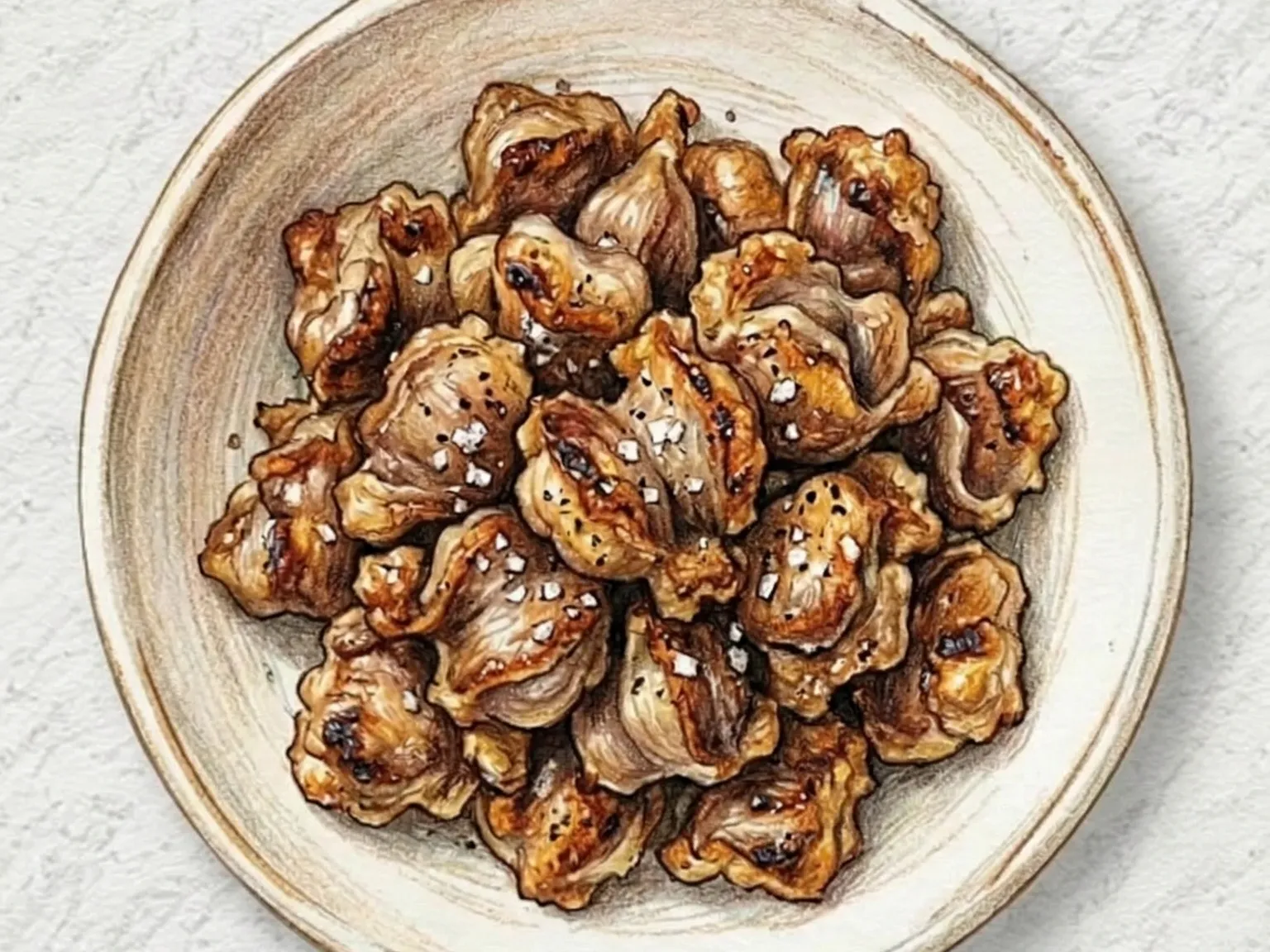
Dak-ttongjip sogeum-gui involves trimming the silver skin from chicken gizzards, seasoning them with salt and black pepper for ten minutes, then searing them in a hot, ga...
What makes this special
- Removing the silver membrane ensures a tender texture in these high-heat salt-grilled gizzards.
- Thorough removal of the silver membrane reduces toughness even under high heat
- A single layer in the pan keeps moisture from steaming and crisps the surface
Key ingredients
Core cooking flow
- 1 Trim the silver skin carefully from 350 g chicken gizzards so the tough membrane is reduced.
- 2 Sprinkle 1 tsp salt and 0.5 tsp black pepper over the cleaned gizzards.
- 3 Add 1 tbsp cooking oil to a pan and warm it over medium heat.
Dak-ttongjip sogeum-gui involves trimming the silver skin from chicken gizzards, seasoning them with salt and black pepper for ten minutes, then searing them in a hot, garlic-scented pan for six to seven minutes. High heat is essential: it crisps the exterior while keeping the interior springy and chewy, and overcrowding the pan causes the gizzards to steam rather than sear, turning them soft and rubbery. Removing the silver skin thoroughly before cooking reduces the tough, chewy membrane that can make gizzards difficult to eat. Scallion is tossed in for the final minute, and a squeeze of lemon juice at the end cuts through the richness and brightens the finish. The dish pairs particularly well with soju or beer, and adding sliced Cheongyang chili during cooking gives a spicier variation for those who want extra heat.
Instructions
Read the steps as a cooking flow: prep, heat, seasoning, doneness control, and finish.
- 1Control
Trim the silver skin carefully from 350 g chicken gizzards so the tough membrane is reduced.
Rinse under cold running water, then pat very dry with paper towels because surface moisture prevents browning.
- 2Season
Sprinkle 1 tsp salt and 0.5 tsp black pepper over the cleaned gizzards.
Toss until the seasoning reaches the folds, then rest at room temperature for 10 minutes so the salt penetrates before searing.
- 3Control
Add 1 tbsp cooking oil to a pan and warm it over medium heat.
Stir in 1 tbsp minced garlic, cooking just until it smells fragrant and turns pale gold, then move on before the garlic burns.
- 4Heat
Spread the gizzards in a single layer and raise the heat to high.
If the pan looks crowded, cook in batches, turning for about 6 minutes until the surfaces become browned instead of steaming.
- 5Heat
When the outside is well browned, lower the heat to medium and cook for 1 more minute.
The gizzards are ready when they feel firm and springy, and most moisture in the pan has evaporated.
- 6Finish
Add 1 sliced scallion and stir-fry for 1 minute so it softens lightly and releases aroma.
Turn off the heat, squeeze over the juice from 0.5 lemon, toss briefly, and serve right away.
After the steps
Pick a recipe that fits this dish.
Continue with shared ingredients, meal pairings, or a similar method.
Recipes That Go Well With This
More Drinks →Based on shared ingredients and meal pairing
Korean Garlic-Grilled Chicken Gizzards
Dakttongjip-maneul-gui is a Korean dish of chicken gizzards grilled and stir-fried over high heat with whole garlic cloves and cheongyang chili peppers. Gizzards are dense, pure-muscle organs with a firm, satisfying chew that sets them apart from other chicken cuts. Scoring them deeply before cooking opens the compact tissue so heat penetrates evenly and seasoning reaches the interior; a ten-minute soak in cooking wine beforehand removes any off-odor and lets the flavors absorb. Whole garlic cloves cooked alongside the gizzards undergo a visible transformation - the exterior caramelizes to a golden brown while the inside softens and turns almost creamy, converting raw sharpness into a rounded, sweet depth. The seasoning stays deliberately minimal - only salt and black pepper - so the natural flavor of the gizzards remains the focus, with cheongyang chilies providing a brief, clean heat that punctuates each bite without overwhelming the palate. The dish works equally well as an anju with drinks or as a savory side with steamed rice.
Gotgam Cream Cheese Roll (Dried Persimmon Rolls)
Gotgam cream cheese roll is a no-cook Korean dessert that requires nothing more than a knife, a bowl, and a refrigerator. Dried persimmons are slit open and flattened into thin sheets, each one acting as the outer wrapper. The filling is cream cheese mixed with honey and fresh lemon juice to balance its natural richness with acidity, and finely chopped walnuts are folded in throughout to add a crunchy, nutty element to every bite. The filling is spread across the opened persimmon, which is then rolled tightly and wrapped in plastic wrap. Twenty minutes in the refrigerator firms the roll enough to slice cleanly. Dipping the knife in warm water and wiping it dry before each cut produces the smoothest cross-sections. The finished slices reveal clearly defined layers: the chewy, caramel-sweet dried persimmon on the outside, the tangy cream cheese in the middle, and flecks of walnut distributed throughout. The combination makes it a natural pairing with wine or a polished addition to a traditional holiday table.
Korean Spicy Rice Cakes (Gochujang Braised Chewy Tteok with Fish Cake)
Simmering cylindrical rice cakes and thin fish cake sheets in a spicy base of gochujang, red chili flakes, sugar, and soy sauce creates a sticky, glossy coating. The starch released from the rice cakes as the liquid reduces acts as a natural thickener, ensuring the sauce clings tightly to each ingredient. While the fish cakes soak up the heat from the surrounding liquid, they release a subtle seafood essence into the pan, and the addition of green onions at the final stage provides a crisp contrast to the underlying sweetness. Preparing a stock from dried anchovies and kelp rather than using plain water establishes a solid savory foundation for the entire dish. It helps to start with only half the seasoning paste, adding the remainder gradually to manage the final intensity and texture as the volume decreases. If the liquid evaporates too quickly, adding small amounts of water prevents the sugars in the sauce from scorching before the rice cakes reach the desired softness. For rice cakes that have been chilled or feel exceptionally firm, a short soak in cool water or a quick blanch in boiling water helps them cook through evenly. Serving the finished dish with boiled eggs, blood sausage, or assorted fried items replicates the setup found at traditional street stalls. This recipe scales easily into different versions by incorporating heavy cream or tomato-based sauces, resulting in the rose and cream variations often found in modern snack shops.
Korean Grilled Dried Pollock
Nogari-gui is a classic Korean bar snack in which semi-dried young pollock is cut into pieces with scissors, then cooked in a buttered pan over medium-low heat until golden and crisp on both sides. The low-and-slow approach matters: the thin fish needs time to dry out evenly into a chewy-crisp texture without scorching on the surface. Butter melts into the fibrous dried flesh with each pass over the heat, coating the fibers with richness that plain dry-frying cannot replicate. The dipping sauce is a deliberate combination of gochujang and mayonnaise, loosened with lemon juice, sweetened with a pinch of sugar, and sharpened with minced garlic, producing a sauce that is spicy, creamy, tangy, and savory all at once. That sauce against the salty, umami-concentrated pollock is the reason one piece is never enough. Cutting with scissors rather than a knife exposes more cross-section of the dried fibers, helping the sauce cling more effectively. The snack is closely associated with the pojangmacha stalls of Noryangjin and remains one of the most requested accompaniments to cold draft beer in Korea.
Serve with this
Korean Seasoned Glasswort Salad
Sebalnamul-muchim features 220 grams of glasswort, a succulent coastal plant that carries a natural salinity from the tidal flats where it grows. A 10-second blanch in boiling water is enough to barely soften the thin stems while preserving their distinctive pop when bitten. The dressing of gochugaru, vinegar, plum extract, and sesame oil coats the tender shoots without masking their inherent briny flavor. Thinly sliced onion adds a sweet crunch, and the plum extract mellows the vinegar's sharpness into a rounded tartness. Because no additional salt is needed, the final seasoning relies entirely on the balance between acid, sweetness, and the glasswort's own minerality.
Dasik (Korean Honey-Pressed Roasted Grain Confection)
Dasik is a traditional Korean pressed confection made by kneading roasted grain or nut powders with honey and pressing the mixture into carved wooden molds. Unlike baked goods, dasik holds its shape entirely through the binding power of honey, with no heat applied during preparation. This technique produces a texture that is slightly resistant at first contact, then dissolves gently at body temperature in a way that releases the full aroma of the main ingredient. Roasted soybean powder yields a nutty version, black sesame produces a deeply aromatic one, and additions of pine nut powder or cinnamon develop the flavor in different directions. The wooden molds carve decorative patterns into the surface of each piece, giving dasik a visual refinement that matches its restrained sweetness. For centuries, dasik has been a standard offering at Korean tea gatherings, and its subtle flavor remains a natural match for the gentle bitterness of green tea.
Similar recipes
Korean Corn Cheese (Buttery Skillet Corn Mozzarella)
Korean corn cheese starts with drained canned corn tossed in mayonnaise, sugar, and black pepper, then sauteed with diced onion in butter before being spread flat in the pan and topped with a generous layer of mozzarella. The lid goes on over low heat until the cheese melts into a stretchy, golden sheet that locks the corn mixture underneath. A teaspoon of sugar pushes the corn's natural sweetness forward, and the fat from the mayonnaise blends with the cheese to produce a rich, creamy texture that coats every kernel. For a finished crust, broiling at 220 degrees Celsius for five minutes chars the surface and adds a toasty, slightly smoky layer on top. Sliced green onion or chopped parsley scattered over the finished dish cuts through the richness and adds a fresh note.
Korean Butter-Grilled Squid Beaks
Ojingeo-ip-butter-gui is a Korean bar snack made by searing squid beaks in melted butter with minced garlic over high heat. Thoroughly patting the squid beaks dry with paper towels before they hit the pan is a non-negotiable step: any residual moisture causes violent splattering and prevents the butter from forming a direct, fragrant crust on the surface. Three minutes of rapid stir-frying over high heat keeps the texture springy and chewy rather than tough and rubbery, which is the line squid crosses the moment heat is applied too long. Adding soy sauce and cooking wine creates a savory glaze as the liquid rapidly evaporates and concentrates against the hot surface. A finish of red chili flakes and cracked black pepper introduces a clean, warm heat that lingers behind the buttery garlic aroma, rounding out every bite. The dish comes together in under five minutes, which makes it one of the most practical snacks to serve alongside drinks.
Korean Garlic-Grilled Octopus
Muneo-garlic-gui is a Korean seafood drinking snack made by slicing pre-boiled octopus into bite-size pieces, seasoning them with salt, pepper, and red chili flakes, then searing them hard in olive oil with minced garlic over high heat. The garlic goes in first at low heat to bloom slowly in the oil, then the flame is raised and the octopus is added so the exterior chars rapidly while the interior stays springy and resilient. The olive oil coats the surface at high temperature and locks in moisture, producing a scorched crust outside and a genuinely tender bite within. A squeeze of fresh lemon juice at the finish cuts through the oil and brings the natural brininess of the octopus into sharp relief. The octopus should go straight to the table after cooking, as the texture toughens quickly, and thorough pan preheating is essential to getting the sear right.
Korean Grilled Chicken Hearts
Chicken hearts are trimmed, rinsed, and marinated briefly in cooking wine to remove any off-flavors before being seasoned with salt, pepper, and garlic. They are seared over high heat in a single layer for about six minutes total, which keeps the interior springy and chewy rather than tough. Finished with sliced scallion, this high-protein dish works well as a drinking snack or a quick weeknight side.