Korean Grilled Chicken Heart Skewers
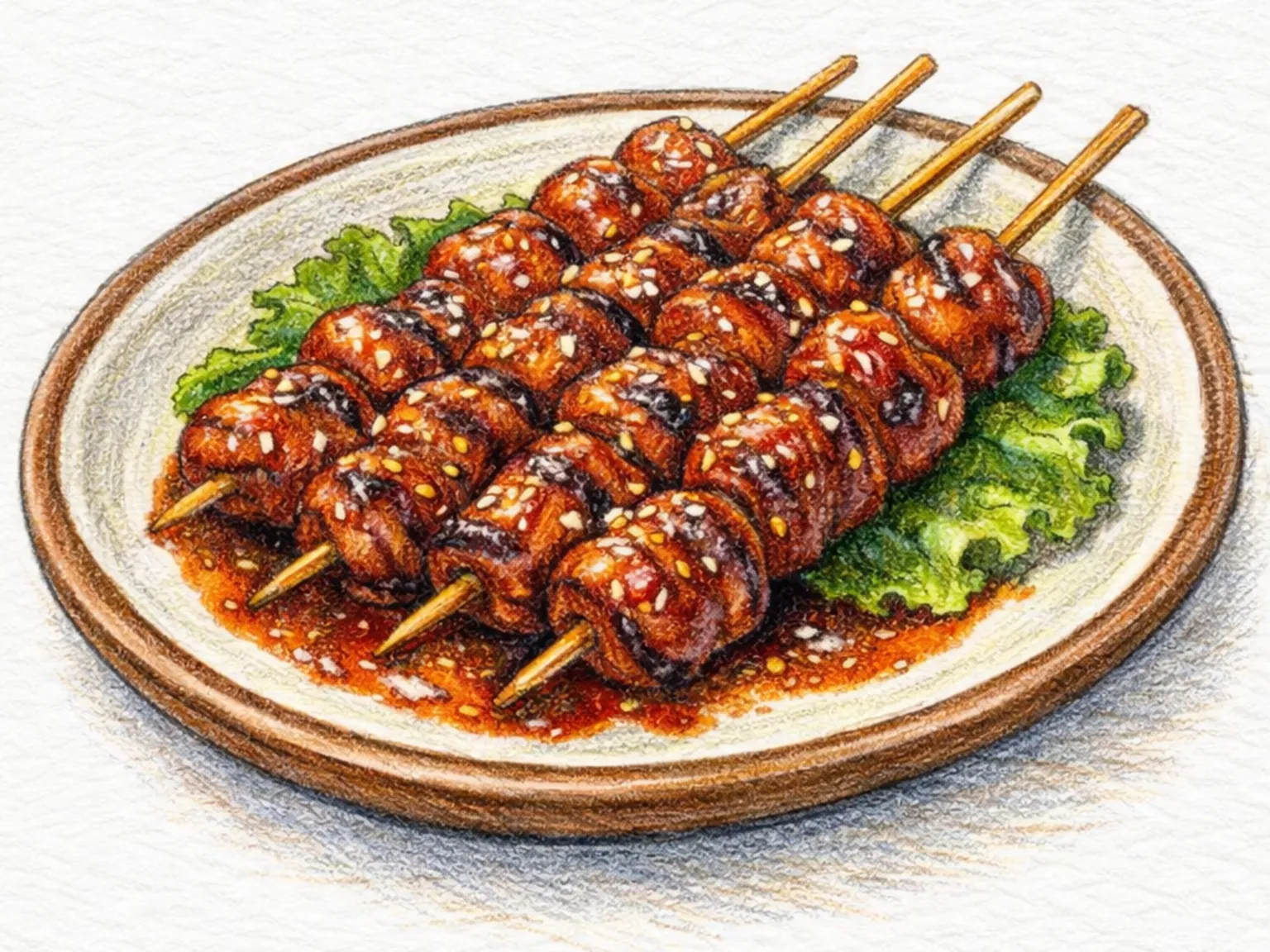
Dak-yeomtong-kkochi starts by soaking trimmed chicken hearts in milk for fifteen minutes to neutralize any off-flavors, then threads them onto skewers for grilling. A glaze of soy sauce, gochujang, sugar, garlic, and cooking wine is brushed on during grilling, building a salty-sweet layer with mild heat. Unlike regular chicken meat, hearts have a firm, springy chew that releases a subtle nuttiness the more you bite. The milk soak, combined with garlic and cooking wine in the sauce, cleanly eliminates any organ taste, leaving only char and seasoning on the finished skewers.
Adjust Servings
Instructions
- 1
Trim veins from chicken hearts and soak in milk for 15 minutes to reduce odor.
- 2
Rinse, pat dry, and thread the hearts onto skewers.
- 3
Mix soy sauce, gochujang, sugar, garlic, cooking wine, and pepper for the marinade.
- 4
Brush half the marinade on skewers and let sit for 10 minutes.
- 5
Heat oil in a pan or grill and cook skewers for 6-8 minutes.
- 6
Brush remaining marinade and cook 2 more minutes until glossy.
As an Amazon Associate, we may earn from qualifying purchases.
Tips
Nutrition (per serving)
More Recipes

Korean Grilled Chicken Skewers
Dak-kkochi-gui is a Korean grilled chicken skewer inspired by street-stall cooking, made by threading bite-sized pieces of chicken breast or thigh onto bamboo sticks and brushing them with a sauce of gochujang, soy sauce, honey, and minced garlic. Thigh meat works best because its higher fat content resists drying out over direct heat, and applying the glaze in two or three separate coats builds up a thick, sticky, caramelized layer. Cutting the chicken into uniform cubes ensures every piece finishes cooking at the same time, and alternating with slices of green onion or bell pepper between the meat adds moisture and color. The interplay of gochujang's fermented heat and honey's sweetness against charcoal smoke captures the unmistakable flavor of Korean street food.

Korean Spicy Octopus Skewers
Blanched octopus is cut into pieces, threaded onto skewers, and grilled on a pan or open flame while being brushed repeatedly with a spicy sauce of gochujang, soy sauce, sugar, minced garlic, and sesame oil. Octopus toughens rapidly with prolonged heat, so high-temperature, quick grilling is essential to maintain a springy chew. The layered sauce builds a coating of chili heat and nutty sesame over the octopus's clean, briny base flavor.

Korean Sausage Skewers
Sosiji-kkochi are Korean sausage skewers made by scoring Vienna sausages and threading two or three onto wooden sticks, then pan-frying until golden brown on all sides. The score marks open up during cooking, allowing heat to penetrate evenly and creating slightly caramelized, crispy edges. Ketchup and mustard are served alongside, with the tomato sweetness and sharp mustard bite complementing the salty sausage. The dish takes under 15 minutes from start to finish, and threading rice cakes between the sausages turns it into a sotteok-sotteok variation.

Korean Spicy Chicken Skewers
Spicy dak-kkochi threads boneless chicken thigh and green onion segments onto skewers, then grills them while brushing on a gochujang-based glaze multiple times. Chicken thigh meat stays moist thanks to its higher fat content, and the green onion segments caramelize and sweeten under the heat, balancing the spicy sauce. The glaze -- gochujang blended with sugar, garlic, and soy sauce -- caramelizes on the surface to form a sticky, lacquered coating. Applying the glaze in two or three rounds during grilling builds layers of sweet-spicy flavor that penetrate into the meat.

Korean Grilled Spicy Chicken Ribs
Dakgalbi-gui is the original Chuncheon-style grilled chicken dish where bone-in thigh and leg pieces marinate in a crimson paste of gochujang, soy sauce, sugar, garlic, sesame oil, and ginger, then cook directly over an open flame or on a hot pan. Unlike the more common iron-plate dakgalbi stir-fried with vegetables, this grilled version focuses solely on the meat, maximizing char and smoky flavor on the surface. Deboned thigh meat spread flat exposes more surface area to the marinade and heat, intensifying the flavor, and a minimum two-hour marination ensures the spice penetrates deep into the flesh. The gochujang caramelizes at high temperatures, creating edges that are simultaneously spicy, sweet, and slightly bitter from the char.

Korean Grilled Jjondeugi (Sweet Spicy Glazed Wheat Cracker Snack)
Jjondeugi-gui is a nostalgic Korean snack made by lightly grilling thin pressed-wheat sheets (jjondeugi) over low heat until pliable, then brushing them with a sauce of gochujang, soy sauce, sugar, oligosaccharide syrup, garlic, and sesame oil and grilling again. Heating transforms the rigid sheets into a chewy texture, while the sauce caramelizes on the surface to create a sweet-spicy glaze. The sauce must be applied in thin layers across multiple passes to avoid burning. The finished sheets are cut into bite-size pieces with scissors and served immediately.